
Memoir, Nonfiction

Happy, Happy, Happy, by Phil Robertson

Duck-CommanderFor some reason, my husband decided to get me seasons 1-3 of Duck Dynasty for Christmas.  I had never seen the show, did not know anything about the Robertson family except that they were a rags-to-riches story and that the father, Phil, had been recently been suspended by A&E. (Which was lifted after 9 days and a lot of public backlash.)

After finishing season 1, we can totally see the appeal of the show and the family.  Compared to everything else on TV they are an anomaly–they work hard, love each other, respect the institution of marriage, value education, they don’t swear, and they make Christianity cool. As my husband pointed out, “People are hungry for a show with values.”

Don’t let the camo and beards fool you.  There’s more depth than meets the eye, which led me to reading Phil’s autobiography when I saw the Kindle version for a reduced price.  At 240 pages, it is a quick read, but enjoyable with some interesting tidbits.  You learn about his impoverished childhood, where no game meant no meat; his and Kay’s youthful (and enduring) marriage nearly 50 years ago, struggles with alcohol, conversion to Christ, and the beginnings of the Duck Commander company.

And, in true “Phil-o-sophy” he drops in his personal wisdom on marriage, raising respectful children, being self-sufficient, and his work ethic.  He is far from a perfect man, but he has learned from his mistakes in life.

The book is thought-provoking in that the reader is reminded that traditional values, now considered “old fashioned” by many, have a lot going for them.

8.5 out of 10 stars
Fiction

Margot, by Jillian Cantor

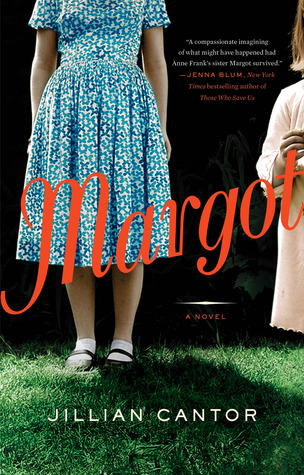
17347640Anne Frank.  Her name is synonymous with the plight of the Jews during the Holocaust. Her diary humanized the life of a young girl bursting with effervescence and dreams of the future, only to have them cruelly ripped away at age 15.

But there was another diary written by another sister.  Anne’s older sister, Margot.  The quiet one. The reserved one.  The excellent student. The “paragon of virtue,” as she was called in the family.  The sister whose work camp order prompted their father, Otto, to shuffle the family into the famous “Annex” in the early hours of July 6, 1942.

After their arrest in 1944 and suffering the atrocities of the concentration camps, only Otto Frank survived. He edited and published Anne’s diary in the early 1950s, which became a hit Broadway play and award-winning film, making Anne Frank an icon for all time. 263 Prinsengracht is now the “Anne Frank House,” with over one million visitors per year.

Margot’s diary was lost and never found.

What is known about Margot is brought to life in this respectfully written “what if” novel by Jillian Cantor.

I couldn’t put it down.

What if Margot survived? What if she made her way to America?

Set in 1959, the year the movie The Diary of Anne Frank hit the big screen, Margie Franklin is a quiet woman in her early thirties, working as a legal secretary.  She has no family. She always wears long sleeves. She lives and behaves modestly. She lives with fear and guilt. She lives a lie every day. She has a secret.

If you are someone who has always been intrigued by the Anne Frank story, as I have, you will greatly enjoy this novel. Told entirely from Margot’s perspective, you sense her daily conflict with wanting to be seen for who she is, yet still being “the quiet one.”  Her inner voice is very authentic.

Appropriate for any age.  I highly recommend it.

9.5 out of 10 stars

Children, Fantasy, Fiction, Series & Collections, Young Adult

The Incorrigible Children of Ashton Place, Book 3, (The Unseen Guest,) by Maryrose Wood

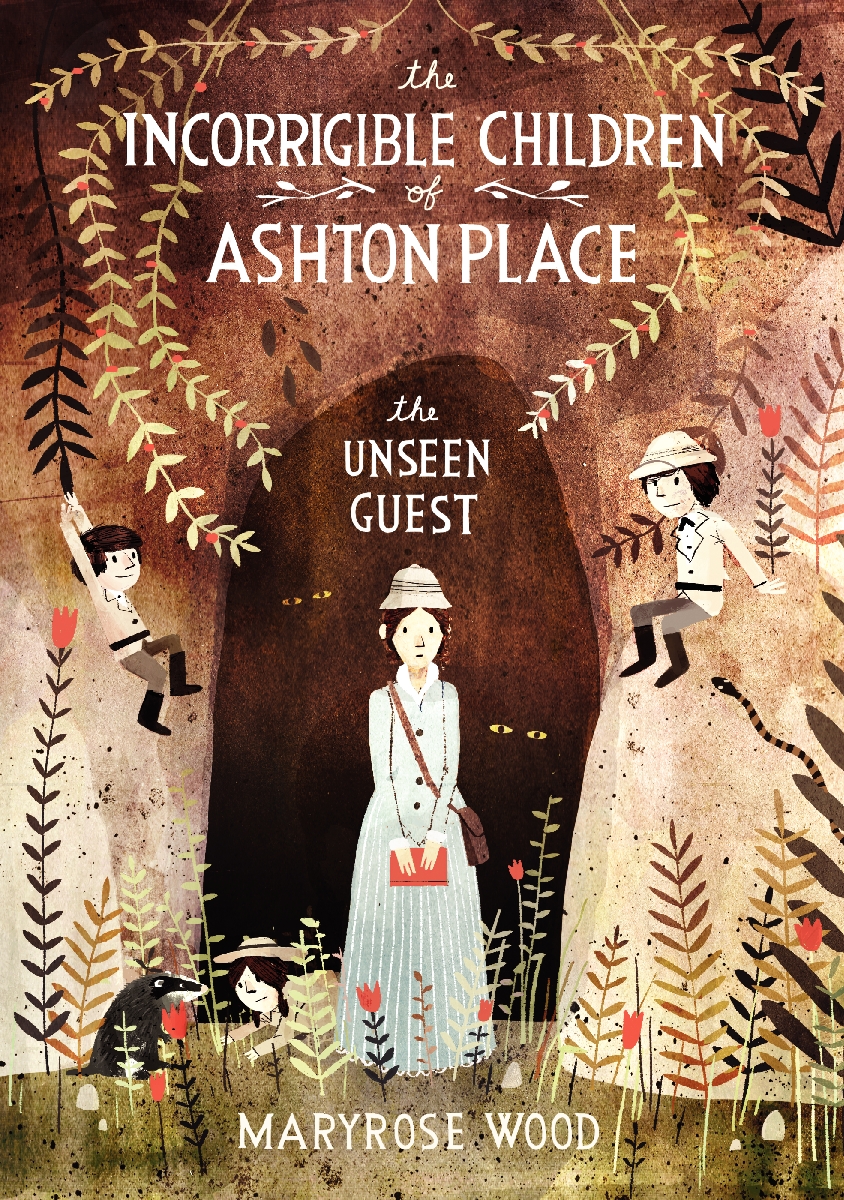
unseen2In this installation of the Incorrigible Children series, we meet Lord Fredrick’s mother, the Widow Ashton.  She arrives with little notice–sending Lady Constance into a state of frenzy–accompanied by Admiral Faucet (pronounced Faw-say,) her gentleman friend who hopes to marry her.

The 3 Incorrigible Children still maintain some of their wolf-ish qualities, obtained from having been raised by them, but are making great strides in English speech and manners.  Admiral Faucet, however, dwells only on their ability to track things in the forest and, when his imported African ostrich, Bertha, goes missing, he invites the siblings and their governess on a mini safari to find her in the surrounding forest.  When Penelope and the children become separated from the admiral (whose intentions for the ostrich and the Incorrigibles are quite sinister,) they encounter a cave that only deepens the mystery of the children’s upbringing.

As with the first 2 books, this is a unique story with many twists and turns.  Although told in the 3rd person, it is mostly from Penelope’s viewpoint.  The language is charming and conversational with the reader, reminding me more and more of Roald Dahl’s style (my favorite author.)

By the 3rd book, however, I was ready for some of the questions about the children’s and Penelope’s backgrounds to be answered.  Instead of answers, there were only more questions.  Clearly, Penelope and the children are connected in a way more than a governess is to her charges.  And, clearly, Lord Fredrick has a secret that is becoming increasingly difficult to keep.

The story-lines with the supporting characters did wrap up satisfactorily, setting the stage for a new adventure in Book 4, which debuts on December 17th.  Like other readers, I will just have to be patient.

8.5 out of 10 stars

Children, Fantasy, Fiction, Series & Collections, Young Adult

The Incorrigible Children of Ashton Place, Book 2 (The Hidden Gallery,) by Maryrose Wood

image

“Navigation, you see, is not just a problem for sailors.  Everyone must go adventuring sooner or later, yet finding one’s way home is not easy. Just like the North Star and all it’s whirling, starry brethren, a person’s idea of where “home” is remains in perpetual motion, one’s whole life long.”

–Page 311, The Hidden Gallery

Shall I mention again how much I am enjoying the series The Incorrigible Children of Ashton Place?

Book 2, The Hidden Gallery, takes young governess Penelope Lumley and her 3 charges to London. She has received a letter from her former headmistress and an invitation to meet in the city. When Lady Ashton of Ashton Place becomes aware of this, she decides to pack up the entire household and rent a home in London so they can all go. While Lady Ashton cares only about nurturing her social connections, Penelope becomes involved in a series of odd coincidences that raise more and more questions about her background and the origin of The Incorrigibles (Lord Ashton’s name for the wolf-raised brood.)

Once again, author Maryrose Wood writes her gothic tale in a way that is both effortless and charming. Even as an adult, I felt like I was sitting at the knee of a great storyteller, completely engrossed in the characters and the action.

Three themes emerge continuously throughout the book: navigation, the moon, and home. Some of the mysteries in Book 1 become a little clearer if you can read between the lines and unravel the clues, but there are plenty of new questions which are not resolved by the end. It doesn’t matter, the ending is satisfying enough to make you let out a temporary sigh before wanting to delve into Book 3. I’m hooked.

9.5 out of 10 stars

Children, Fantasy, Fiction, Series & Collections, Young Adult

The Incorrigible Children of Ashton Place, Book 1 (The Mysterious Howling,) by Maryrose Wood

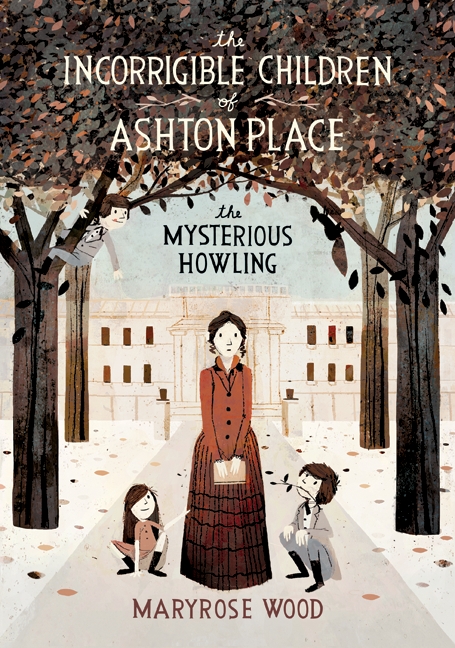
9780061791055When 15 year old Penelope Lumley stepped off the carriage at Ashton Place to interview for a governess post, she had no idea what awaited her.  After quickly being hired by flighty Lady Ashton, Penelope suddenly found herself in charge of 3 feral children that Lord Ashton had discovered on his property the only week before.  All of Penelope’s hopes of imparting her knowledge of languages, math, and geography were dashed so she could teach the children the most basic skills.  They had no language, no manners, and couldn’t even dress themselves properly.  Meanwhile, Lady Ashton is thinking only of planning her first big party as mistress of the house and Lord Ashton spends all his days at the gentleman’s club.

Written in a charming style that makes Miss Lumley appear both loving and determined, author Maryrose Wood has managed to make this first book in the series akin to children’s books of old, like Mary Poppins or Alice in Wonderland.  The story is nothing if not unique, as well as engaging and well-paced.  I was enraptured and read it in less than a day.

This is a little gem of a book, and I have already begun Book 2 (The Hidden Gallery.)  How wonderful to read a novel that doesn’t talk down to its reader, doesn’t resort to the current trends of zombies and vampires, and even makes an effort to introduce its readers to new words (“irony” and “hyperbole” are cleverly explained in context.)  Penelope Lumley is smart, plucky and likeable, yet rarely discouraged despite her circumstances.  Since leaving the classroom 4 years ago, this is the first series I have encountered that made me wish I had students again with which to share it.

10 out of 10 stars