Fiction

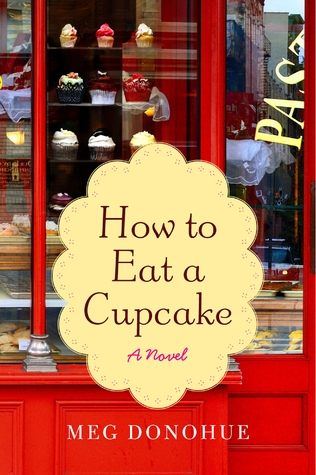
How to Eat a Cupcake, by Meg Donohue

12266205Meg Donohue must be a devoteé of Fannie Flagg, because she also names her chapters after the character whose narrative we will be hearing. In the case of How to Eat a Cupcake, each chapter is named either “Julia” or “Annie.”

Julia St. Claire is the privileged only child of Tad and Lolly St. Claire. She’s blond, beautiful, educated, and successful in everything she attempts. Her upscale upbringing in the tony San Francisco neighborhood of Pacific Heights has been a life most people can only dream about.

Annie Quintana is the illegitimate daughter of Ecuadorian immigrant, Lucia Quintana. Upon the announcement of her pregnancy, Lucia was disowned by her strict family. She made her way to the US, working a series of jobs until she became the housekeeper and nanny for the St. Claire family. Although Lucia and Annie lived in the estate’s carriage house, they were cherished by their employers. Lucia had the gift for putting everyone around her at ease and she could cook and bake like no else.

Through the years, Annie’s and Julia’s relationship changed as they got older and were forced to navigate the murky depths of the exclusive Devon Prep high school, the St. Claires paying both tuitions. Eventually the girls grew apart, their once sisterly bond fueled by competition and loathing–the kind of nagging dislike that people only experience when they actually care deeply for one another. The kind which only fades if both parties make amends.

Then one day, Annie’s mother, Lucia, died.

Trust me, I’m not giving anything away. This is the expository information generously given at the beginning of the novel. The main plot picks up 10 years later. The girls are now 28 year old women whose lives are about to intersect once again. Julia is now a talented businesswoman with all the right connections. Annie is a gifted baker living with a dash of cynicism after losing the only relative she ever knew. The following year for both of them will be a learning experience in trust, faith, and introspection.

Since we hear each of their inner voices, we see what is genuine and what is perceived.

Although, technically, a “light” read, the relationship between the women felt very real. That is what kept my attention to the end. Most lifelong friendships are complicated, as any relationship with a lot of history. I think of friends I have had since early childhood. There have been ups and downs, joys and sorrows, and lengthy periods with no contact at all. But when you know someone for most of your life there is a unique bond. Discovering which is stronger–Julia and Annie’s childhood bond or the events that later tore them apart–is what makes this novel worthwhile.

8.5 out of 10 stars
Fiction, Romance

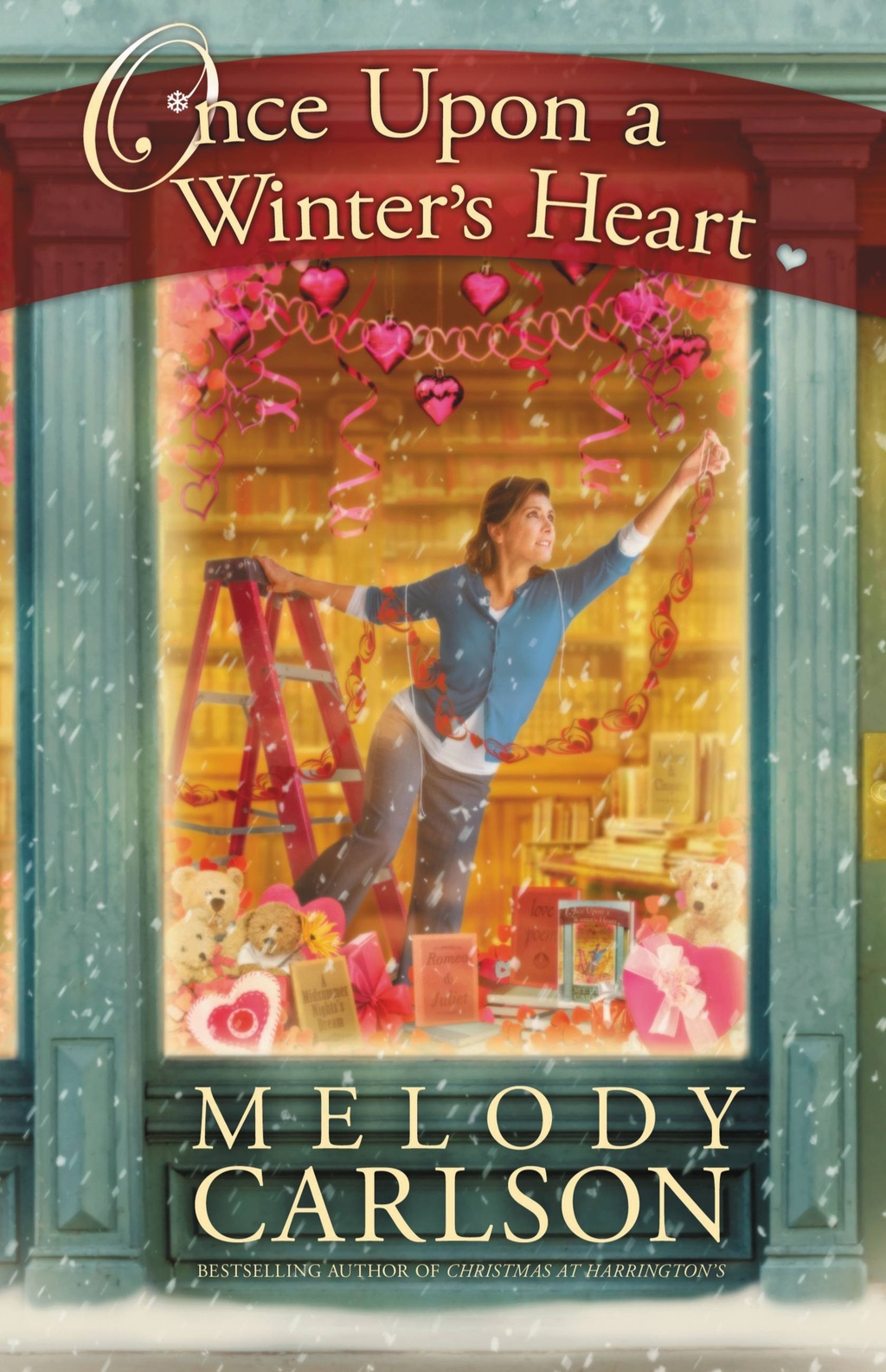
Once Upon A Winter’s Heart, by Melody Carlson

Once-Upon-a-Winters-HeartI suppose I’ve been in a “Melody Carlson” mood lately. Once Upon A Winter’s Heart was recommended to me through BookBub, a new site I discovered that emails me a daily list of discounted or free e-books on Amazon. This selection, by one of my favorite writers, was on the list. It was $1.99 and only 156 pages. (The price is back to $7 now.)  I read 2/3 of it on the treadmill this morning and the rest lying on the couch before making dinner this evening. Voila!

Some might find Carlson’s books cheesy or boring, but I’ll tell you what I like about them. For one thing, the female protagonist is usually someone who has given up on love and then finally finds it. As someone who got married at 39, I can very much relate to that. There is someone for everyone, truly, and these stories confirm it. I also appreciate the fact that as “romance” novels they are far from “blush worthy.” They are always about the meeting, the does-he-or-doesn’t-he, the friendship, and eventual getting together of two very decent people. If you’re a “Fifty Shades of Gray” person who needs the kinky stuff to entertain you, I recommend you look elsewhere.

In Once Upon A Winter’s Heart, Emma Burcelli has packed up her few belongings from her Seattle apartment and moved in with her recently widowed grandmother. Ready to start anew and willing to help out in her grandparents’ book shop, Emma reconnects with her parents, her nephew, and becomes slightly disillusioned while watching a supposed romance between her younger sister, Anne, and the charming Lane.

As usual, the characters are modeled after people the reader can recognize from their own life. The plot, although a bit rushed in this short novel, is, shall we say… “feasible.” It’s light, it’s possible, it’s fun, and it can be read in a day in between workouts and housework.

8/10 stars

Children, Fantasy, Fiction

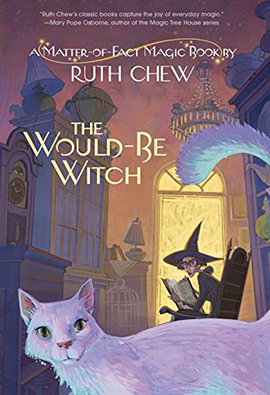
The Would-Be Witch, by Ruth Chew

the-would-be-witchBefore there was J.K. Rowling and the Harry Potter series, there was prolific author Ruth Chew (1920-2010.) She was one of my favorite writers when I was a child and The Wishing Tree was a book I reread many times. Recently I came across another book she wrote called The Would-Be Witch and it is delightful.

Her style is much simpler than Rowling’s and her magical worlds are very innocent. Each book she wrote stands alone and offers a fun escape for its reader, showing unique glimpses of what this world would be like if witches and real magic existed.  Her protagonists are always ordinary children who stumble upon an enchanted object or meet an interesting woman who is a little “different.” The charming pencil sketches in her books are also hers. There is nothing dark or graphic about her books.

In The Would-Be Witch, siblings Robin and Andy Gates find a clumsy white cat who belongs to a shop owner named Zelda. While watching Zelda’s shop one afternoon, the children start speculating about the eccentric lady and her odd clothing. Meanwhile, their mother has just purchased some “magic” polish, said to work wonders on any surface from wood to plastic, and the adventure begins.

The time period is general, and could take place anytime from the early 1900’s to present day. The children mind their parents and are responsible young people. It is all told in an uncomplicated narrative with interesting twists and turns and a satisfying ending.

If the fantasy world of magic is something your young child is interested in, and the Harry Potter series is too advanced, I highly recommend The Would-Be Witch, The Wishing Tree, or anything by Ruth Chew. Her official page is HERE, and books that were out of print for years are now becoming available again in libraries and in digital form.