Biography, Black History, History, Nonfiction, Young Adult

The Life of Frederick Douglass, by David F. Walker

For the second time in two weeks I am completely bowled over by a book I discovered accidentally. I have so many thoughts right now…

With so much racial unrest happening I feel that one of the things we need to do is get at the core–its history and its reasons. Obviously, there is no one alive right now who can tell us what it was like to be a slave in the United States during the 1800’s, but when you read Frederick Douglass’s own words, you get pretty close.

I learned so much about this important historical figure who I thought I already knew. When I read about Harriet Tubman and the early suffragettes, Susan B. Anthony and Elizabeth Cady Stanton, Frederick Douglass is always mentioned. But until now, I did not know his personal history.

In this powerful book you learn about his entire life, from birth to death: his boyhood, his mother, his escape, his wife and children, and, of course, his determined quest to help abolish slavery.
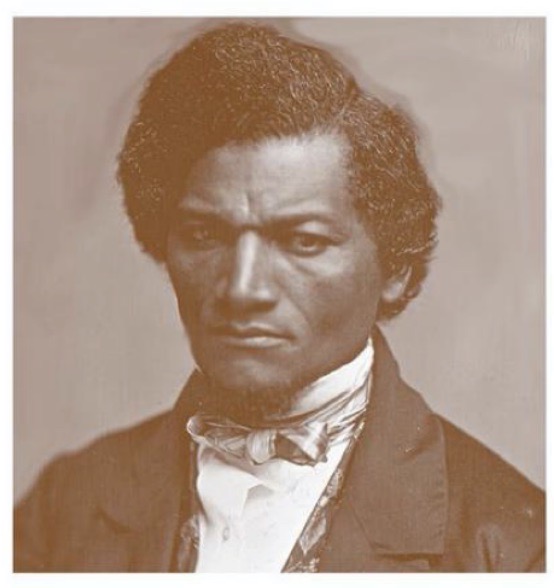
Although it was not the custom at the time, Frederick Douglass purposefully looked into the camera when his picture was taken. He felt it showed his humanity and resolve.

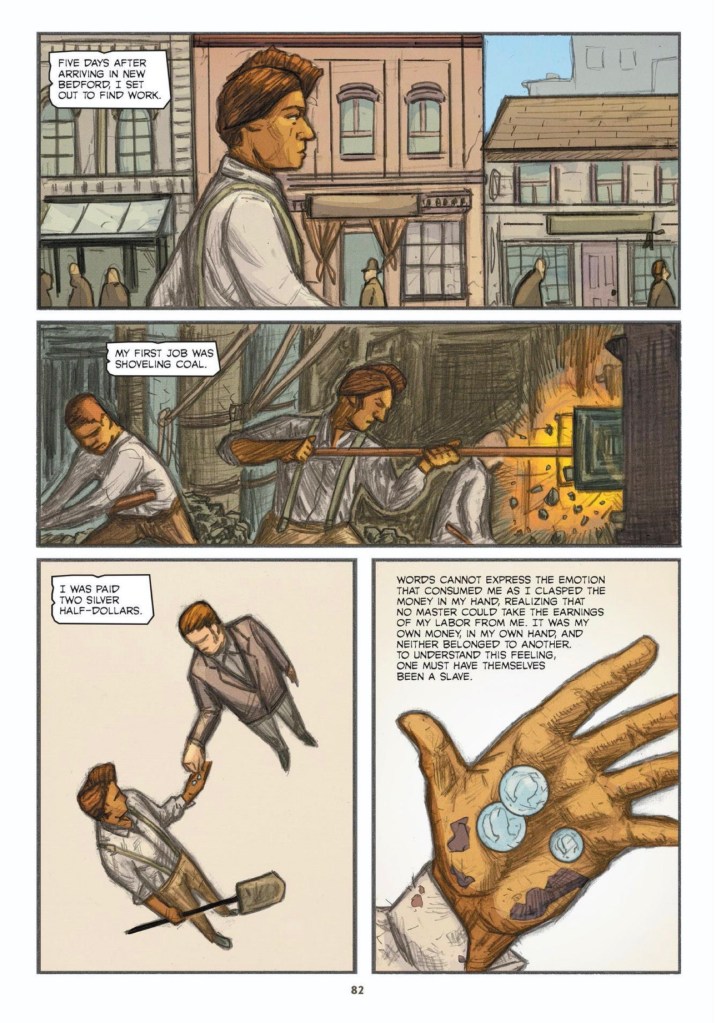
This particular screen shot is one of many quotes by Douglass that made me realize the amount of guilt he often felt. Throughout his life he dealt with much internal conflict, always wondering if he was doing enough to help the slaves and always putting pressure on himself to be an example of dignity. He felt great responsibility to show others that a (former) slave is a person with intelligence and emotion, not just a piece of property to be bought, sold, and abused.

I highly, highly recommend this graphic novel to adults and young people. (Probably a mature 10 years old and older.) Although it chronicles an era of the past, its themes are still relevant. Mostly, that while many agree that change needs to happen, they differ on how to achieve that change. Until that question is resolved, how can things be different?

10/10 Stars

This book is available on Amazon.com, or perhaps your local digital library, which is where I found it. Just look at these amazing drawings by David F. Walker:
Biography, Faith, Faith and Religion, Nonfiction, Religion

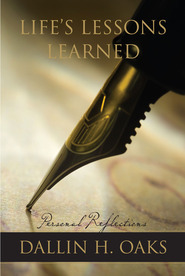
Life’s Lessons Learned, by Dallin H. Oaks

If you’re familiar with Dallin H. Oaks, you know he is nothing if not certain when he speaks. As the senior apostle in the Quorum of the Twelve in The Church of Jesus Christ of Latter-day Saints, some might even describe him as intimidating. I have felt that too, until about a year ago when I heard him being interviewed, alongside his wife, on a podcast. Hearing him speak freely, as opposed to giving a speech, humanized him to me. It was then I had new respect for the man.

Life’s Lessons Learned, published in 2011, is a book with a simple format. President Oaks (he is called “president” because of his current Church calling in the First Presidency) shares different events from his life and the outcomes of those events. The oldest of three children raised by a single mother after his father died of tuberculosis when he was 11, Dallin H. Oaks is the definition of self-made. Trained as an attorney, his legal resume is very impressive. However, the majority of his adulthood has been devoted to Church service, and it will be that way for the rest of his life.

The book is divided up into three chronological sections, each with brief experiences and the lessons learned from them. The sum of its parts being that anything we go through, good or bad, has something to teach us. The more self-aware person will take that information and apply it. Sometimes the lessons come from observing others as well.

There are many wonderful things to glean from the book, but I think my favorite was the one on “labeling.” Here is an excerpt:

“We should be careful not to label or define ourselves (or others) by some temporary quality. The only single quality that should characterize us is that each of us is a son or daughter of God. That fact transcends all other characteristics….

“When we choose to define or label ourselves (or others) by some characteristic that is temporary or trivial in eternal terms, we de-emphasize what is most important about us (or them) and overemphasize what is relatively unimportant. This label can lead us down the wrong path and hinder our eternal progress.”

I could not help but think about recent events and run this section through that particular filter. Lately it feels like excessive labeling (and generalizing) is leading to society’s downfall.

That is only one of many examples, all taken from his own life. President Oaks will be the first to tell you he is not perfect, something he freely admits. But he also shares ways he and all of us can improve, both from a spiritual perspective and from Life’s lessons.

His writing is clear and well-organized–the kind of intuitive organization I appreciate. I recommend this book and look forward to reading more.

9/10 Stars

Fiction, Historical Fiction

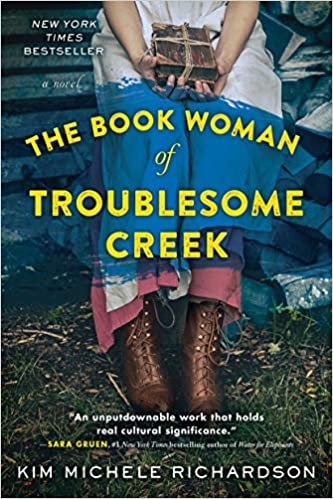
The Book Woman of Troublesome Creek, by Kim Michele Richardson

Their hunger for books could teach them of a better life free of the hunger, but without food they’d never live long enough or have the strength to find it.

Where to start? I loved this book.

There are so many unique qualities to The Book Woman of Troublesome Creek, by Kim Michele Richardson, starting with the fact that it takes two fascinating pieces of history and merges them together into one character.

That character, the voice of our narrator, is Cussy Mary Carter, nicknamed “Bluet.” Piece of History #1: she is a Pack Horse librarian in the 1930’s, riding through the Appalachian Mountains weekly, delivering books to the poor but proud. Piece of History #2: she is a descendant of the Blue Fugates of Kentucky, a group of people with a rare genetic condition that turned their skin blue.

On one hand, you have Cussy Mary as the outcast because of her visible blue skin (she even qualified as “colored,” although she was not African American, and was subject to the same restrictions of the time.) On the other hand, you have Cussy Mary as the one who brings culture to the region’s isolated people. The school children look forward to seeing her. The illiterate (too proud to ever admit such a thing) depend on her to read to them. The elderly simply enjoy her pleasant company.

If there existed a scale of reactions people have towards Cussy Mary, from loving, sympathetic, and compassionate to repulsed, fearful, and murderous, she evokes them all. Yet, somehow, she maintains her composure, ever the book’s heroine from beginning to end. When a character is convinced they are unlovable, yet still manages to treat others with kindness and respect–as Cussy Mary does–you cannot help but admire them.

The themes of prejudice, segregation and ignorance are pervasive throughout the novel. But there is also forgiveness, redemption, and stoicism. My only small criticism is that the ending is almost “too tidy,” seemingly out of step with the rest of the novel. But that is purely my opinion.

Overall, The Book Woman of Troublesome Creek is an extremely engaging read, suitable for book clubs or the curious individual looking for a story unlike any other.

9.5/10 Stars

Fiction, Parable

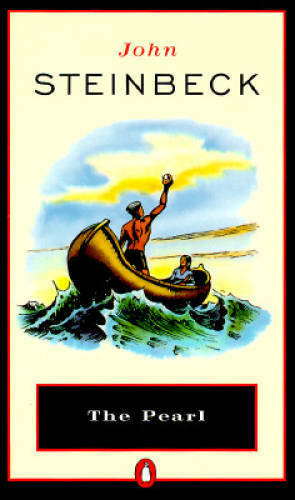
The Pearl, by John Steinbeck

s-l640

For it is said that humans are never satisfied, that you give them one thing and they want something more… –The Pearl

How is it that some have so much while others go without? A hut versus a grand house. Rags versus silken finery. Character versus emptiness. The Song of Family versus the Song of Evil. Do possessions make one evil? Possessions can make one a slave.

Greed. Materialism. Attributes that are practically glorified these days. The master storyteller does not need hundreds of pages to tell how they corrupt and distort. John Steinbeck is that master storyteller.

All of these themes are explored in The Pearl, the story of a humble fisherman named Kino who finds a treasure he thinks will bring an end to his troubles. Yet, what are his troubles? Before his discovery, he lived peacefully, although simply, with his loving wife and little son.

A master storyteller can affect his reader in less than an hour, as I was last night. And today I look around at my possessions wondering if they belong to me or if it is the other way around.

Read The Pearl and prepare to be changed.

9/10 Stars


Faith, Faith and Religion, Religion

Answers Will Come, by Shalissa Lindsay

81YbOCsKU2L

Olympians sometimes swim in sweats to increase the drag and work their muscles harder. This mortal body may often feel like that too. Some of the challenges that I process as temptations are more helpfully viewed as mortal processes that provide my spirit an intensive training exercise in patience, self-discipline, and charity. –Shalissa Lindsay

(Just a brief disclaimer for anyone reading this review: this particular book is very much targeted to members of the Church of Jesus Christ of Latter-day Saints, also known as LDS or Mormons. There are several references only they will understand. That being said, the book’s message is for everyone.)

Since the COVID-19 pandemic began in mid-March, my Sundays have looked very different. Instead of spending a minimum of two hours at our church building listening to talks and lessons, singing hymns, and partaking of the sacrament, my hubby and I have been holding our version of “home-centered church.” It is spiritual and reverent, but we dress more casually and it doesn’t last two hours. We pray, follow the weekly Sunday School lessons, read the scriptures, and try to maintain a Sabbath atmosphere in our home that day.

It has actually been wonderful. It’s made me realize the power we each have to access the Spirit and have him abide in our homes, whether we attend church in a building or not. I do miss my church family and the insights they give during lessons–I learn so much from their example–but this will do for now.

Not being around others of my faith on a weekly basis has created another desire in me. If I cannot share ideas in person, I would, at least, like to read the ideas of others. Part of attending church in person is the comfort of knowing others share your struggles. Not exactly in a “misery loves company” type of way, but more like “we’re all in this together, so let’s figure it out together.”

That’s a lengthy introduction! Suffice to say, all this spiritual pondering without a congregation has been a bit lonely. When I have questions or concerns, there is no class full of like-minded people with whom to discuss them.

I’m very aware that the Lord’s timeline for answers is not my own. (“Answers” could be answers to questions or answers to prayer.) So it is comforting to read a book such as this that lets me know that my (some time) impatience and frustration is not unique. In Answers Will Come, Shalissa Lindsay tells my heart and my head things I already know, but need to hear again…and again…and….again.

The bottom line, Life is not easy, and that’s OK. Answers are not immediate, and that’s OK too.

Elder Jeffrey R. Holland has a well-known quote: “Some blessings come soon, some come late, and some don’t come until heaven; but for those who embrace the gospel of Jesus Christ, they come.”

You could reread this quote substituting the word blessings for answers, making it no less true.

I found myself agreeing with a lot of the logic the author uses to reconcile her faith, her patience, and current gaps in her doctrinal knowledge that she wants to fill. Many of her gaps and questions are fairly common. And, while not the most revelatory read, Answers Will Come certainly makes you think and self-examine, as we all should do once in a while.

8.5/10 Stars


Fiction, Series & Collections

My Name is Asher Lev, by Chaim Potok

9781400031047_l

“To touch a person’s heart, you must see a person’s face…”

Last week I was listening to a podcast where actor Tom Hanks was being interviewed. The interviewer asked him to name the first book he ever read that he felt was “transformative.” Tom answered My Name is Asher Lev. I was between books at the time and, having already read and enjoyed The Chosen, by Chaim Potok, I decided to try another.

Honestly, I found myself plodding through this book as if metaphorically walking through mud. I knew it would be about the Orthodox Jew culture. I knew it would be heavy. But it was heavy in a way I did not expect. It was emotionally heavy. Heavy and frustrating.

Now, I suppose that as far as “transformative,” I could see where Tom Hanks is coming from. If you are an artist and you believe that nothing comes before your art then, yes, My Name is Asher Lev could be considered transformative. But for the rest of us, I’m not so sure.

This is where interpretation of literature becomes a gray area.

As far as writing style, yes, Chaim Potok is an excellent writer. His style is minimal, yet profound. There is an indescribable power within it that propels the reader to carry on and keep reading. The plot, however…

Simply put, My Name is Asher Lev does not do any favors for the Orthodox Jews. It follows a young, friendless boy into adulthood who, more than anything else, wants to be an artist. The more his father tells him to stop wasting his time on drawing, the more he rebels. Over the years he continues to pursue his vocation at the risk of alienating everyone he cares about, his parents, his rabbi, his community.

The biggest question would have to be “Is it worth it?” Never having been in that situation, I cannot say. I did, however, think of my Uncle Ruben, an extremely talented artist who struggled for years against the wishes of my grandparents to turn his vocation into a career, eventually becoming successful and convincing them and everyone else.

Our protagonist, Asher Lev, had a larger task. He was battling against pervasive religious traditions that affected everything in his life. He was also battling against a close-knit religious community whose stronghold on those traditions was becoming more and more desperate as the world crumbled around them. Lastly, as the only son of a respected man who worked to help the persecuted, he was battling against his father, whom he loved.

Those who are fighting that uphill battle to just be who they are at the risk of all they love and hold dear will, perhaps, find Asher Lev’s story more relatable. There is an audience for his struggles. Unfortunately, I am not that audience.

8/10 Stars


History, Nonfiction, Speeches

The American Spirit, by David Mccullough

DAzPhz4XgAATs5o

We are all part of a larger stream of events, past, present, and future. We are all the beneficiaries of those who went before us–who built the cathedrals, who braved the unknown, who gave of their time and service, and who kept faith in the possibilities of the mind and human spirit. —David McCullough in The American Spirit

When I read the work of a writer as gifted as David McCullough, I fear I will not be able to express myself as he deserves in my review. Many feelings are coursing through me as I put his words through the filter of recent world and national events.

In the wake of George Floyd’s recent death at the hands of Minneapolis police, there has been a lot of talk about racism, to be sure, but there has also been a lot of talk about American history. It is said that those who do not learn from history are doomed to repeat it. How do we learn about it? By reading it. There is so much to know and so many facets.

I was, of course, familiar with David McCullough. As someone who loves documentaries, he is a fixture on PBS, narrating countless stories in his grandfatherly voice. But McCullough is also a renowned American historian and prolific author, winner of the National Book Award, two Pulitzer Prizes, and the Presidential Medal of Freedom. He has made it his life’s work and personal crusade to humanize historic icons of the past and bring unsung contributors of our nation to the forefront. (Benjamin Rush is my new historic interest.)

It wasn’t difficult to decide which of David McCullough’s books to read first. While visiting our local digital library site, The American Spirit was the only one readily available (I put holds on several others.) But, as so often happens when I read an author for the first time, it was providence that this would be the first of his books I would experience.

This is what you do with his writing. You don’t just read it. You experience it.

Unlike his other books, which are mostly about prominent figures in American history, The American Spirit is a collection of speeches that David McCullough has given over the years. Many are to new college graduates, some are at events commemorating anniversaries (of Congress, the White House, the 250th birthday of the Marquis de Lafayette, etc.) But before you groan at the word “speeches,” let me assure you that these are each mini works of art. They are vibrant. They inspire. They provoke. They motivate and they elevate.

History’s greatest enemies are those who distort, deny, sugar-coat, reimagine, and try to erase it. McCullough does none of these things. That level of honesty is not only refreshing, but vital. Despite our many flaws and struggles, America has a lot about which to be proud. I found this comforting, especially in the midst of recent events. We also have a lot we need to change. But let’s change things for the future without denying the past. Learn from it. Read about it. Improve upon it.

9.5/10 Stars

Faith, Faith and Religion, Nonfiction, Religion, Self-Help

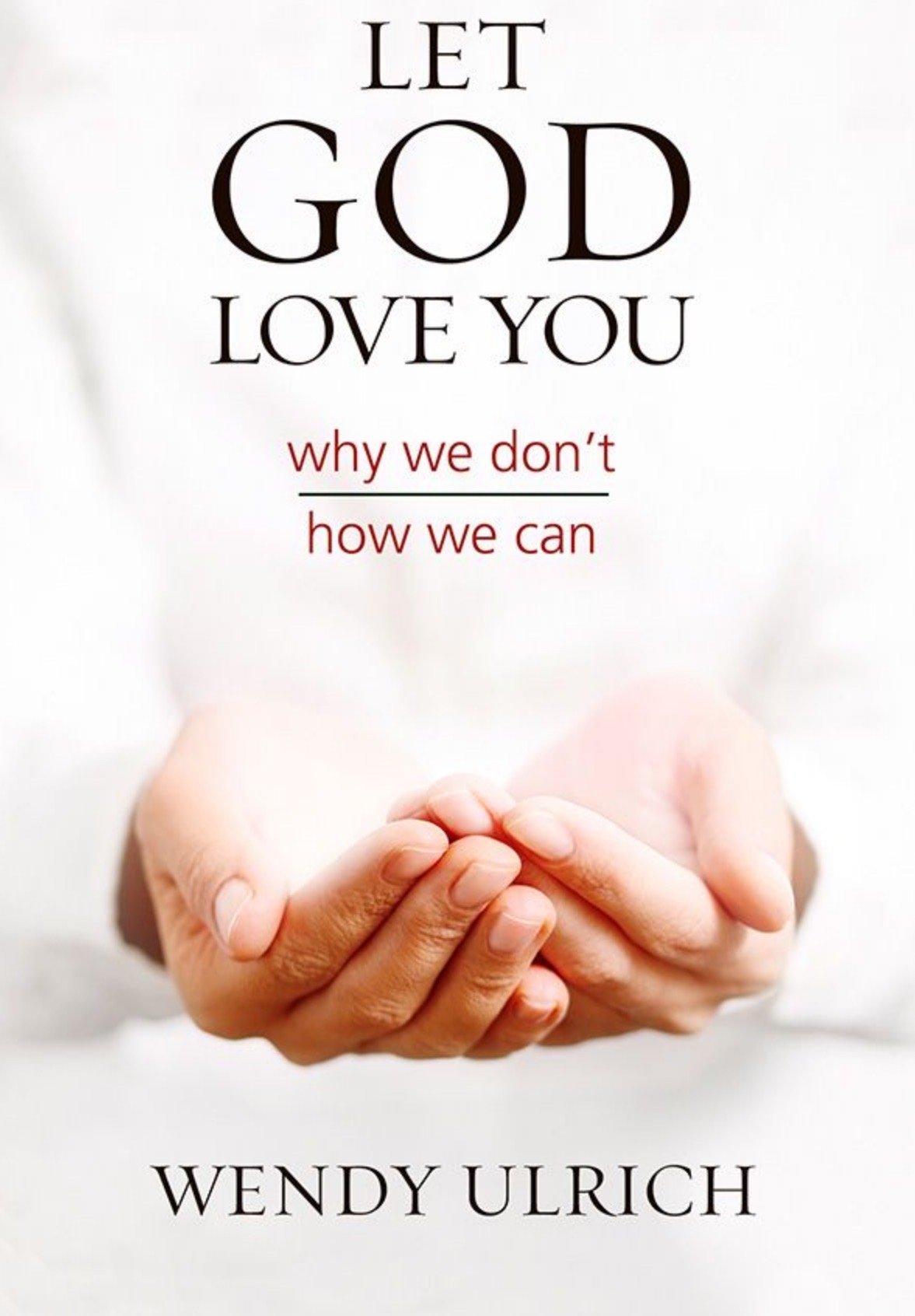
Let God Love You, by Wendy Ulrich

Screen Shot 2020-06-11 at 5.51.09 AM

Once in a very great while I will read a book and think, “If I was more eloquent and disciplined, this is the book I would’ve liked to write.”

Fortunately, probably more successfully, Wendy Ulrich beat me to it.

For many, just believing that God exists is a challenge. That’s a subject for another book. (One I have no plans to write.) But for the rest of us, the biggest challenges can be keeping Him close, feeling worthy of His love, and being assured that He is listening when we pray. Admitting these challenges, even to like-minded friends and family, is equally difficult. It feels like a massive character flaw.

Wendy Ulrich, who spoke at an event I attended in 2012, addresses these challenges and more in her book Let God Love You: Why We Don’t, How We Can. Although Ulrich is a psychologist–which would normally have me running in the opposite direction–she doesn’t use professional terms to make her point. Instead, she takes a very courageous route, an incredibly vulnerable route, tapping into all of her own insecurities with her personal relationship with God over the years and sharing them with us.

At times I felt almost numb. Her sentiments echoed mine in a way that was so accurate, it was almost scary. Her concerns, her fears, her highs and lows felt so relatable. I could feel myself nodding along and thinking, “yes, Yes, YES…These are all things I’ve felt too.” After a while I thought, “I should just stop highlighting, because I’m highlighting everything.” Other reviewers have said the exact same thing.

Not only was it extremely satisfying to know that someone else has gone through the same struggles I have while trying to feel God’s closeness, but it was a relief to know the root of those struggles (she shares many possibilities) and to know that there is hope. Hope, being a core element of faith. Faith being the “assurance of things hoped for, the evidence of things not seen.”

Some may ask, “If being close to God is so hard, why try at all?” Good question.

Obviously, the desire to believe in God (or not) is a choice we all make. But, like anything else worthwhile, it takes practice. Knowing there is hope of getting closer to Him by understanding what we might be doing to keep Him at a distance is a major step. The most important lesson I learned is that we often project human flaws on God because being flawed humans–who often hurt and disappoint each other– is all we know.

It’s been a long time since I could honestly say I was “blown away” by a book, but I was with this one. Yes, it forces introspection and self-examination, sometimes admitting things we are secretly ashamed of and have tucked away, possibly for years. But for those of us who think having a better relationship with God is worth it, which I most certainly do, this book is a wondrous read that far surpassed my expectations. And, while Ulrich is an LDS author, the principles of the book are for anyone and everyone.

10/10 Stars

Black History, Children, History, Nonfiction, Poetry, Young Adult

A Wreath for Emmett Till, by Marilyn Nelson

41xN5LACnwL._SX351_BO1,204,203,200_

This country we love has a Janus face: one mouth speaks with a forked tongue, the other reads the Constitution.

Let us first define what a Janus face is: cb922372af7ff4692a4ccfe77b79d2bbAmong other things, Janus was the Roman god of duality. And while America represents the Land of the Free for some, it is still a land of hypocrisy, fear, and double standards for many. The last couple of weeks have been a painful, shameful reminder of this.
I happened upon the poetic prose of Marilyn Nelson completely by accident this morning on my local digital library site. I was quickly intrigued by her beautifully expressed story of Emmett Till. For those unaware, Emmett Till was a 14 year old black boy who was lynched and murdered in 1955 for whistling at a white woman. His killers were never brought to justice. His mother, Mamie, who lost her husband 10 years before in a controversial hanging, courageously displayed her young son’s mutilated body in an open casket at his funeral. If the law would not prosecute those responsible, she would do it in her own way.

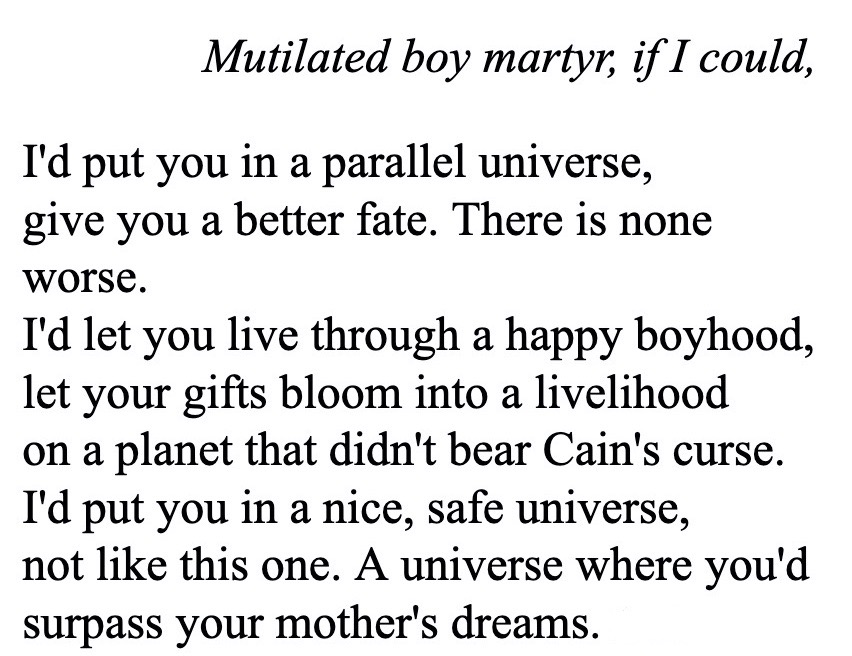
In this sonnet, A Wreath for Emmett Till, award-winning poet Marilyn Nelson speaks for the young man who could not speak for himself and for his brave mother, thrust into the spotlight after his killing. Everything is said with sorrow, with love, and with heart-felt apology. I can hardly do it justice:

Screen Shot 2020-06-10 at 9.32.58 AM

Nelson’s style lends a power that makes mere storytelling inadequate. While probably targeted for young readers, teens and adults will also appreciate this quiet treasure. And, although a quick read, the message lingers long after that we, as humans, still have a long way to go.

9.5 Stars


Children, Fiction, Series & Collections, Young Adult

Daddy-Long-Legs, by Jean Webster

81qjcQXpF1L

I suppose that in today’s world, a story where a rich, older man anonymously sponsors an orphaned girl’s schooling while also orchestrating in-person meetings would seem, well, creepy. And if you watch the movie with Fred Astaire as Jervis Pendleton and Leslie Caron as little Judy there is a great age gap–about 30 years– between them, cute as the movie may be. But, as expected, the book is different.

First of all, it is all set in America, not France. Second of all, in the book it is easier to imagine about a 10-15 year age gap between them. This is more acceptable. The film immediately reveals that Daddy-Long-Legs and Jervis Pendleton are one and the same. The book does not, but it’s fairly obvious to the perceptive reader. It’s a spoiler that does not really spoil, although one does wonder how this man who is so sweet to young Judy in person can let her toil and wonder why her sponsor never writes back, allowing her to wallow in confusion for 3 years. That is a bit more unacceptable.

It’s an odd story, one that could only be told at a time when the role of women was to be demure and subservient. The book is comprised entirely of Judy’s letters to her sponsor, always a risky tactic, but here it seems to work. The letters are detailed enough to help the reader forget that they are only reading letters. We see a range of emotions from the young orphan, plus cute little sketches, and even some back-pedaling as she feels one thing one day (usually frustration with the one-sided relationship) and retracts it with regret the next.

The part I find most perplexing is the reader demographic for this story, which I can only assume is a teenage girl, an age peer of Judy’s, at the time it was written in 1912. Again, a very different time for women, still eight years away from the 19th Amendment. At one point Judy asks “are women even citizens?” (Jean Webster, the author, was a great supporter of women’s suffrage.)

So, if you keep in mind the context of the time period this book was published, it is easier not to judge it too harshly and see it as just a sweet, unusual story.

8/10 Stars

Aside from the full-length 1955 American movie, there are many Japanese anime versions of Daddy-Long-Legs. You can find them on YouTube. I came across this short, 12-min bedtime story version, which actually helped me enjoy the book more. Available HERE on Amazon Prime.

Nonfiction, Self-Help

If I Understood You, Would I Have This Look on My Face? by Alan Alda

AlanAlda_June12

Make no mistake, I’m a huge fan of Alan Alda. M*A*S*H has been a staple in my family since I was a kid and my husband and I still continue to enjoy it immensely. The day when Alan Alda is no longer with us (hopefully long into the future,) it will feel like losing a relative.

So when I discovered that he had a podcast on communication (thoroughly enjoyable, check it out on iTunes and other platforms) and a book on the subject (published in 2017) I decided to check it out.

Many of us know that after 11 seasons of M*A*S*H, Alan Alda also went on to host Scientific American Frontiers on PBS for another 11 years. This last show led him to notice a common skill often missing from the scientific community–effective communication.

After speaking with university deans, a lobbyist friend, and various others with a shared vision, the Alda Center for Communicating Science was born at Stony Brook University in New York. It’s been his passion ever since.

In his book, If I Understood You, Would I Have This Look on My Face? Alda talks about the evolution of the center and its work. This hearkens back to his early days as a theater actor, taking classes to hone his craft and doing acting exercises. These exercises promoted both trust and unity among the actors, which resulted in a better performance.

Trust and unity. These are key. By using acting exercises and other theater games, the Alda Center teaches science students at all levels and future professions on how to communicate better. Much of the book is dedicated to the particulars of the exercises, which was a bit tedious at times, and the practical outcomes in either the real or experimental worlds.

Communication is discussed within various categories of the scientific community: labs, research, medical and dental, as well as within business, marriage/partnerships, and even with autistic children. I preferred these sections more that the descriptions of the exercises, which almost seem better suited for a supplemental workbook.

However, all of it was interesting. The heart vs the head, the importance of reading body language, and the most necessary trait in effective communication–empathy. And, while I found myself skimming over the various theater games and exercises, the core skills and feelings we need to develop and maintain, now more than ever, were both helpful and poignant. A powerful reminder that what every human really wants is to be heard.

8/10 Stars

For more information on the Alan Alda Center for Communicating Science and Alan Alda’s podcast, Clear and Vivid, visit www.alanalda.com.

Fiction, Historical Fiction

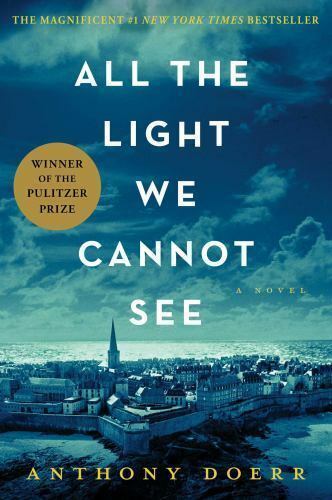
All the Light We Cannot See, by Anthony Doerr

s-l640

“The total entropy of any system, said Dr. Hauptmann, will decrease only if the entropy of another system will increase. Nature demands symmetry.”

In All the Light We Cannot See, the Pulitzer Prize winning novel by Anthony Doerr, that symmetry is achieved by telling parallel stories of two main characters on opposite sides of World War II.

In Germany there is Werner Pfennig, an orphaned, tow-headed young man with a special gift for fixing and engineering radios at a time when communication is crucial. His only family is his younger sister, Jutta, who also acts as his conscience. Werner’s talent and Aryan looks get him noticed and he is recruited into a special school for the Hitler Youth.

In France there is Marie-Laure LeBlanc, a freckled, motherless blind girl. Her father, Daniel Le Blanc, is the locksmith at a local museum. His life is completely devoted to his daughter. He has built an elaborate model of the neighborhood so Marie-Laure can find her way. When they move in with his eccentric, agoraphobic Uncle Etienne, Daniel starts over and builds a model of the new location. He is determined that Marie-Laure be as independent as possible, a skill she will need later. Daniel has also been entrusted with a priceless item from the museum.

There are also a handful of important supporting characters: Frank von Rumpel, the determined German gemologist on an unstoppable quest; Madam Manec, Uncle Etienne’s servant who has become such a part of the family that the word servant hardly suffices; and Frederick, Werner’s first roommate at the new boys’ school, whose sensitive nature and morality chafes against the brutal methods being taught.

All throughout the book we, the reader, are ping-ponged back and forth between Werner’s and Marie-Laure’s lives, wondering when they will converge, as you know fate will orchestrate. Set aside all assumptions, however. All of my guesses were incorrect.

Time periods shift frequently. Sometimes they are clearly marked and other times not, the biggest complaint I’ve seen from other reviewers. I see no purpose in the added confusion, there are so many other details about which to keep track. My other complaint would be that the most intense climatic build ends in a very anti-climactic way. The proverbial balloon popping and hissing until empty.

But overall, All The Light We Cannot See is riveting. If you can picture in your mind an upside cone, that is how I felt as I read about Werner and Marie-Laure’s lives, waiting impatiently for them to intertwine. I flew through the 532 pages in about 3 days, staying up until after 1am last night to finish. As someone whose attention span has been greatly affected by the world’s goings-on, that was an achievement. The book was obviously meticulously researched. I’ve never read so much detail about the Hitler Youth. It made me cringe. War’s unfairness, loss, brutality, and waste is peppered throughout. Why some are allowed to live and others are not is a question that echoes into eternity.

9/10 Stars