Children, Nonfiction, Young Adult

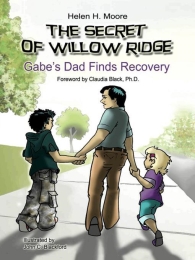
The Secret of Willow Ridge, by Helen H. Moore

2370007452279

If you Google The Secret of Willow Ridge, you will find it available as a free PDF file. The reason for this is because it’s not a children’s mystery book, as the title implies, but a book for children of addicts. The teacher in me was intrigued and I was curious to read it.

Addiction is an isolating disease, both for the spouse and children of the addict. That isolation is the “secret” of Willow Ridge.

Gabe is our eyes and ears in the story. His dad, Jack, is the addict. Jack’s addiction is all Gabe has known in his short life. For him, the word “addict” doesn’t exist until it is explained. In the meantime, his dad’s mood swings, inability to keep a job, and talent for putting new dents in the family car are only a source of embarrassment.

Like any child, Gabe wants two things: a family that functions like the other families he observes and acceptance from his peers. His dad’s addiction has prevented this for years. While Gabe might seem a bit critical in his judgements about his parents, especially his dad, it’s clearly a defense mechanism. This is a child in pain.

Fortunately, the trip to the recovery center happens very early in the story.

The great thing The Secret of Willow Ridge does for young readers who suffer in families such as Gabe’s is it gives them hope–hope that things can change for the better. It also helps to explain addiction in a way a child understands and remove the stigma attached.

This is probably not a book I would put on my classroom shelf, but it is a book I would recommend. If I had a student like Gabe, it could be helpful. Addiction and recovery are covered well, but not glossed over as something easily overcome. As victims of addiction get younger and younger, a book like The Secret of Willow Ridge is necessary.

9/10 Stars
Fiction

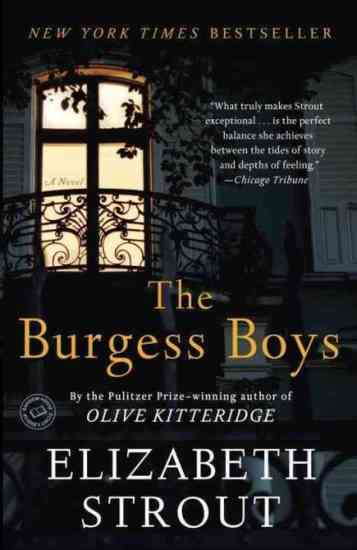
The Burgess Boys, by Elizabeth Strout

9780812979510_custom-a517c1be40b300d6ddc6893d99dee5f0198d85a5-s6-c30

Character development. If I had to share Elizabeth Strout’s greatest skill as an author, that would be it.

I’m always curious how authors assist the reader in getting to know their characters. Some will spend entire chapters telling you everything about a character before returning to the plot. Others will allow the reader to make his/her own assumptions based on a character’s language and choices, leaving physical traits up to the imagination.

Elizabeth Strout gives the reader just enough information about a character to build a foundation for the here and now.

However, like all humans in real life, her characters are multi-faceted, changing over time, shaped by Life’s milestones. No one is completely good or completely bad and all of them surprise you when you least expect it.

The Burgess Boys is, undoubtedly, a character-driven novel, meaning that the reader is more interested in the players than the plot.

The players are:

  • Oldest brother, Jim Burgess, a famous criminal defense attorney. He is brash, arrogant, and the center of any room he occupies. He will do anything to leave his humble, Maine-based roots behind him. His mood is often volatile, his language coarse, and compassion is rarely his first instinct. His wife, Helen, dutifully plays her role as a successful man’s wife. She’s supportive, but not passive, and is the only living person who can elicit an apology from her unapologetic husband. We often see Jim through her eyes. Helen and Jim are recent empty-nesters. It’s been a challenging adjustment.
  • Younger brother Bob Burgess is also an attorney. He’s divorced from Pam, with whom he still has an amiable friendship, and works for Legal Aid. Bob lives in the shadow of his older brother who, even in adulthood, uses every opportunity to chop Bob down to size. Yet, there is a subtle strength and steadiness to Bob that one admires more and more as the novel progresses. Like Jim, Bob also lives in New York City. Unlike Jim, Bob does not feel the need to deny his past.
  • Susan Burgess is Bob’s twin sister. She has never left their hometown of Shirley Falls, Maine, although the town has aged her beyond her years. She trudges to work daily, only cooks food she can defrost and microwave, and lives a monotone existence. Every time the story switched to Susan, I imagined her surrounded by outdated earth-tones in a house resembling the set of Rosanne, only less cheerful.
  • Zach Olson is Susan’s only child. He’s a sad, scrawny nineteen-year-old, but seems much younger. He is naive, friendless, fatherless and speaks in single syllables. His only contact with his dad, who now lives in Sweden with a girlfriend, is the occasional email. Like his mother, Zach drifts from day to day with hardly any variety from one hour to the next.

Supporting characters include Susan’s upstairs tenant, Mrs. Drinkwater, who functions as a flickering light of optimism and friendship in Susan’s dreary life, and displaced immigrant Abdikarim who is the face of the ever-growing Somali community in Shirley Falls. The story takes off when the Burgess brothers are called upon to help their nephew, who–in a moment of absolute stupidity–pranks the Somali people in their house of worship.

What makes the characters and story interesting is that, by the novel’s conclusion, no event or character ends as they begin. It is a powerful reminder that people cannot be defined by first impressions or even by choices they have cultivated for years.

Still, I am not sure how to feel about the book as a whole. As one reviewer on Goodreads wrote “is it the most ‘very OK novel’ I’ve read in a long time.” It’s a vague description, but one with which I agree. Even Strout’s masterful writing style was not enough to save this one. Most plots have a noticeable arch. This one did not. Even it’s ending felt like a literary amputation, making the reader feel as if the real concluding chapter was missing. This might support the realism Strout is attempting to achieve, but it robs the reader of that sense of satisfaction we all desire after investing in three hundred pages.

8.5/10 Stars

Fiction, Women's Fiction

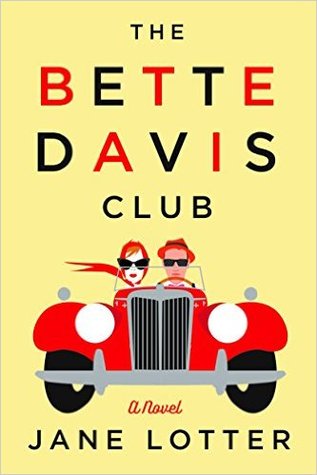
The Bette Davis Club, by Jane Lotter

25874027

We’re cautioned not to go grocery shopping when we’re hungry. In that same vein I would also say be careful about choosing a new book in the middle of the night.

That is exactly what I did two nights ago, during a fitful sleep with much tossing, turning, and long periods of wakefulness. In an attempt to occupy my mind I drifted over to the Prime Reading section on Amazon, saw a cute book cover and was dazzled by its 4.5 out of 5 star reviews. After downloading it, I was seduced by its sentimental introduction by the author’s daughter, talking about the book’s posthumous publishing. Her mother, always a writer but never quite an author, had finished the book right before she died and, in a labor of love, her grieving family had it published.

All of these things create a certain amount of expectation in a reader, even a sleep-deprived reader in the middle of the night. But, like most things, The Bette Davis Club took on a new appearance in the light of day. It was, sadly, unflattering.

I found the plot to be ridiculous, with asinine characters and writing that is both distracted and desperate. The protagonist, Margo Just, alternately but with the same amount of determination, bathes herself in self-pity and gin martinis. While the story begins with Margo trying to find her niece–an immature runaway bride–it diverges two thirds of the way to take the reader down a completely different path. Suddenly we’re transported back thirty years to a nineteen year old Margo falling in love with an older man. Then, just as quickly, we’re zapped back into the present to tie the original plot up with a tidy little bow. Meanwhile, Margo’s final transformation is as unlikely as the journey it took for her to arrive there.

When I finished the book it was with a simultaneous eye roll and a sigh of relief.

In the “they can’t all be winners” category… 4/10 Stars

History, Nonfiction

Life Below Stairs, by Alison Maloney

12338204

Even though it has been two years since it’s been off the air, I’ve been mourning the completion of Downton Abbey lately and will probably re-watch my DVDs soon. In the meantime, Life Below Stairs: True Lives of Edwardian Servants has been a fun, quick, informative read.

The whole idea of an upstairs/downstairs lifestyle is very foreign and outdated, but still fascinating. Until reading this book, it never occurred to me how the lack of modern appliances necessitated large amounts of servants in houses that were almost kingdoms unto themselves. However, just like when reading about famous frontiersmen and women, I was reminded that everything took longer in a time when there was no electricity, no washing machines, dishwashers, and often–no indoor plumbing.

I have new appreciation for shows such as Downton Abbey because of the nuances in servants’ characters: the obvious hierarchy among those below stairs, the fierce protection of their jobs, the back-biting and work politics , the sleeplessness, the importance of character references, and the huge amount of rules and restrictions.

And yet, for many, it was either a tireless life in service or abject poverty.

For a poor and unskilled person, but one with great personal potential and a high work ethic, going into service was a terrific opportunity. And, unlike today’s minimum wage jobs, service provided room and board and sometimes, a chance for advancement.

It makes one stop and think how many people today would leap at such a chance, despite the hardships.

This book reads almost like a interesting text book. It is very well organized and uses great “word economy.” There is no fluff, just an outline of the way things used to be in a time now gone. If this is a period in history that interests you, I recommend it.

9.5/10 Stars

Fiction, Young Adult

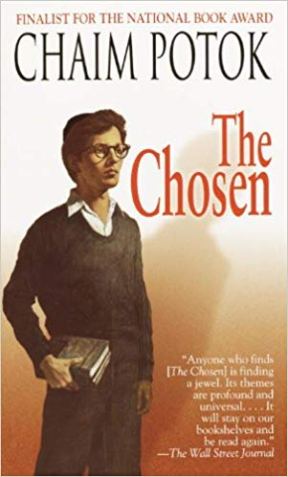
The Chosen, by Chaim Potok

41ZPUySSONL._SX299_BO1,204,203,200_

I always have an extra amount of respect for an author who treats his/her reader as an intelligent being, who does not pound a heavy-handed agenda into the reader’s head, but presents a “buffet” of ideas, if you will, that the reader can choose from and decide which is right or wrong. At the very least, allowing the reader to choose the idea or philosophy with which he/she is most comfortable. (Right or wrong is so often subjective.)

Chaim Potok does this in his brilliant novel, The Chosen. The backdrop is different sects in Judaism at the end of World War II. And, unlike the previous book I reviewed here that was about a mother/daughter relationship, The Chosen looks deeply into father/son relationships. But it does more than that. It puts two teenage boys together in an unlikely way and poses many questions:

  • Who is being raised the right way by his father? (Is there a right way?)
  • Who is “the chosen?” (And…chosen for what?)
  • Are we born with a soul? Or is it something that grows within us by the choices we make?
  • And, when it comes to being devout in religion, how much is too much?

Leaving the reader pondering all of these questions (and more) is, in my opinion, the mark of high-quality writing. Why? Because Life rarely ties things up in a neat little package.

While getting more invested in the story, I started to think of other great books that have two male protagonists who are very different, brought together in odd circumstances and who forge a deep friendship or a bond that is created out of curiosity for one another. After brainstorming, I realized there are many:

  • A Separate Peace, by Jon Knowles (Which takes place during the same time period as The Chosen. It’s been years since I’ve read it, and I’m currently listening to the audio version.)
  • The Great Gatsby, by F. Scott Fitzgerald
  • Bridehead Revisited, by Evelyn Waugh
  • The Kite Runner, by Khaled Hosseini

Strangely, as many books as there are with these types of characters, there is no specific genre name given to them–and there should be–because they are unique types of stories.

The two in The Chosen are Reuven Malter (modern Orthodox) and Danny Saunders (Hasidic,) brought together, ironically, by a baseball game, the all-American sport. If you created a Venn diagram on these two boys it would be fascinating, because they have much in common. Their differences, however, are what drive the story forward, and their respective fathers are the heightened versions of those differences.

Chaim Potok does a marvelous job of bringing both sets of fathers and sons to life. Their influences, emotions, thoughts, victories, and defeats all feel very authentic. Whether for a book club, a class discussion, or individual enlightenment, The Chosen is worth your time.

10/10 Stars

Fiction, Women's Fiction

My Name is Lucy Barton, by Elizabeth Strout

{2DB1F063-DAD6-42AE-9E64-A96E10FB3490}Img100

We all have chapters in our lives. Oft times Life itself is moving too quickly to dwell on those chapters–or even recognize them. But there are other times when Life forces us to not only dwell and recognize, but to revisit, analyze, regret, wonder, and forgive.

Lucy Barton is in the hospital and having one of those forced-upon moments. Her condition is serious, but just vague enough to leave her concerned about her future. Serious enough for her mother to visit and stay at her bedside for several days. Not only does a new chapter begin, but now Lucy has a companion–sometimes an opponent–in her nostalgia.

And, like any mother-daughter relationship, this one has its own brand of unique complications: the love, the selective memory, the needs, the power struggles, the guilt, the role reversals, and so many other subtle but strong elements that many women can relate to as mothers, daughters, or both.

While other books exhibit their brilliance in interwoven plots and complex characters, My Name is Lucy Barton exhibits its brilliance in its simplicity. It’s seeming simplicity. Elizabeth Strout has touched on female emotions in an understated, but extremely powerful way–just a woman flipping through the chapters in her life, remembering events that shaped her (some mundane, others not,) acknowledging people who influenced her, and owning her decisions through it all.

The nature vs. nurture debate is not solved, but perpetuated, forcing the reader to delve into his/her own life and wonder “how much of my life is because of my choices?” and “how much of my life is because of the choices of others?”

9.5/10 Stars

Fantasy, Fiction

The Keeper of Lost Things, by Ruth Hogan

the-keeper-of-lost-things-ruth-hogan

Three couples. Three time periods. A handful of colorful supporting characters.

And maybe…a little bit of fantasy.

If this book was a movie on a shelf, I would have a difficult time choosing its genre. Comedy? Drama? Romance? Philosophy? “Yes” to all because it incorporates all of those things. But it is also a quirky, creative tapestry of characters and their individual stories, woven together into a very unusual, but clever, novel.

At its heart, The Keeper of Lost Things, by Ruth Hogan, centers around Anthony Peardew and his lost love, an event which becomes the catalyst for everything that follows. The rest of the characters, even those who occupy more of the plot, orbit this initial story-line. Each is introduced in a methodical and timely way. All are sympathetic, with fully explored personalities.

What impressed me was that, despite the layers of plots and subplots, the novel was not confusing. Ruth Hogan’s writing is not just clever, but beautiful. The reader empathizes with every loss and every victory because, on some level, we’ve all had similar experiences.

Both the “keeper” and the “things” in the title are subject to discussion. While there are certainly actual objects that qualify as “things,” there are also plenty of abstracts. The key is to allow the story to carry you, the reader, through its ebb and flow, allowing all things to be revealed in time.

It is a worthwhile journey.

9.5/10 Stars

Nonfiction

Stiff: The Curious Lives of Human Cadavers, by Mary Roach

Stiff COVER

I always thought I had a fairly strong stomach when it came to the medical field, until I read this book. I also did it an injustice by listening to the audio version of When Breath Becomes Air, a philosophical approach to death that is so beautifully written, any other book I was reading at the time could only pale in comparison.

The smart thing to do is review Stiff: The Curious Lives of Human Cadavers, on its own merits, of which there are plenty.

There is no doubt that the journey of a human cadaver is fascinating. This book talks about all of the different possible routes a body donated to science can take, with a lot of details about those routes. We all know that medical students work on cadavers, but did you know that working physicians do too? They are used to practice procedures before doing them on a live person.  But cadavers are also used for studies on decomposition in different environments–that was a fun, grisly chapter–and as crash test dummies in cars.

You learn about when cadavers were first used, the ethical ramifications, and alternatives where cadavers aren’t even necessary to hone a doctor’s skills. You will also learn about the embalming process and its history. (That was pretty interesting.)

Some things about donating your body to science: It doesn’t go to waste, it will be treated as a gift, and it benefits the future. If you don’t think about where it is going and what might happen to it, you’ll be fine.

All in all, the book is intriguing. There’s plenty to learn and much humor infused throughout without being disrespectful. Who knows? It might even make you rethink your future wishes…when that melancholy event occurs.

8.5/10 Stars


Memoir, Nonfiction, Philosophy

When Breath Becomes Air, by Paul Kalanithi

When Breath COVER

I’m going to do something I’ve never done on this site, which is to reveal my rating for a book at the beginning of its review. When Breath Becomes Air has earned a solid 10, pure and simple. We’ll work backwards from there.

Let me also say that nothing keeps me away from reading a book or seeing a movie more than “hype” surrounding it. The little cynic in me says, “OK, prove it.” So often the material does not live up to the hype, and who wants that disappointment? There has been a lot of that with this book. Ergo my cautious avoidance and wary delayed approach.

When it became available as an audio book on the local online library site, I downloaded it, but with the condition that it was competing with two other books already on my iPhone. “We’ll see how good it is,” I thought.

A few days ago, with the audio version accompanying me on a 130 mile drive, my opinion changed completely. Suddenly, I was glued to the journey of Dr. Kalanithi, an accomplished neurosurgeon in California who was about to start his surgical residency and, almost simultaneously, was diagnosed with aggressive lung cancer.

Lung cancer for a non-smoker seems especially cruel, even more so for someone with such a promising future ahead. The second son of a family of doctors, Paul had received two Bachelor’s Degrees from Stanford, a Master’s from Cambridge, and his MD from Yale. His work was highly regarded and his medical papers were winning awards.  What of this spectacularly unfair turn of events?

One of the words Paul uses frequently is “trajectory.” In regards to his career, his marriage, the possibility (or not) of children, his faith (or lack thereof,) and his future, his trajectory would have to be reset. Not just once, but over and over again.

Now, about my rating. I do not give a “10” lightly. Only a handful of books have qualified. Like other “10” books I’ve read, When Breath Becomes Air never lost my attention. But, more importantly, it is exquisitely written. Not a word or sentence out of place, perfect word economy, and every thought expressed is done so with quality and depth. This is no accident. The author himself once considered writing as a full-time profession.

Instead, it is his legacy.

I highly, highly recommend When Breath Becomes Air. It is eye-opening, witty, fascinating, and majestic. You will not be disappointed.

With all my heart– 10/10 Stars!!


Christian Fiction, Fiction, Romance, Series & Collections

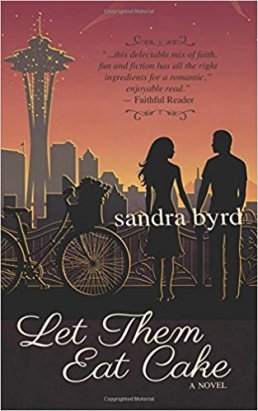
Let Them Eat Cake, by Sandra Byrd

Let Them Eat Cake 02

Like so many new college graduates, Lexi Stuart is at a crossroads. She has to choose between her passions and jobs that are lucrative, and she is floundering. Others in her life seem to be reaching new milestones and she is not. It’s a position in which lots of young people find themselves.

In the meantime, Lexi, a self-proclaimed “Francophile,” has found work at a cute French bakery and cafe. She’s living with her parents, not dating but open to possibilities, and reexamining her relationship with God.

As expected, Lexi has a lot of choices to make. New situations are constantly spiraling toward her that require reactions and decisions. Through it all the reader is in her head as she navigates the road of Life over several months.

Sandra Byrd, the author, as created a character who is quite realistic. Lexi is a level-headed girl from a solid family, but she isn’t perfect. She’s young enough to still experience plenty of uncertainty, but grounded enough to know her ultimate goals. The problems are the where, the when, and with who.

This could be classified as “light” Christian fiction. It is enjoyable without being heavy-handed. Characters are likable, personable, and very human in their challenges and actions. And, despite her challenges, Lexi is never over-dramatic or narcissistic.

Let Them Eat Cake is Book 1 of 3 in Sandra Byrd’s French Twist Series. I feel invested enough in Lexi Stuart to root for her happiness and curious enough to see what happens next in her life.

8.5/10 Stars

Book 2: Bon Appétit

Book 3: Pièce de Résistance

Fiction, Young Adult

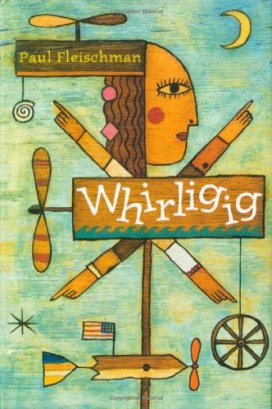
Whirligig, by Paul Fleischman

0805055827

When I came to the end of Whirligig, a book I listened to on Overdrive’s audio app, I was surprised to learn that it was published 20 years ago. Why? Because the protagonist, Brent Bishop, is the poster child for the modern depressed teen. Despite a privileged upbringing, he has no sense of identity, no hobbies or skills, and measures his self-worth against the yardstick of popularity. Life has no real purpose and he is connected to no one and nothing.

It’s a sad way to live, but when you meet Brent’ parents, who drift forward through life in much the same way, the person he is becoming makes more sense. As such, Brent is an unhappy person, but when all of your energy goes towards yourself, it is any wonder?

The themes of the book are connection, redemption, and self-discovery. Unfortunately, it takes a horrible tragedy to put Brent on the path to these things. A life with much promise is snuffed out due to his selfishness and, as restitution, he must take a journey around the country, building and placing four whirligigs in honor of the life he carelessly took. Suddenly he is compelled to create, to interact, to observe, and most importantly, to think of others and how we’re all part of a larger plan.

Yesterday, two-thirds into the book, I read a cynical review on Goodreads from a woman who was appalled at the book’s message, which she interpreted as an “angsty teenage boy” using the death of someone else “as motivation for their own self-discovery.” And, while there may be some truth to this, I see most of Brent’s angst as a result of his upbringing. Little of his parents’ energy has gone into teaching him to care, to love, to show compassion for others, or to do anything really worth-while. Until he’s forced to do something for someone else, he merely exists. It’s a sad commentary on the way so many people live, perpetuating that purposeless state through their children.

The book is far from flawless, but it has heart. Aimed at teenage readers, it’s core message is one you hope they will recognize, learn from, and carry into the future.

8/10 Stars


Biography, Memoir, Nonfiction

Watch Me, by Anjelica Huston

watchme5

It was through an odd series of steps that I happened upon Anjelica Huston’s memoir, Watch Me. As a chronic “looker upper”–someone who is constantly looking up words, people, historic events–and even more intrigued when they are intertwined, I ended up checking out the audio book through our local online library.

Part of the third generation of a Hollywood dynasty, Huston has lived an extraordinary life. But the elegant, statuesque woman on the book’s cover was not always that way. Once upon a time she was a quiet, self-conscious teenager who had a lonely childhood and shrank in the shadow of her famous father. I saw proof of this while watching her first interview on YouTube. The composure that has become synonymous with Anjelica Huston was nowhere to be seen.

Watch Me is the second of two memoirs, and it picks up just when Anjelica’s life starts getting interesting. Still, it took years for her to carve her own way in the notoriously cutthroat arena of show business. Her last name opened doors, but it didn’t always keep them open, and it created huge expectations that, as a young actress, she couldn’t always fulfill.

As someone who had a fairly “normal” childhood, it was a bit daunting to hear the amount of famous people Huston has known. She has met and known people from the Golden Age of Hollywood to the modern day. Her 17 year relationship with Jack Nicholson is discussed at length, as are other significant personal connections that defined her as a woman and an actress.

By the end, though, I felt she was a friend who had just shared some of her greatest triumphs and saddest losses. She has a delicate femininity despite her strong appearance and she loves adjectives. Her voice trembles with emotion as she reads about her parents’ deaths and her husband’s final illness. You almost feel you’re reliving those moments with her. It’s clear she has no regrets, realizes the blessings and curses that accompany fame, and still holds on to the memory of loved ones with wistful nostalgia .

8.5/10 Stars