Fiction, Romance, Women's Fiction

The Lost Husband, by Katherine Center

Book-Review-Adult-Fiction-The-Lost-Husband-by-Katherine-Center

I should start a new section called “unputdownables.” The Lost Husband would definitely fit into that category. Most importantly, though, I think I have found a new author whose books I want to read.

The last time I finished a book in two days was The Bette Davis Club, an unmitigated disaster, in my opinion. The Lost Husband was also quick reading, but for different reasons. No talking down to the reader, no ridiculous, selfish characters (OK, one selfish character, but she has to be selfish to assist the story.) Just an entertaining plot peppered with unpredictability that makes the reader want to return again and again.

Libby has been a young widow for three years. Two of those years have been spent living with her mother, who takes more passive-aggressive pleasure in criticizing Libby and running off to pedicure appointments than supporting her and allowing her to mourn. Libby’s two children, Abby and Theodore (Tank,) are resilient as most children are, but still fragile. Unfortunately, Libby has no other options.

Then one day, out of the blue, Libby receives a letter from Aunt Jean. She’s offering Libby room and board on her goat farm in exchange for help running the place. “Crazy Aunt Jean,” Libby’s mother’s sister of whom she has only vague memories. Most of what Libby knows about Aunt Jean comes from her mother’s venomous opinions with a hearty side dish of hatred. These sisters are the epitome of oil and water. Still…anything is better than living with her narcissistic mother, Libby decides, and one day later she’s off to a goat farm in Atwater, Texas.

The rest of the story centers around Libby’s new life in these unforeseen circumstances, the people she meets (there are some terrific supporting characters in Aunt Jean, O’Connor, and Sunshine,) and the healing process Libby is finally allowed to explore. Everyone has some secret or past challenge they are trying to overcome, allowing for extra character dimension and some interesting subplots, and no one is who they seem when Libby initially meets them. The story is told in first person, so we see everything through Libby’s eyes and feel it all through her emotions, which are relatable and authentic.

The book walks the line of “froth,” but I didn’t care. I enjoyed every minute with it and look forward to reading more from Katherine Center. Not every book has to be earth-shattering and life-changing. Some can just be good old-fashioned escapism. You’ll find that in The Lost Husband. Delightful from start to finish.

9/10 Stars

8/1/18 Here’s a fun tidbit: last night I was poking around on Goodreads and came across a Q&A section on the author’s page. I wrote that I was impressed with her comment to an aspiring writer, and quickly received 2 responses. It’s always a treat when authors interact with readers.:

Screen Shot 2018-08-01 at 11.20.41 AM


Fiction

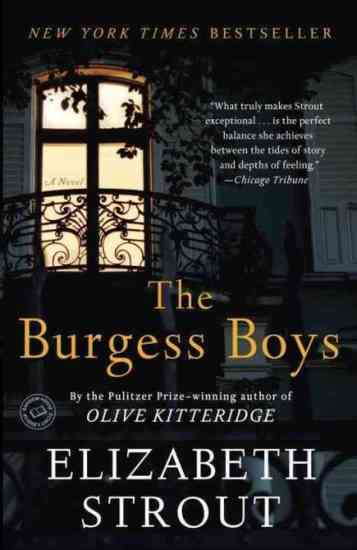
The Burgess Boys, by Elizabeth Strout

9780812979510_custom-a517c1be40b300d6ddc6893d99dee5f0198d85a5-s6-c30

Character development. If I had to share Elizabeth Strout’s greatest skill as an author, that would be it.

I’m always curious how authors assist the reader in getting to know their characters. Some will spend entire chapters telling you everything about a character before returning to the plot. Others will allow the reader to make his/her own assumptions based on a character’s language and choices, leaving physical traits up to the imagination.

Elizabeth Strout gives the reader just enough information about a character to build a foundation for the here and now.

However, like all humans in real life, her characters are multi-faceted, changing over time, shaped by Life’s milestones. No one is completely good or completely bad and all of them surprise you when you least expect it.

The Burgess Boys is, undoubtedly, a character-driven novel, meaning that the reader is more interested in the players than the plot.

The players are:

  • Oldest brother, Jim Burgess, a famous criminal defense attorney. He is brash, arrogant, and the center of any room he occupies. He will do anything to leave his humble, Maine-based roots behind him. His mood is often volatile, his language coarse, and compassion is rarely his first instinct. His wife, Helen, dutifully plays her role as a successful man’s wife. She’s supportive, but not passive, and is the only living person who can elicit an apology from her unapologetic husband. We often see Jim through her eyes. Helen and Jim are recent empty-nesters. It’s been a challenging adjustment.
  • Younger brother Bob Burgess is also an attorney. He’s divorced from Pam, with whom he still has an amiable friendship, and works for Legal Aid. Bob lives in the shadow of his older brother who, even in adulthood, uses every opportunity to chop Bob down to size. Yet, there is a subtle strength and steadiness to Bob that one admires more and more as the novel progresses. Like Jim, Bob also lives in New York City. Unlike Jim, Bob does not feel the need to deny his past.
  • Susan Burgess is Bob’s twin sister. She has never left their hometown of Shirley Falls, Maine, although the town has aged her beyond her years. She trudges to work daily, only cooks food she can defrost and microwave, and lives a monotone existence. Every time the story switched to Susan, I imagined her surrounded by outdated earth-tones in a house resembling the set of Rosanne, only less cheerful.
  • Zach Olson is Susan’s only child. He’s a sad, scrawny nineteen-year-old, but seems much younger. He is naive, friendless, fatherless and speaks in single syllables. His only contact with his dad, who now lives in Sweden with a girlfriend, is the occasional email. Like his mother, Zach drifts from day to day with hardly any variety from one hour to the next.

Supporting characters include Susan’s upstairs tenant, Mrs. Drinkwater, who functions as a flickering light of optimism and friendship in Susan’s dreary life, and displaced immigrant Abdikarim who is the face of the ever-growing Somali community in Shirley Falls. The story takes off when the Burgess brothers are called upon to help their nephew, who–in a moment of absolute stupidity–pranks the Somali people in their house of worship.

What makes the characters and story interesting is that, by the novel’s conclusion, no event or character ends as they begin. It is a powerful reminder that people cannot be defined by first impressions or even by choices they have cultivated for years.

Still, I am not sure how to feel about the book as a whole. As one reviewer on Goodreads wrote “is it the most ‘very OK novel’ I’ve read in a long time.” It’s a vague description, but one with which I agree. Even Strout’s masterful writing style was not enough to save this one. Most plots have a noticeable arch. This one did not. Even it’s ending felt like a literary amputation, making the reader feel as if the real concluding chapter was missing. This might support the realism Strout is attempting to achieve, but it robs the reader of that sense of satisfaction we all desire after investing in three hundred pages.

8.5/10 Stars

Fiction, Women's Fiction

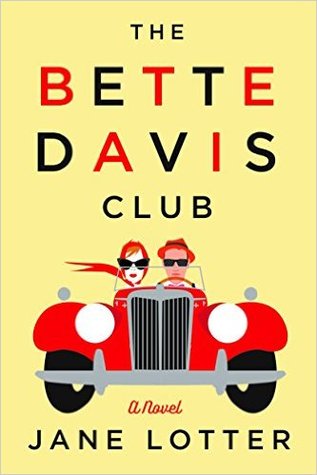
The Bette Davis Club, by Jane Lotter

25874027

We’re cautioned not to go grocery shopping when we’re hungry. In that same vein I would also say be careful about choosing a new book in the middle of the night.

That is exactly what I did two nights ago, during a fitful sleep with much tossing, turning, and long periods of wakefulness. In an attempt to occupy my mind I drifted over to the Prime Reading section on Amazon, saw a cute book cover and was dazzled by its 4.5 out of 5 star reviews. After downloading it, I was seduced by its sentimental introduction by the author’s daughter, talking about the book’s posthumous publishing. Her mother, always a writer but never quite an author, had finished the book right before she died and, in a labor of love, her grieving family had it published.

All of these things create a certain amount of expectation in a reader, even a sleep-deprived reader in the middle of the night. But, like most things, The Bette Davis Club took on a new appearance in the light of day. It was, sadly, unflattering.

I found the plot to be ridiculous, with asinine characters and writing that is both distracted and desperate. The protagonist, Margo Just, alternately but with the same amount of determination, bathes herself in self-pity and gin martinis. While the story begins with Margo trying to find her niece–an immature runaway bride–it diverges two thirds of the way to take the reader down a completely different path. Suddenly we’re transported back thirty years to a nineteen year old Margo falling in love with an older man. Then, just as quickly, we’re zapped back into the present to tie the original plot up with a tidy little bow. Meanwhile, Margo’s final transformation is as unlikely as the journey it took for her to arrive there.

When I finished the book it was with a simultaneous eye roll and a sigh of relief.

In the “they can’t all be winners” category… 4/10 Stars

Fiction, Young Adult

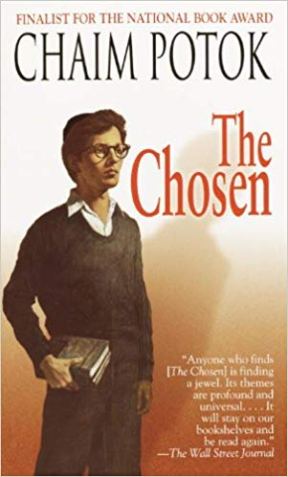
The Chosen, by Chaim Potok

41ZPUySSONL._SX299_BO1,204,203,200_

I always have an extra amount of respect for an author who treats his/her reader as an intelligent being, who does not pound a heavy-handed agenda into the reader’s head, but presents a “buffet” of ideas, if you will, that the reader can choose from and decide which is right or wrong. At the very least, allowing the reader to choose the idea or philosophy with which he/she is most comfortable. (Right or wrong is so often subjective.)

Chaim Potok does this in his brilliant novel, The Chosen. The backdrop is different sects in Judaism at the end of World War II. And, unlike the previous book I reviewed here that was about a mother/daughter relationship, The Chosen looks deeply into father/son relationships. But it does more than that. It puts two teenage boys together in an unlikely way and poses many questions:

  • Who is being raised the right way by his father? (Is there a right way?)
  • Who is “the chosen?” (And…chosen for what?)
  • Are we born with a soul? Or is it something that grows within us by the choices we make?
  • And, when it comes to being devout in religion, how much is too much?

Leaving the reader pondering all of these questions (and more) is, in my opinion, the mark of high-quality writing. Why? Because Life rarely ties things up in a neat little package.

While getting more invested in the story, I started to think of other great books that have two male protagonists who are very different, brought together in odd circumstances and who forge a deep friendship or a bond that is created out of curiosity for one another. After brainstorming, I realized there are many:

  • A Separate Peace, by Jon Knowles (Which takes place during the same time period as The Chosen. It’s been years since I’ve read it, and I’m currently listening to the audio version.)
  • The Great Gatsby, by F. Scott Fitzgerald
  • Bridehead Revisited, by Evelyn Waugh
  • The Kite Runner, by Khaled Hosseini

Strangely, as many books as there are with these types of characters, there is no specific genre name given to them–and there should be–because they are unique types of stories.

The two in The Chosen are Reuven Malter (modern Orthodox) and Danny Saunders (Hasidic,) brought together, ironically, by a baseball game, the all-American sport. If you created a Venn diagram on these two boys it would be fascinating, because they have much in common. Their differences, however, are what drive the story forward, and their respective fathers are the heightened versions of those differences.

Chaim Potok does a marvelous job of bringing both sets of fathers and sons to life. Their influences, emotions, thoughts, victories, and defeats all feel very authentic. Whether for a book club, a class discussion, or individual enlightenment, The Chosen is worth your time.

10/10 Stars

Fiction, Women's Fiction

My Name is Lucy Barton, by Elizabeth Strout

{2DB1F063-DAD6-42AE-9E64-A96E10FB3490}Img100

We all have chapters in our lives. Oft times Life itself is moving too quickly to dwell on those chapters–or even recognize them. But there are other times when Life forces us to not only dwell and recognize, but to revisit, analyze, regret, wonder, and forgive.

Lucy Barton is in the hospital and having one of those forced-upon moments. Her condition is serious, but just vague enough to leave her concerned about her future. Serious enough for her mother to visit and stay at her bedside for several days. Not only does a new chapter begin, but now Lucy has a companion–sometimes an opponent–in her nostalgia.

And, like any mother-daughter relationship, this one has its own brand of unique complications: the love, the selective memory, the needs, the power struggles, the guilt, the role reversals, and so many other subtle but strong elements that many women can relate to as mothers, daughters, or both.

While other books exhibit their brilliance in interwoven plots and complex characters, My Name is Lucy Barton exhibits its brilliance in its simplicity. It’s seeming simplicity. Elizabeth Strout has touched on female emotions in an understated, but extremely powerful way–just a woman flipping through the chapters in her life, remembering events that shaped her (some mundane, others not,) acknowledging people who influenced her, and owning her decisions through it all.

The nature vs. nurture debate is not solved, but perpetuated, forcing the reader to delve into his/her own life and wonder “how much of my life is because of my choices?” and “how much of my life is because of the choices of others?”

9.5/10 Stars

Fantasy, Fiction

The Keeper of Lost Things, by Ruth Hogan

the-keeper-of-lost-things-ruth-hogan

Three couples. Three time periods. A handful of colorful supporting characters.

And maybe…a little bit of fantasy.

If this book was a movie on a shelf, I would have a difficult time choosing its genre. Comedy? Drama? Romance? Philosophy? “Yes” to all because it incorporates all of those things. But it is also a quirky, creative tapestry of characters and their individual stories, woven together into a very unusual, but clever, novel.

At its heart, The Keeper of Lost Things, by Ruth Hogan, centers around Anthony Peardew and his lost love, an event which becomes the catalyst for everything that follows. The rest of the characters, even those who occupy more of the plot, orbit this initial story-line. Each is introduced in a methodical and timely way. All are sympathetic, with fully explored personalities.

What impressed me was that, despite the layers of plots and subplots, the novel was not confusing. Ruth Hogan’s writing is not just clever, but beautiful. The reader empathizes with every loss and every victory because, on some level, we’ve all had similar experiences.

Both the “keeper” and the “things” in the title are subject to discussion. While there are certainly actual objects that qualify as “things,” there are also plenty of abstracts. The key is to allow the story to carry you, the reader, through its ebb and flow, allowing all things to be revealed in time.

It is a worthwhile journey.

9.5/10 Stars

Christian Fiction, Fiction, Romance, Series & Collections

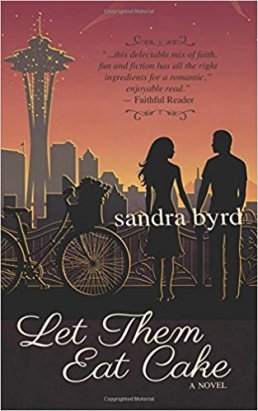
Let Them Eat Cake, by Sandra Byrd

Let Them Eat Cake 02

Like so many new college graduates, Lexi Stuart is at a crossroads. She has to choose between her passions and jobs that are lucrative, and she is floundering. Others in her life seem to be reaching new milestones and she is not. It’s a position in which lots of young people find themselves.

In the meantime, Lexi, a self-proclaimed “Francophile,” has found work at a cute French bakery and cafe. She’s living with her parents, not dating but open to possibilities, and reexamining her relationship with God.

As expected, Lexi has a lot of choices to make. New situations are constantly spiraling toward her that require reactions and decisions. Through it all the reader is in her head as she navigates the road of Life over several months.

Sandra Byrd, the author, as created a character who is quite realistic. Lexi is a level-headed girl from a solid family, but she isn’t perfect. She’s young enough to still experience plenty of uncertainty, but grounded enough to know her ultimate goals. The problems are the where, the when, and with who.

This could be classified as “light” Christian fiction. It is enjoyable without being heavy-handed. Characters are likable, personable, and very human in their challenges and actions. And, despite her challenges, Lexi is never over-dramatic or narcissistic.

Let Them Eat Cake is Book 1 of 3 in Sandra Byrd’s French Twist Series. I feel invested enough in Lexi Stuart to root for her happiness and curious enough to see what happens next in her life.

8.5/10 Stars

Book 2: Bon Appétit

Book 3: Pièce de Résistance

Fiction, Young Adult

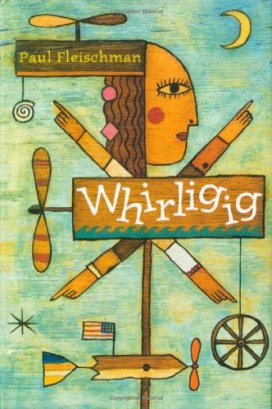
Whirligig, by Paul Fleischman

0805055827

When I came to the end of Whirligig, a book I listened to on Overdrive’s audio app, I was surprised to learn that it was published 20 years ago. Why? Because the protagonist, Brent Bishop, is the poster child for the modern depressed teen. Despite a privileged upbringing, he has no sense of identity, no hobbies or skills, and measures his self-worth against the yardstick of popularity. Life has no real purpose and he is connected to no one and nothing.

It’s a sad way to live, but when you meet Brent’ parents, who drift forward through life in much the same way, the person he is becoming makes more sense. As such, Brent is an unhappy person, but when all of your energy goes towards yourself, it is any wonder?

The themes of the book are connection, redemption, and self-discovery. Unfortunately, it takes a horrible tragedy to put Brent on the path to these things. A life with much promise is snuffed out due to his selfishness and, as restitution, he must take a journey around the country, building and placing four whirligigs in honor of the life he carelessly took. Suddenly he is compelled to create, to interact, to observe, and most importantly, to think of others and how we’re all part of a larger plan.

Yesterday, two-thirds into the book, I read a cynical review on Goodreads from a woman who was appalled at the book’s message, which she interpreted as an “angsty teenage boy” using the death of someone else “as motivation for their own self-discovery.” And, while there may be some truth to this, I see most of Brent’s angst as a result of his upbringing. Little of his parents’ energy has gone into teaching him to care, to love, to show compassion for others, or to do anything really worth-while. Until he’s forced to do something for someone else, he merely exists. It’s a sad commentary on the way so many people live, perpetuating that purposeless state through their children.

The book is far from flawless, but it has heart. Aimed at teenage readers, it’s core message is one you hope they will recognize, learn from, and carry into the future.

8/10 Stars


Fantasy, Fiction, Series & Collections, Young Adult

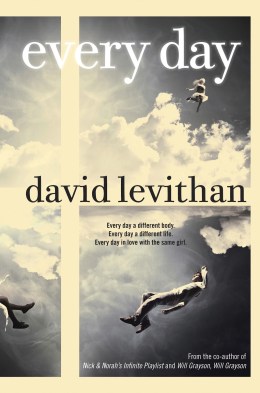
Every Day, by David Levithan

every-day

In 16 years of life, “A,” an entity who is neither male or female, has lived every day in a different body. The name “A” is self given. That, an email address, and a favorite book are the only consistencies A knows. Everything else is a mysterious, Quantum Leap-style existence, with no relationships, no family, no connections.

Enter Rhiannon. On the day A inhabits the body of Justin, Rhiannon’s self-absorbed boyfriend, A connects. The dilemma is clear. How do you maintain a relationship, let alone explain your unique situation, when tomorrow is always uncertain? Uncertainties exist for all of us, but the variety of bodies, lives, families, distances, mental/physical health situations, and transportation options dictate the level of control A has in pursuing this connection.

With no rules and no explanation as to why A is destined to live this way, A has had to create rules. Try not to derail the life of who you are inhabiting too much. Try to be responsible with a body that is not your own. Embrace goodness. If possible, try to leave the person a bit better than when you arrived, even inserting some happy memories once in a while.

Seeing glimpses of so many lives has given A a bit of an advantage in some ways, but has also created some severe deprivations. If there is any positive lesson to be learned from witnessing A’s struggles, it is the importance of stability and loving relationships in a person’s life.

There is no doubt that David Levithan is a creative writer. I was much more absorbed in this story than with Dash & Lily. The author makes some fascinating choices with the bodies A inhabits.  I still think Levithan walks a tightrope in some of his themes and ideas, but I understand that is his prerogative. But as such, it’s my opinion that parents ought to pre-read his books.

As I mentioned in another review, I am not in the author’s target age demographic. I cannot help but look at his YA novels from an adult perspective. And, while Every Day was not peppered throughout with popular profanities (as in Dash & Lily,)  David Levithan’s strong social opinions took their place. It’s clear he has an unapologetic loathing for many things most people would consider traditional.

As far as plot, my main dissatisfaction with Every Day was the ending. It was horrendous because, in order to know what really happens next, the reader is forced to move on to the sequel, Another Day.  I don’t like feeling forced. (Does anyone?)

A half-hearted (and forced) 8/10 stars.


Children, Fiction, Mystery, Young Adult

Wonderstruck, by Brian Selznick

book-cover

We are all in the gutter, but some of us are looking at the stars.

–Oscar Wilde, from Lady Windemere’s Fan

Two of our deepest longings in life, whether we acknowledge them or not, is (1) to be connected to someone or something in a world where it is too easy to feel adrift and (2) to be heard and validated through some means of communication.

Then there is the subject of communication. How do people communicate? Through a specific language, either written or spoken using an alphabet or gestures, like American Sign Language. There’s also Morse Code, Braille, semaphores, hieroglyphics, and many others. Humans have a great need and desire to communicate with one another and have, therefore, created many ways to do so. To be unable to communicate is to be isolated, even in a room full of people.

Enter the two main characters in Brian Selznick’s Wonderstruck, Rose in 1927’s Hoboken, New Jersey, and Ben in 1977’s Gunflint, Michigan. Two twelve year olds in different cities, fifty years apart. How are they connected?

The way Brian Selznick achieves this is like nothing I’ve ever seen. Ben’s story is told through the written word. Rose’s story is told through incredibly impressive and expressive pencil drawings done by the author. The drawings leave no room for misinterpretation.

Despite their differences, both children are on a similar journey with similar challenges. Both are trying desperately to fulfill those longings for connection and communication. The pacing is excellently done using the different modes of storytelling. So excellent, in fact, that the reader is aware of the overlap in the children’s stories as it’s happening (I’m trying to avoid spoilers here.) And, while the story feels like a fantasy, there’s still a sense of it could happen.

There is a lot of potential discussion to be facilitated between teachers and students using Wonderstruck as its source. I think it would work successfully in both a classroom or a home-school setting. Amazon Prime just released the movie version a few days ago, but I believe the movie works better as an addendum to the book. There is a sweetness unique to the book that is lacking in the movie, as well as a layer of truthfulness regarding Ben, because only in the book do we hear his inner dialogue. But I will say the young actress who plays Rose in the movie is mesmerizing to watch.

Overall, I recommend Wonderstruck with confidence. I was even more impressed when I read about the amount of research Brian Selznick employed in its creation. It is an award-winning middle school book, but I think it would be entirely appropriate for younger, emotionally mature children. If a parent or teacher has specific questions before sharing it with school-aged children, please feel free to contact me or leave your question in the comments. I will answer it promptly.

9.5/10 Stars

P.S. A 55-page summary and study guide of Wonderstruck is also available on Amazon, but I have not read it.


Fiction, Romance, Women's Fiction, Young Adult

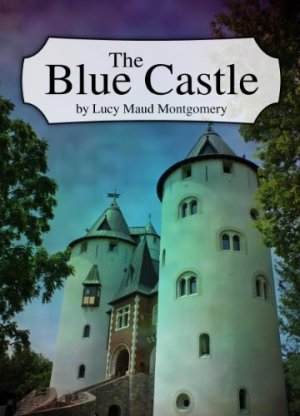
The Blue Castle, by Lucy Maud Montgomery

517w3GgshkL

One of the most thrilling things when finishing a book is knowing that it has qualified for my “10 Star” list, a list reserved for only the best, in my opinion. When a dear friend mentioned that The Blue Castle was her favorite book I expected to enjoy it, but I did not expect to fall in love with it. Yet, that is exactly what happened. The author, Lucy Maud Montgomery, is best known for Anne of Green Gables and its subsequent series. Yet, I must admit, I enjoyed The Blue Castle’s main character even more. (Please forgive me, Anne Shirley fans!)

I have to care about and feel emotionally invested in a main character in order for me to love a book.  In The Blue Castle, it is Valancy Stirling, a 29 year old “spinster” who lives with her widowed mother and two aunts. They are dour, puritanical, and robotic in all they do, say, and think. Even sneezing in public is a grievous sin. Valancy knows of no other life but this one–this colorless life with no friends and no future.

Why do I love this character? Because, in her longing for something more, she is deserving, quirky, humble, and imaginative. She simply wants what we all want: to be cherished, to be seen as who she really is, and to have a companion who puts her above all others. She is not ambitious or greedy. Her desires, as elusive as they may seem, are simple and valid.

In the meantime, Valancy must live in her head. Only two things bring her comfort while she waits– her John Foster novels, with their color and life and pearls of wisdom: Fear is the original sin, and the thought of her Blue Castle: a metaphor for all the happy, beautiful things currently just out of reach. In her Blue Castle, Valancy is free to think and enjoy without the daily berating she endures from her mother and aunts.

As the reader, you join in this longing and, hope against hope, that Valancy will, somehow, emerge victorious. But how?

At this point, I must resist using spoilers and simply say that The Blue Castle is worth your time. If you are looking for a story that restores your faith in everything, including quality literature and characters that you absolutely fall in love with, this is it. In addition, the writing is like exquisite poetry dripping from your lips as you read it.

A true masterpiece.

A very worthy 10 STARS.

Fiction, Romance, Young Adult

Dash & Lily’s Book of Dares, by Rachel Cohn & David Levithan

9780375859557_p0_v2_s260x420

I want to believe there is somebody out there for me.

I want to believe that I exist to be there for that somebody.

Somewhere between the quirky Roald Dahl novels of my youth in the late 70’s and early 80’s and the books I read now in my mid 40’s, there is the Young Adult romance genre of today. I’m very aware that I’m not in the demographic this genre is targeting. I had to remind myself of that when reading John Green’s The Fault in Our Stars, which I enjoyed and finished quickly. I had to remind myself of this again (several times, earnestly) while reading Dash & Lily’s Book of Dares.

The premise is unique and attractive, something of a “Sleepless in Seattle” motif, where two New York City teenagers–independent and far too smart for their own good–begin a “relationship,” such as it is, through letters in a red Moleskin notebook, an idea conjured up by Lily’s brother, Langston, and his boyfriend, Benny.

With twists and turns, colorful secondary characters, and the underlying question of “when and where will they finally meet in person?” Dash & Lily has a lot of potential from the get-go. Whether or not it meets that potential is a toss up.

In discussing the book with others who have read it–all adults ranging from their 20’s to 40’s–there was division. We agreed there was plenty of wisdom in the characters of Dash and Lily, some with which even “grownups” could identify. (Like in the quotes above.) We also agreed that the characters’ “teenage intellect” seems to be given a great amount of philosophical leeway. Is the modern teenager really like this? Not being one, I couldn’t tell you. I was a teenager with above-average intelligence in the 1980’s but my internal dialogue sounded nothing like the teens in these pages. (It still doesn’t.) But if a modern teenager wanted to feel very intelligent by identifying with the characters as fictional peers, I suppose that *could* be achieved here.

There is also the sexualization of the characters. Again, not being in the target audience, I don’t know if it’s accurate. These characters are both left alone by their (seemingly selfish) parents in a way I’ve never seen before. They’re sixteen years old, for Pete’s sake. (Some reality suspension, clearly.) Such independence gives way to opportunity…

So, my guess is that it (the teenage sexualization) is accurate for some, but advanced for others, depending on their upbringings and life experiences.

These conflicts make it difficult to review the book objectively, but not impossible. Personally, I didn’t much care for it. It’s merits (many) were overshadowed by its flaws (abundant.) I felt there was an underlying cry by the co-authors to the Young Adult audience it is attempting to reach, saying “please like me.” Many will. Many already have.

However, if I had a teenager, I would be offering him or her other options, of which there are plenty.

7/10 Stars