ARC (Advanced Reader Copy), Autobiography, Nonfiction

Soundtrack of Silence, by Matt Hay

The amount of challenges a body can endure is pretty remarkable. In Soundtrack of Silence, author Matt Hay takes us through his journey with NF2 (Neurofibromatosis, Type 2,) a rare disorder that has affected him throughout his life, robbing him of his hearing, causing facial paralysis, and tampering periodically with his mobility and balance.

Even more amazing is the human spirit, something that Matt has curated and strengthened while dealing with NF2, empowering him with a drive to move forward instead of wallow, and to share his story with a mixture of humor and wisdom.

This is an advanced copy that I’ve had for a while and, like so many other memorable books, appeared in my mood reading queue at just the right time. Here, at the beginning of a new year, where starting fresh and making resolutions is the norm, it was fascinating to read about someone whose medical challenges have necessitated that he make life resets in abundance. RE-solutions, or “solving again,” facing old challenges packaged in new ways with determination, is a pattern in which both Matt and his incredible wife, Nora, have become veterans.

Simply put, NF2 is a (usually) genetic condition in which benign tumors grow along nerves. For Matt, the tumors’ location affects sound to effectively reach the brain. Confronting the removal of these tumors, which keep returning, is one thing. Recovery is another. The possibility of new medical issues arising from each surgery is something else. Factor in the strain on mental health, finances, and family, and this man has not had it easy.

So where does the soundtrack fit in? Despite grappling with sub par hearing most of his life, Matt Hay adores music. Melodies, lyrics, and the marriage of these elements with the right voice and instruments have sustained him in a formidable way. It may seem unfair that someone who loves music so much has struggled to hear it, but that struggle has also created insight and opportunity at different times. One of those tender mercies whose purpose unfolds when you least expect it.

This is an important book which will yield different takeaways for different readers. Some will feel inspired by Matt Hay’s dogged determination, some might decide to finally have their hearing checked, and still others will use his story as a way to put their own difficulties into perspective. Whatever the reason, it’s a book worth reading with an author worth knowing. 

9/10 Stars for the writing, but 10/10 for the inspiring story. You can visit Matt Hay’s website at: https://hearmatthay.com/

Autobiography, Memoir, Nonfiction

Farewell to Matthew Perry…

Like so many others, I am reeling over the sad, sudden passing of actor Matthew Perry on October 28th. As my husband said yesterday, watching Friends will never feel the same. I agree. When I read Matthew’s memoir a few months ago, Friends, Lovers, and the Big Terrible Thing, I learned a lot about this funny, talented man. It may be too soon for some, but I do encourage anyone and everyone to read it. Beyond his legacy of laughter, Matthew Perry battled some huge mental and physical challenges.

You can read my review HERE. Matthew wanted to be remembered for so much more than Friends. Reading his book is a good place to start.

Autobiography, Memoir, Nonfiction

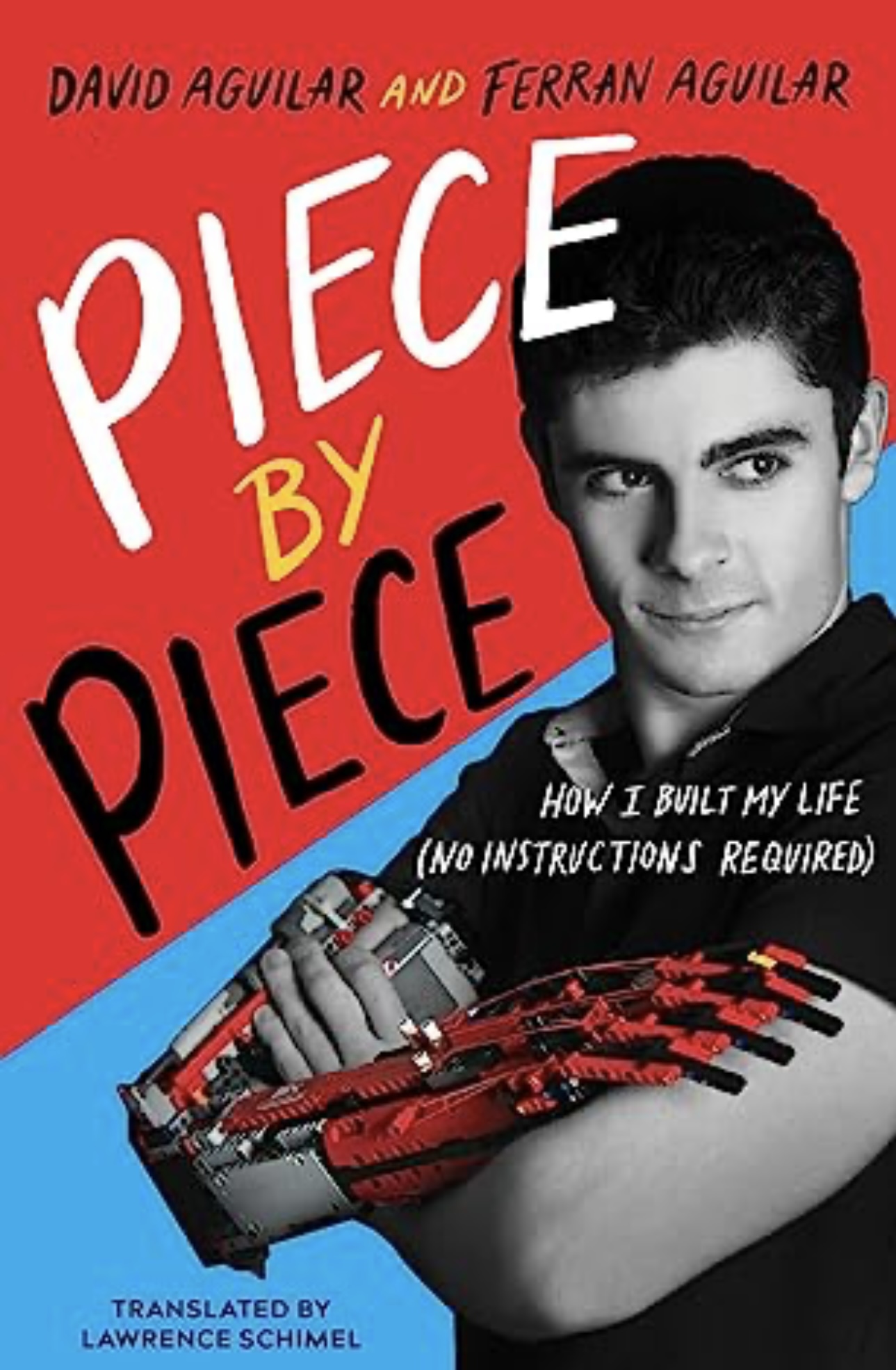
Piece by Piece, by David Aguilar

Disabled? No. Diff-abled? Yes. This is how David Aguilar sees himself. But his positive outlook has only happened after years of bullying, determination, and persistence.

David, of Andorra, Spain, was born with Poland’s Syndrome, a rare condition that left him with an underdeveloped right arm. His “bracito”–as he and his family have named it–might be small, but it has presented its share of challenges and shaped their lives in ways they never expected.

But first, let’s take a look at the book’s cover. That’s not Tony Stark. It’s David, with the fifth prosthetic arm he designed. Does he need it? No. But society responds to symmetry, and it was that pressure–plus his innate talent–that led David to create the world’s first prosthetic arm built entirely of LEGOs. Yes, you read that correctly. LEGOs.

Piece by Piece is David’s story from birth to the present. We learn of the obstacles he faced, he incredibly supportive family, and where he is now. A charming, witty, sensitive young man, you will root for David all the way. This was a great read!

Available on Kindle Unlimited.

9/10 Stars

Learn more about David here: (Email subscribers, hop on over to the blog to see the videos!)

History, Nonfiction

The Library Book, by Susan Orlean

During the first few months of 1986, the world was swirling in a double-helix of tragedy. In January, the space shuttle Challenger exploded, extinguishing the lives of six astronauts and a beloved teacher. The Russian nuclear disaster at Chernobyl happened on April 25th, bringing with it an apocalyptic panic that resonated for years.

So it is no wonder that when the Los Angeles Central Library caught fire on April 29th, the event did not get the press it deserved. I can attest to this personally. I was fifteen years old, a sophomore in high school living ten miles away, and I never even knew this devastation took place until reading about it nearly forty years later.

But Central Library has a life beyond the fire. There is richness in its design and in the ebb and flow that has mirrored world and national events for decades. Wars, Prohibition, the Depression, women’s rights, homelessness, politics–whatever is happening outside the library’s doors also affects its interior.

And then there is the mystery. Was this conflagration a crime or an accident? Old wiring or arson? There are conflicting theories, but some facts were undeniable. The inferno raged for nearly eight hours, reaching nearly 3000 degrees, becoming the worst library fire in American history. Restoring what was damaged would take years. Recovering what was lost would be impossible.

Susan Orlean has written a fascinating book that is about so much more than a building on fire. We learn about the colorful characters who worked on and in the library, the directors, the conflicts, the changes, and the employees. We also learn about the eccentric suspect who may or may not have been behind the blaze, whose story kept changing, and who basked in all of the attention.

This was a great read. You’ll never look at any library in quite the same way again.

9/10 Stars

Some interesting links:

Who Started the 1986 Fire at the Los Angeles Library? (LA TIMES, 2018)

Susan Orlean Dissects the Catastrophic LA Library Fire (Daily Beast, 2018)

Nonfiction

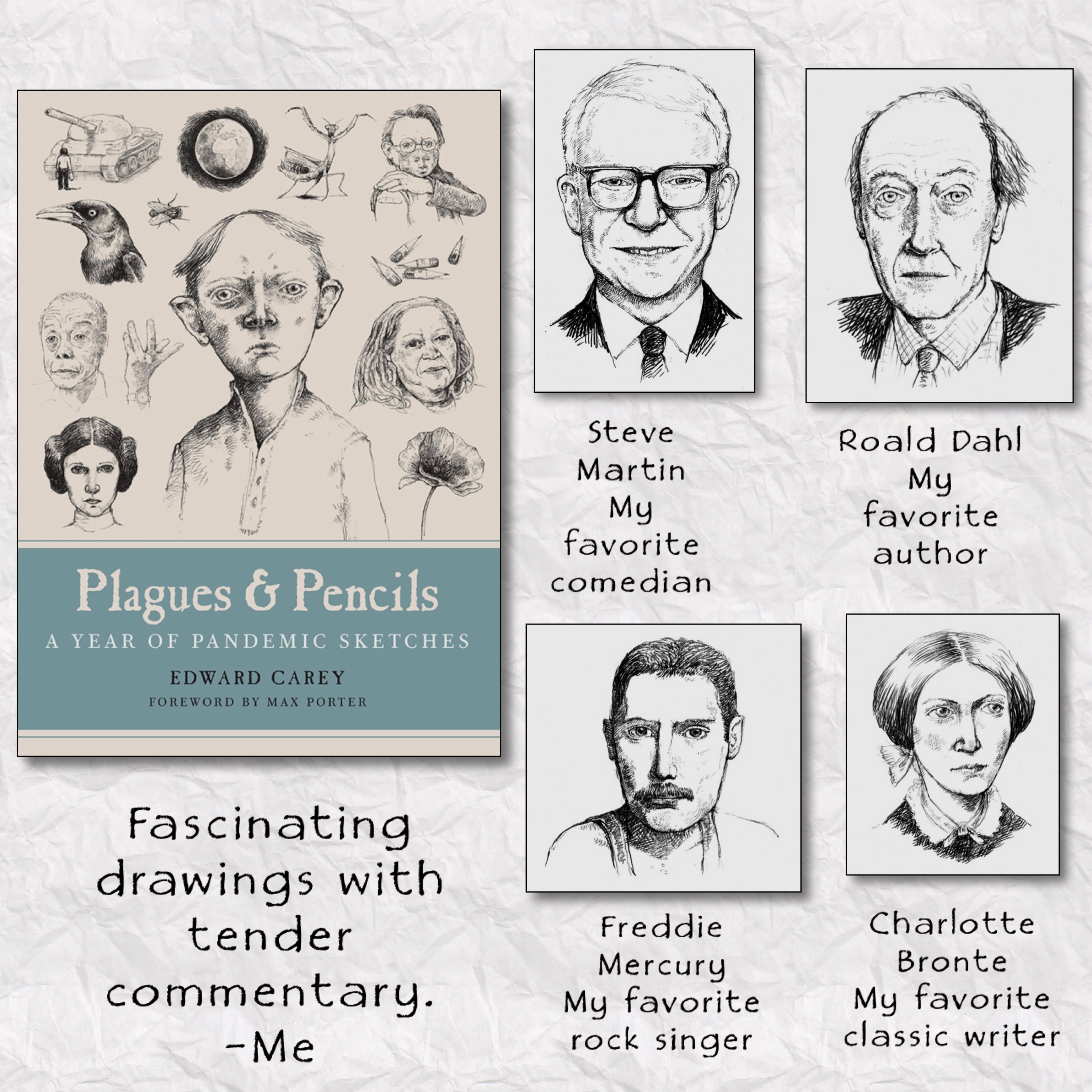
Plagues & Pencils: A Year of Pandemic Sketches, by Edward Carey

If you happen across the little gem, Plagues & Pencils, I highly recommend opening it up and taking a look. Like most people, I don’t really enjoy reliving the early days of Covid, but I do find it fascinating how people spent their time during lockdown.

Edward Carey is an author and artist from England, currently living in Austin, Texas. Shortly after leaving his homeland and hunkering down like the rest of us, he made the commitment to draw one sketch per day for the length of the pandemic. Of course, some of us would argue that the pandemic is still happening, but we’re talking about the days when restrictions were extra strict and we only ventured out when absolutely necessary.

There’s a lot to appreciate about this book. There are the 300+ sketches that hover somewhere between portraits and caricatures. There is the variety: historical figures, people of the arts, birds, animals, and people in the news at the moment. And there is Carey’s commentary: thoughtfully done, always wondering when the daily drawings will end. In his mind, their conclusion represented the resuming of normal life.

I appreciate the time he took on some of my favorite people from history and the arts. The four above are just a small sample. You’ll also see Beethoven, Houdini, Emily Dickinson, and many others. Because Carey is of my generation, you could tell the pang of hurt he felt when Christopher Plummer passed away. He honored him with a sketch from his iconic role as Captain von Trapp in The Sound of Music.

Overall, just an interesting, delightful discovery.

9/10 Stars

Autobiography, Nonfiction

The Year of Magical Thinking, by Joan Didion

This is a book I’ve wanted to read for a long time, starting back in 2006 when I suffered the loss of someone very dear to me. I opted instead, that year, to read Year of Pleasures by Elizabeth Berg, about a widow recovering from the death of her husband. I’m so glad I made that decision, because The Year of Magical Thinking is not the handbook on grief that I hoped it would be. It is Joan Didion’s stream-of-consciousness outpouring, one that is disjointed, random, and very personal.

Personal is fine. There’s nothing wrong with personal, and I’m sure this book was extremely cathartic for her to write. However, the title doesn’t fit anywhere in the content and, while there are some profound thoughts about loss, they are sparse. Instead, there is also a lot of zigzagging and digging up old memories. So I have to wonder, if anyone but Joan Didion wrote this book, would it have even been published?

The reviews are very mixed. Some people applaud the disjointed writing style, saying that it is exactly how one feels after losing a spouse or partner. This is true. I wish she had explored that more, the way loss lives rent free in your mind while you’re trying to carry on with life. Other reviewers are annoyed at Didion constantly referring to her upper-class lifestyle, having been married to John Gregory Dunne, and the fabulous places she lived, visited, and dined. I agree. After being bombarded with off-the-mark anecdotes about Delmonico’s, the Beverly Hills Hotel, high-end private schools, and vacations that are beyond the reach of the common man, I found it refreshing when she talked about grabbing a burger at McDonald’s. But it wasn’t enough to buffer the very obvious showiness of privilege, which often eclipsed the tragedies she experienced in a very short amount of time. Was the end goal to appear relatable or to relate her loss? We will never know.

So, unfortunately, it didn’t have the sensitive, healing effect I expected. I didn’t find it magical, memorable, or thought-provoking. But her ardent fans will probably find it very interesting.

7/10 Stars

Autobiography, Nonfiction

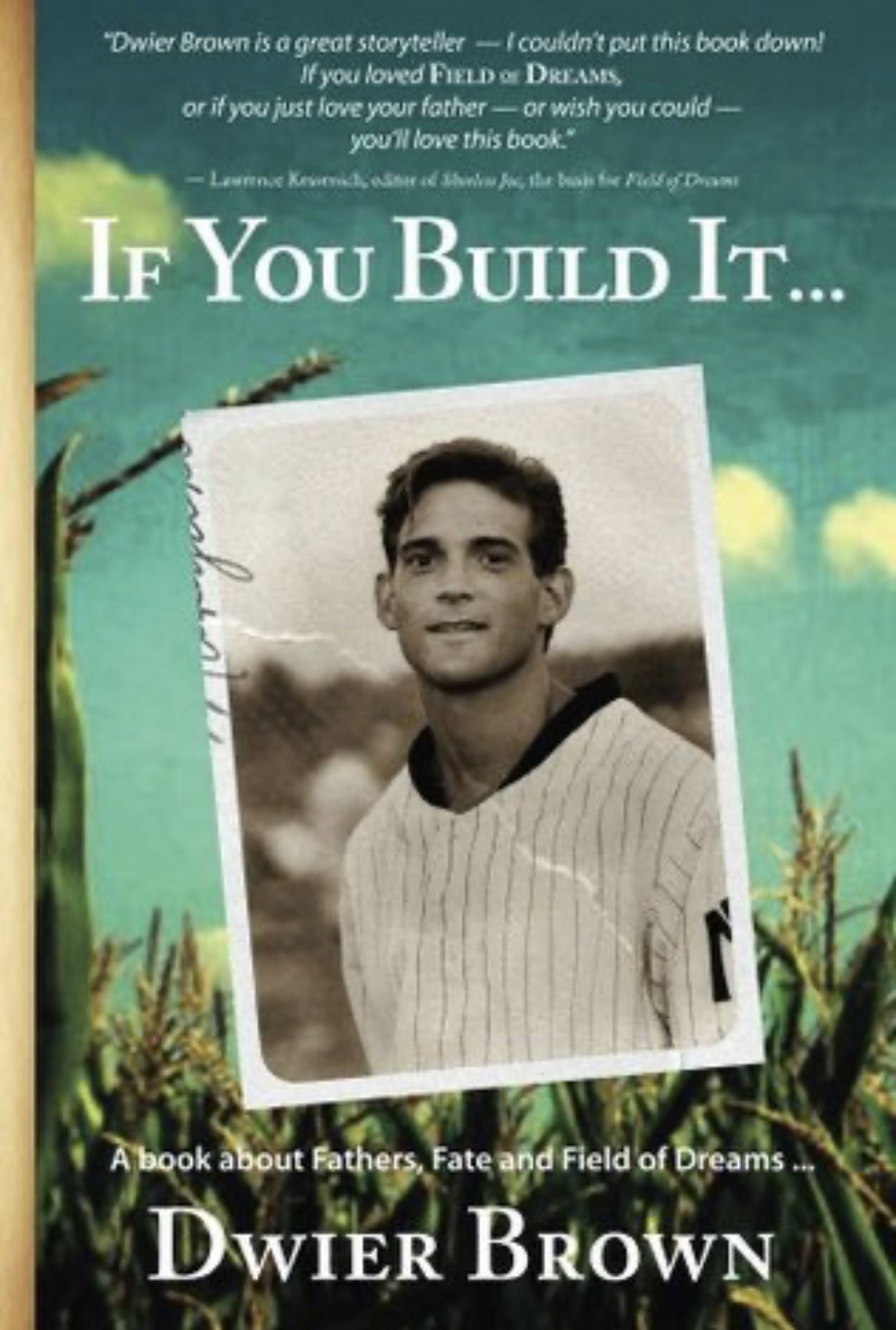
If You Build It, by Dwier Brown

Back in the early 1980’s two things were happening simultaneously. 1. A Canadian writer named W.P. Kinsella was launching his new book called Shoeless Joe 2. A struggling actor from Ohio named Dwier Brown was trying his hand at acting. While Kinsella’s book gained traction, Brown’s career, aside from playing “Stuart Cleary” in The Thorn Birds and being cast in a few plays, did not.

Their stories merged in 1988 when Shoeless Joe was adapted to screen as the beloved film, Field of Dreams, with Kevin Costner, then at his career apex. Dwier Brown was cast as John Kinsella, Ray’s (Costner’s) father. It’s a small but pivotal role, set in the day’s “magic hour,” making the viewer realize that Field of Dreams is about so much more than baseball.

When it was complete, not much was expected of Field of Dreams. Yes, it had Burt Lancaster in his final role and the incomparable James Earl Jones as Ray’s unlikely road trip companion, but no one could’ve guessed that this quiet little film would become the juggernaut that it is today. The Lansing farm in Iowa, where Dreams was filmed, still draws thousands of fathers and sons every year hoping to recapture the magic as they “have a catch” on that famous baseball diamond in the middle of a cornfield. A diamond inspired by the mystical phrase “If you build it, he will come.”

While Dwier Brown’s role is small–he appears in some early photographs and in the last five minutes of the movie–its impact on his life has been enormous. It is this impact that his book, If You Build It, is based. Part autobiography, part behind-the-scenes of the film, Brown sensitively shows how his whole life led up to that role and the part it would play in years to come. He also adds anecdotes, snapshots of the many times that people would recognize him and share their own personal stories. Stories of men and their dads watching the movie together, feeling their bond strengthen, and stories of estranged fathers and sons feeling the need to reconnect and forgive, inspired by the movie’s message.

That is what makes this book so special. It does not focus heavily on ideal father/son relationships. It acknowledges the honest truth that all parent/child relationships are complicated, including Ray and John in the movie, Dwier Brown and his father, and his father before him. As a daughter who had a complicated relationship with my father, I found this extremely refreshing. The book is beautifully written, with a rhythmic fluidity and plenty of heart-tugging tidbits that keep your interest until the very end.

Being familiar with the film is very helpful, but not completely essential, to read If You Build It. I recommend watching the movie and reading the book, in that order. Both are very much worth your time and will restore some of your faith in family and its potential.

9/10 Stars

Memoir, Nonfiction

Theme: Embracing Our Differences

This week I’m participating in an online nonfiction read-a-thon, so I will be getting out of my comfort zone a bit. Not that I don’t like nonfiction, but I’ve enjoyed creatively told stories a lot lately.

Which brings me to two books that I read today. Both address differences–dealing with them, owning them, and embracing them.

Visual Thinking, by Temple Grandin, has been on my radar for quite a while. Temple Grandin is a fascinating woman with a unique story. Born with Autism, she has used her differences in the way she absorbs and processes information to become a pioneer in animal behavior. Her work is mainly with the meat industry, making sure that animals raised for slaughter are humanely treated. Because she is a visual thinker, which she explains in the book, she notices details that others might miss.

The part that I thought was most profound is the way she describes the “screening out” of visual thinkers in the American education system. Thanks to different government movements in the name of “progress,” teachers are now forced to teach in such a linear way that students with diverse learning can easily get left behind. Speaking as a former teacher, I wholeheartedly agree. However, the book itself was a cumbersome read. There is a lot of repetition and spiraling in the way information is presented. It is broken up into chapters, but their content doesn’t seem as individual as you’d expect. Instead, it is more of the same over and over again. For that reason I can only give it a lukewarm 8/10 Stars.

Ugly, by Robert Hoge. The youngest of five children, Robert was born in Australia in 1972. The reasons are still unclear, but he came into this world with a large tumor above his nose and misshapen legs and feet. The tumor pushed his eyes far to each side, like a fish, making depth perception and balance difficult. His crooked legs and feet made walking impossible. Intellectually, though, Robert was born a bright and inquisitive child.

This memoir is marketed to readers of all ages and, because this world and the media are so unforgiving of people who look different, Ugly is an important book. After dozens of surgeries on his face, amputations of both feet, and adjusting to prosthetic legs, Robert lives a fairly “normal” life. His journey, one with pain and humor, is an inspiring one. His unusual appearance is the first thing you notice about him, but his attitude and sensitive nature are what you remember. This is a wonderfully well-written autobiography that I highly recommend. 9/10 Stars

***Both Temple Grandin and Robert Hoge are popular speakers on the TED Talk circuit and in other public speaking settings. You can easily find them on YouTube to hear more about their lives and experiences.

Autobiography, Memoir, Nonfiction

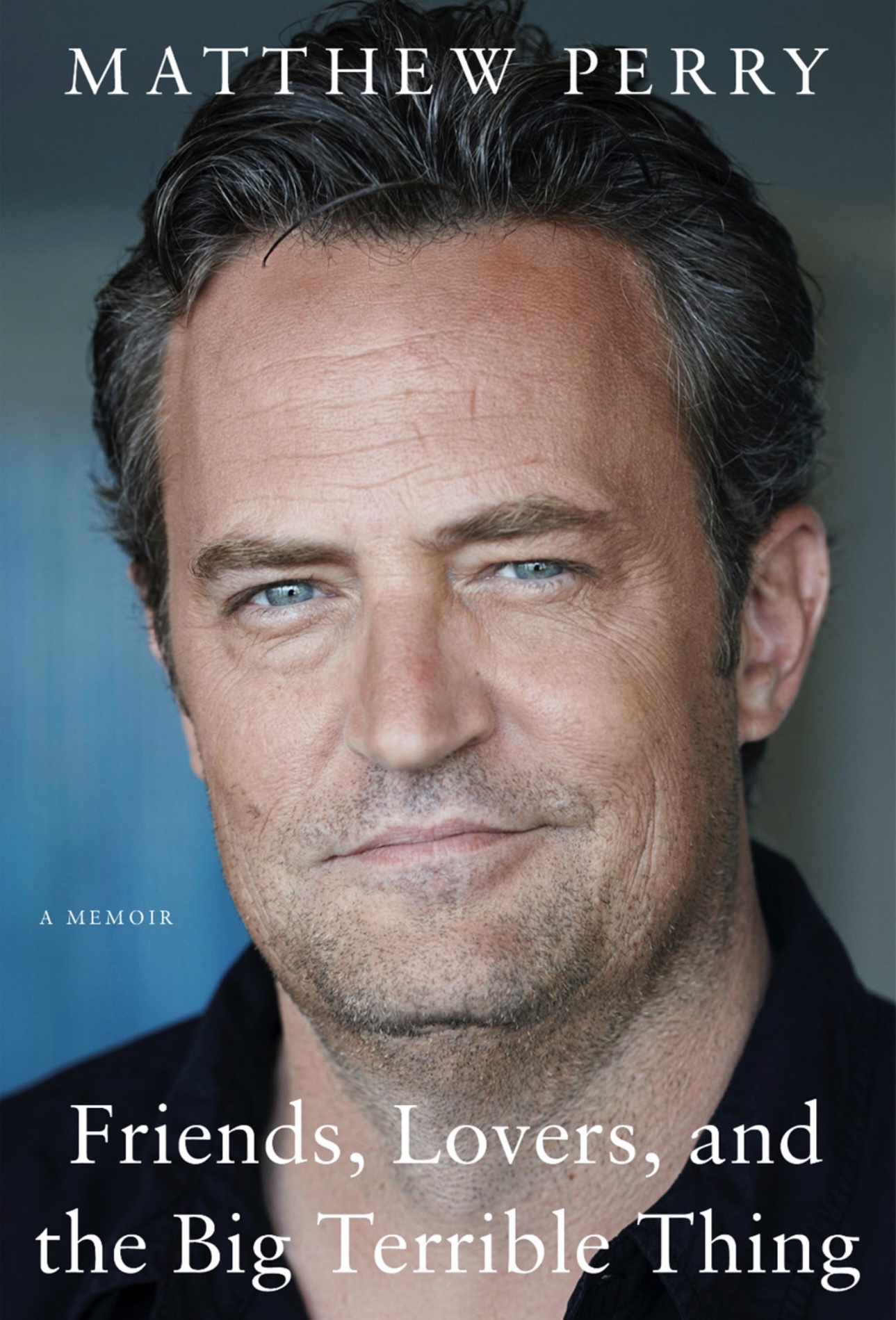
Friends, Lovers, and the Big Terrible Thing, by Matthew Perry

It’s 1995, FRIENDS has been on the air for a year. (As soon as I saw a promo for it in 1994, I knew I wanted to watch this series. And I did–every episode of every season for ten seasons. I still kick myself that I never attended a taping.) Now I’m at Disneyland with my mom, aunt, and cousin, Laura. My aunt had recently been hired at Disney Imagineering and was able to get us into the park for free. It was a blast.

Halfway through the day we’re in New Orleans Square (my favorite section) and Laura says to me, “Hey, isn’t that Matthew Perry?” Yes, it was. Celebrity sightings–one of the perks of growing up in Southern California. There was Matthew Perry, aka Chandler Bing, wearing (I’ll never forget) a white leather letterman’s-style jacket, holding court in the middle of an entourage of 6-8 friends, with a glow and a swagger that showed he was on top of the world. The guy oozed charisma.

We headed over to the Haunted Mansion. Matthew and group probably entered through some VIP back door without waiting in line because suddenly, we were all in the “stretching room”–our group, his group, and a few other people who probably didn’t love the show FRIENDS as much as I did. I can only assume.

Yes, I stared. This was a big deal. I have a faint memory of catching his eye and a hopeful, selective memory that there was a small grin returned only for me, but it could just be my imagination. I don’t care. It was dang cool. After the ride we only saw the backs of him and his group. Moment over, but not forgotten.

Some shows are just a part of us. FRIENDS is one of those shows for me. It started right as I earned my college degree, saw me through getting my first apartment, my first “real job,” and all of those milestones that make you feel grown up (except getting married, that came later.)

Of course we knew that, of all the cast members, Matthew Perry was the one struggling the most. We just didn’t know how much. Fast forward 20+ years to last Monday, when my husband and I watched his interview with Diane Sawyer. He’s uber famous, uber wealthy, starred in one of the most beloved shows of all time, and my first thought was, “He seems like a really lonely guy.” The swagger and smirk I saw in 1995 was replaced with a man slightly older than me, but wearing decades of trauma on his face.

I had to read the book. What a life. What an exhausting, sad, tortured, lonely life. I’ve never really understood addiction, but this is probably the closest I’ll ever get. His memoir is that raw. And it is heartbreaking. As a highly sensitive empath, I absorb other people’s pain more than most, and I felt like I was right there with every relapse of drinking and pills and their accompanying horrific consequences. This book is both fascinating and painful. Never once does he play the victim.

If you’ve been on the FRIENDS journey at all since its inception, read about Matthew’s journey and see what he went through. It’s a miracle he’s even still alive. And it’s a lesson of where fulfillment can truly be found. Hint: it isn’t fame and fortune. 9/10 Stars

ARC (Advanced Reader Copy), Fiction, Nonfiction

Amazing Surgeons: Two Books

Two books: one nonfiction and one fiction.

Two doctors: a pediatric neurosurgeon and an embittered heart surgeon.

One goal: save the patient.

I always say that books seem to enter our lives at the right time, and these two are no different. There is something special and similar about them that made me feel they needed to be grouped together. I highly recommend both.

First, ALL THAT MOVES US, by Jay Wellons. Dr. Jay Wellons, to be exact. An experienced pediatric neurosurgeon with decades of operating and teaching experience, this is his memoir and love letter to the profession. We follow him from patient to patient, those that he saved and those he couldn’t, year after year. As expected, certain patients stand out and have left imprints on his heart. The writing is excellent and his humility is admirable. Be prepared for some detailed medical explanations, but it is never boring. A great, timely autobiography. 9.5/10 Stars

Next, WHEN CRICKETS CRY, by the incomparable Charles Martin. I truly believe Martin is one of our greatest living novelists, and I’ve only read four of his books with many more left to discover. It is, perhaps, a minor spoiler to identify the main character as a surgeon because he spends most of the story building and restoring boats with his brother-in-law, Charlie (who deserves his own book.) But whether he is known as “Reese Mitch: boat builder” or “Jonathan Reese Mitchell: heart surgeon extraordinaire,” he is still a lonely, broken man. When Reese meets Annie, a little girl selling lemonade who is ill and wise beyond her years, he must ask himself if the time is right to emerge from his shell of grief and uncertainty and tap into his incredible gifts. 9.5/10

ARC (Advanced Reader Copy), Faith, Nonfiction, Self-Help

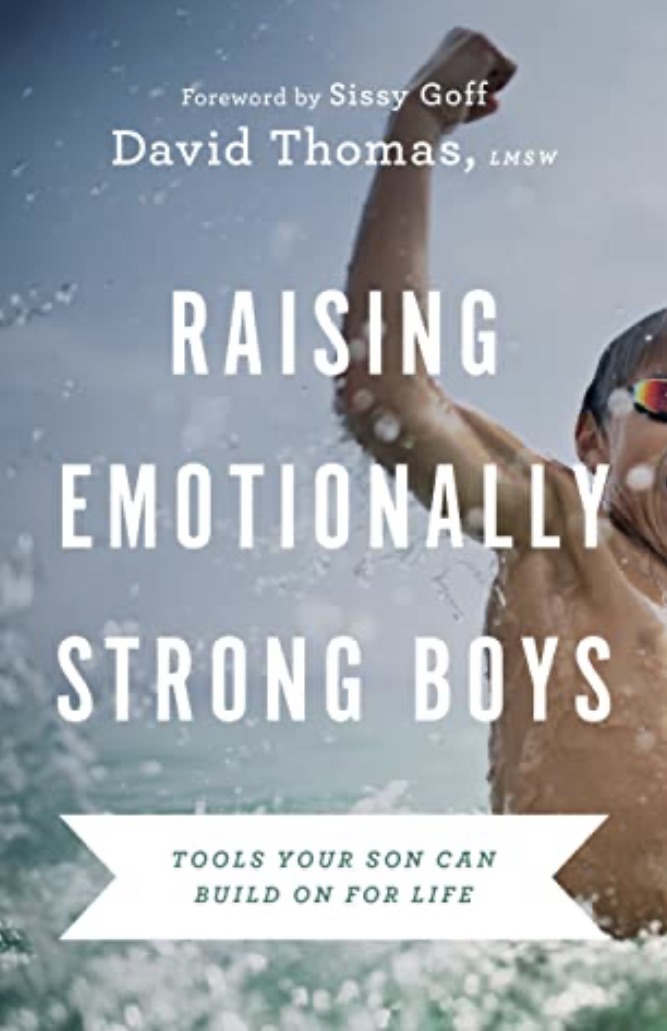
Raising Emotionally Strong Boys, by David Thomas

AVAILABLE June 14, 2022

I am so impressed with this book! Although I’m not a parent, I have taught hundreds of boys ages 4-11 in my teaching career. I could not help but think of the variety of personalities and levels of emotional strength in my young students.

The insights and tools in this book are excellent. It emphasizes the importance of teaching boys not only to manage their emotions, but to give themselves permission to have them in the first place. It talks about how essential it is for boys to see examples of other men being vulnerable, asking for help, losing a competition, and mourning a loved one, all without compromising their manliness. That is something I appreciated greatly, being married to a very masculine, but also a sensitive man.

I also thought about the other men in my life: my second generation absent father, my brother who broke that cycle and is an extremely involved dad to his children, an amazing grandfather who often stepped into the father role, cousins and uncles, circling back to my husband, who is one of the most emotionally strong men I know.

While I welcome them, I was not prepared for the amount of Biblical references. They may, unfortunately, limit the book’s audience. The author uses Christ as the ultimate example of emotional strength. Who better to pattern your life after?

This would make a great book club selection, a terrific gift, and an interesting read for parents, grandparents, and teachers. Thank you NetGalley and Bethany House Publishers for this advanced copy in exchange for my honest review.

9.5/10 Stars

Autobiography, Faith, Memoir, Nonfiction

Hope Unseen, by Captain Scotty Smiley and Doug Crandall

“I’m not sure what God is going to do with my life, but I know that there are good things in store and that He has a purpose for me.”

I first heard about Scott Smiley a few weeks ago. He was a guest speaker at an event hosted by a state congressional candidate I follow on Facebook. I had no idea who he was and what made him so inspiring. As I learned more about him and his story, I was reminded how backwards this world is, in that so many famous people have done very little for others, basking in the light of their own glory, while those who truly deserve our attention are often relegated to smaller venues.

One of seven children, a West Point graduate who married his high school sweetheart, Tiffany, Scotty Smiley’s life dramatically changed on April 6, 2005. While leading a 40-man platoon in Iraq charged with finding car bombs stationed throughout a residential area, Smiley confronted a suicide bomber at the moment of detonation. At that instant his world went black. He was blinded and partially paralyzed.

This book tells of Captain Smiley’s journey from that day to recovery, rehabilitation, and finding a new purpose in life. Make no mistake, this man had his gloomy days–lots of them–despite being blessed with an incredible support system of family and friends. Going from an independent, highly motivated Army officer to a man who could get lost walking in a parking lot was a huge blow. It challenged his sense of self and his lifelong faith down to their very cores.

Certainly, his story is one like many veterans who return home with physical and emotional scars that can last a lifetime. Living in a country that hasn’t seen war on its own soil for such a long time can make us feel distanced from the sacrifices made on a daily basis by people who dedicate their lives to preserving freedom for ourselves and others. No doubt, his story, faith, and determination are worthy of 10 stars. As a piece of writing I do wish it was more linear with less detours. There were several, although it may be the style of his coauthor. But overall, Scotty Smiley does make you want to try harder and be better, remembering that through God, all things are possible.

8.5/10 Stars