
Fiction, Romance, Women's Fiction, Young Adult

The Blue Castle, by Lucy Maud Montgomery

517w3GgshkL

One of the most thrilling things when finishing a book is knowing that it has qualified for my “10 Star” list, a list reserved for only the best, in my opinion. When a dear friend mentioned that The Blue Castle was her favorite book I expected to enjoy it, but I did not expect to fall in love with it. Yet, that is exactly what happened. The author, Lucy Maud Montgomery, is best known for Anne of Green Gables and its subsequent series. Yet, I must admit, I enjoyed The Blue Castle’s main character even more. (Please forgive me, Anne Shirley fans!)

I have to care about and feel emotionally invested in a main character in order for me to love a book.  In The Blue Castle, it is Valancy Stirling, a 29 year old “spinster” who lives with her widowed mother and two aunts. They are dour, puritanical, and robotic in all they do, say, and think. Even sneezing in public is a grievous sin. Valancy knows of no other life but this one–this colorless life with no friends and no future.

Why do I love this character? Because, in her longing for something more, she is deserving, quirky, humble, and imaginative. She simply wants what we all want: to be cherished, to be seen as who she really is, and to have a companion who puts her above all others. She is not ambitious or greedy. Her desires, as elusive as they may seem, are simple and valid.

In the meantime, Valancy must live in her head. Only two things bring her comfort while she waits– her John Foster novels, with their color and life and pearls of wisdom: Fear is the original sin, and the thought of her Blue Castle: a metaphor for all the happy, beautiful things currently just out of reach. In her Blue Castle, Valancy is free to think and enjoy without the daily berating she endures from her mother and aunts.

As the reader, you join in this longing and, hope against hope, that Valancy will, somehow, emerge victorious. But how?

At this point, I must resist using spoilers and simply say that The Blue Castle is worth your time. If you are looking for a story that restores your faith in everything, including quality literature and characters that you absolutely fall in love with, this is it. In addition, the writing is like exquisite poetry dripping from your lips as you read it.

A true masterpiece.

A very worthy 10 STARS.

Fiction, Romance, Young Adult

Dash & Lily’s Book of Dares, by Rachel Cohn & David Levithan

9780375859557_p0_v2_s260x420

I want to believe there is somebody out there for me.

I want to believe that I exist to be there for that somebody.

Somewhere between the quirky Roald Dahl novels of my youth in the late 70’s and early 80’s and the books I read now in my mid 40’s, there is the Young Adult romance genre of today. I’m very aware that I’m not in the demographic this genre is targeting. I had to remind myself of that when reading John Green’s The Fault in Our Stars, which I enjoyed and finished quickly. I had to remind myself of this again (several times, earnestly) while reading Dash & Lily’s Book of Dares.

The premise is unique and attractive, something of a “Sleepless in Seattle” motif, where two New York City teenagers–independent and far too smart for their own good–begin a “relationship,” such as it is, through letters in a red Moleskin notebook, an idea conjured up by Lily’s brother, Langston, and his boyfriend, Benny.

With twists and turns, colorful secondary characters, and the underlying question of “when and where will they finally meet in person?” Dash & Lily has a lot of potential from the get-go. Whether or not it meets that potential is a toss up.

In discussing the book with others who have read it–all adults ranging from their 20’s to 40’s–there was division. We agreed there was plenty of wisdom in the characters of Dash and Lily, some with which even “grownups” could identify. (Like in the quotes above.) We also agreed that the characters’ “teenage intellect” seems to be given a great amount of philosophical leeway. Is the modern teenager really like this? Not being one, I couldn’t tell you. I was a teenager with above-average intelligence in the 1980’s but my internal dialogue sounded nothing like the teens in these pages. (It still doesn’t.) But if a modern teenager wanted to feel very intelligent by identifying with the characters as fictional peers, I suppose that *could* be achieved here.

There is also the sexualization of the characters. Again, not being in the target audience, I don’t know if it’s accurate. These characters are both left alone by their (seemingly selfish) parents in a way I’ve never seen before. They’re sixteen years old, for Pete’s sake. (Some reality suspension, clearly.) Such independence gives way to opportunity…

So, my guess is that it (the teenage sexualization) is accurate for some, but advanced for others, depending on their upbringings and life experiences.

These conflicts make it difficult to review the book objectively, but not impossible. Personally, I didn’t much care for it. It’s merits (many) were overshadowed by its flaws (abundant.) I felt there was an underlying cry by the co-authors to the Young Adult audience it is attempting to reach, saying “please like me.” Many will. Many already have.

However, if I had a teenager, I would be offering him or her other options, of which there are plenty.

7/10 Stars


Fiction, Romance, Women's Fiction

A Girl’s Guide to Moving On, by Debbie Macomber

“Clean escapist romance.” That would be the best description of Debbie Macomber’s genre. Escapist lit is not necessarily a bad thing, but it certainly doesn’t challenge the reader. It’s familiar, comfortable, and predictable.

I experienced A Girl’s Guide to Moving On as an audio-book checked out from our local online library. Over a period of two weeks I would listen to it through headphones while walking around the neighborhood on clear afternoons, plugged into my car’s audio system while running errands, or while making dinner and folding laundry. It is perfect for such mundane activities.

The two audio-book narrators take on the roles of middle-aged Leanne and her 30-something daughter-in-law, Nichole. The plot follows their stories back and forth with an easy-going fluidity. Both are on the brink of divorce from their two-timing husbands (keep in mind that Nichole’s ex is Leanne’s son,) both are adjusting to a newly simplified lifestyle, both are looking to redefine themselves as someone other than “so-and-so’s” wife.

Of course as a light romance, that last point is doomed to failure. Personally, I take issue with “moving on” being characterized as finding a new romance so quickly after a divorce, but, as with most escapist literature, we have to be forgiving and suspend reality a bit.

Enter Rocco for Nichole and Nikolai for Leanne. Both story-lines have their “will they or won’t they” hiccups, bumps, and obstacles. Both men are supposed to be the antithesis of the ex-husbands. While Rocco is a “rough around the edges” gentleman, I found Nikolai to be demanding, jealous, and something of a bully. Perhaps others would disagree, but I was not rooting for that particular relationship.

As the story progressed I found myself staying with the characters more out of curiosity than actual emotional investment. By the end, there were no real surprises, no real lessons learned by anyone, just the satisfaction of having everything end exactly as I had predicted. If anything, it was a “placeholder” type of book–one you read until you find something better, which wouldn’t be difficult.

7/10 Stars

Fiction, Romance, Women's Fiction

Comfort and Joy, by Kristin Hannah

IMG_1661

In Kristin Hannah’s novel, Comfort and Joy, high school librarian Joy Candelaro is a realist, but still a dreamer. Her beloved job is real. So is the fact that her ex-husband, Thom, and her sister, Stacey, are now a couple.

It is one thing to choose to change your life, but it is something else entirely to have change thrust upon you without your approval. This particular change has hit Joy like a ton of bricks. Being the result of betrayal by the two people she trusted most in the world has made it even more difficult. How does someone recover from something like this? How does someone regain a semblance of control when everything she knew has been tossed to the wind? All she has left to hold on to is her job, and it isn’t enough.

Joy’s answer is to give herself a spontaneous gift. A change of scenery should do it; the chance to leave dusty Bakersfield and board a plane to the lush Pacific Northwest.

Little does she know that this decision will take her on a journey of discovery. A journey of the heart and mind.

To tell more would spoil the plot.

This is a novel that requires some compromises from the reader. The reader must suspend reality a bit, which I was willing to do. The reader must also accept the fact that not all questions (there are many) will be answered by the book’s conclusion. That was harder for me. And, although I’m glad I stayed with it until the end, there were times I almost put it down permanently. The book is flawed, but still sweet and worth your time. Resist the urge to tell yourself “that would never happen.”  Just give yourself over to the events and let the plot envelop you.

This is most definitely in the category of “Women’s Fiction.” The book taps into many of our emotions: empathy, despair, hope, and love. It is escapist and it is enjoyable.

8/10 Stars

Fiction, Romance, Series & Collections, Young Adult

Happy Scoops, by Katie Coughran

hs-coverIn Happy Scoops, we are introduced to Chryssa Parker. Chryssa is the girl you love to hate. She’s privileged, beautiful and smart. She leads the school as both student body president and captain of the cheerleading squad. Despite attending Intellectual Elite High School, she still rises to the top in everything she does, including making everyone around her feel inferior.

All of Chryssa’s energy goes into maintaining her popularity status. She chooses friends who are similar but submissive. The idea of not judging a book by its cover is completely lost on her. Appearance in everything is everything to Chryssa.

How could a reader become emotionally invested in such a distasteful character?

Author Katie Coughran suddenly sends Chryssa Parker on a journey that strips away everything she knows and holds dear. After an ultimatum from her parents, she is forced to take a job where personal appearance means nothing. In an instant, Chryssa must reevaluate everything she thought was important.

Amidst clever dialogue and a very unique story, we follow this unpleasant young woman on her path to humility and actually begin to care about her. Her world is turned upside down as a domino effect of uncontrollable circumstances starts to take place.

Happy Scoops is a delightful page-turner. More than once I found myself chuckling out loud at some of the funny scenes, continually wanting to read more. What’s even better is that beneath the humor are serious reminders we can all benefit from, mainly that beauty can fade at any time and that real relationships are built on compassion and concern for others.

8.5/10 Stars

Fiction, Romance

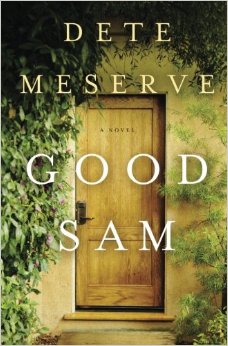
Good Sam, by Dete Meserve

51D1qb1-T9L._SY344_BO1,204,203,200_Good Sam, by Dete Meserve, is a book that has been patiently sitting in my Kindle Cloud for months. It has positive reviews on Amazon and Goodreads and, as a reader who does not like wasting my time on a book that shows little promise, I decided to give it a try.

“Good Sam,” stands for “Good Samaritan,” a modern-day version of the Biblical character who is charitable for charity’s sake. Or is he? (Or she.)

Someone has been anonymously leaving bags of one hundred thousand dollars on people’s doorsteps throughout Los Angeles. The recipients come from a variety of neighborhoods and socio-economic backgrounds, so why were they chosen? The question of who is behind these seemingly random acts is the novel’s backbone. Kate Bradley, a 20-something beat reporter for Channel 11 has been assigned to the story.

Unfortunately, what could’ve been an inspired plot about true kindness in a fast-paced, metropolitan setting, was actually a flimsy romance. Kate is a protagonist who fails to earn my sympathy or appreciation. Alternately strong and independent, she acts weak and distressed in the arms of the right man. She claims to be someone who pursues and respects truth, but she is very selective in whose lies she forgives. Essentially, a maddening character who I found myself rolling my eyes at again and again.

In addition, as someone who was born and raised in Los Angeles, I found the city’s portrayal ridiculous and full of stereotypes.

I wanted to enjoy this book, but its initial potential quickly waned. As I said, I don’t like to waste my time as a reader, so I will say that the main redeeming quality of Good Sam was how fast I was able to finish it.  (I started it last night.) The zigzag ending only confirmed what I figured out less than halfway into the novel, and even that was barely worth my time. Sadly, if you are a reader in search of substance, I advise you look elsewhere.

6.5/10 stars


Fiction, Romance, Series & Collections

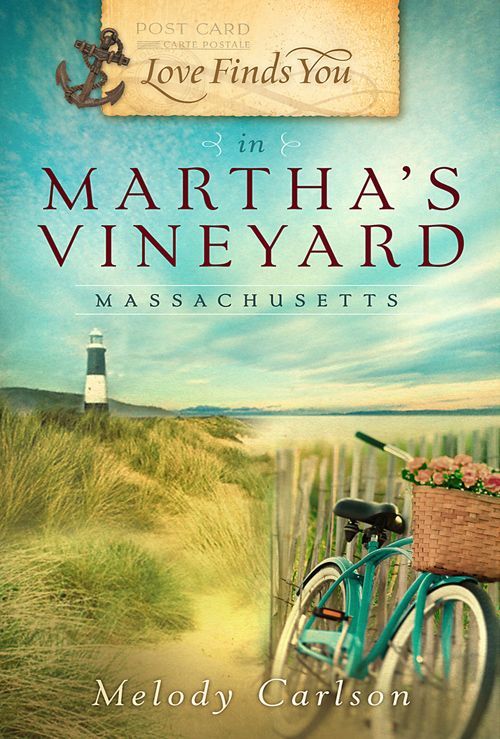
Love Finds You in Martha’s Vineyard, by Melody Carlson

91c1a3a986bba3f51ef601c2defb9651Anyone who has loved and lost and loved again will appreciate that second chances are rare and welcome. Whether or not first loves ended in death or divorce, that second chance gives you an opportunity to learn from past mistakes.

I never thought I would be reading books in the Christian Romance genre, but Melody Carlson keeps churning out one delightful story after another. In Love Finds You in Martha’s Vineyard, we catch up with Waverly Brennen. Newly widowed, Waverly leaves behind her dead-end job in Chicago to take over “The Gallery,” newly acquired by her mother, Vivian, and Aunt Louise.

A recently divorced man named Blake moves in next door to Vivian and Louise. Grappling with his failed marriage and a daughter who is 9 going on 30, Blake has his hands full and is ready for some peace and quiet. When a pushy cousin of Waverly’s visits the island, everyone has choices to make about their futures.

Melody Carlson’s stories are predictable, but the journey is worthwhile. Relationships evolve with a fluidity that is both entertaining and natural. Best of all, the story is clean, with no gratuitous scenes to make the reader blush.

I find myself returning to this author’s works again and again. She is nothing if not consistent and prolific. Each of her books has been a pleasant read and this one is no exception.

8.5/10 Stars

Fiction, Romance, Women's Fiction

The Ladies’ Room, by Carolyn Brown

th

I should’ve gone to the ladies’ room before the service began. But my four cups of coffee and the 32 ounce Coke I’d drunk on the way to church hadn’t made it to my bladder until the preacher cleared his throat and began a eulogy that sounded as if it would go on six days past eternity…

And so begins the saga of Trudy Williams, our protagonist of The Ladies’ Room, by Carolyn Brown.

When I first read the premise of the story–a woman’s life changed because of some gossip she overhears in the ladies’ room–I thought it sounded cute and unique.

When I actually began the book a few weeks later I was immediately turned off by Trudy’s two cousins, Marty and Betsy, the perpetuators of the gossip at their Aunt Gert’s funeral. The whole thing felt very immature.

The final straw was when all of them, including Trudy, referred to Trudy as a frumpy, middle-aged woman and I realized that Trudy is 5 years younger than me. Ahem!

But I stuck it out, grasping to my first instinct that this would be a book worth reading. It was.

Whatever her age, I picture Trudy as a sister of Kathy Bates’ character in the movie Fried Green Tomatoes, a put‐upon housewife whose husband of twenty-plus years sees her more as a cook and laundress than a romantic partner.

Between the gossip she overhears and the result of Aunt Gert’s will, Trudy now has the motivation and means to start fresh. Her one friend is Billy Lee Tucker, a childhood acquaintance and the town misfit, who also happened to be Gert’s next door neighbor.

There is nothing deep, profound, or even unique about The Ladies’ Room, but it will still speak to many women who have found themselves in Trudy’s situation, or, at least part of it. Some aspects of it reminded me of Melody Carlson’s Dear Daphne series, with Trudy being a slightly older, married, version of Daphne.

This is not a book you read for great personal enlightenment. It is purely “escapist literature” at its. The Ladies’ Room is endearing, clean, light, and thoroughly enjoyable.

8.5/10 Stars

Fiction, Romance

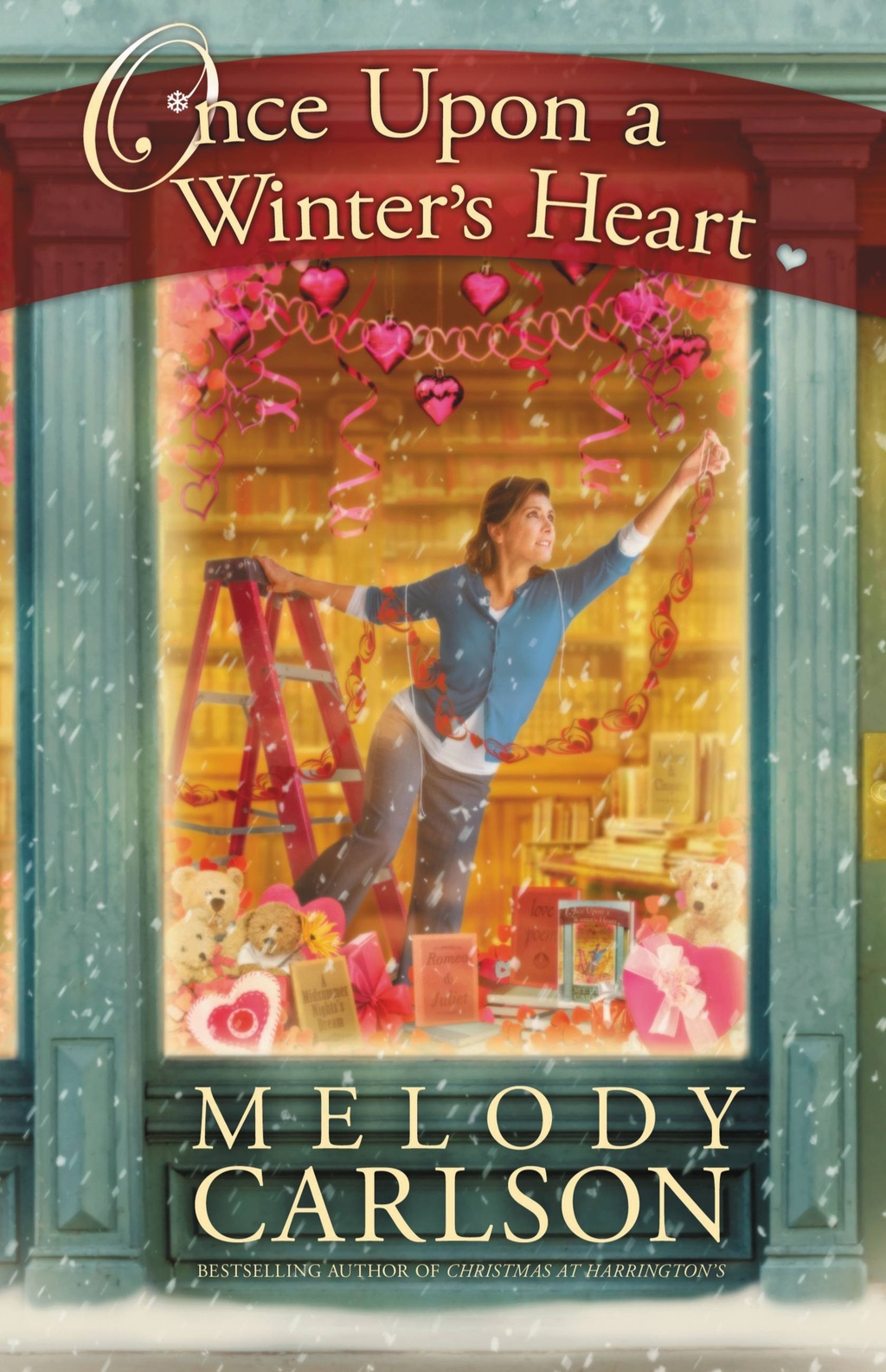
Once Upon A Winter’s Heart, by Melody Carlson

Once-Upon-a-Winters-HeartI suppose I’ve been in a “Melody Carlson” mood lately. Once Upon A Winter’s Heart was recommended to me through BookBub, a new site I discovered that emails me a daily list of discounted or free e-books on Amazon. This selection, by one of my favorite writers, was on the list. It was $1.99 and only 156 pages. (The price is back to $7 now.)  I read 2/3 of it on the treadmill this morning and the rest lying on the couch before making dinner this evening. Voila!

Some might find Carlson’s books cheesy or boring, but I’ll tell you what I like about them. For one thing, the female protagonist is usually someone who has given up on love and then finally finds it. As someone who got married at 39, I can very much relate to that. There is someone for everyone, truly, and these stories confirm it. I also appreciate the fact that as “romance” novels they are far from “blush worthy.” They are always about the meeting, the does-he-or-doesn’t-he, the friendship, and eventual getting together of two very decent people. If you’re a “Fifty Shades of Gray” person who needs the kinky stuff to entertain you, I recommend you look elsewhere.

In Once Upon A Winter’s Heart, Emma Burcelli has packed up her few belongings from her Seattle apartment and moved in with her recently widowed grandmother. Ready to start anew and willing to help out in her grandparents’ book shop, Emma reconnects with her parents, her nephew, and becomes slightly disillusioned while watching a supposed romance between her younger sister, Anne, and the charming Lane.

As usual, the characters are modeled after people the reader can recognize from their own life. The plot, although a bit rushed in this short novel, is, shall we say… “feasible.” It’s light, it’s possible, it’s fun, and it can be read in a day in between workouts and housework.

8/10 stars

Fiction, Romance, Series & Collections

Dating, Dining, and Desperation, by Melody Carlson

1433679310In Melody Carlson’s second installment of her Dear Daphne series, “conditional heiress” Daphne Ballinger is making peace with her situation. Still living in her Aunt Dee’s house and using her vintage car–both left to her temporarily through her aunt’s estate–Daphne makes friends with neighbors of all ages and is set up on dates by those closest to her.

Like in the first book of the series, there is a lot of heart in an otherwise corny premise. But you know what? It works. It’s fast reading. It’s enjoyable. And it isn’t blush-worthy.

I’ve spent this busy week thoroughly enjoying the first two books of the series (either on the treadmill or before nodding off at night) and I’m eager to see what happens next. That level of expectation in a reader only happens through above-average writing with a decent plot and excellent character development.  There is warmth and comfort to the author’s style, making you want to revisit the small town life and its inhabitants again and again. Melody Carlson has a way of tapping into her readers’ emotions without exhausting them, making us care about the new friends we have discovered between the pages of her novels. It’s a rare gift. I for one, am hooked.

8.5 out of 10 stars

***At the end of this 2nd novel the author tells the reader that the next 2 books of the series will be out soon, but doesn’t give exact release dates. Both will be released as digital books first, as the publishing company is undergoing some changes.

Fiction, Romance

Lock, Stock, and Over a Barrel, by Melody Carlson

9781433679308_p0_v1_s260x420Daphne Ballinger is stuck. Her job, living situation, and love life are going nowhere. Years ago she moved to New York in hopes of becoming a writer and living an exciting life, but, somewhere along the way, everything plateaued.

Back in her home town of Appleton, her dad’s older sister, the loving, eccentric Aunt Dee, has just died. Daphne is shocked to learn that she is the sole heir of Aunt Dee’s entire estate. The only problem? She must fall truly in love and get married within a year or she loses it all.

With this monumental condition hanging ominously over her head, Daphne decides to be a good sport and move back to Appleton for the year. Coming full circle from a life she was determined to leave, she learns that Aunt Dee left her a lot more than just her estate.

Lock, Stock, and Over a Barrel is the first in Melody Carlson’s Dear Daphne series. The second book, Dating, Dining, and Desperation, came out in March 2014. It’s next on my reading list.

If the premise seems a little hokey, well, maybe it is. Beyond that, however, is a delightful story full of well-rounded characters that enter and exit Daphne’s life. She is a protagonist that you root for and that women, especially, will identify with on her journey.

Carlson’s books are usually entertaining, light but not ridiculous, and this one is no different. For others like me who have no tolerance for racy fiction, her writing style is very satisfying. It is a fun novel for this busy holiday season, or to read on the treadmill, as I did.

8.5 out of 10 Stars

Fiction, Romance, Young Adult

The Fault in Our Stars, by John Green

The-Fault-in-Our-StarsThis post will be a little unusual, because I’m going to talk about the book and the film.  Don’t worry…no spoilers. 🙂

Although…there are people like me who sometimes like spoilers!  So I did the twisted thing and went and read about the story on Wikipedia first–simply because I was curious “What the heck is with this book that everyone is raving about?”  Yep. Guilty. Then I discovered that the Kindle edition was only $5 and started reading. 24 hours, and one sleep-deprived night later, I was finished.

But I will assure you that whether you know the plot or not, the journey to that destination is worth your time.

The basics: Cancer-stricken teenagers Hazel and Augustus meet in a support group.  Hazel is highly intelligent with a side order of charm and Augustus is highly charming with a side order of intelligence. And so their story begins as the book tries to answer the question we should all ask ourselves: to what extent will I allow my crappy experiences to dominate me?

Because we all have terrible, unfair things happen to us. Whether or not we become a victim of those circumstances is, of course, a choice.

John Green, the author, also does what all young adult authors should do, which is to make his characters a little more mature than most teenagers.  Mature, but not arrogant. (Not to diss teenagers, but to point out that he treats his teenage readers as intelligent beings.) And you get the impression that Hazel and Gus would be like this even without cancer–because cancer does not give you maturity–but it does force these young people to confront their mortality earlier than most.   In addition, these are also teens who have genuinely good relationships with their parents, both sets who are happily married.  Yes, it happens!

Green does something else, too.  He successfully gets inside the head of a young girl.  Just like Hazel has a favorite author who, she feels, describes her cancer and death though he hasn’t died, Green does the same with Hazel without having been a teenage girl.  As a former teenager with a favorite author at that age, Hazel’s insecurities, fears, and general feelings are pretty spot on.

Speaking of spot on, I’m going to segue to the film, which I saw tonight.  The makers of The Fault in Our Stars (the film) had to know that many readers would be eager to see how Hazel and Gus would transfer to film.  Too much leeway with the story would enrage them, and rightly so.  Fortunately, the author was on the set, the actors read the novel beforehand, and both young people go above and beyond to embody Hazel and Gus in amazing performances (really, some of the best I’ve seen.) The film cuts out a couple of peripheral characters, but stays true to the story in other ways.  (I do wish the “swing-set story” was given more time, though.)

If I had to make one criticism about the book and the film, it would be the Van Houten character.  On the page I thought he was way over the top. An annoying parenthesis in an, otherwise, lovely sentence.  On the screen I felt the character was miscast (Gary Oldman would’ve gotten my vote,) but everything else about the film was just the way I pictured it as I read the book.

If you are someone who wants to read about healthy love among two unhealthy people, then this is a story you’ll enjoy.  Sentiment, but without sentimentality.  What do I mean by “healthy love?” A love between equal partners who genuinely like and respect each other, where they take turns saving each other, and where there is unconditional acceptance. We should all be so lucky.

9 out of 10 stars