Fiction, Romance, Women's Fiction

The Lost Husband, by Katherine Center

Book-Review-Adult-Fiction-The-Lost-Husband-by-Katherine-Center

I should start a new section called “unputdownables.” The Lost Husband would definitely fit into that category. Most importantly, though, I think I have found a new author whose books I want to read.

The last time I finished a book in two days was The Bette Davis Club, an unmitigated disaster, in my opinion. The Lost Husband was also quick reading, but for different reasons. No talking down to the reader, no ridiculous, selfish characters (OK, one selfish character, but she has to be selfish to assist the story.) Just an entertaining plot peppered with unpredictability that makes the reader want to return again and again.

Libby has been a young widow for three years. Two of those years have been spent living with her mother, who takes more passive-aggressive pleasure in criticizing Libby and running off to pedicure appointments than supporting her and allowing her to mourn. Libby’s two children, Abby and Theodore (Tank,) are resilient as most children are, but still fragile. Unfortunately, Libby has no other options.

Then one day, out of the blue, Libby receives a letter from Aunt Jean. She’s offering Libby room and board on her goat farm in exchange for help running the place. “Crazy Aunt Jean,” Libby’s mother’s sister of whom she has only vague memories. Most of what Libby knows about Aunt Jean comes from her mother’s venomous opinions with a hearty side dish of hatred. These sisters are the epitome of oil and water. Still…anything is better than living with her narcissistic mother, Libby decides, and one day later she’s off to a goat farm in Atwater, Texas.

The rest of the story centers around Libby’s new life in these unforeseen circumstances, the people she meets (there are some terrific supporting characters in Aunt Jean, O’Connor, and Sunshine,) and the healing process Libby is finally allowed to explore. Everyone has some secret or past challenge they are trying to overcome, allowing for extra character dimension and some interesting subplots, and no one is who they seem when Libby initially meets them. The story is told in first person, so we see everything through Libby’s eyes and feel it all through her emotions, which are relatable and authentic.

The book walks the line of “froth,” but I didn’t care. I enjoyed every minute with it and look forward to reading more from Katherine Center. Not every book has to be earth-shattering and life-changing. Some can just be good old-fashioned escapism. You’ll find that in The Lost Husband. Delightful from start to finish.

9/10 Stars

8/1/18 Here’s a fun tidbit: last night I was poking around on Goodreads and came across a Q&A section on the author’s page. I wrote that I was impressed with her comment to an aspiring writer, and quickly received 2 responses. It’s always a treat when authors interact with readers.:

Screen Shot 2018-08-01 at 11.20.41 AM


Fiction, Women's Fiction

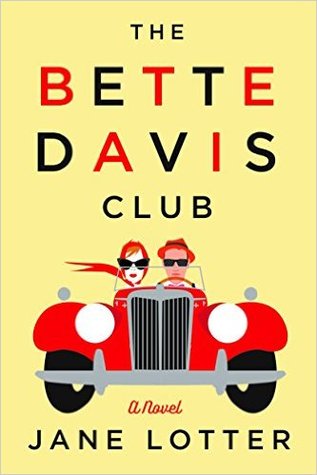
The Bette Davis Club, by Jane Lotter

25874027

We’re cautioned not to go grocery shopping when we’re hungry. In that same vein I would also say be careful about choosing a new book in the middle of the night.

That is exactly what I did two nights ago, during a fitful sleep with much tossing, turning, and long periods of wakefulness. In an attempt to occupy my mind I drifted over to the Prime Reading section on Amazon, saw a cute book cover and was dazzled by its 4.5 out of 5 star reviews. After downloading it, I was seduced by its sentimental introduction by the author’s daughter, talking about the book’s posthumous publishing. Her mother, always a writer but never quite an author, had finished the book right before she died and, in a labor of love, her grieving family had it published.

All of these things create a certain amount of expectation in a reader, even a sleep-deprived reader in the middle of the night. But, like most things, The Bette Davis Club took on a new appearance in the light of day. It was, sadly, unflattering.

I found the plot to be ridiculous, with asinine characters and writing that is both distracted and desperate. The protagonist, Margo Just, alternately but with the same amount of determination, bathes herself in self-pity and gin martinis. While the story begins with Margo trying to find her niece–an immature runaway bride–it diverges two thirds of the way to take the reader down a completely different path. Suddenly we’re transported back thirty years to a nineteen year old Margo falling in love with an older man. Then, just as quickly, we’re zapped back into the present to tie the original plot up with a tidy little bow. Meanwhile, Margo’s final transformation is as unlikely as the journey it took for her to arrive there.

When I finished the book it was with a simultaneous eye roll and a sigh of relief.

In the “they can’t all be winners” category… 4/10 Stars

Fiction, Women's Fiction

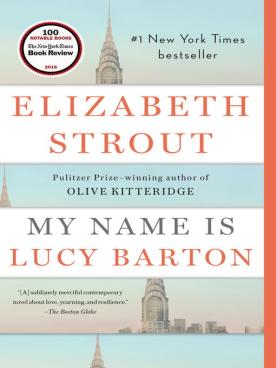
My Name is Lucy Barton, by Elizabeth Strout

{2DB1F063-DAD6-42AE-9E64-A96E10FB3490}Img100

We all have chapters in our lives. Oft times Life itself is moving too quickly to dwell on those chapters–or even recognize them. But there are other times when Life forces us to not only dwell and recognize, but to revisit, analyze, regret, wonder, and forgive.

Lucy Barton is in the hospital and having one of those forced-upon moments. Her condition is serious, but just vague enough to leave her concerned about her future. Serious enough for her mother to visit and stay at her bedside for several days. Not only does a new chapter begin, but now Lucy has a companion–sometimes an opponent–in her nostalgia.

And, like any mother-daughter relationship, this one has its own brand of unique complications: the love, the selective memory, the needs, the power struggles, the guilt, the role reversals, and so many other subtle but strong elements that many women can relate to as mothers, daughters, or both.

While other books exhibit their brilliance in interwoven plots and complex characters, My Name is Lucy Barton exhibits its brilliance in its simplicity. It’s seeming simplicity. Elizabeth Strout has touched on female emotions in an understated, but extremely powerful way–just a woman flipping through the chapters in her life, remembering events that shaped her (some mundane, others not,) acknowledging people who influenced her, and owning her decisions through it all.

The nature vs. nurture debate is not solved, but perpetuated, forcing the reader to delve into his/her own life and wonder “how much of my life is because of my choices?” and “how much of my life is because of the choices of others?”

9.5/10 Stars

Fiction, Romance, Women's Fiction, Young Adult

The Blue Castle, by Lucy Maud Montgomery

517w3GgshkL

One of the most thrilling things when finishing a book is knowing that it has qualified for my “10 Star” list, a list reserved for only the best, in my opinion. When a dear friend mentioned that The Blue Castle was her favorite book I expected to enjoy it, but I did not expect to fall in love with it. Yet, that is exactly what happened. The author, Lucy Maud Montgomery, is best known for Anne of Green Gables and its subsequent series. Yet, I must admit, I enjoyed The Blue Castle’s main character even more. (Please forgive me, Anne Shirley fans!)

I have to care about and feel emotionally invested in a main character in order for me to love a book.  In The Blue Castle, it is Valancy Stirling, a 29 year old “spinster” who lives with her widowed mother and two aunts. They are dour, puritanical, and robotic in all they do, say, and think. Even sneezing in public is a grievous sin. Valancy knows of no other life but this one–this colorless life with no friends and no future.

Why do I love this character? Because, in her longing for something more, she is deserving, quirky, humble, and imaginative. She simply wants what we all want: to be cherished, to be seen as who she really is, and to have a companion who puts her above all others. She is not ambitious or greedy. Her desires, as elusive as they may seem, are simple and valid.

In the meantime, Valancy must live in her head. Only two things bring her comfort while she waits– her John Foster novels, with their color and life and pearls of wisdom: Fear is the original sin, and the thought of her Blue Castle: a metaphor for all the happy, beautiful things currently just out of reach. In her Blue Castle, Valancy is free to think and enjoy without the daily berating she endures from her mother and aunts.

As the reader, you join in this longing and, hope against hope, that Valancy will, somehow, emerge victorious. But how?

At this point, I must resist using spoilers and simply say that The Blue Castle is worth your time. If you are looking for a story that restores your faith in everything, including quality literature and characters that you absolutely fall in love with, this is it. In addition, the writing is like exquisite poetry dripping from your lips as you read it.

A true masterpiece.

A very worthy 10 STARS.

Fiction, Romance, Women's Fiction

A Girl’s Guide to Moving On, by Debbie Macomber

“Clean escapist romance.” That would be the best description of Debbie Macomber’s genre. Escapist lit is not necessarily a bad thing, but it certainly doesn’t challenge the reader. It’s familiar, comfortable, and predictable.

I experienced A Girl’s Guide to Moving On as an audio-book checked out from our local online library. Over a period of two weeks I would listen to it through headphones while walking around the neighborhood on clear afternoons, plugged into my car’s audio system while running errands, or while making dinner and folding laundry. It is perfect for such mundane activities.

The two audio-book narrators take on the roles of middle-aged Leanne and her 30-something daughter-in-law, Nichole. The plot follows their stories back and forth with an easy-going fluidity. Both are on the brink of divorce from their two-timing husbands (keep in mind that Nichole’s ex is Leanne’s son,) both are adjusting to a newly simplified lifestyle, both are looking to redefine themselves as someone other than “so-and-so’s” wife.

Of course as a light romance, that last point is doomed to failure. Personally, I take issue with “moving on” being characterized as finding a new romance so quickly after a divorce, but, as with most escapist literature, we have to be forgiving and suspend reality a bit.

Enter Rocco for Nichole and Nikolai for Leanne. Both story-lines have their “will they or won’t they” hiccups, bumps, and obstacles. Both men are supposed to be the antithesis of the ex-husbands. While Rocco is a “rough around the edges” gentleman, I found Nikolai to be demanding, jealous, and something of a bully. Perhaps others would disagree, but I was not rooting for that particular relationship.

As the story progressed I found myself staying with the characters more out of curiosity than actual emotional investment. By the end, there were no real surprises, no real lessons learned by anyone, just the satisfaction of having everything end exactly as I had predicted. If anything, it was a “placeholder” type of book–one you read until you find something better, which wouldn’t be difficult.

7/10 Stars

Fiction, Romance, Women's Fiction

Comfort and Joy, by Kristin Hannah

IMG_1661

In Kristin Hannah’s novel, Comfort and Joy, high school librarian Joy Candelaro is a realist, but still a dreamer. Her beloved job is real. So is the fact that her ex-husband, Thom, and her sister, Stacey, are now a couple.

It is one thing to choose to change your life, but it is something else entirely to have change thrust upon you without your approval. This particular change has hit Joy like a ton of bricks. Being the result of betrayal by the two people she trusted most in the world has made it even more difficult. How does someone recover from something like this? How does someone regain a semblance of control when everything she knew has been tossed to the wind? All she has left to hold on to is her job, and it isn’t enough.

Joy’s answer is to give herself a spontaneous gift. A change of scenery should do it; the chance to leave dusty Bakersfield and board a plane to the lush Pacific Northwest.

Little does she know that this decision will take her on a journey of discovery. A journey of the heart and mind.

To tell more would spoil the plot.

This is a novel that requires some compromises from the reader. The reader must suspend reality a bit, which I was willing to do. The reader must also accept the fact that not all questions (there are many) will be answered by the book’s conclusion. That was harder for me. And, although I’m glad I stayed with it until the end, there were times I almost put it down permanently. The book is flawed, but still sweet and worth your time. Resist the urge to tell yourself “that would never happen.”  Just give yourself over to the events and let the plot envelop you.

This is most definitely in the category of “Women’s Fiction.” The book taps into many of our emotions: empathy, despair, hope, and love. It is escapist and it is enjoyable.

8/10 Stars

Fiction, Romance, Women's Fiction

The Ladies’ Room, by Carolyn Brown

th

I should’ve gone to the ladies’ room before the service began. But my four cups of coffee and the 32 ounce Coke I’d drunk on the way to church hadn’t made it to my bladder until the preacher cleared his throat and began a eulogy that sounded as if it would go on six days past eternity…

And so begins the saga of Trudy Williams, our protagonist of The Ladies’ Room, by Carolyn Brown.

When I first read the premise of the story–a woman’s life changed because of some gossip she overhears in the ladies’ room–I thought it sounded cute and unique.

When I actually began the book a few weeks later I was immediately turned off by Trudy’s two cousins, Marty and Betsy, the perpetuators of the gossip at their Aunt Gert’s funeral. The whole thing felt very immature.

The final straw was when all of them, including Trudy, referred to Trudy as a frumpy, middle-aged woman and I realized that Trudy is 5 years younger than me. Ahem!

But I stuck it out, grasping to my first instinct that this would be a book worth reading. It was.

Whatever her age, I picture Trudy as a sister of Kathy Bates’ character in the movie Fried Green Tomatoes, a put‐upon housewife whose husband of twenty-plus years sees her more as a cook and laundress than a romantic partner.

Between the gossip she overhears and the result of Aunt Gert’s will, Trudy now has the motivation and means to start fresh. Her one friend is Billy Lee Tucker, a childhood acquaintance and the town misfit, who also happened to be Gert’s next door neighbor.

There is nothing deep, profound, or even unique about The Ladies’ Room, but it will still speak to many women who have found themselves in Trudy’s situation, or, at least part of it. Some aspects of it reminded me of Melody Carlson’s Dear Daphne series, with Trudy being a slightly older, married, version of Daphne.

This is not a book you read for great personal enlightenment. It is purely “escapist literature” at its. The Ladies’ Room is endearing, clean, light, and thoroughly enjoyable.

8.5/10 Stars