Fiction, Romance, Women's Fiction, Young Adult

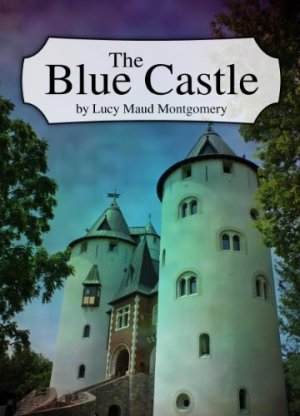
The Blue Castle, by Lucy Maud Montgomery

517w3GgshkL

One of the most thrilling things when finishing a book is knowing that it has qualified for my “10 Star” list, a list reserved for only the best, in my opinion. When a dear friend mentioned that The Blue Castle was her favorite book I expected to enjoy it, but I did not expect to fall in love with it. Yet, that is exactly what happened. The author, Lucy Maud Montgomery, is best known for Anne of Green Gables and its subsequent series. Yet, I must admit, I enjoyed The Blue Castle’s main character even more. (Please forgive me, Anne Shirley fans!)

I have to care about and feel emotionally invested in a main character in order for me to love a book.  In The Blue Castle, it is Valancy Stirling, a 29 year old “spinster” who lives with her widowed mother and two aunts. They are dour, puritanical, and robotic in all they do, say, and think. Even sneezing in public is a grievous sin. Valancy knows of no other life but this one–this colorless life with no friends and no future.

Why do I love this character? Because, in her longing for something more, she is deserving, quirky, humble, and imaginative. She simply wants what we all want: to be cherished, to be seen as who she really is, and to have a companion who puts her above all others. She is not ambitious or greedy. Her desires, as elusive as they may seem, are simple and valid.

In the meantime, Valancy must live in her head. Only two things bring her comfort while she waits– her John Foster novels, with their color and life and pearls of wisdom: Fear is the original sin, and the thought of her Blue Castle: a metaphor for all the happy, beautiful things currently just out of reach. In her Blue Castle, Valancy is free to think and enjoy without the daily berating she endures from her mother and aunts.

As the reader, you join in this longing and, hope against hope, that Valancy will, somehow, emerge victorious. But how?

At this point, I must resist using spoilers and simply say that The Blue Castle is worth your time. If you are looking for a story that restores your faith in everything, including quality literature and characters that you absolutely fall in love with, this is it. In addition, the writing is like exquisite poetry dripping from your lips as you read it.

A true masterpiece.

A very worthy 10 STARS.

Fiction, Romance, Young Adult

Dash & Lily’s Book of Dares, by Rachel Cohn & David Levithan

9780375859557_p0_v2_s260x420

I want to believe there is somebody out there for me.

I want to believe that I exist to be there for that somebody.

Somewhere between the quirky Roald Dahl novels of my youth in the late 70’s and early 80’s and the books I read now in my mid 40’s, there is the Young Adult romance genre of today. I’m very aware that I’m not in the demographic this genre is targeting. I had to remind myself of that when reading John Green’s The Fault in Our Stars, which I enjoyed and finished quickly. I had to remind myself of this again (several times, earnestly) while reading Dash & Lily’s Book of Dares.

The premise is unique and attractive, something of a “Sleepless in Seattle” motif, where two New York City teenagers–independent and far too smart for their own good–begin a “relationship,” such as it is, through letters in a red Moleskin notebook, an idea conjured up by Lily’s brother, Langston, and his boyfriend, Benny.

With twists and turns, colorful secondary characters, and the underlying question of “when and where will they finally meet in person?” Dash & Lily has a lot of potential from the get-go. Whether or not it meets that potential is a toss up.

In discussing the book with others who have read it–all adults ranging from their 20’s to 40’s–there was division. We agreed there was plenty of wisdom in the characters of Dash and Lily, some with which even “grownups” could identify. (Like in the quotes above.) We also agreed that the characters’ “teenage intellect” seems to be given a great amount of philosophical leeway. Is the modern teenager really like this? Not being one, I couldn’t tell you. I was a teenager with above-average intelligence in the 1980’s but my internal dialogue sounded nothing like the teens in these pages. (It still doesn’t.) But if a modern teenager wanted to feel very intelligent by identifying with the characters as fictional peers, I suppose that *could* be achieved here.

There is also the sexualization of the characters. Again, not being in the target audience, I don’t know if it’s accurate. These characters are both left alone by their (seemingly selfish) parents in a way I’ve never seen before. They’re sixteen years old, for Pete’s sake. (Some reality suspension, clearly.) Such independence gives way to opportunity…

So, my guess is that it (the teenage sexualization) is accurate for some, but advanced for others, depending on their upbringings and life experiences.

These conflicts make it difficult to review the book objectively, but not impossible. Personally, I didn’t much care for it. It’s merits (many) were overshadowed by its flaws (abundant.) I felt there was an underlying cry by the co-authors to the Young Adult audience it is attempting to reach, saying “please like me.” Many will. Many already have.

However, if I had a teenager, I would be offering him or her other options, of which there are plenty.

7/10 Stars


Fiction, Romance, Series & Collections, Young Adult

Happy Scoops, by Katie Coughran

hs-coverIn Happy Scoops, we are introduced to Chryssa Parker. Chryssa is the girl you love to hate. She’s privileged, beautiful and smart. She leads the school as both student body president and captain of the cheerleading squad. Despite attending Intellectual Elite High School, she still rises to the top in everything she does, including making everyone around her feel inferior.

All of Chryssa’s energy goes into maintaining her popularity status. She chooses friends who are similar but submissive. The idea of not judging a book by its cover is completely lost on her. Appearance in everything is everything to Chryssa.

How could a reader become emotionally invested in such a distasteful character?

Author Katie Coughran suddenly sends Chryssa Parker on a journey that strips away everything she knows and holds dear. After an ultimatum from her parents, she is forced to take a job where personal appearance means nothing. In an instant, Chryssa must reevaluate everything she thought was important.

Amidst clever dialogue and a very unique story, we follow this unpleasant young woman on her path to humility and actually begin to care about her. Her world is turned upside down as a domino effect of uncontrollable circumstances starts to take place.

Happy Scoops is a delightful page-turner. More than once I found myself chuckling out loud at some of the funny scenes, continually wanting to read more. What’s even better is that beneath the humor are serious reminders we can all benefit from, mainly that beauty can fade at any time and that real relationships are built on compassion and concern for others.

8.5/10 Stars

Fiction, Young Adult

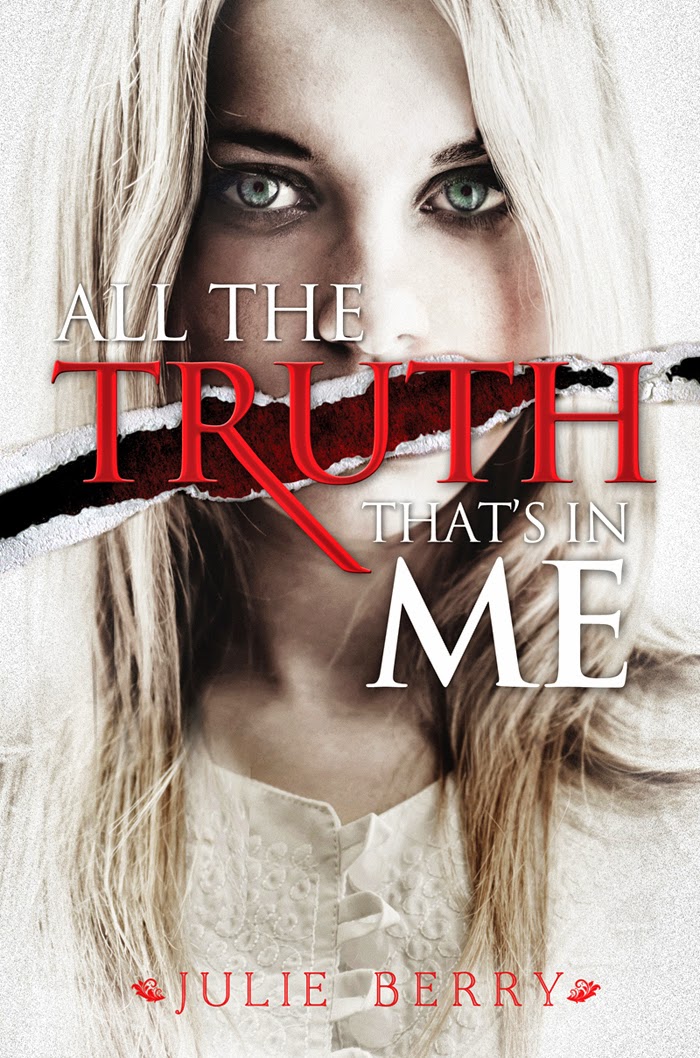
All the Truth That’s In Me, by Julie Berry

All the truth that is in me

Silence is the method I’ve perfected, adaptable to almost any need. Silence and stillness. I wait.

In an undisclosed town during an undisclosed time lives a teenage girl maimed and muted by her former
captor.

These things we know:
• Society defines a girl by her virtue, or lack thereof.
• A girl defines herself by the way her mother treats her.
• A mother sometimes takes Society’s word over that of her daughter.

This is the tale of Judith Finch, our silent narrator and observer of all things around her.

Told in a present tense that forces the reader to shadow this wretched girl, we live Life alongside her, feeling her few joys and many sorrows.

There is great injustice in Judith’s story, the kind that only personal fortitude can overcome.
Judith’s test is to decide if that fortitude exists. Any opinions of her as a young woman before her abduction have long since evaporated. Gone for two years and returned for two, the town only knows her as the silent, probably simple, girl with the shamed and widowed mother.

Is it possible for such a person to have any allies? Happily, yes, but her greatest ally is surprising. He is the son of the man who took her and maimed her. Another is the son’s betrothed, who remembers Judith as a childhood friend.

With so much to overcome, both physically and within her broken family, the reader cannot help but root for such a protagonist. Being privy to her thoughts, elevated beyond what she can outwardly express, we know there is much more to this young woman than what the world admits.

Author Julie Berry has crafted a unique tale. Part Scarlet Letter, part Witch of Blackbird Pond,
part
Crucible. Clearly this is a Puritanical society. Church attendance is mandatory. The accused are guilty until proven innocent. Superstition and ignorance run high. Compassion is scarce, but can be found among a trusted few.

This is a book aimed at young adults, but appealing to anyone who understands the context and time period. The characters, feelings, and, especially, the injustices, resonate with the reader.

Do I recommend it? Yes.

10/10 Stars

Children, History, Memoir, Nonfiction, Young Adult

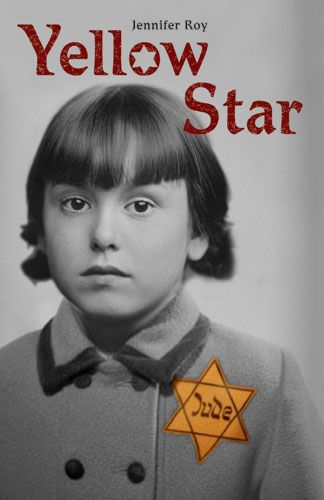
Yellow Star, by Jennifer Roy

v_roy_yellow_star

The Holocaust.

It is one of the most grim events in recent world history. Families are still affected today by lives lost and relatives gone missing.

It is also an event with amazing stories. True stories. Stories that exemplify faith, determination, and strength.

In 2006, author Jennifer Roy endeavored to pen her Aunt Sylvia’s childhood experiences of living in a Polish ghetto during World War II. The “ghetto” was a crowded Jewish internment camp. A neighborhood with barbed wire around it as a way to contain the people Hitler saw as the “problem.” His “final solution” would come later, of course, in the form of concentration camps.

Miraculously, Sylvia (an American modernization of Syvia,) spent the entire war in a ghetto and was one of only 12 surviving children out of thousands. The others became sad, anonymous statistics.

Jennifer Roy is very truthful about her challenges in relating the story. How should she tell it? A narrative? In third person? After trying other methods unsuccessfully, she decides to tell it in Sylvia’s voice, a combination of an old woman’s memories and the simple, but profound, observations of a child.

What emerges are short chapters and efficient language that sound like young Syvia commenting on her changing world. She tries to make sense of things that are senseless.

Why a yellow star? Yellow is supposed to be a happy color.

Bright colors don’t exist in the ghetto, except for the yellow stars and puddles of red blood we carefully step around. “More shootings,” Papa says quietly. His face is gray.

What happened to my friend? She was here yesterday…

Hava is missing. She went for a short walk on the street and never came back. Gone, missing, vanished.

From the ages of 5 to 10, the ghetto, and all that went with it, was Syvia’s world.

It is a child’s honest interpretation of starvation, cold, fear, death, and the unknown. She is acutely aware of her surroundings and the sacrifices her parents make to ease her suffering and keep her safe. “Safe” equals “alive.”

This book would be an excellent teaching tool when discussing the Holocaust, a subject that is quickly disappearing from students’ knowledge of history. Parents should read it with their children. Teachers should read it to their pupils. It is clear in its statement of the times without being overtly frightening. The childhood version of Syvia is relatable and sincere, with that strong sense of fairness that exists in all young people.

Highly, highly recommended.

9.5/10 Stars

Fantasy, Fiction, Series & Collections, Young Adult

Gathering Blue, by Lois Lowry

gathering-blueIn Gathering Blue, a companion book to The Giver, the world is a harsh place.  It begins with a young crippled girl named Kira mourning over the body of her dead mother.  Fatherless before she was born, Kira now has no one and nothing, except for an innate talent with needle and thread.

Lois Lowry has created a dark and primitive setting filled with dense forests and unknown beasts. People are competitive and thuggish, scrounging for Life’s basic necessities. Weakness has no place here and children are taught this at an early age.

Kira, however, was raised differently by a mother who fought to keep her “broken” infant. She knows light and love still exist.  Still, Kira must struggle to survive in a community that does not want her.  One, that with all of its brutality, still has strict traditions.  There are rules to be followed and leaders to be obeyed.

Gathering Blue does not pick up where The Giver left off. No time period is given. I simply told myself that it was another “community,” as described in the first book–but one that functions very differently.

Lois Lowry’s real skill is her storytelling and character development. She is masterful at giving readers just enough information to drive the plot, but allows us to draw our own conclusions before confirming them. I have never seen a writer so gifted at this.

Like in The Giver, “humanity” is the underlying theme of Gathering Blue.  The more you see characters devoid of this trait, the more you are aware of your own.

10/10 stars

Fantasy, Fiction, Series & Collections, Young Adult

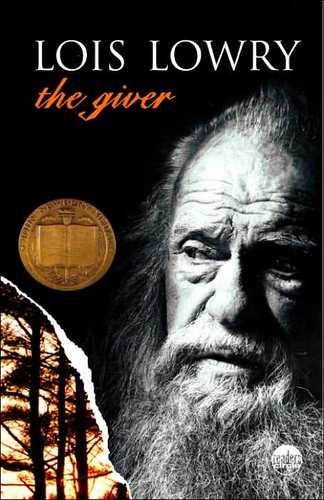
The Giver, by Lois Lowry

giverWhen I was in college and majoring in Humanities, my brother used to tease me by saying that I was studying how to “be human.”  His good-natured mockery annoyed me a little, but after reading The Giver, I now realize that studying how to be human is exactly what I was doing.

When we use the word “humanity,” what does that mean?  Is it a noun?  A verb? An adjective?  Is it spiritual or evolutionary? And can it be taken away?

Even online dictionary definitions are a bit vague.  “Branches of learning.” (Humanities.) “Human attributes or qualities.” (Humanity.)

I pose this question:  Branches of learning according to whom?  Human attributes or qualities according to whom?  All of mankind?  Others in our particular culture?

Which brings me full circle to the question, can it be taken away?

In The Giver, nameless communities who subscribe to the idea of “Sameness,” are doing their very best (with much success) to force the humanity out of humans.  This is done by removing choice and suffering, the very things that aid our individuality, wisdom and personal growth.

Only one person, the Giver, is burdened with the memories of generations before when Sameness didn’t exist.  And his protegee, the Receiver, is training to succeed him.

I will say no more about the plot because the beauty of this story is letting it unfold before you in the timeline the author has created.  Lois Lowry, in a mere 200 pages, produces a world that we all, jokingly, have said would be a better one.  The truth, however, is very different.

Her writing is as efficient and ordered as the community itself.  No words are wasted. No expository paragraph is set to take up space.  She treats her readers as intelligent, feeling, thinking beings–the opposite of the way those in the community are treated.

The only spoiler I will put here–something to expect–there is no ending.  This is the first book in a series of four. Does that lessen its impact?  No.  This is a beautifully written, profound story that makes you question what is and what could be.

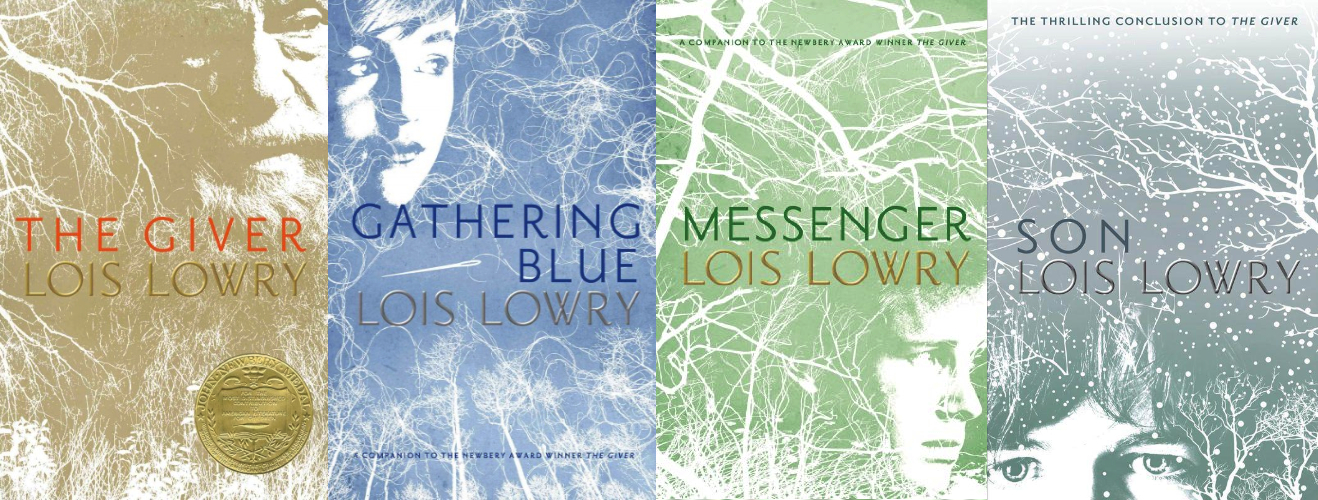
The Giver Series:

The Giver Quartet

A quick commentary about the upcoming film being released on Friday.  For lack of a better word, there is a certain “volume” (noise level, not book number) to The Giver.  Lois Lowry’s language is quiet and steady, much like the characters’ surroundings.  The film’s trailer shows that volume turned up and intensified.  The trailer also reveals important plot points, which is disappointing. Some films based on books enhance the story (the Harry Potter films are excellent examples.)  Some do not. I fear that seeing the film first will detract from anyone’s upcoming literary experience.  If you have the patience and desire, do yourself a favor and read the book first. I think you’ll be glad you did. 🙂

10/10 Enthusiastic Stars

Fiction, Romance, Young Adult

The Fault in Our Stars, by John Green

The-Fault-in-Our-StarsThis post will be a little unusual, because I’m going to talk about the book and the film.  Don’t worry…no spoilers. 🙂

Although…there are people like me who sometimes like spoilers!  So I did the twisted thing and went and read about the story on Wikipedia first–simply because I was curious “What the heck is with this book that everyone is raving about?”  Yep. Guilty. Then I discovered that the Kindle edition was only $5 and started reading. 24 hours, and one sleep-deprived night later, I was finished.

But I will assure you that whether you know the plot or not, the journey to that destination is worth your time.

The basics: Cancer-stricken teenagers Hazel and Augustus meet in a support group.  Hazel is highly intelligent with a side order of charm and Augustus is highly charming with a side order of intelligence. And so their story begins as the book tries to answer the question we should all ask ourselves: to what extent will I allow my crappy experiences to dominate me?

Because we all have terrible, unfair things happen to us. Whether or not we become a victim of those circumstances is, of course, a choice.

John Green, the author, also does what all young adult authors should do, which is to make his characters a little more mature than most teenagers.  Mature, but not arrogant. (Not to diss teenagers, but to point out that he treats his teenage readers as intelligent beings.) And you get the impression that Hazel and Gus would be like this even without cancer–because cancer does not give you maturity–but it does force these young people to confront their mortality earlier than most.   In addition, these are also teens who have genuinely good relationships with their parents, both sets who are happily married.  Yes, it happens!

Green does something else, too.  He successfully gets inside the head of a young girl.  Just like Hazel has a favorite author who, she feels, describes her cancer and death though he hasn’t died, Green does the same with Hazel without having been a teenage girl.  As a former teenager with a favorite author at that age, Hazel’s insecurities, fears, and general feelings are pretty spot on.

Speaking of spot on, I’m going to segue to the film, which I saw tonight.  The makers of The Fault in Our Stars (the film) had to know that many readers would be eager to see how Hazel and Gus would transfer to film.  Too much leeway with the story would enrage them, and rightly so.  Fortunately, the author was on the set, the actors read the novel beforehand, and both young people go above and beyond to embody Hazel and Gus in amazing performances (really, some of the best I’ve seen.) The film cuts out a couple of peripheral characters, but stays true to the story in other ways.  (I do wish the “swing-set story” was given more time, though.)

If I had to make one criticism about the book and the film, it would be the Van Houten character.  On the page I thought he was way over the top. An annoying parenthesis in an, otherwise, lovely sentence.  On the screen I felt the character was miscast (Gary Oldman would’ve gotten my vote,) but everything else about the film was just the way I pictured it as I read the book.

If you are someone who wants to read about healthy love among two unhealthy people, then this is a story you’ll enjoy.  Sentiment, but without sentimentality.  What do I mean by “healthy love?” A love between equal partners who genuinely like and respect each other, where they take turns saving each other, and where there is unconditional acceptance. We should all be so lucky.

9 out of 10 stars


Children, Fantasy, Fiction, Series & Collections, Young Adult

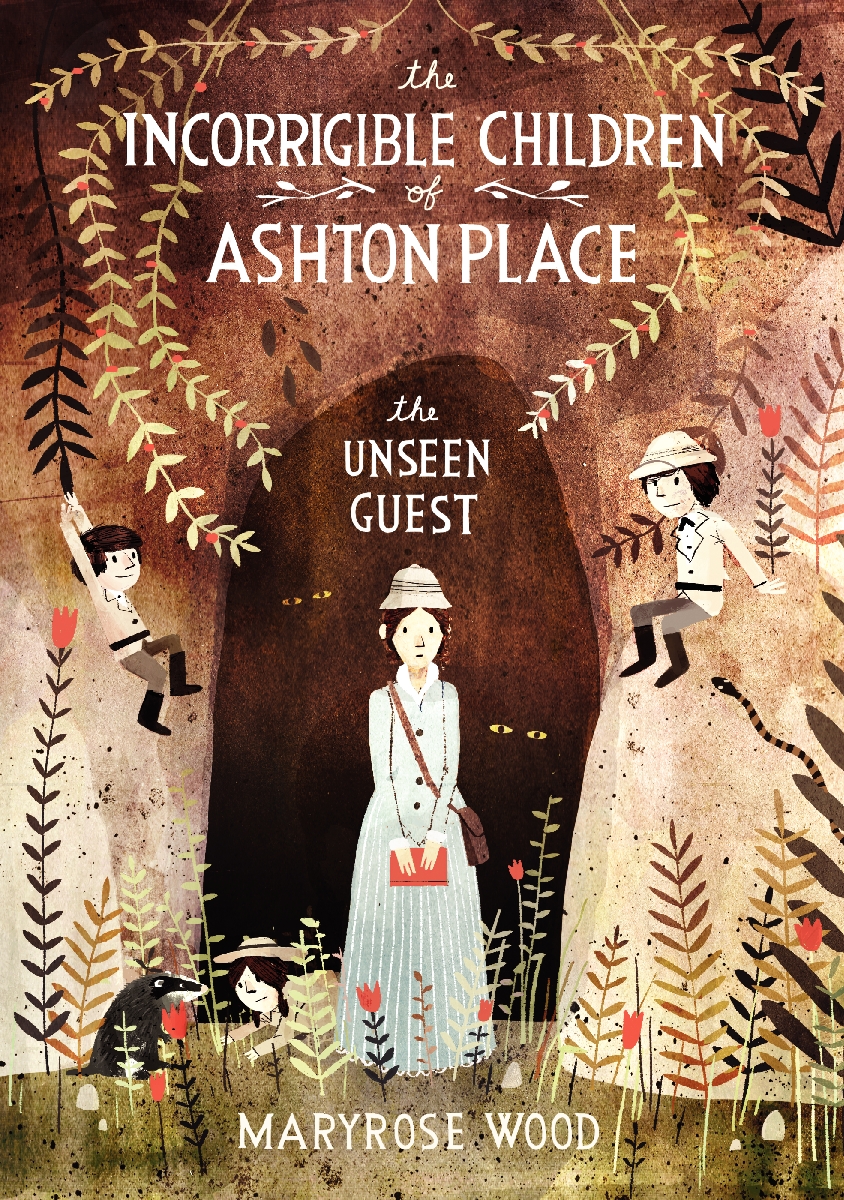
The Incorrigible Children of Ashton Place, Book 3, (The Unseen Guest,) by Maryrose Wood

unseen2In this installation of the Incorrigible Children series, we meet Lord Fredrick’s mother, the Widow Ashton.  She arrives with little notice–sending Lady Constance into a state of frenzy–accompanied by Admiral Faucet (pronounced Faw-say,) her gentleman friend who hopes to marry her.

The 3 Incorrigible Children still maintain some of their wolf-ish qualities, obtained from having been raised by them, but are making great strides in English speech and manners.  Admiral Faucet, however, dwells only on their ability to track things in the forest and, when his imported African ostrich, Bertha, goes missing, he invites the siblings and their governess on a mini safari to find her in the surrounding forest.  When Penelope and the children become separated from the admiral (whose intentions for the ostrich and the Incorrigibles are quite sinister,) they encounter a cave that only deepens the mystery of the children’s upbringing.

As with the first 2 books, this is a unique story with many twists and turns.  Although told in the 3rd person, it is mostly from Penelope’s viewpoint.  The language is charming and conversational with the reader, reminding me more and more of Roald Dahl’s style (my favorite author.)

By the 3rd book, however, I was ready for some of the questions about the children’s and Penelope’s backgrounds to be answered.  Instead of answers, there were only more questions.  Clearly, Penelope and the children are connected in a way more than a governess is to her charges.  And, clearly, Lord Fredrick has a secret that is becoming increasingly difficult to keep.

The story-lines with the supporting characters did wrap up satisfactorily, setting the stage for a new adventure in Book 4, which debuts on December 17th.  Like other readers, I will just have to be patient.

8.5 out of 10 stars

Children, Fantasy, Fiction, Series & Collections, Young Adult

The Incorrigible Children of Ashton Place, Book 2 (The Hidden Gallery,) by Maryrose Wood

image

“Navigation, you see, is not just a problem for sailors.  Everyone must go adventuring sooner or later, yet finding one’s way home is not easy. Just like the North Star and all it’s whirling, starry brethren, a person’s idea of where “home” is remains in perpetual motion, one’s whole life long.”

–Page 311, The Hidden Gallery

Shall I mention again how much I am enjoying the series The Incorrigible Children of Ashton Place?

Book 2, The Hidden Gallery, takes young governess Penelope Lumley and her 3 charges to London. She has received a letter from her former headmistress and an invitation to meet in the city. When Lady Ashton of Ashton Place becomes aware of this, she decides to pack up the entire household and rent a home in London so they can all go. While Lady Ashton cares only about nurturing her social connections, Penelope becomes involved in a series of odd coincidences that raise more and more questions about her background and the origin of The Incorrigibles (Lord Ashton’s name for the wolf-raised brood.)

Once again, author Maryrose Wood writes her gothic tale in a way that is both effortless and charming. Even as an adult, I felt like I was sitting at the knee of a great storyteller, completely engrossed in the characters and the action.

Three themes emerge continuously throughout the book: navigation, the moon, and home. Some of the mysteries in Book 1 become a little clearer if you can read between the lines and unravel the clues, but there are plenty of new questions which are not resolved by the end. It doesn’t matter, the ending is satisfying enough to make you let out a temporary sigh before wanting to delve into Book 3. I’m hooked.

9.5 out of 10 stars

Children, Fantasy, Fiction, Series & Collections, Young Adult

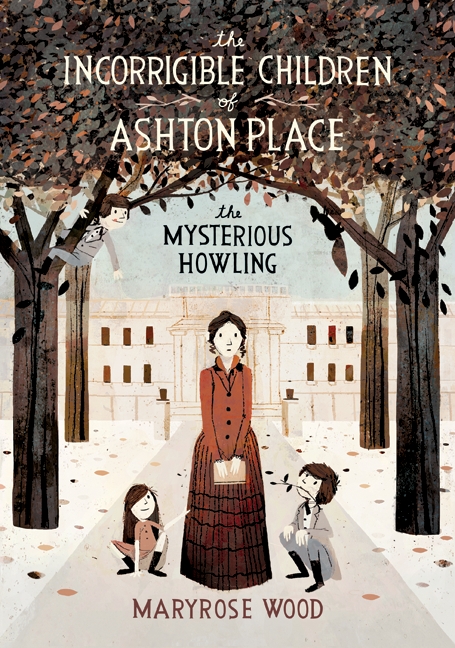
The Incorrigible Children of Ashton Place, Book 1 (The Mysterious Howling,) by Maryrose Wood

9780061791055When 15 year old Penelope Lumley stepped off the carriage at Ashton Place to interview for a governess post, she had no idea what awaited her.  After quickly being hired by flighty Lady Ashton, Penelope suddenly found herself in charge of 3 feral children that Lord Ashton had discovered on his property the only week before.  All of Penelope’s hopes of imparting her knowledge of languages, math, and geography were dashed so she could teach the children the most basic skills.  They had no language, no manners, and couldn’t even dress themselves properly.  Meanwhile, Lady Ashton is thinking only of planning her first big party as mistress of the house and Lord Ashton spends all his days at the gentleman’s club.

Written in a charming style that makes Miss Lumley appear both loving and determined, author Maryrose Wood has managed to make this first book in the series akin to children’s books of old, like Mary Poppins or Alice in Wonderland.  The story is nothing if not unique, as well as engaging and well-paced.  I was enraptured and read it in less than a day.

This is a little gem of a book, and I have already begun Book 2 (The Hidden Gallery.)  How wonderful to read a novel that doesn’t talk down to its reader, doesn’t resort to the current trends of zombies and vampires, and even makes an effort to introduce its readers to new words (“irony” and “hyperbole” are cleverly explained in context.)  Penelope Lumley is smart, plucky and likeable, yet rarely discouraged despite her circumstances.  Since leaving the classroom 4 years ago, this is the first series I have encountered that made me wish I had students again with which to share it.

10 out of 10 stars

Fantasy, Fiction, Series & Collections, Young Adult

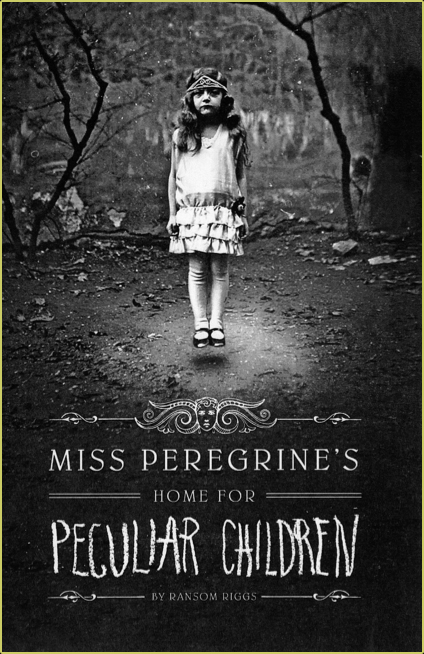
Miss Peregrine’s Home for Peculiar Children, by Ransom Riggs

miss p book cover with borderSomewhere between the X-Men comics and the movie Groundhog Day lies the story of Miss Peregrine’s Home for Peculiar Children, a debut novel for its author.

Aimed at teens, this book begins by introducing us to Jacob Portman, an introverted young man with no direction who works at a drug store.  The caveat is that his family owns the drug store and hundreds just like it.  Like many teens who come from considerable wealth, Jacob values little and has no direction, secure in the knowledge that his family’s money will always support him.  His circle consists of his heiress mother, frustrated father, condescending psychologist, and a grandfather he adores.

His grandfather, Abe, who was a survivor of the Nazi regime, grew up in a children’s home.  Never knowing which stories to believe, Jacob was entertained by Abe’s collection of freaky vintage photographs.  The photos, taken long before Photoshop existed, contain images that have clearly been manipulated in some way.  Or have they?  A girl who floats in air, another who holds a ball of fire in her hand, these cannot be real, right?

Jacob’s life is suddenly sent into a tailspin when he witnesses his grandfather’s death, which is both horrific and mysterious. Using his grandfather’s last words as his guide, Jacob begins a quest to find out the truth about the man he loved most in the world and where he came from.

It is on this quest that the story and setting changes dramatically, from a posh Florida suburb to a tiny island near Wales.  Everything Jacob knows about home, family and himself is about to change.

I was riveted for the first half of the book. Any story that takes its protagonist on the journey this one does is going to hold your attention. The plot is definitely unique and has the makings for a film, which I read is already being made.  My issue is character development.  Jacob and Emma–a “peculiar” child who takes center stage–are developed well, but don’t make us care about them much. (In reading other reviews I know I’m in the minority when I say that.) The other peculiar children are difficult to keep track of, as in which one has which peculiar ability. (Some “peculiarities” are a bit disturbing.) And one of the most important characters, Miss Peregrine herself, feels like a mystery even at the book’s end.  The person I found myself caring about the most, Jacob’s father, had no ending to his plot line.

Two things are clear by the end. This story is an outline for a film and it is going to have a sequel (available 1/14/14.)  But it could have been so much more.  And, in a shameless comparison with the Harry Potter series, JK Rowling showed us that you can have magnificent writing in modern times without profanity.  Riggs seems to want to make friends with his readers by peppering the book with words you hear kids say today.  If the writing is of high enough quality, you can connect with today’s teens without doing that.

Overall, Miss Peregrine is an interesting story that did not meet its full potential. However, I am curious to see where the sequel takes us.

8 out of 10 stars