Faith, Faith and Religion, Nonfiction, Religion, Self-Help

Let God Love You, by Wendy Ulrich

Screen Shot 2020-06-11 at 5.51.09 AM

Once in a very great while I will read a book and think, “If I was more eloquent and disciplined, this is the book I would’ve liked to write.”

Fortunately, probably more successfully, Wendy Ulrich beat me to it.

For many, just believing that God exists is a challenge. That’s a subject for another book. (One I have no plans to write.) But for the rest of us, the biggest challenges can be keeping Him close, feeling worthy of His love, and being assured that He is listening when we pray. Admitting these challenges, even to like-minded friends and family, is equally difficult. It feels like a massive character flaw.

Wendy Ulrich, who spoke at an event I attended in 2012, addresses these challenges and more in her book Let God Love You: Why We Don’t, How We Can. Although Ulrich is a psychologist–which would normally have me running in the opposite direction–she doesn’t use professional terms to make her point. Instead, she takes a very courageous route, an incredibly vulnerable route, tapping into all of her own insecurities with her personal relationship with God over the years and sharing them with us.

At times I felt almost numb. Her sentiments echoed mine in a way that was so accurate, it was almost scary. Her concerns, her fears, her highs and lows felt so relatable. I could feel myself nodding along and thinking, “yes, Yes, YES…These are all things I’ve felt too.” After a while I thought, “I should just stop highlighting, because I’m highlighting everything.” Other reviewers have said the exact same thing.

Not only was it extremely satisfying to know that someone else has gone through the same struggles I have while trying to feel God’s closeness, but it was a relief to know the root of those struggles (she shares many possibilities) and to know that there is hope. Hope, being a core element of faith. Faith being the “assurance of things hoped for, the evidence of things not seen.”

Some may ask, “If being close to God is so hard, why try at all?” Good question.

Obviously, the desire to believe in God (or not) is a choice we all make. But, like anything else worthwhile, it takes practice. Knowing there is hope of getting closer to Him by understanding what we might be doing to keep Him at a distance is a major step. The most important lesson I learned is that we often project human flaws on God because being flawed humans–who often hurt and disappoint each other– is all we know.

It’s been a long time since I could honestly say I was “blown away” by a book, but I was with this one. Yes, it forces introspection and self-examination, sometimes admitting things we are secretly ashamed of and have tucked away, possibly for years. But for those of us who think having a better relationship with God is worth it, which I most certainly do, this book is a wondrous read that far surpassed my expectations. And, while Ulrich is an LDS author, the principles of the book are for anyone and everyone.

10/10 Stars

Black History, Children, History, Nonfiction, Poetry, Young Adult

A Wreath for Emmett Till, by Marilyn Nelson

41xN5LACnwL._SX351_BO1,204,203,200_

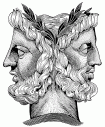
This country we love has a Janus face: one mouth speaks with a forked tongue, the other reads the Constitution.

Let us first define what a Janus face is: cb922372af7ff4692a4ccfe77b79d2bbAmong other things, Janus was the Roman god of duality. And while America represents the Land of the Free for some, it is still a land of hypocrisy, fear, and double standards for many. The last couple of weeks have been a painful, shameful reminder of this.
I happened upon the poetic prose of Marilyn Nelson completely by accident this morning on my local digital library site. I was quickly intrigued by her beautifully expressed story of Emmett Till. For those unaware, Emmett Till was a 14 year old black boy who was lynched and murdered in 1955 for whistling at a white woman. His killers were never brought to justice. His mother, Mamie, who lost her husband 10 years before in a controversial hanging, courageously displayed her young son’s mutilated body in an open casket at his funeral. If the law would not prosecute those responsible, she would do it in her own way.

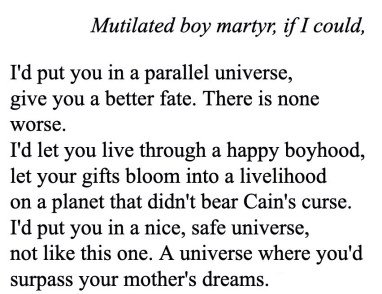
In this sonnet, A Wreath for Emmett Till, award-winning poet Marilyn Nelson speaks for the young man who could not speak for himself and for his brave mother, thrust into the spotlight after his killing. Everything is said with sorrow, with love, and with heart-felt apology. I can hardly do it justice:

Screen Shot 2020-06-10 at 9.32.58 AM

Nelson’s style lends a power that makes mere storytelling inadequate. While probably targeted for young readers, teens and adults will also appreciate this quiet treasure. And, although a quick read, the message lingers long after that we, as humans, still have a long way to go.

9.5 Stars


Children, Fiction, Series & Collections, Young Adult

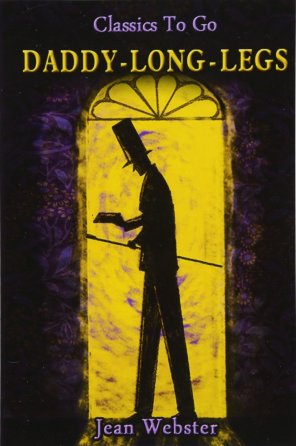
Daddy-Long-Legs, by Jean Webster

81qjcQXpF1L

I suppose that in today’s world, a story where a rich, older man anonymously sponsors an orphaned girl’s schooling while also orchestrating in-person meetings would seem, well, creepy. And if you watch the movie with Fred Astaire as Jervis Pendleton and Leslie Caron as little Judy there is a great age gap–about 30 years– between them, cute as the movie may be. But, as expected, the book is different.

First of all, it is all set in America, not France. Second of all, in the book it is easier to imagine about a 10-15 year age gap between them. This is more acceptable. The film immediately reveals that Daddy-Long-Legs and Jervis Pendleton are one and the same. The book does not, but it’s fairly obvious to the perceptive reader. It’s a spoiler that does not really spoil, although one does wonder how this man who is so sweet to young Judy in person can let her toil and wonder why her sponsor never writes back, allowing her to wallow in confusion for 3 years. That is a bit more unacceptable.

It’s an odd story, one that could only be told at a time when the role of women was to be demure and subservient. The book is comprised entirely of Judy’s letters to her sponsor, always a risky tactic, but here it seems to work. The letters are detailed enough to help the reader forget that they are only reading letters. We see a range of emotions from the young orphan, plus cute little sketches, and even some back-pedaling as she feels one thing one day (usually frustration with the one-sided relationship) and retracts it with regret the next.

The part I find most perplexing is the reader demographic for this story, which I can only assume is a teenage girl, an age peer of Judy’s, at the time it was written in 1912. Again, a very different time for women, still eight years away from the 19th Amendment. At one point Judy asks “are women even citizens?” (Jean Webster, the author, was a great supporter of women’s suffrage.)

So, if you keep in mind the context of the time period this book was published, it is easier not to judge it too harshly and see it as just a sweet, unusual story.

8/10 Stars

Aside from the full-length 1955 American movie, there are many Japanese anime versions of Daddy-Long-Legs. You can find them on YouTube. I came across this short, 12-min bedtime story version, which actually helped me enjoy the book more. Available HERE on Amazon Prime.

Nonfiction, Self-Help

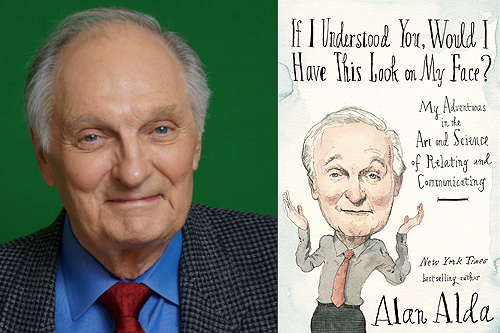
If I Understood You, Would I Have This Look on My Face? by Alan Alda

AlanAlda_June12

Make no mistake, I’m a huge fan of Alan Alda. M*A*S*H has been a staple in my family since I was a kid and my husband and I still continue to enjoy it immensely. The day when Alan Alda is no longer with us (hopefully long into the future,) it will feel like losing a relative.

So when I discovered that he had a podcast on communication (thoroughly enjoyable, check it out on iTunes and other platforms) and a book on the subject (published in 2017) I decided to check it out.

Many of us know that after 11 seasons of M*A*S*H, Alan Alda also went on to host Scientific American Frontiers on PBS for another 11 years. This last show led him to notice a common skill often missing from the scientific community–effective communication.

After speaking with university deans, a lobbyist friend, and various others with a shared vision, the Alda Center for Communicating Science was born at Stony Brook University in New York. It’s been his passion ever since.

In his book, If I Understood You, Would I Have This Look on My Face? Alda talks about the evolution of the center and its work. This hearkens back to his early days as a theater actor, taking classes to hone his craft and doing acting exercises. These exercises promoted both trust and unity among the actors, which resulted in a better performance.

Trust and unity. These are key. By using acting exercises and other theater games, the Alda Center teaches science students at all levels and future professions on how to communicate better. Much of the book is dedicated to the particulars of the exercises, which was a bit tedious at times, and the practical outcomes in either the real or experimental worlds.

Communication is discussed within various categories of the scientific community: labs, research, medical and dental, as well as within business, marriage/partnerships, and even with autistic children. I preferred these sections more that the descriptions of the exercises, which almost seem better suited for a supplemental workbook.

However, all of it was interesting. The heart vs the head, the importance of reading body language, and the most necessary trait in effective communication–empathy. And, while I found myself skimming over the various theater games and exercises, the core skills and feelings we need to develop and maintain, now more than ever, were both helpful and poignant. A powerful reminder that what every human really wants is to be heard.

8/10 Stars

For more information on the Alan Alda Center for Communicating Science and Alan Alda’s podcast, Clear and Vivid, visit www.alanalda.com.

Fiction, Historical Fiction

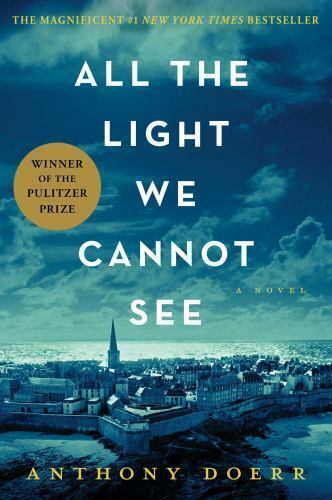
All the Light We Cannot See, by Anthony Doerr

s-l640

“The total entropy of any system, said Dr. Hauptmann, will decrease only if the entropy of another system will increase. Nature demands symmetry.”

In All the Light We Cannot See, the Pulitzer Prize winning novel by Anthony Doerr, that symmetry is achieved by telling parallel stories of two main characters on opposite sides of World War II.

In Germany there is Werner Pfennig, an orphaned, tow-headed young man with a special gift for fixing and engineering radios at a time when communication is crucial. His only family is his younger sister, Jutta, who also acts as his conscience. Werner’s talent and Aryan looks get him noticed and he is recruited into a special school for the Hitler Youth.

In France there is Marie-Laure LeBlanc, a freckled, motherless blind girl. Her father, Daniel Le Blanc, is the locksmith at a local museum. His life is completely devoted to his daughter. He has built an elaborate model of the neighborhood so Marie-Laure can find her way. When they move in with his eccentric, agoraphobic Uncle Etienne, Daniel starts over and builds a model of the new location. He is determined that Marie-Laure be as independent as possible, a skill she will need later. Daniel has also been entrusted with a priceless item from the museum.

There are also a handful of important supporting characters: Frank von Rumpel, the determined German gemologist on an unstoppable quest; Madam Manec, Uncle Etienne’s servant who has become such a part of the family that the word servant hardly suffices; and Frederick, Werner’s first roommate at the new boys’ school, whose sensitive nature and morality chafes against the brutal methods being taught.

All throughout the book we, the reader, are ping-ponged back and forth between Werner’s and Marie-Laure’s lives, wondering when they will converge, as you know fate will orchestrate. Set aside all assumptions, however. All of my guesses were incorrect.

Time periods shift frequently. Sometimes they are clearly marked and other times not, the biggest complaint I’ve seen from other reviewers. I see no purpose in the added confusion, there are so many other details about which to keep track. My other complaint would be that the most intense climatic build ends in a very anti-climactic way. The proverbial balloon popping and hissing until empty.

But overall, All The Light We Cannot See is riveting. If you can picture in your mind an upside cone, that is how I felt as I read about Werner and Marie-Laure’s lives, waiting impatiently for them to intertwine. I flew through the 532 pages in about 3 days, staying up until after 1am last night to finish. As someone whose attention span has been greatly affected by the world’s goings-on, that was an achievement. The book was obviously meticulously researched. I’ve never read so much detail about the Hitler Youth. It made me cringe. War’s unfairness, loss, brutality, and waste is peppered throughout. Why some are allowed to live and others are not is a question that echoes into eternity.

9/10 Stars


Memoir, Nonfiction

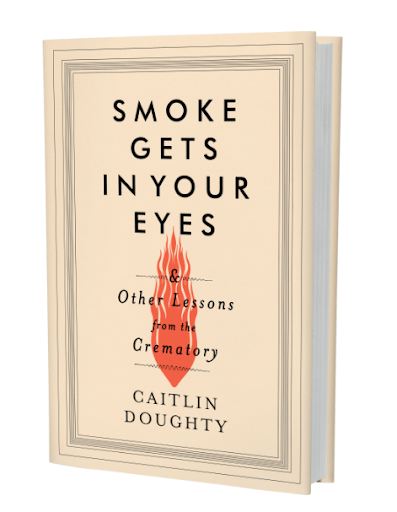
Smoke Gets In Your Eyes & Other Lessons from the Crematory, by Caitlin Doughty

unnamed

Last year, after my mother-in-law passed away, I happened upon a YouTube video entitled “What happens when you’re cremated?” I wasn’t trying to be morbid, I promise. I just like learning new things and, hey, here was a new thing that was exactly what we were going through.

Aside from the information, the video’s hostess, Caitlin Doughty, was great. I started looking around her channel, called Ask a Mortician, and watched more of her videos. You know what I learned? A lot! (For instance, did you know that embalming is not required by law before burial? Did you know there is a “green” version of cremation that uses water instead of fire?)

But what I mostly learned, was that despite having planned 3 funerals/wakes/Celebrations of Lives in the last 12 years, I knew very little about what actually happens to a corpse from the time it arrives at the funeral home to the time it is interred or buried. The industry is designed that way–to sell you the embalming/cremation/burial packages and to shield you from your vast multitude of options. Many of these options are less expensive, more eco-friendly, simpler, and give the grieving family a way to intimately participate. That shielding is not doing us any favors.

So, we the living, advocate for the deceased. But who advocates for the living? Enter Caitlin Doughty, who has made it her mission to pull back the curtain of the funeral industry and give us a look inside. As. It. Should. Be.

In her first book, Smoke Gets In Your Eyes & Other Lessons from the Crematory, we see the author’s foray into the funeral industry as a lowly crematory operator in San Francisco. It’s far from glamorous, but she learns a lot in those few months and we learn right along with her. After that, it’s mortuary school and pretty much being on call 24/7 while driving the “body van” up and down I-5, boomeranging between San Diego and Santa Barbara.

As you probably guessed, this is not a subject for the squeamish, but it’s important. Death is something none of us will avoid. It discriminates against no one. And right now, during the COVID-19 pandemic, most of us are probably thinking about death more than usual. So learn about it. Make a plan so that your family isn’t left guessing. Learn from the good and bad decisions of others. Reading this book is a very entertaining and informative way to start. You’ll be amazed at how much you don’t know, but you’ll also revel in Doughty’s writing style, which is witty, a bit sardonic, but respectful of her vocation.

Caitlin Doughty has written two more books, both of which I plan to read and review in the future. She also owns her own funeral home in Los Angeles, runs a website called The Order of the Good Death, and, of course, her YouTube channel, Ask a Mortician.

Here’s a little intro:

Ask a Mortician YouTube Channel

The Order of the Good Death website (designed to provide education and transparency about the funeral process.)

9/10 Stars

Christian Fiction, Fiction, Historical Fiction, Series & Collections

Muddy: Where Faith and Polygamy Collide, River: Where Faith and Consecration Converge, by Dean Hughes

Muddy_Where_Faith_and_Polygamy_Collide

I’m going to combine the first two novels in Dean Hughes’ newest series:

MUDDY: Where Faith and Polygamy Collide

If you’ve ever wondered what it was like to be a polygamist family in the early days of the Utah pioneers, look no further. Muddy, and the books following it in the series, will give you a fly-on-the-wall view.

Morgan Davis, a faithful young man in his 20’s from Farmington, Utah, has been asked to marry and settle in Southern Utah. Over time, despite his great hesitancy to participate in polygamy, he is asked to marry again.

But there is more to the story–much, much more. There is the setting up in a new place, the adjustment to being a husband and father, and the challenges that accompany hard living while farming and having to provide everything for your family in a place with no resources or commerce.

When Morgan is asked to marry his second wife, Ruth–a quiet young widow–he and his first wife, Angeline, must navigate this new dynamic in their family. What are the logistics when there are two wives? We are privy to all of this, and it’s fascinating.

52329908._UY1000_SS1000_

RIVER: Where Faith and Consecration Converge

Just when Morgan thinks his life is on track, he is thrown more curve balls. River begins with a grasshopper plague swarming into the community. Dean Hughes describes it in such detail, you feel yourself swatting the insects away.

But the biggest new challenge, aside from the grasshoppers, is that Morgan Davis is asked to move with his family to a new settlement and begin living the United Order’s Law of Consecration. If we thought the logistics of plural marriage were challenging, living this law is even more difficult. Many hands might make light work, but they also bring different viewpoints, personalities, and interpretations of rules.

Meanwhile, Washington DC is starting to pursue polygamist families. Morgan, his wives, and children must prepare and decide what to do should he be hauled away by the deputies.

River is a very “meaty” book, with a lot more intensity and personality clashes than its predecessor, Muddy. A terrific second book in the series.

My Observations

Dean Hughes is a very gifted writer. He has a way of showing us the thoughts and feelings of different characters that is both realistic and detailed. He explores an impressive array of human emotion. During the multiple talks to set up the Law of Consecration in the community, Hughes touches on nearly every kind of concern that people would have when asked to live such a lifestyle. It takes an enormous amount of faith and selflessness, things that are difficult for even the best of people.

But I think the thing that impresses me most about Hughes’ writing style is the way he writes women. He seems to know how women tick, their worries and fears, their jealousies and concerns. I am constantly amazed at how well the female characters’ innermost thoughts are described.

This is historical fiction at its best, with realistic fictional characters living and interacting with actual figures from history. I find myself often in moments of self-reflection wondering how I would react to the hardships these people faced and the things that were asked of them by their church leaders.

9.5/10 Stars

History, Nonfiction

Slave Stealers, by Timothy Ballard

Slave_Stealers_cover

Remember these words: Operation Underground Railroad. Visit their site, donate to their cause, and find interviews with their founder, Tim Ballard.

If you feel like modern-day heroes do not exist anymore, look no further. They do.

Timothy Ballard was working as a special agent for Homeland Security when he was inspired to take a very brave step: leave a secure government job and start a nonprofit. Why? Because a government agency has restrictions that a nonprofit doesn’t.

Since 2013, Ballard and his organization have recruited former police officers and agents to rescue thousands of trafficked children around the world. Not only do they rescue them, but they house them in aftercare facilities to help them get the psychological, medical, and emotional help they need to heal, and to gain skills and education so they can proceed with their lives. When possible, they reunite them with their families. No matter what, O.U.R. stays in touch with all of the kids they rescue. And let’s define “kids.” These trafficked children could’ve ended up in that terrible situation at any age, from infancy to their teens. Some were sold by their very own families.

It’s as heart-breaking as it sounds, but it is something about which we need to be aware. After all, change doesn’t happen when we’re comfortable. In case you’re nervous, know that Tim Ballard is very good at shielding his readers from the “worst of the worst,” while still reminding us of its existence.

Meanwhile, he also spends time writing about the life of a Civil War era slave named Harriet Jacobs–her escape attempts, the abuse she endured, the unfairness that abounded in her life, and her minor triumphs. That time period is getting further and further away. It needs to not be forgotten.

Slave Stealers should be required reading for everyone, especially for those of us who enjoy Life’s everyday comforts and luxuries. The accounts will both outrage you and make you grateful. It will make you feel like you want to do something, even if it is just donating to O.U.R., supporting those heroes who risk their lives to save these kids from hell on earth.

9/10 Stars

Fantasy, Fiction, Young Adult

Snape, A Definitive Reading, by Lorrie Kim

snape cover.jpg

Definitive, yes. Interesting, no.

Anyone who has invested time reading and/or watching the entire Harry Potter series knows that there is much more to Severus Snape than meets the eye, and certainly much more than he appears in the very first book. Since the end of the series and as Snape’s true nature and motives have been revealed, the character has become an unlikely hero. It is for this reason that I had such high hopes for this book.

Harry Potter author, J.K. Rowling, has released several books with backstories of everything from Hogwarts teachers to the inception of Quidditch. They’re fascinating. And it makes sense. The backstories are coming from the same imagination that conceptualized the characters in the first place.

Snape, A Definitive Reading is the opposite of fascinating.

I see this book as one more example of someone riding on the coattails of someone else’s talent and success. There is nothing revelatory here, but merely a chronicling of every single time Snape and Harry Potter interacted with each other through the book series. And that, my friends, is A LOT of interacting. It’s as tedious as it sounds.

At the beginning I read carefully, but as time went on and the book maintained its dry format, I found myself skimming more and more. It’s a few hours I’ll never get back and, as a favor, I recommend you not waste your time with this book. You can do better and Snape deserves more.

6/10 Stars

Children, Fiction

Bud, Not Buddy, by Christopher Paul Curtis

Bud Not Buddy cover.jpg

This is a book I discovered completely by accident. It was featured on the homepage of my local online library during Black History Month. I was attracted to its Newbery award winning status and its many stellar reviews.

Bud (not Buddy) is an only child with an absent father and a recently deceased mother. He’s currently “in the system,” being bounced from one foster home to another. He longs for a real family and, deep down, he knows there is one waiting for him.

The story seesaws between touching moments as Bud (not Buddy) pieces together clues to find the man he thinks is his father and hilarious moments in his transient, fractured life. Aimed at children, the balance of these two characteristics is just enough to keep a young person’s attention. It certainly captivated mine. Bud (not Buddy) is extremely likable and polite, you root for him the entire time, always hoping that he’ll find the family he seeks.

I was very happy to have found this book. If I was still teaching elementary school (which I did for 13 years until my marriage in 2010,) I would definitely purchase this for our classroom library and read it aloud during group storytime. There are plenty of things to discuss with young students. However, since I do not currently have my own classroom, I shared this book by sending it, along with Farmer Boy, to California as birthday presents for my 12-year old nephew. We do what we can.

8.5/10 Stars


Children, Historical Fiction, Nonfiction, Series & Collections, Young Adult

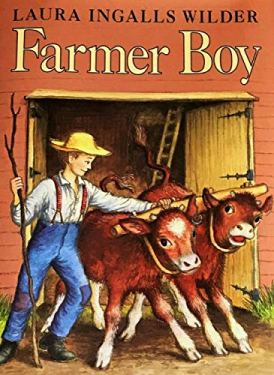
Farmer Boy, by Laura Ingalls Wilder

Frmer Boy cover.jpg

As a child I was given the entire Little House on the Prairie book series. It was, after all, the late 70’s, and the TV show was a local favorite. I read a few of the books, some of them several times, but Farmer Boy always stayed in my blind spot. In some ways I’m glad it did. I’m a big believer that books come into our lives at the right time when we can fully appreciate them and, apparently, Farmer Boy needed to be appreciated in my late 40’s.

This is a stand-alone book from the rest of the Little House series, one that Laura Ingalls Wilder wrote about one significant year in the life of her beloved husband, Almanzo Wilder. Almanzo has just turned nine years old. He has an older brother and older sisters. Poor Almanzo feels what so many children feel when they’re the youngest, always left behind and never given the responsibilities that the older ones are given.

The book is both entertaining and poignant. The way the siblings handle their freedom when their parents leave them alone for a week is hilarious. But the majority of the book is from Almanzo’s point of view as he observes his father work around the farm and train horses, a particular talent his son greatly admires. And, like the Sarah, Plain and Tall series, the reader sees how children were put to work at a young age, never in an abuse manner, but given chores appropriate for their age. Everyone needed to pitch to keep a farm running and most children of farmers grew up to be farmers themselves.

There is a wonderful documentary on Amazon Prime Video called Almanzo Wilder: Life Before Laura. It was this documentary that prompted me to read the book, despite not being in the age group of its target audience. I recommend both the documentary and the book.

9.5/10 Stars

Children, Series & Collections, Young Adult

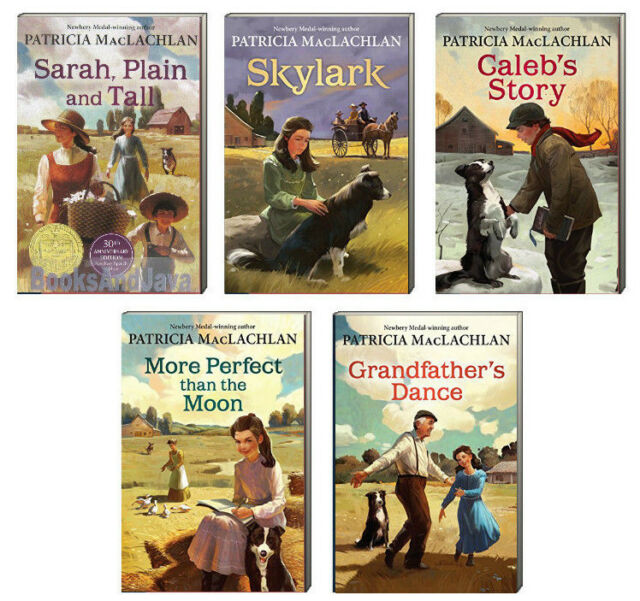
Sarah, Plain and Tall Series, by Patricia MacLachlan

Sarah Plain and Tall series covers.jpg

If you’re a fan of Laura Ingalls Wilder’s Little House series, then you will be just as charmed by Sarah, Plain and Tall, Skylark, Caleb’s Story, More Perfect Than the Moon, and Grandfather’s Dance.

And, if you know about President Abraham Lincoln’s early childhood, the premise of these books will sound familiar too: a widowed man with two children marries again, the new wife becomes a beloved member of the family and positively influences them for years to come. (In fact, Lincoln’s sister, stepmother, and stepsister were all named Sarah.)

All five of these books are short, but very enjoyable. I was amazed that they weren’t all one multi-chaptered book. But I reveled in their descriptions of a simpler time when families spent so much time together making their farms a success and just enjoying each other’s company. Children learned the value of work much earlier than today and parents were parents. Less focus was placed on material possessions. The days and months had a rhythm to them that followed the harvests and seasons. Hardships, usually due to inclement weather, were plentiful, and families had to adapt in different ways.

This series is both pleasant and powerful in its capturing of the time period.

9/10 Stars