Faith, Nonfiction, Religion

Worth the Wrestle, by Sheri Dew

worthwrestle

There is a vast spectrum between belief in God and non-belief. There is also a large spectrum within the range of belief. In the course of our life this is something that everyone must self-evaluate at least once. Our belief system, after all, shapes who we are, what we do, and how we interact with others. Am I a Christian or not? Do I believe in God or not? Do I adhere to the doctrine of an organized religion or not? Am I satisfied with my belief system or not? All of us have answered these questions, either in quiet solitude or aloud.

It is only fair to tell the reader of this post two important things: 1. This blog is maintained and written by a member of the Church of Jesus Christ of Latter-day Saints. 2. While not strictly for a Latter-day Saint audience, Sheri Dew’s Worth the Wrestle is directed mostly towards members of this particular church.

Having said that, and knowing what one is getting into when reading this book, its audience is well, anyone. If you are a seeker of faith, a student of religion, a Latter-day Saint who is struggling, a Latter-day Saint whose testimony is strong but needs a booster shot, or even a curious person with any belief system who seeks important suggestions for a happier life, then this book is for you.

Sheri Dew has been blessed with a wonderful gift of expression. Her messages are simple, but the outcome is undeniable. She uses examples from her own life when she encountered situations that could have threatened her beliefs. Like all of us, she has wrestled. She knows of what she speaks, and does so brilliantly. However, unlike all of us, she has emerged victorious from that wrestle with her initial beliefs intact. She also gives examples of friends and acquaintances who have wrestled with their faith. What is the common denominator for those, like Sheri Dew, who are able to heal from their spiritual slumps? True humility and true desire to find their way back. The outcome for the humble person versus the obstinate one is profound.

I listened to the audio version of this book on Deseret Bookshelf PLUS, a treasure trove of faith-based materials available to anyone. Sheri Dew, the current CEO of Deseret Book, reads her own words, making them all the more poignant and expressive. At the book’s conclusion I was fortified, spiritually uplifted, and informed. All good things.

9.5/10 Stars

Nonfiction, Self-Help

The Ultimate Guide to Menstrual Cups, by Jackie Bolen

ultimatemenstrualcups

I have a new project! I’ve been researching ecological, cruelty-free health and beauty products over the last several months (one of the reasons why this blog went dormant for a while.) This quest has led me to reusable menstrual products, mainly menstrual cups. (All together now…”eewwww.” And now, “What the heck is a menstrual cup?”)

Developed in the 1800s, redesigned in the 1930’s, and finally coming into prominence in the last decade, menstrual cups are similar to tampons, except that they collect the flow instead of absorbing it. Made of medical-grade silicon or TPE (thermoplastic elastomer,) they are healthier (virtually no risk of TSS!), more comfortable, and more economical. Choosing the right one, however, is a process that requires time, patience, knowledge, and research.

I have learned A LOT about these little marvels recently, enough to know that the limited resources of information vary greatly in their quality. There are only a small handful of websites and Youtube channels that I would recommend. There is, however, only one book I would recommend, and that is this one, The Ultimate Guide to Menstrual Cups, by Jackie Bolen. It is only available in ebook form, and is on Amazon for $4.49.

The book is concise, informative, and thorough. In my experience, potential users always have the same questions and this book addresses all of them.

9.5/10 Stars

Nonfiction, Philosophy, Self-Help

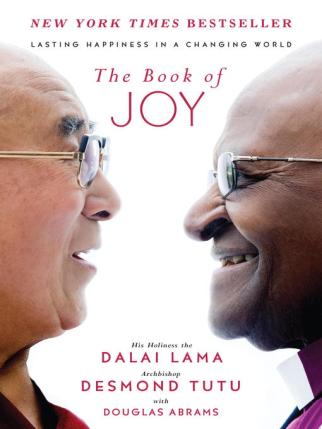
The Book of Joy, by Douglas Abrams

bookofjoy

Despite having only met a handful of times, the Dalai Lama and Anglican Archbishop Tutu are terrific friends. Their mutual love, respect, generosity, and self-deprecating humor is wonderful to witness. The Book of Joy, by Douglas Abrams, chronicles a meeting spanning several days in which the author both observes and asks questions of these two revered spiritual leaders. The questions are about joy, happiness, the toxic state of the world and how to find joy and happiness within it. There are also questions regarding their personal lives, experiences, and challenges.

Both men have overcome great obstacles in regards to health and national politics. Both have had to adapt their spirituality and personal philosophies to the changing world. Both are highly disciplined (although the Dalai Lama clearly excels in this trait.) They also differ in many ways. Archbishop Tutu is a Christian, the Dalai Lama is a self-described “non-theist” Buddhist. The archbishop is married with children, the Dalai Lama leads a celibate lifestyle. The archbishop chose his path in life, while the Dalai Lama was sought out and plucked from his very large family at the age of 3 to fulfill his spiritual obligations.

The book could be described as “pleasant.” But I cannot describe it as groundbreaking. It is endearing to see the banter between the men and to hear about their histories, especially the Dalai Lama’s exile, but my interest did not go too far beyond this. The concepts of love, kindness, compassion, and forgiveness are, no doubt, very important, but I did not extrapolate any significant depth from the discussions. The Dalai Lama was always the one who initiated answers, while the archbishop usually “seconded” them. However, for a reader such as myself who believes in God and an afterlife, unlike the Dalai Lama (who frequently reminded the reader of this fact,) it often felt like a large puzzle piece was missing.

The person who doesn’t give himself enough credit is the author himself, who often contributed insights that elaborated and enhanced the discussions. As the book continued I found myself highlighting more and more of his thoughts. By the end, after color coding the contributions of all three men involved, the Dalai Lama had the most highlights, the author was second, and the archbishop was third.

Make no mistake, I do think an audience exists for this book. Someone who reveres these men more than myself, someone who is a nontheist or agnostic, someone who lacks personal or scriptural resources on joy and happiness, someone who wants to read a pleasant book about joy without digging too deep, someone who enjoys a wider range of reading material than myself…there are plenty who would enjoy this book very much. Sadly, my enjoyment had its limitations.

7.5/10 Stars


Biography, History, Nonfiction

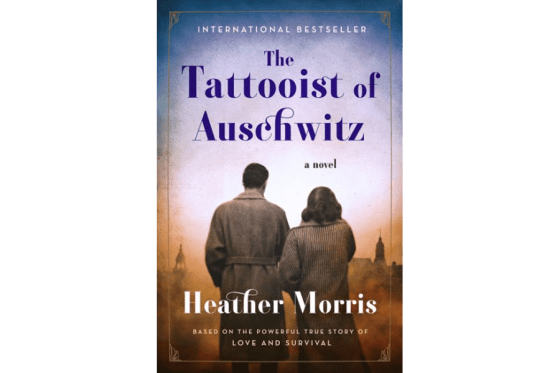
The Tattooist of Auschwitz, by Heather Morris

1067891_1_08-22tattooist_standard

Stories of love, discipline, generosity, and resourcefulness that were born out of the Holocaust never fail to amaze me. But because of the atrocities of the time, I usually prefer to learn about them in a documentary. It’s much easier for me to devote an hour or two to this cruel period than several hours reading about it. Knowing this about myself, I began The Tattooist of Auschwitz with caution. Seeing the word “survival” on the cover also helped me. Whatever darkness endured by the main character it would ultimately be about…survival.

Armed with this knowledge and drawn in by Heather Morriss’s high-quality writing style, I began the story of Lale, a Jewish Slovakian man in his twenties who went to Auschwitz when concentration camps were still in their infancy. Quickly promoted from the assistant to the main tattooist responsible for carving thousands of permanent numbers into inmates’ arms, he was given access to more areas of the camp, afforded extra rations which he usually shared, and even came face to face with the “doctor of death” himself, Josef Mengele.

Through Lale’s eyes we are given a glimpse into the abominable creativity the Nazis used for dehumanizing those who crossed their paths. Any wrong move–or no move at all–brought death. The alternate side is how the craftiest and luckiest (often a factor) inmates survived from day to day, submissive on the outside, powerfully resolute on the inside.

This book reads very smoothly as we live through Lale’s three years at the hands of such doom. Every day could be his last. But, like other inspiring stories from this time, he triumphs again and again, helps many others, constantly dodges death, and even finds love.

The Tattooist of Auschwitz is a phenomenal book that deserves its many accolades. It is only graphic in its honest portrayal of events but never more than necessary. I appreciated that. There are also a few f-bombs, but I allow rare leniency on this because of the setting’s intensity.

Highly, highly recommended for mature teens and older. This would make a terrific book club selection or just for individual reading. It is uplifting in ways you would never expect but most importantly–it will change you.

A worthy 10/10 Stars


History, Nonfiction

The Radium Girls, by Kate Moore

radium girls

If you’ve never heard of the “radium girls” and their sensational trial in the mid 1930s, you’re not alone. Until reading this book, neither had I. But it is a piece of history that needed to be told.

After Marie and Pierre Curie discovered Radium in 1898 it became the “wonder element.” Radium was put into face creams and lotions, people drank radium-infused water, and its glowing properties were put to use in special paint at the Radium Dial Company in New Jersey. “Fortunate” women were hired to paint over numbers on watches worn by American GIs fighting in WWI. Later, radium watches and clocks were sold across the US.

f1
Example of a radium clock

The highly trained women who painted the dials made more money than most in the workforce. They could help their families and still afford expensive clothing. Others longed to follow in their glowing footsteps. That’s right, the dust from the workroom clung to them, making their glowing figures instantly recognizable as they walked home each evening.

Speed was of the essence and these women kept up, 6 days a week, long hours every day. Paid by the unit, they were trained to use the “lip, dip, paint” method, a quick way to give the brush that perfect point necessary for such delicate work.

But over time the radium worked its way in deeper than the women’s skin and hair. A toothache here, a painful hip there, a sore arm, and worse. Much, much worse. Radium poisoning was making its appearance, starting slowly until it could not be ignored.

Radium Girls tells the story of these women and what they endured physically, emotionally, and financially as their health issues began dominating their lives. Eventually their illnesses forced the medical community to connect the dots and someone needed to be held accountable. So began the lawsuits against Radium Dial, who, for years, stubbornly refuted all accusations.

The book is important and I’m so grateful to finally know of this segment of history, one you would never learn about in school. These women’s suffering cannot be overstated, as you read believing…hoping…knowing that surely the company will be made to pay, right? Sometimes the company’s reactions were so, so frustrating.

A very impressive recounting of the events and, although long in coming, the vindication these women deserve.

9/10 Stars

June 2020 Update: This morning I learned that Radium Girls has been made into a film, set to release last April, but delayed due to COVID-19. This is a story that was crying out for more attention. I hope the film does it justice. More info is available HERE.


Fiction, Romance, Women's Fiction

How To Walk Away, by Katherine Center

how-to-walk-away-book

Katherine Center’s sassy females are just so dang likeable! And some of these life-altering events are big, things we can only pray we never have to experience.

Our sassy female in How To Walk Away is Maggie Jacobsen. Her event is….a spoiler that I’m not going to divulge here. Let’s just say that everything was in place for her life and her future and what happens next sends those plans down in flames. (hehe)

What makes How To Walk Away a reader’s escapist delight is the journey. That journey is fun, witty, karmic, and emotional. There is something life-affirming to the style Katherine Center uses because it’s something many of us have experienced–your life is headed in one direction, gets derailed, and you end up in a better place than you could’ve imagined. And though that derailment isn’t very fun as it’s happening, the ending would not have been possible without it. When it’s all over, you’re a little stronger, a little wiser, and a lot happier–just like these characters.

I know, vaguest review ever. I’ll just conclude by saying that Maggie’s journey is worth the read. (Mine was a zippy 3 hours. I could not put the book down!)

8.5/10 Stars

Disclaimer: While sassy females are going through that process of mourning the life they knew, they sometimes get frustrated and angry. Those emotions can bring out some choice words. One particular choice word that starts with F appears about 10 times in this book. I’m very much not a fan of that language, but it’s there and it didn’t keep me from reading. Still, now you know.

Fiction

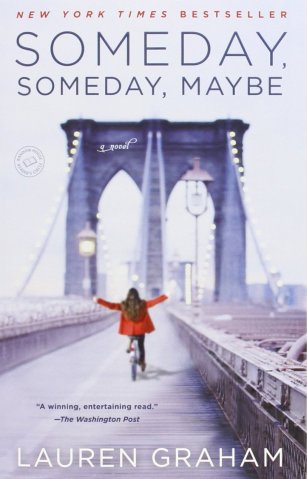
Someday, Someday, Maybe, by Lauren Graham

SSM

Someday, Someday, Maybe, by Lauren Graham is a book that has been in my peripheral vision for a while. It has great reviews and a beloved author. However, Lauren Graham is not beloved because she is an author, but because of her role as the sarcastic and charming Lorelai Gilmore, on Gilmore Girls.

And therein lies the problem. Lauren Graham was not the writer of the show that made her famous, yet she tries to channel her alter ego of the early 2000’s into Frannie Banks, a hybrid of the author and the actress. True fans might be more forgiving than me, but my struggle to like this novel was akin to Frannie’s struggle as an actress in New York City.

Frannie has set a three year deadline for herself. If, at the end of three years, she has not found success, she will admit defeat and move on to something else. Meanwhile, she’s making pennies as a waitress, sharing an apartment with roommates Jane and Dan, and playing phone tag with her concerned father.

Being leashed to this character through her ups and downs in these scenarios does not make for much of a plot. Instead, we’re introduced to a plethora (don’t you love that word?) of potential plots that never quite gain traction. How I would’ve loved to read a story about Frannie’s relationship with the guy she ends up with, or delve further into the father/daughter relationship. I would’ve been satisfied if the story had started where this one ended.

Instead, Lauren Graham chose a segment of Frannie’s life that isn’t really that interesting with a character who is pretty one-dimensional. The doodles in Frannie’s Filo-fax were a cute touch, but not enough to keep the story afloat.

After finishing Someday, Someday, Maybe, I zipped through a book by Katherine Center (my next review.) Her sassy female characters are created so effortlessly, it made me think that this was probably what Lauren Graham was trying to accomplish…but didn’t.

A swing and a miss on this one.

7.5/10 Stars

P.S. I did start watching Gilmore Girls for the first time ever and am liking it very much. The moral of this story? Stick with what you know. Not everyone was meant to be a writer. (And that is OK!)

Fiction, Magical Realism, Young Adult

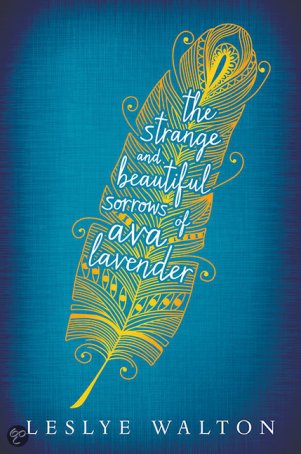
The Strange and Beautiful Sorrows of Ava Lavender, by Leslye Walton

9200000025021139

Clearly, magical realism needs to be a new category on my site. So let it be done.

The Strange and Beautiful Sorrows of Ava Lavender…I’m still trying to decide my feelings about this book as I write this review. Kirkus Reviews expressed it so well: Lyrical magical realism paints four generations of women with tragic lives until a shocking violation fixes everything. (Although I’m not sure I would agree with the word “fixes.” Maybe “ended everything…” And where a female character is involved, the word “violation” can only mean one thing. A bit graphic for a YA novel, IMHO.)

Kirkus Reviews also mentions what so many others have too, which is that the main character, Ava Lavender–if you could call her the main character–isn’t born until nearly halfway through the story, although she narrates it from the beginning. The first half is all about her ancestry, starting with her great grandparents in France. This would be interesting if it were relevant, something only the reader can decide. I did not find it to be so. The tragic genealogy of Ava’s family did not explain the odd fact that she was born with wings, that her twin, Henry, was most likely autistic, or that their mother can predict certain events from their smell.

Like the unique plot, the writing quality is also up for debate. Poetic? Or tedious? I suppose if the writing were truly moving the plot forward, I would’ve appreciated it more, but when so many of the characters at the beginning have no real bearing on the supposed “main character,” I couldn’t help but question the point of the book’s first half. It was like the author was just warming up for the real story…such as it is.

Strange as it may seem, my favorites were Ava’s best friend, Cardigan, and her brother, Rowe. I loved the way they saw beyond her “deformity” and viewed her as just another girl. I also enjoyed the characters of Gabe and Wilhelmina, both steadfast presences in the lives of Ava’s mother and grandmother.

When I’m longing for the “sidekicks” to reappear, that, to me, indicates something is lacking in the story.

This is labeled as a Young Adult novel, but I wouldn’t recommend it. The plot is pretty “out there” and too much is unresolved at the end. (An ending I’m still trying to correctly interpret.)

7/10 Stars

Fiction, Historical Fiction

The Guernsey Literary and Potato Peel Pie Society, by Mary Ann Shaffer and Annie Barrows

The-Guernsey-Literary-and-Potato-Peel-Pie-Society

Is it possible for a book written completely in an epistolary style and a movie adaptation that takes great liberties in plot to compliment each other perfectly? The answer is a resounding “yes.” I give you The Guernsey Literary and Potato Peel Pie Society, by the late Mary Ann Shaffer and her niece, Annie Barrows.

I will admit I began the book first and then abandoned it for several weeks. Reading a book that is all letters back and forth felt a bit tedious. (Although it may have been my own timing.) It was like opening a box of letters in someone’s attic and, while reading them, trying to create a timeline, a narrative, and full-bodied characters. My imagination at the time (or lack thereof) needed help. Shortly thereafter, a friend mentioned the movie’s release on Netflix and how much she loved it. Being a period piece, British, with four cast members from my beloved Downton Abbey was all I needed to know.

Soon I became engrossed in the lives and stories of London writer Juliet Ashton and her new pen pals and friends on the island of Guernsey. The movie’s casting, production quality, and acting more than made up for the changes it made to the book–changes I only realized later while reading. It gave faces, voices, and personalities to our darling, witty Juliet and Guernsey natives Dawsey, Isola, Eben, Amelia, Eli, and Kit, as well as the Society’s leader, Elizabeth McKenna, and Juliet’s publisher, Sydney Stark. All changes were immediately forgiven.

I know, this is sounding more like a movie critique than a book review…

Historically, the novel opens a window to a section of World War II that most of us have never known, the German occupation of the Island of Guernsey and the effect it had on the residents. The island was no more a refuge but a prison, with those living there completely cut off from news and communication with the rest of the world, including the United Kingdom, where the Guernsey children were sent. It is a life that we, who have never known war on the home-front, can scarcely imagine. There are a few scenes in the book that describe the horrors of the time that, gratefully, were omitted from the screen. Reading about them was enough for me.

That really is what the story is about–the power of the written word and the light it brings, especially when the world outside is so dark.

As a stand-alone novel, it is difficult for me to review it without including the film because they work in tandem so well. This is a rare occasion where watching the film first really worked for me when I read the book, and all I have to go on is my own experience. Still, that experience was a delightful one. I recommend them both whole-heartedly.

9/10 Stars


Fiction, Short Stories

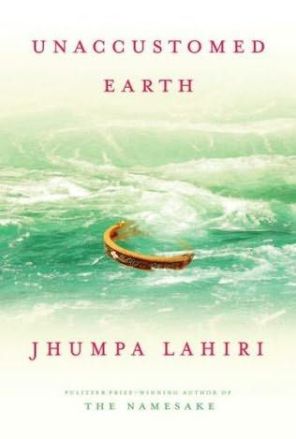
Unaccustomed Earth, by Jhumpa Lahiri

unaccustomedearth

In eight short stories, the reader is tossed in the middle of specific family situations. It could be about spouses, siblings, parents and children, roommates, or lifelong acquaintances whose lives intersect at the most unexpected moments.

There is no beginning and no end to each story. Events have already begun happening when the reader arrives and continue happening when the reader exits. We are a fly on the wall, sometimes in a room where characters are conversing and sometimes on the walls of their minds. We learn of the high expectations for Indian immigrant children: multiple university degrees, marriage, a family, a successful career, and the perpetuation of those expectations. Anything less shames the parents and previous generations.

The writing is exquisite. If writing has a “volume,” this one is quiet and steady but not monotonous. There is great power in the quiet. Every move a character makes is part of his/her development. Every decision affects the outcome. We learn about what is said versus the large amount that is not said. The gap between the two usually has fateful consequences. There is love, hate, disappointment, redemption, loss, and learning. The last three stories blend together beautifully. And, although it is fiction, the people feel incredibly real and biographical.

What a delight to read such high quality writing as Unaccustomed Earth. I had no idea what to expect, but I came away feeling like I knew more about the Indian immigrant culture in the United States.

9.5/10 Stars


Christian Fiction

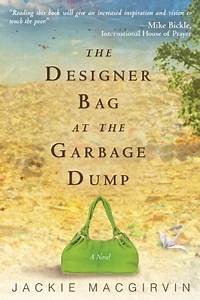
The Designer Bag at the Garbage Dump, by Jackie Macgirven

th

Sigh…

This is a book I debated about putting on this site because it is one of the worst books I’ve read lately, but reviews are about honesty and public service, so here is one to avoid.

(My Goodreads Review)

This book is advertised as a modern-day parable, but it is absolutely not a parable. Parables are gentle and subtle, allowing the reader to extrapolate the message on their own. This book was the complete opposite of subtle. It was a sledgehammer grinding a message into the reader.

The premise sounded interesting: a self-absorbed shopaholic meets Jesus on the subway who admonishes her materialistic ways and forces her into a new setting–India, of all places–to care for the forgotten. But it is all downhill from there…

As a Christian book I found it ridiculous, tedious, and very heavy handed. The characterization of Jesus Christ was appalling. None of us ask to be born in a certain time or place. I felt like I was being made to feel guilty for being born into a middle-class American family while others are suffering. One person’s blessings are not the cause of someone else’s suffering, and that is the way this story is told. And no, I did not miss the message. How could I? It had all the subtlety of a buffalo playing the tuba.

After having just read Unaccustomed Earth, with its exquisite high quality writing and subtle, yet powerful, messages about interpersonal relationships within families, this book was insulting. I felt talked down to by the writer.

Both Goodreads and Amazon give praise to this book through their many reviews, although there are a few who share my opinion. It is terrible.

3/10 Stars

Fantasy, Fiction, Young Adult

The Astonishing Color of After, by Emily X.R. Pan

35604686.jpg

Back from a 3 week vacation through Utah, so I’m trying to catch up. I’ll be pasting in my Goodreads reviews on a few books I read while we were away. 🙂

Suicide, depression, grief. These are heavy subjects. Leigh Chen Sanders is trying to cope with all of them. Her mother is gone, depression has clouded their family for years, and now she and her father are trying to pick up the pieces.

And her mother? Her mother is now a bird. A red, fleeting bird who is always just beyond her grasp. Leigh is convinced of it. She is also convinced that the answers she seeks are in Taiwan with the grandparents she’s never met. Her father agrees to take her there.

The rest is a journey of memories and family revelations.

The Astonishing Color of After was my first foray into magical realism. I love the title and the concept of Leigh mentally transferring her mother’s spirit into a bird. But the story fell flat. Leigh is the crankiest, most unlikable character. She is rude to everyone, offended by everything, and acts as if her grief gives her a free pass to treat people horribly. She is at constant odds with her father, who is clearly just trying to keep the family afloat in these challenging circumstances. Yet Leigh never sees beyond her own needs.

The color imagery felt forced. Leigh is an artist and she thinks and feels in colors. But having a character like Leigh create beauty and meaning while being constantly sour does not work. I didn’t care for her, so I couldn’t care about her. Her supposed self-discovery is as ridiculous as her sudden lightheartedness at the story’s conclusion. Everything is tied up in a neat little bow….after all that? My head was spinning.

The reviews I read on the book were overwhelmingly positive, so I dove in with high expectations. Overall I found it to be tedious, very boring, and frustrating. I felt disconnected throughout the entire story and deeply disappointed in the unrealistic ending.

7.5/10 Stars

(My Goodreads Review)