Children, Fantasy, Fiction

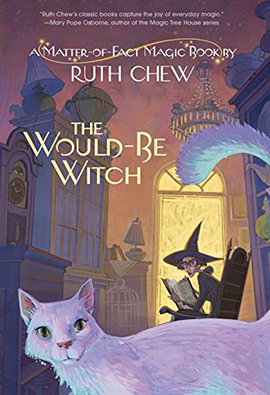
The Would-Be Witch, by Ruth Chew

the-would-be-witchBefore there was J.K. Rowling and the Harry Potter series, there was prolific author Ruth Chew (1920-2010.) She was one of my favorite writers when I was a child and The Wishing Tree was a book I reread many times. Recently I came across another book she wrote called The Would-Be Witch and it is delightful.

Her style is much simpler than Rowling’s and her magical worlds are very innocent. Each book she wrote stands alone and offers a fun escape for its reader, showing unique glimpses of what this world would be like if witches and real magic existed.  Her protagonists are always ordinary children who stumble upon an enchanted object or meet an interesting woman who is a little “different.” The charming pencil sketches in her books are also hers. There is nothing dark or graphic about her books.

In The Would-Be Witch, siblings Robin and Andy Gates find a clumsy white cat who belongs to a shop owner named Zelda. While watching Zelda’s shop one afternoon, the children start speculating about the eccentric lady and her odd clothing. Meanwhile, their mother has just purchased some “magic” polish, said to work wonders on any surface from wood to plastic, and the adventure begins.

The time period is general, and could take place anytime from the early 1900’s to present day. The children mind their parents and are responsible young people. It is all told in an uncomplicated narrative with interesting twists and turns and a satisfying ending.

If the fantasy world of magic is something your young child is interested in, and the Harry Potter series is too advanced, I highly recommend The Would-Be Witch, The Wishing Tree, or anything by Ruth Chew. Her official page is HERE, and books that were out of print for years are now becoming available again in libraries and in digital form.

Fiction, Romance, Series & Collections

Dating, Dining, and Desperation, by Melody Carlson

1433679310In Melody Carlson’s second installment of her Dear Daphne series, “conditional heiress” Daphne Ballinger is making peace with her situation. Still living in her Aunt Dee’s house and using her vintage car–both left to her temporarily through her aunt’s estate–Daphne makes friends with neighbors of all ages and is set up on dates by those closest to her.

Like in the first book of the series, there is a lot of heart in an otherwise corny premise. But you know what? It works. It’s fast reading. It’s enjoyable. And it isn’t blush-worthy.

I’ve spent this busy week thoroughly enjoying the first two books of the series (either on the treadmill or before nodding off at night) and I’m eager to see what happens next. That level of expectation in a reader only happens through above-average writing with a decent plot and excellent character development.  There is warmth and comfort to the author’s style, making you want to revisit the small town life and its inhabitants again and again. Melody Carlson has a way of tapping into her readers’ emotions without exhausting them, making us care about the new friends we have discovered between the pages of her novels. It’s a rare gift. I for one, am hooked.

8.5 out of 10 stars

***At the end of this 2nd novel the author tells the reader that the next 2 books of the series will be out soon, but doesn’t give exact release dates. Both will be released as digital books first, as the publishing company is undergoing some changes.

Fiction, Romance

Lock, Stock, and Over a Barrel, by Melody Carlson

9781433679308_p0_v1_s260x420Daphne Ballinger is stuck. Her job, living situation, and love life are going nowhere. Years ago she moved to New York in hopes of becoming a writer and living an exciting life, but, somewhere along the way, everything plateaued.

Back in her home town of Appleton, her dad’s older sister, the loving, eccentric Aunt Dee, has just died. Daphne is shocked to learn that she is the sole heir of Aunt Dee’s entire estate. The only problem? She must fall truly in love and get married within a year or she loses it all.

With this monumental condition hanging ominously over her head, Daphne decides to be a good sport and move back to Appleton for the year. Coming full circle from a life she was determined to leave, she learns that Aunt Dee left her a lot more than just her estate.

Lock, Stock, and Over a Barrel is the first in Melody Carlson’s Dear Daphne series. The second book, Dating, Dining, and Desperation, came out in March 2014. It’s next on my reading list.

If the premise seems a little hokey, well, maybe it is. Beyond that, however, is a delightful story full of well-rounded characters that enter and exit Daphne’s life. She is a protagonist that you root for and that women, especially, will identify with on her journey.

Carlson’s books are usually entertaining, light but not ridiculous, and this one is no different. For others like me who have no tolerance for racy fiction, her writing style is very satisfying. It is a fun novel for this busy holiday season, or to read on the treadmill, as I did.

8.5 out of 10 Stars

Fantasy, Fiction, Series & Collections, Young Adult

Gathering Blue, by Lois Lowry

gathering-blueIn Gathering Blue, a companion book to The Giver, the world is a harsh place.  It begins with a young crippled girl named Kira mourning over the body of her dead mother.  Fatherless before she was born, Kira now has no one and nothing, except for an innate talent with needle and thread.

Lois Lowry has created a dark and primitive setting filled with dense forests and unknown beasts. People are competitive and thuggish, scrounging for Life’s basic necessities. Weakness has no place here and children are taught this at an early age.

Kira, however, was raised differently by a mother who fought to keep her “broken” infant. She knows light and love still exist.  Still, Kira must struggle to survive in a community that does not want her.  One, that with all of its brutality, still has strict traditions.  There are rules to be followed and leaders to be obeyed.

Gathering Blue does not pick up where The Giver left off. No time period is given. I simply told myself that it was another “community,” as described in the first book–but one that functions very differently.

Lois Lowry’s real skill is her storytelling and character development. She is masterful at giving readers just enough information to drive the plot, but allows us to draw our own conclusions before confirming them. I have never seen a writer so gifted at this.

Like in The Giver, “humanity” is the underlying theme of Gathering Blue.  The more you see characters devoid of this trait, the more you are aware of your own.

10/10 stars

Fantasy, Fiction, Series & Collections, Young Adult

The Giver, by Lois Lowry

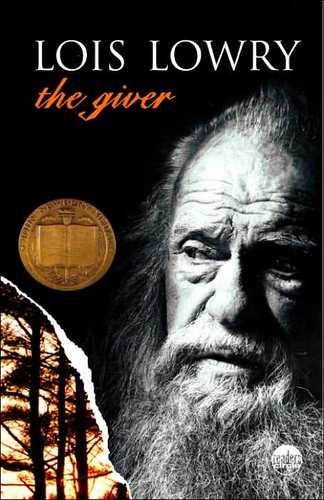
giverWhen I was in college and majoring in Humanities, my brother used to tease me by saying that I was studying how to “be human.”  His good-natured mockery annoyed me a little, but after reading The Giver, I now realize that studying how to be human is exactly what I was doing.

When we use the word “humanity,” what does that mean?  Is it a noun?  A verb? An adjective?  Is it spiritual or evolutionary? And can it be taken away?

Even online dictionary definitions are a bit vague.  “Branches of learning.” (Humanities.) “Human attributes or qualities.” (Humanity.)

I pose this question:  Branches of learning according to whom?  Human attributes or qualities according to whom?  All of mankind?  Others in our particular culture?

Which brings me full circle to the question, can it be taken away?

In The Giver, nameless communities who subscribe to the idea of “Sameness,” are doing their very best (with much success) to force the humanity out of humans.  This is done by removing choice and suffering, the very things that aid our individuality, wisdom and personal growth.

Only one person, the Giver, is burdened with the memories of generations before when Sameness didn’t exist.  And his protegee, the Receiver, is training to succeed him.

I will say no more about the plot because the beauty of this story is letting it unfold before you in the timeline the author has created.  Lois Lowry, in a mere 200 pages, produces a world that we all, jokingly, have said would be a better one.  The truth, however, is very different.

Her writing is as efficient and ordered as the community itself.  No words are wasted. No expository paragraph is set to take up space.  She treats her readers as intelligent, feeling, thinking beings–the opposite of the way those in the community are treated.

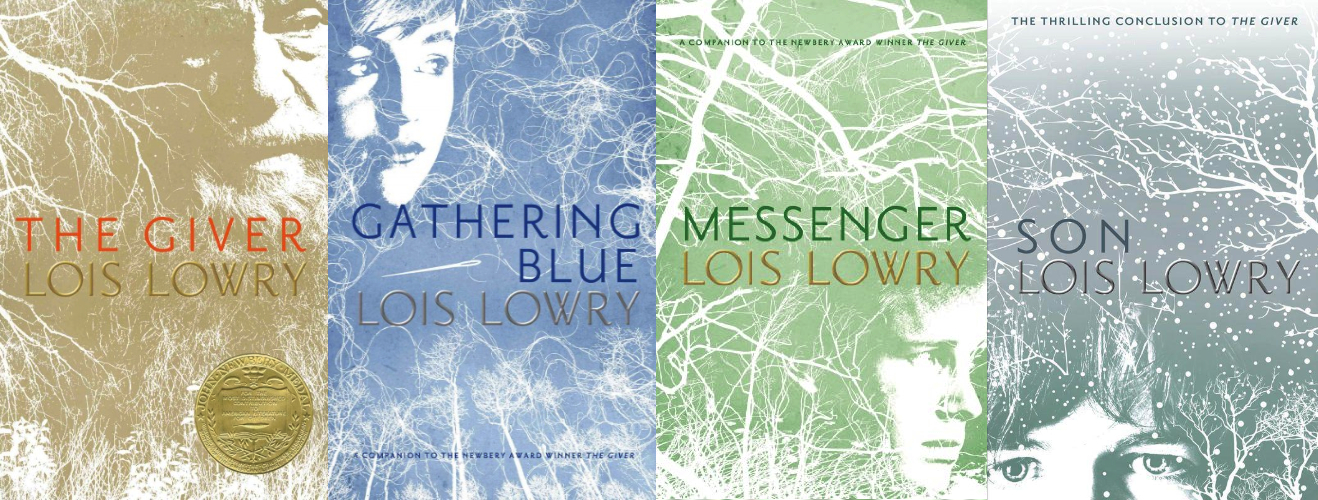
The only spoiler I will put here–something to expect–there is no ending.  This is the first book in a series of four. Does that lessen its impact?  No.  This is a beautifully written, profound story that makes you question what is and what could be.

The Giver Series:

The Giver Quartet

A quick commentary about the upcoming film being released on Friday.  For lack of a better word, there is a certain “volume” (noise level, not book number) to The Giver.  Lois Lowry’s language is quiet and steady, much like the characters’ surroundings.  The film’s trailer shows that volume turned up and intensified.  The trailer also reveals important plot points, which is disappointing. Some films based on books enhance the story (the Harry Potter films are excellent examples.)  Some do not. I fear that seeing the film first will detract from anyone’s upcoming literary experience.  If you have the patience and desire, do yourself a favor and read the book first. I think you’ll be glad you did. 🙂

10/10 Enthusiastic Stars

Fiction, Romance, Young Adult

The Fault in Our Stars, by John Green

The-Fault-in-Our-StarsThis post will be a little unusual, because I’m going to talk about the book and the film.  Don’t worry…no spoilers. 🙂

Although…there are people like me who sometimes like spoilers!  So I did the twisted thing and went and read about the story on Wikipedia first–simply because I was curious “What the heck is with this book that everyone is raving about?”  Yep. Guilty. Then I discovered that the Kindle edition was only $5 and started reading. 24 hours, and one sleep-deprived night later, I was finished.

But I will assure you that whether you know the plot or not, the journey to that destination is worth your time.

The basics: Cancer-stricken teenagers Hazel and Augustus meet in a support group.  Hazel is highly intelligent with a side order of charm and Augustus is highly charming with a side order of intelligence. And so their story begins as the book tries to answer the question we should all ask ourselves: to what extent will I allow my crappy experiences to dominate me?

Because we all have terrible, unfair things happen to us. Whether or not we become a victim of those circumstances is, of course, a choice.

John Green, the author, also does what all young adult authors should do, which is to make his characters a little more mature than most teenagers.  Mature, but not arrogant. (Not to diss teenagers, but to point out that he treats his teenage readers as intelligent beings.) And you get the impression that Hazel and Gus would be like this even without cancer–because cancer does not give you maturity–but it does force these young people to confront their mortality earlier than most.   In addition, these are also teens who have genuinely good relationships with their parents, both sets who are happily married.  Yes, it happens!

Green does something else, too.  He successfully gets inside the head of a young girl.  Just like Hazel has a favorite author who, she feels, describes her cancer and death though he hasn’t died, Green does the same with Hazel without having been a teenage girl.  As a former teenager with a favorite author at that age, Hazel’s insecurities, fears, and general feelings are pretty spot on.

Speaking of spot on, I’m going to segue to the film, which I saw tonight.  The makers of The Fault in Our Stars (the film) had to know that many readers would be eager to see how Hazel and Gus would transfer to film.  Too much leeway with the story would enrage them, and rightly so.  Fortunately, the author was on the set, the actors read the novel beforehand, and both young people go above and beyond to embody Hazel and Gus in amazing performances (really, some of the best I’ve seen.) The film cuts out a couple of peripheral characters, but stays true to the story in other ways.  (I do wish the “swing-set story” was given more time, though.)

If I had to make one criticism about the book and the film, it would be the Van Houten character.  On the page I thought he was way over the top. An annoying parenthesis in an, otherwise, lovely sentence.  On the screen I felt the character was miscast (Gary Oldman would’ve gotten my vote,) but everything else about the film was just the way I pictured it as I read the book.

If you are someone who wants to read about healthy love among two unhealthy people, then this is a story you’ll enjoy.  Sentiment, but without sentimentality.  What do I mean by “healthy love?” A love between equal partners who genuinely like and respect each other, where they take turns saving each other, and where there is unconditional acceptance. We should all be so lucky.

9 out of 10 stars


Fiction, Romance

Austenland, by Shannon Hale

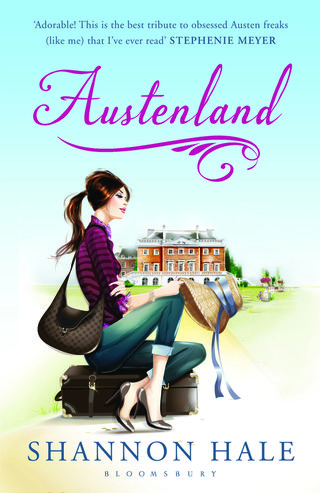
austenlandJane Hayes is pretty, educated, employed, and not entirely satisfied with her life.  Boyfriends have come and gone for years, but none of them measure up to her ideal, the famous Mr. Darcy of Jane Austen’s Pride and Prejudice. Now in her early 30’s with no real prospects for a permanent relationship, Jane immerses herself in the BBC version of the story, much to the dismay of her mother and elderly aunt.

When her aunt passes and Jane’s inheritance is a 3 week trip to England’s “Austenland,” the story really begins.

Think “City Slickers,” the Jane Austen version, where the customers shed all things modern in exchange for corsets, bonnets and a life of leisure.  A small mix of men and women, some paid actors, keep each others company daily.  But what is real and what isn’t?

It’s an entertaining idea and a case of “be careful what you wish for,” as Jane learns modern life lessons while playing dress up and adhering to the strict rules of this land of make-believe.

I cannot say I was riveted, but there is enough intrigue in the form of potential suitors, competition for said suitors, and Jane’s self-realization that made me want to see what happened.  Having read the author’s Princess Academy, I knew that she a strong storyteller.

Austenland does not disappoint and familiarity with Austen’s characters helps.

8 out of 10 stars

Fiction

The All-Girl Filling Station’s Last Reunion, by Fannie Flagg

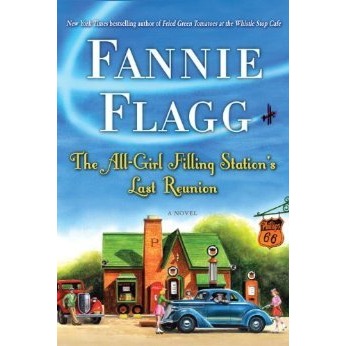
17345258Another winner by Fannie Flagg!

Sookie Krackenberry Poole leads an enviable life, to say the least.  Her husband, Earle, is loving, supportive, and an excellent provider.  Together they have 4 independent children who honor and respect their parents.  With the exception of her flamboyant, out-spoken mother, Lenore, everything is practically perfect. Which makes it all the more difficult when Sookie discovers she is adopted.

What follows is a plot for which Fannie Flagg is both adept and famous, 2 parallel storylines that intertwine and eventually intersect.  One is Sookie’s journey of discovery about her origins. The other is the story of the Jurdabralinski family’s daughters, who burst through the boundaries of expectations for women in the 1940s.

Using excellent character development and sensitive points of view, the author takes her readers on a fun adventure that explores relationships between mothers, daughters, sisters, and friends.  But, trust me, this story is anything but predictable.  Just when you think the story is headed towards a straight road, it takes a sharp, unexpected detour.  All in all, this is Sookie’s story, and proof that self-discovery in all forms can happen at any age.

A wonderful read.

9.5 out of 10 stars

Memoir, Nonfiction

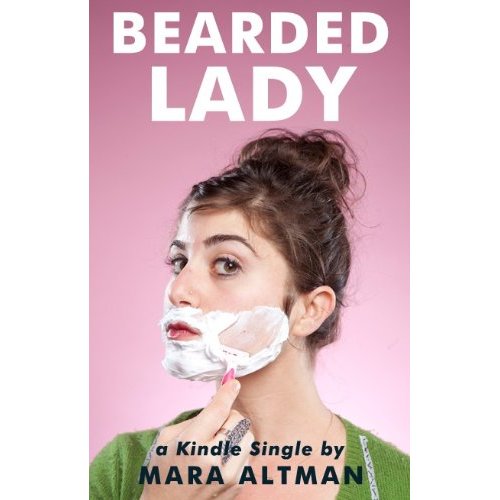
Bearded Lady, by Mara Altman

41nwMDlclmL._SS500_Today, as I left an Amazon browsing session and headed off to a long overdue pedicure, I decided to download a Kindle Single called Bearded Lady.  A Kindle Single is like a short book.  OK, it IS a short book.  This one was 46 pages and my pedi time was almost enough to finish the whole thing.

And the subject, my friends, is Hair.  To be more specific:  Unwanted Hair.

It is basically a short memoir by Altman in an attempt to entertain and to bring together women of the world and their hair removal embarrassment.  As someone who has used Nair, Nads, razors, bleach, wax, and body groomers…I could relate.

There is a certain comfort to read about someone else’s journey into unwanted hair removal, but this is anything but a deep literary experience.  At most, Altman explores the history of when hairless legs and underarms on American women became the norm.  She has quotes from professors of Anthropology and Gender Studies from around the country, none of which are ground-breaking.  The collective thought is that, as hemlines and sleeves got shorter, grooming for women went in a new direction.

Yes, it brought back memories of when my mom handed me my first razor and when my grandma said, “Hija, you have a little mustache.  Try this..” as she handed me my first tube of Nair (which pretty much takes your skin off along with your upper lip hair.) Neither was a memory I needed to revisit.

Overall it was a one-time read, not necessarily one I would recommend, but it was entertaining for the hour it took finish.  My main issue is the use of the F-word a few times, which I LOATHE, and a couple of sh-words peppered in.  Totally uncool and not necessary.

7.5 out of 10 Stars

Memoir, Nonfiction

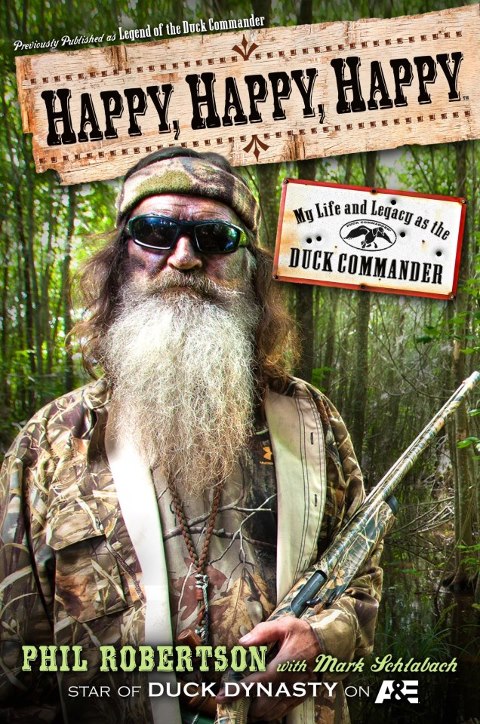
Happy, Happy, Happy, by Phil Robertson

Duck-CommanderFor some reason, my husband decided to get me seasons 1-3 of Duck Dynasty for Christmas.  I had never seen the show, did not know anything about the Robertson family except that they were a rags-to-riches story and that the father, Phil, had been recently been suspended by A&E. (Which was lifted after 9 days and a lot of public backlash.)

After finishing season 1, we can totally see the appeal of the show and the family.  Compared to everything else on TV they are an anomaly–they work hard, love each other, respect the institution of marriage, value education, they don’t swear, and they make Christianity cool. As my husband pointed out, “People are hungry for a show with values.”

Don’t let the camo and beards fool you.  There’s more depth than meets the eye, which led me to reading Phil’s autobiography when I saw the Kindle version for a reduced price.  At 240 pages, it is a quick read, but enjoyable with some interesting tidbits.  You learn about his impoverished childhood, where no game meant no meat; his and Kay’s youthful (and enduring) marriage nearly 50 years ago, struggles with alcohol, conversion to Christ, and the beginnings of the Duck Commander company.

And, in true “Phil-o-sophy” he drops in his personal wisdom on marriage, raising respectful children, being self-sufficient, and his work ethic.  He is far from a perfect man, but he has learned from his mistakes in life.

The book is thought-provoking in that the reader is reminded that traditional values, now considered “old fashioned” by many, have a lot going for them.

8.5 out of 10 stars

Fiction

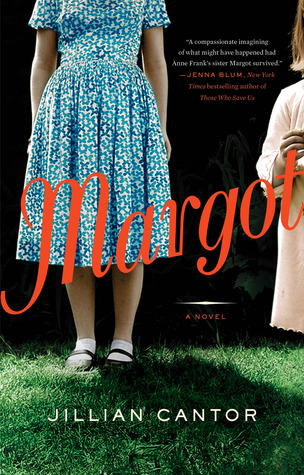
Margot, by Jillian Cantor

17347640Anne Frank.  Her name is synonymous with the plight of the Jews during the Holocaust. Her diary humanized the life of a young girl bursting with effervescence and dreams of the future, only to have them cruelly ripped away at age 15.

But there was another diary written by another sister.  Anne’s older sister, Margot.  The quiet one. The reserved one.  The excellent student. The “paragon of virtue,” as she was called in the family.  The sister whose work camp order prompted their father, Otto, to shuffle the family into the famous “Annex” in the early hours of July 6, 1942.

After their arrest in 1944 and suffering the atrocities of the concentration camps, only Otto Frank survived. He edited and published Anne’s diary in the early 1950s, which became a hit Broadway play and award-winning film, making Anne Frank an icon for all time. 263 Prinsengracht is now the “Anne Frank House,” with over one million visitors per year.

Margot’s diary was lost and never found.

What is known about Margot is brought to life in this respectfully written “what if” novel by Jillian Cantor.

I couldn’t put it down.

What if Margot survived? What if she made her way to America?

Set in 1959, the year the movie The Diary of Anne Frank hit the big screen, Margie Franklin is a quiet woman in her early thirties, working as a legal secretary.  She has no family. She always wears long sleeves. She lives and behaves modestly. She lives with fear and guilt. She lives a lie every day. She has a secret.

If you are someone who has always been intrigued by the Anne Frank story, as I have, you will greatly enjoy this novel. Told entirely from Margot’s perspective, you sense her daily conflict with wanting to be seen for who she is, yet still being “the quiet one.”  Her inner voice is very authentic.

Appropriate for any age.  I highly recommend it.

9.5 out of 10 stars

Children, Fantasy, Fiction, Series & Collections, Young Adult

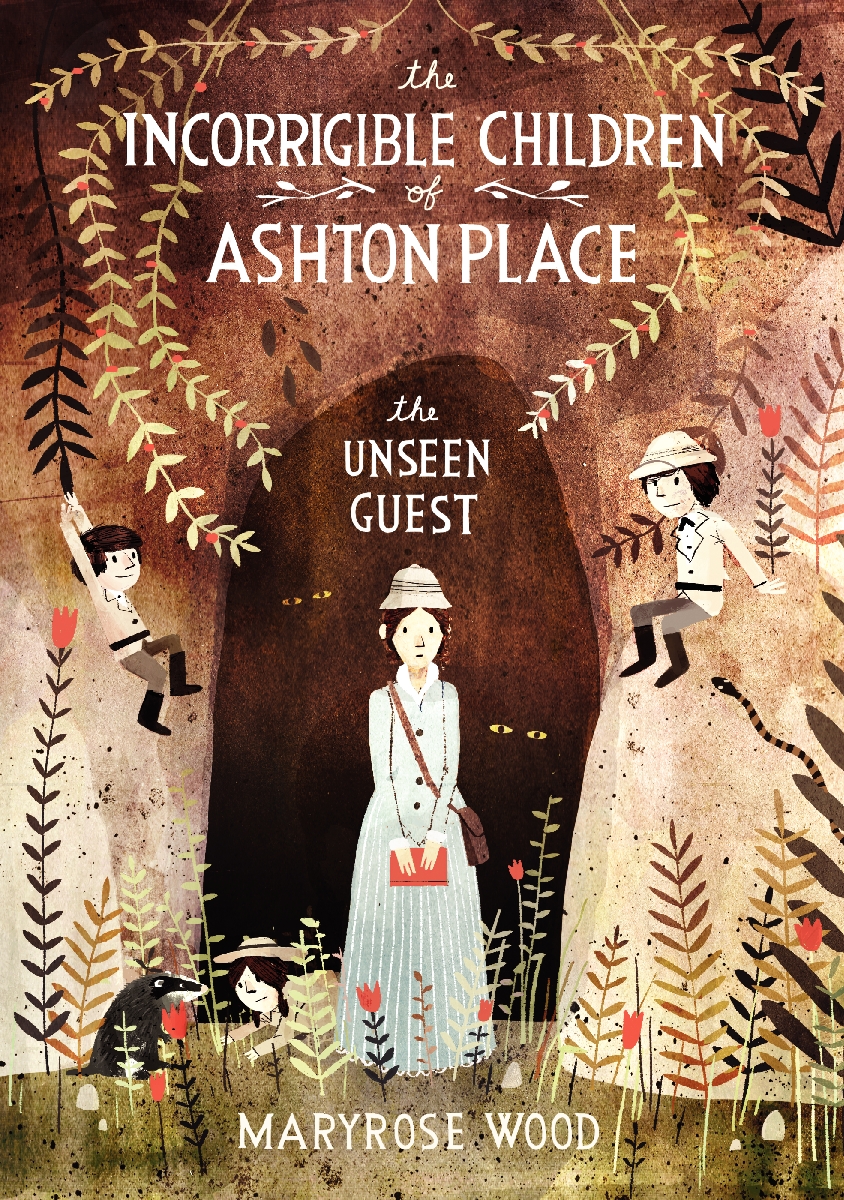
The Incorrigible Children of Ashton Place, Book 3, (The Unseen Guest,) by Maryrose Wood

unseen2In this installation of the Incorrigible Children series, we meet Lord Fredrick’s mother, the Widow Ashton.  She arrives with little notice–sending Lady Constance into a state of frenzy–accompanied by Admiral Faucet (pronounced Faw-say,) her gentleman friend who hopes to marry her.

The 3 Incorrigible Children still maintain some of their wolf-ish qualities, obtained from having been raised by them, but are making great strides in English speech and manners.  Admiral Faucet, however, dwells only on their ability to track things in the forest and, when his imported African ostrich, Bertha, goes missing, he invites the siblings and their governess on a mini safari to find her in the surrounding forest.  When Penelope and the children become separated from the admiral (whose intentions for the ostrich and the Incorrigibles are quite sinister,) they encounter a cave that only deepens the mystery of the children’s upbringing.

As with the first 2 books, this is a unique story with many twists and turns.  Although told in the 3rd person, it is mostly from Penelope’s viewpoint.  The language is charming and conversational with the reader, reminding me more and more of Roald Dahl’s style (my favorite author.)

By the 3rd book, however, I was ready for some of the questions about the children’s and Penelope’s backgrounds to be answered.  Instead of answers, there were only more questions.  Clearly, Penelope and the children are connected in a way more than a governess is to her charges.  And, clearly, Lord Fredrick has a secret that is becoming increasingly difficult to keep.

The story-lines with the supporting characters did wrap up satisfactorily, setting the stage for a new adventure in Book 4, which debuts on December 17th.  Like other readers, I will just have to be patient.

8.5 out of 10 stars