Children, Fiction

Danny, the Champion of the World, by Roald Dahl

One of the reasons why Roald Dahl’s books have remained so popular over the years, is because he treats the children in his stories the way kids want to be treated.  And he does the same thing to his readers.  I first discovered Danny, The Champion of the World as a 9 year old 4th grader, and it was the first book I ever read where I felt a complete connection with the author and the characters.  Roald Dahl’s messages to kids are simple, yet profound:  You matter.  You’re important.  Your ideas are worth sharing.  There is validity in what you contribute to the world, and it doesn’t matter that you’re a kid.

Most of Roald Dahl’s books center around a child in a peculiar circumstance that has an adult ally and plenty of obstacles to overcome.  In Danny, our young protagonist lives with his father in a gypsy caravan in a small English village where they maintain the local filling station and garage.  Danny goes to school and endures the daily tyranny of his teacher, Captain Lancaster.  When at home, he and his father work on cars together and lead a simple, but fulfilling life.  The bond between these two is extremely close. Danny absolutely worships his dad, who tells him fantastic tales every night before bed.

But one evening, Danny’s father nearly falls from his pedestal when he reveals a secret to his son about a late-night hobby– poaching (stealing) pheasants off the land of a wealthy landowner.  Danny must come to terms with this news and decide how to deal with it.

What follows is a father/son adventure of the wildest sort, which involves local villagers, the constable, and even the preacher’s wife!

There are fun, fantastic stories, and there is excellent storytelling.  Danny has both.  One minute you are whisked away in a high-flying balloon and the next you are crawling along in the dark with Danny and his dad on a midnight mission.  Few authors, of children’s or adult books, can bring language to life the Roald Dahl can, and this book is one of his treasures.  It isn’t his most well-known, (most know Dahl as the author of Charlie and the Chocolate Factory and James and the Giant Peach,) but I think it is his best.  I have read it to many of my elementary school classes over the years and it never ceases to mesmerize.

10/10 Stars

Fiction, History

A Thousand Splendid Suns, by Khaled Hosseini

How is it that some writers can blend depth and simplicity, happiness and sorrow, and beauty and disgust all in one amazing tale? That is what Khaled Hosseini has done in A Thousand Splendid Suns.

The book is the story of 2 women. There is Mariam, an illegitimate daughter of her town’s most respected businessman. She lives in a hovel with her cynical and disillusioned mother.

There is Laila, the daughter of a forward-thinking schoolteacher and a mother who is vibrant and outgoing.

The book is divided into four parts. Part 1 is Mariam’s story, which is filled with hopes, determination, and years of emotional numbness after circumstances force her into a harsh marriage.

Part 2 is Laila’s story, which is filled with love, tenderness, loss and redemption. I don’t want to give anything away, so forgive my sketchy descriptions.

Part 3 is where these women’s lives meet, then intersect, then become entwined out of circumstance, necessity, and, ultimately, sacrifice.

Part 4 is where they part ways, each finding a new kind of peace and tranquility and even fulfillment. Although they part ways, they are still very much entwined with each other.

During the tales you see the disintegration of society in Afghanistan. Happy families are torn apart by death and political upheaval. Thriving cities are now piles of rubble ruled over by warlords who are merciless. Rules are imposed that remind you of what the Jews had to endure in Nazi Germany, only this time it is the Afghan women who are being oppressed.

But through it all you see the indomitable spirits of these women. They find a way to survive the most incredible challenges. They love, they hope, they plan for the future. They try to create normalcy for their children. They shake their heads at the men riding by in the backs of trucks with their rifles and airs of self-importance. They even stay optimistic that their lot in life will eventually change.

This book in amazing, just as I expected it to be after my previous experience with Hosseini’s The Kite Runner. Despite the subject matter, it is extremely fast reading. I learned and understand more about the plight of the Afghan people from A Thousand Splendid Suns than anything I’ve seen or heard from the media.

I’m sure I’m not the only one who watches those news stories about the Middle East with a sense of mild apathy. After all, those countries are always fighting amongst themselves and with others. There are so many names of leaders, cities, warlords, and factions we don’t understand. I know my sympathy has diluted over the years because all of these problems seem to melt together until one isn’t distinguishable from the other.

What I most appreciated about this book is that the reader gets an inside perspective of what life was like before, during, and after the Taliban took over the main cities of Afghanistan. You see how lives change. I, personally, felt thankful for having been born in the USA (which is something I haven’t done in a long time.)

Give yourself the gift of an amazing read that will leave you with knowledge of a forgotten group of people–the women of Afghanistan–and a heightened sense of compassion for everyone. Read Khaled Hosseini’s A Thousand Splendid Suns. It will stay with you for a long time.

10/10 Stars

Entertainment, Memoir, Nonfiction

Forever Liesel, by Charmian Carr

If you asked my mother which songs I sang the most as a child, she would tell you Top of the World, by the Carpenters, and Doe-A-Deer, from The Sound of Music.  In fact, several years ago when we had the thrilling opportunity to meet Julie Andrews at a book signing in Pasadena, that is one of the first things she told her.

I was embarrassed at the time, but quickly got over it, because I’m one of the millions of people around the world who simply adores The Sound of Music.  One of the really nice things is learning about what decent, upstanding people the young cast has grown into.  Forever Liesel, written by Charmian Carr, is a delightful account of what it was like to be a part of this beloved movie.  In a succinct but entertaining way, she talks about learning when she got the part, meeting the rest of the cast, and working with Julie Andrews and Christopher Plummer (on whom she had quite a crush.)  Unlike the rest of the “children,” she was of age where she could work longer hours, enjoy the Austrian location with less restrictions, and associate with the 2 stars off the set.

Unlike so many other young stars who shun the very vehicle that shot them to fame, all 7 of the film’s young actors still appreciate the positive impact that The Sound of Music had on their lives.  They spent years promoting it and making appearances without pay, enjoy having cast reunions, and regard each other with warm affection as much as if they were really brothers and sisters.  And, although most have left acting for other endeavors, they still have fond memories of their months working on the project.

Forever Liesel is not especially earth-shattering, but simply a fun behind-the-scenes look at the making of an iconic film.  It is a fast read that will make you want to cuddle up in front of the movie once again and enjoy it with new appreciation.

8/10 Stars

Fiction

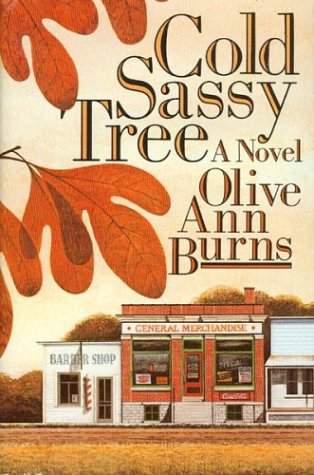
Cold Sassy Tree, by Olive Ann Burns

When I was in college and flying back and forth between Utah and California, there were 2 books that always came with me on the airplane, Jane Eyre and Cold Sassy Tree.  I remember specifically my introduction to Jane Eyre, but I cannot, for the life of me, remember how I discovered Cold Sassy Tree.  I do know that it has been a book I have revisited many times like an old friend, always ready to greet me with its characters and multiple storylines.

Cold Sassy Tree takes place at the turn of the century in Cold Sassy, Georgia.  It centers around a boy and his grandpa.  The boy, Will Tweedy, is 14 years old and experiencing life as most boys that age.  He is caught between childhood and adulthood, surging with hormones, and at the point where rules are not as black and white as they used to be.  He has just lost his best friend and confidante, Bluford Jackson, to a freak accident.  One thing he has no doubt about, though, is his love for his grandpa, E. Rucker Blakeslee, owner of the general store, several homes, and a recent widower.  Rules don’t mean much to him either, but for different reasons.  Rucker feels he has lived enough years that he is entitled to do what he wants.

To prove his point, Rucker shocks his family and the town by eloping with his milliner less than 3 weeks after his wife dies.  Love Simpson is young, brash, flamboyant and, Heaven forbid–a Yankee!

This causes a lot of upheaval in a town that is usually free of scandal, not to mention the embarrassment to Rucker’s 2 daughters and their families.  His only ally seems to be his grandson, Will, who watches his grandpa with a mixture of fear, respect, and awe. Rucker begins stretching social boundaries more and more, even having church in his own living room to show up the ladies of the town who are not accepting of his new, much-younger wife.  Miss Love, herself, is a breath of fresh air in Rucker’s life, bringing new ideas  and a renewed sense of self-worth to the old man.

Cold Sassy Tree is all about good, old-fashioned storytelling.  It is not trying to be something lofty, and yet, because the story is told from Will Tweedy’s viewpoint, we find ourselves discovering life right alongside him.  As he deals with feelings about his grandpa, his parents, his best friend’s death, first love, elitism, racism, and other issues, I found myself transported.  The fact that these issues are dealt with in an entertaining, not heavy-handed way, makes the story all the more special.

The authoress, Olive Ann Burns, died shortly after writing Cold Sassy Tree and in the midst of writing a sequel, called Leaving Cold Sassy.  Sadly, and not because it was unfinished, lightening did not strike a second time with that book.  The original Cold Sassy book ends very satisfactorily, as you wish the remaining characters well and thank them for the glimpse they allowed you into their lives during that hot, scandalous summer.

It is a delightful read that all ages can enjoy.

9/10 Stars

History, Memoir, Nonfiction

Unbroken, by Laura Hillenbrand

This will be a tough act to follow, but I’m going to start this blog by including my review of Unbroken, by Laura Hillenbrand.  This is a review I actually put on my personal blog, but I can’t think of a better way to christen this site than by talking about this incredible book.  The following is my review from December 4, 2011:

Of all the books I’ve read this year–some for my book club and some for pure enjoyment–the best of the bunch is Unbroken, by Laura Hillenbrand. As I told my mom while describing this book, “Whatever you’re reading right now, this is better.”

Laura Hillenbrand, who is also the author of Seabiscuit, suffers from a debilitating form of CFS (Chronic Fatigue Syndrome,) which forces her to stay at home most of the time. She’s devoted the last 7 years to researching Unbroken, including conducting about 50 interviews with its subject, Louis Zamperini.

Louis Zamperini, who, at the time the book was written, was a spry 94 year old, has lived a life few of us can imagine–partly of his own doing, like competing in the 1936 Olympics– and partly as a victim of circumstance. The circumstances that were not of his choosing happened while he was a bombadier during WWII. The plane he was in was shot down, and the 3 survivors drifted for 47 days until being picked up by the Japanese.

What followed then was 2 years in 2 different POW camps in conditions beyond our imagination. What made the conditions even worse was a particularly sadistic guard, nicknamed “The Bird,” who singled Louis out and attempted to victimize him in every way possible. The army’s pursuit of this guard after the war ended is another element that makes this book so captivating.

I say “attempted,” because one of the interesting things that the book focuses on is the issue of dignity vs humiliation. The authoress describes the importance of dignity in ways I’ve never read before, making it a thing as tangible and necessary to existence as food or air. In other words, no matter how bad the conditions are, you are only a victim if you allow yourself to be.

Even if you know the basics of the story, there is something else that makes it worth reading, and that is the series of odd coincidences that seemed to pop up here and there throughout Louis’s life, and usually during his darkest moments. I don’t want to give too much away, but these oddities certainly make the story even more compelling.

For those with weak stomachs who may be worried about the book’s portrayal of war violence, I would say this: It is “realistic,” but not “gratuitous.” In other words, the authoress tells things as they happened, but doesn’t overdo it.

The important thing to remember about this book is that not only is this a story of “Survival,” but also of “Resilience and Redemption,” just as the tagline reads. Louis’s POW experience is definitely the grittiest part of the book, but there is so much more than that….there’s his adventurous childhood as the town rascal and thief, his foray into becoming a world-class runner, his family, his post-war trauma, and the experiences that finally brought him peace.

This is a book about a man who has experienced the full circle of life and has lived to tell about it. Laura Hillenbrand writes with such amazing quality, you feel like you’re seeing everything as it is happening.

I won’t say anymore about it, except to implore you, again, to read it.  This book and its subject are treasures.

10/10 Stars