Fiction, History

Hotel on the Corner of Bitter and Sweet, by Jamie Ford

hotel-of-bitter-and-sweet

My poor heart is sentimental

Not made of wood

I got it bad and that ain’t good.

–Duke Ellington, 1941

Few things delight this reader more than becoming emotionally invested in a book that turns out to be even better than I could’ve hoped. In turn, few things frustrate me more than reading about a shameful time in US history that is rarely taught in schools. That is what happened to me while reading Hotel on the Corner of Bitter and Sweet, by Jamie Ford.

The story centers on the innocent friendship of Henry Lee and Keiko Okabe. It is 1942, Seattle. The only two Asian students “scholarshipping” at an all-white prep school, they meet by working side-by-side in the cafeteria but soon become inseparable. As a child of the 1970s and 1980s, some of my best friends were Japanese and I respected them immensely, but 1942 was a very different time. Even Americans of Japanese-descent were regarded as the enemy. Henry’s father feels this hatred especially personally, having arrived alone in America years before at age 13 from China, orphaned by war with Japan.

Like young children today, Henry and Keiko see their similarities more than their differences, and Keiko’s educated parents are likewise enlightened and inclusive. Henry’s father, however, cannot and will not see anything redeeming in the Okabes. To him they are mere representations of the people who slaughtered his family.

Fast forward to 1986. Henry is 59 and a recent widower. The nearby Panama Hotel has just been sold and, like a dusty time capsule, its basement is full of items once belonging to Japanese families nearly 50 years before. Items they could not carry to internment camps. Items they meant to retrieve after the war was over. Items they never saw again.

Suddenly, memories of the past are thrust to the present.

Through the wide eyes of young people whose childhoods are systematically being robbed, we see the harsh realities of war on the American home-front. But this is different than watching fathers and brothers enlisting and not coming back. This is watching families driven from their homes and businesses in ways that seem decidedly un-American. And yet, it happened.

Despite reading some mixed reviews on Goodreads and a self-imposed hesitant start, I started devouring this book more and more. Besides falling in love with Henry’s developing courage and Keiko’s sweet innocence, I began to recognize the value of a book like this. It is important. Denying history does not erase it. If anything, it creates the danger of repetition.

There are so many potential discussions with this book (making it the top book club selection of Fall/Winter 2009-2010.) It’s a treasure. You will remember it and its characters for a long time.

9.5/10 Stars


History, Nonfiction

Life Below Stairs, by Alison Maloney

12338204

Even though it has been two years since it’s been off the air, I’ve been mourning the completion of Downton Abbey lately and will probably re-watch my DVDs soon. In the meantime, Life Below Stairs: True Lives of Edwardian Servants has been a fun, quick, informative read.

The whole idea of an upstairs/downstairs lifestyle is very foreign and outdated, but still fascinating. Until reading this book, it never occurred to me how the lack of modern appliances necessitated large amounts of servants in houses that were almost kingdoms unto themselves. However, just like when reading about famous frontiersmen and women, I was reminded that everything took longer in a time when there was no electricity, no washing machines, dishwashers, and often–no indoor plumbing.

I have new appreciation for shows such as Downton Abbey because of the nuances in servants’ characters: the obvious hierarchy among those below stairs, the fierce protection of their jobs, the back-biting and work politics , the sleeplessness, the importance of character references, and the huge amount of rules and restrictions.

And yet, for many, it was either a tireless life in service or abject poverty.

For a poor and unskilled person, but one with great personal potential and a high work ethic, going into service was a terrific opportunity. And, unlike today’s minimum wage jobs, service provided room and board and sometimes, a chance for advancement.

It makes one stop and think how many people today would leap at such a chance, despite the hardships.

This book reads almost like a interesting text book. It is very well organized and uses great “word economy.” There is no fluff, just an outline of the way things used to be in a time now gone. If this is a period in history that interests you, I recommend it.

9.5/10 Stars

Biography, Children, History, Nonfiction, Young Adult

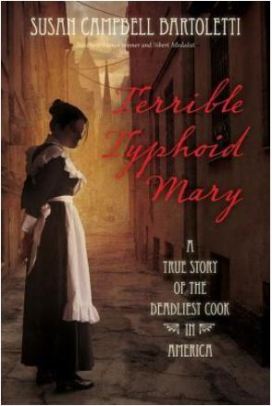
Terrible Typhoid Mary, by Susan Campbell Bartoletti

bartoletti-terrible-typhoid-maryWhen I was an elementary school student in Southern California and discovering for myself which books I enjoyed, I often gravitated towards biographies. Some of my favorites were biographies on Helen Keller, Annie Sullivan, Harry Houdini, and Harriet Tubman. I still remember the covers of each of those books, all of which were worn with use. (In fact, the Helen Keller biography still sits in the bookcase next to me, as do many other childhood favorites.)
I mention this because I know that Terrible Typhoid Mary, by Susan Campbell Bartoletti, would’ve been added to the group. It’s exactly the kind of biography I would’ve read again and again. Not only is it a fascinating true story, but it’s also extremely thorough, and written so well that everyone involved is brought to life. The reader is immersed in colorful descriptions and an interesting cast of characters, who just happen to be real people. (Dr. S. Josephine Baker, one of the first female doctors in the United States, is also prominently featured.) We can just imagine the increasing rage building on Mary Mallon‘s face when Health Department employee, George Soper, finally tracked her down and tried to explain that she was a carrier of Typhoid and was making others ill. We can also imagine the scene where she chased him–and others after him–out of her kitchen with knives and a few choice words.

Mary Mallon’s story is captivating for many reasons and the author covers them all. As the first “healthy carrier” discovered (but not the last,) many important human rights issues are brought to the surface. Did the government have the right to arrest and quarantine Mary when, technically, she had not broken any laws? Did it have the right to insist that Mary give samples of her blood and bodily waste? Were Mary’s stubbornness and violent temper the reasons she was singled out and forced into decades of isolation? Could her situation have been avoided?

The historical period of this real-life drama created other dilemmas. There were hoards of new immigrants flooding into New York City at the time. Sanitation was becoming more of a challenge as population increased. Indoor plumbing, daily baths, and sewers were not yet the norm. The idea that microscopic germs cause disease was also extremely new. (Vaccinations were even newer.) Germ theory was a difficult concept to explain and a source of skepticism among the masses.  And Mary Mallon, a proud, hard-working Irish immigrant who worked her way up the domestic ladder to become a cook for elite families, refused to hear that she wasn’t clean and that she had infected the households who ate her meals. But where do her rights begin and end? Doesn’t the Health Department have a responsibility to stop the spread of disease and prevent an epidemic?

Adults, young adults, and elementary school children will enjoy Terrible Typhoid Mary. It’s the perfect marriage of writer and subject. Teachers and home-school parents will also appreciate the author’s comprehensive bibliography, a terrific example of citing primary and secondary sources that could even be used in a separate lesson. As a biography for school-age readers, this one is as good as it gets.

A well-deserved 10/10 Stars

Fiction, History

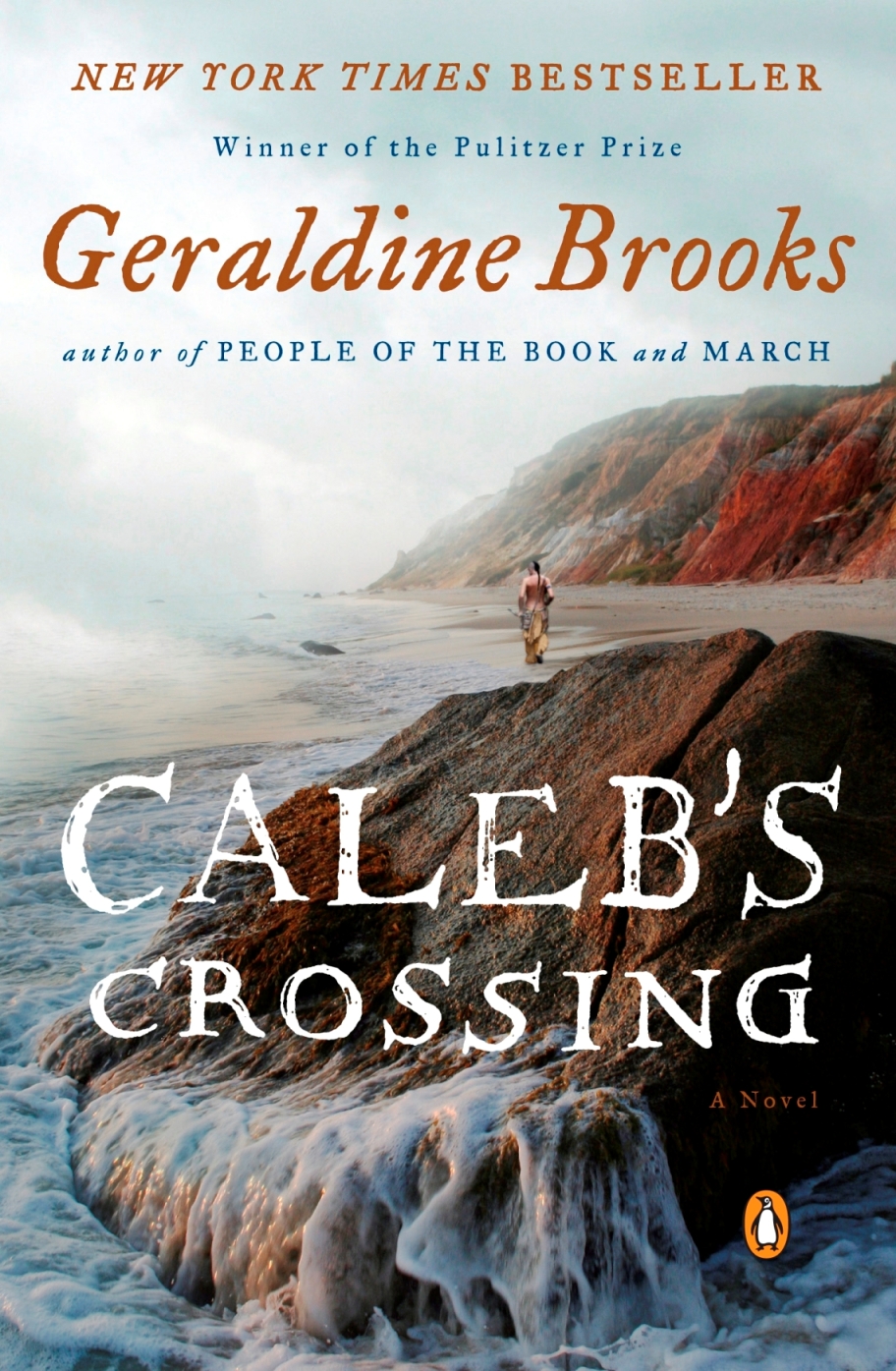
Caleb’s Crossing, by Geraldine Brooks

PB.Cover_.Calebs-Crossing

Once again, I had spoken too freely. I seemed too dense witted to learn the simple lesson: silence was a woman’s sole safe harbor.

These are the profound words of Bethia Mayfield, the voice in Caleb’s Crossing, by Geraldine Brooks. Profound, because they sum up the expectation imposed upon Puritan women in the 1600’s. Be seen, not heard. Be dutiful, modest, productive, obedient, submissive, and grateful.

And what of happiness? Happiness was a luxury. Life at that time was about attending to basic needs: food, shelter, clothing. Intellectual pursuits were reserved for males, and on “the island” described in the novel, a few males of the Wampanoag tribe as well. Caleb, for whom the novel is named, is one of them. Although a supporting character, some of the questions he asks and the identity he adopts makes the reader re-examine which people are savage and which are truly educated and dignified.

Hardship permeates throughout. The white men and native people try to coexist, but an undercurrent of determined hostility lingers. The word “sonquem” is used frequently. The best definition I could find of “sonquem” was “conquered.” In the novel’s context, the English buy or take land from the sonquem, the conquered people.

This is a novel which requires attention and commitment. The language is elevated, yet lyrical, and through Bethia’s eyes we come to understand that she is much more than what she shows others, and certainly much more than they acknowledge.

The characters experience great losses, disease, racism, indentured servitude, and public humiliation. At a time when most were endeavoring to be as Christian as possible, compassion and mercy were virtues rarely called upon. However, despite the bleak setting, we also see characters experience self-realization, regret, and love.

As the reader, I was motivated by Bethia’s fortitude and creativity during extreme trials of all varieties. At the end of the story, she calls Caleb a hero. In her eyes, perhaps he was. I think her modest nature and humble upbringing prevented her from realizing all that she accomplished, which you will see when you enter her world. I’m happy I did.

8.5/10 Stars


History, Memoir, Nonfiction, Series & Collections

All Things Bright And Beautiful, by James Herriot

{0EB76228-F8AF-4A23-847A-8EDB7B0E65F6}Img100I love books that I can put down for a while and then pick up again without guilt. James Herriot’s first book in his memoir series as a country vet in England is one such book. Each chapter is like a small short story in itself, chronicling his early years as a new veterinarian in a small farm town.

Because my husband and I have had some very busy months lately, it was nice to have a book at the ready that I could immerse myself in or, if necessary, abandon for weeks on end, without feel like I was leaving a juicy story behind.

Around the years surrounding WWII, James Herriot was new to his profession, sharing an office with his mentor, Sigfried. Sigfried’s younger brother, Tristan, a skilled veterinary student with a wicked sense of humor, also worked there. Having 3 people with different levels of experience approaching the interesting animal cases and eccentric cast of characters in the town make for some pretty interesting stories. Dog, cats, cows, pigs, horses, you will read about them all. Most stories ended happily, but some do not. All add to James’ hands-on education.

Parallel to his adventures in the office and visiting various local farms is James courting his future wife, Helen. The chapter about the large collection of books he buys at a flea market and must, somehow, get home in order to impress Helen is especially hilarious.

There is nothing controversial or offensive in any of his stories. Just interesting, colorful anecdotes of a simpler time when hard work and appreciating the land took precedent over technology and greed.

It isn’t difficult to see why James Herriot’s stories have made a lasting impression on readers for decades. They are truly delightful.

9 out of 10 stars

Children, History, Memoir, Nonfiction, Young Adult

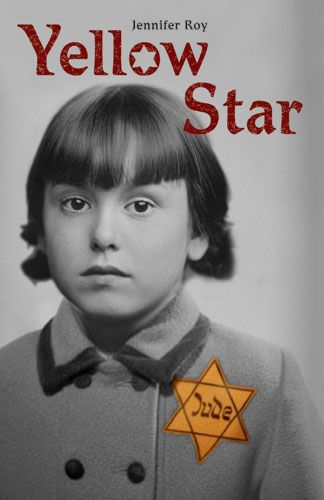
Yellow Star, by Jennifer Roy

v_roy_yellow_star

The Holocaust.

It is one of the most grim events in recent world history. Families are still affected today by lives lost and relatives gone missing.

It is also an event with amazing stories. True stories. Stories that exemplify faith, determination, and strength.

In 2006, author Jennifer Roy endeavored to pen her Aunt Sylvia’s childhood experiences of living in a Polish ghetto during World War II. The “ghetto” was a crowded Jewish internment camp. A neighborhood with barbed wire around it as a way to contain the people Hitler saw as the “problem.” His “final solution” would come later, of course, in the form of concentration camps.

Miraculously, Sylvia (an American modernization of Syvia,) spent the entire war in a ghetto and was one of only 12 surviving children out of thousands. The others became sad, anonymous statistics.

Jennifer Roy is very truthful about her challenges in relating the story. How should she tell it? A narrative? In third person? After trying other methods unsuccessfully, she decides to tell it in Sylvia’s voice, a combination of an old woman’s memories and the simple, but profound, observations of a child.

What emerges are short chapters and efficient language that sound like young Syvia commenting on her changing world. She tries to make sense of things that are senseless.

Why a yellow star? Yellow is supposed to be a happy color.

Bright colors don’t exist in the ghetto, except for the yellow stars and puddles of red blood we carefully step around. “More shootings,” Papa says quietly. His face is gray.

What happened to my friend? She was here yesterday…

Hava is missing. She went for a short walk on the street and never came back. Gone, missing, vanished.

From the ages of 5 to 10, the ghetto, and all that went with it, was Syvia’s world.

It is a child’s honest interpretation of starvation, cold, fear, death, and the unknown. She is acutely aware of her surroundings and the sacrifices her parents make to ease her suffering and keep her safe. “Safe” equals “alive.”

This book would be an excellent teaching tool when discussing the Holocaust, a subject that is quickly disappearing from students’ knowledge of history. Parents should read it with their children. Teachers should read it to their pupils. It is clear in its statement of the times without being overtly frightening. The childhood version of Syvia is relatable and sincere, with that strong sense of fairness that exists in all young people.

Highly, highly recommended.

9.5/10 Stars

History, Nonfiction

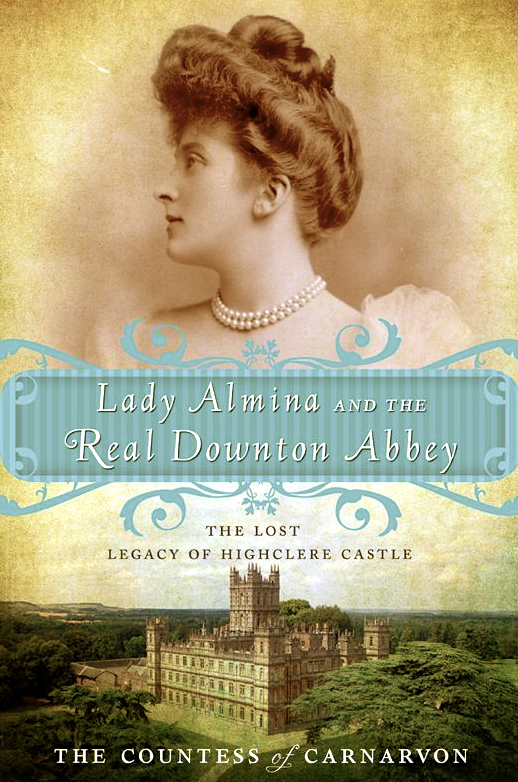
Lady Almina and the Real Downton Abbey: the Lost Legacy of Highclere Castle, by the Countess of Carnarvon

Screen Shot 2013-10-28 at 7.31.37 PMBefore there was Downton Abbey, there was Highclere Castle, the house used in the series, and the real life home of the Herbert family.  The current owner, George Herbert, is the 8th Earl of Carnarvon.  He is the latest in an illustrious family who, through determination, business sense, and fortuitous marriages has managed to keep Highclere Castle a self-sustaining estate when so many other houses of its kind have fallen into ruin.

The current earl’s wife Fiona, Countess of Carnarvon, feels a great duty to uphold the history of the castle and the family, especially now when Downton Abbey fans are clamoring for more information about the original owners.

Like Jacquelyn Bouvier, who brought class and style to Kennedy’s Camelot, Almina Wombwell did the same when she arrived at Highclere Castle as a 19 year old bride in 1895.

The illegitimate daughter of the fabulously wealthy Alfred de Rothschild, Almina was never fully embraced by society until she married the 5th Earl of Carnarvon.  She came with an enormous dowry, a generous stipend for redecorating, and her indulgent father funded the hospital she established at the castle during World War I.

There is no doubt that the current Lady Carnarvon has great respect for Almina and her legacy, much of which is still evident at the castle.  Her writing is uneven, but interesting, especially when she focuses on personal stories of the family, staff, and memorable soldiers who enjoyed the high-quality care provided there during the war.

As the reader I found myself either deeply engrossed or skimming.  I read intensely the parts about Almina and the earl’s courtship, personal stories from her childhood and her relationship with her father, the planning of her first important party for the Prince of Wales, and the many trips to Egypt which eventually led to the discovery of Tutankhamen’s tomb.

I skimmed over a lot of the less personal chapters about the happenings during the war.  Certainly the war affected Europe, and therefore, the inhabitants of Highclere, greatly.  But there were several times when the author seemed to get caught up in the technical aspects, almost like she was regurgitating information from another book.  It was lengthy and out of place.

It is fascinating to read about families such as the Carnarvons who have great inherited wealth, an estate, a title, and the responsibility to uphold these things for future generations.  As stewards of these privileges, that is their job.  But they also enjoy perks that the common man will never know, like rubbing elbows with royalty, being “gentleman politicians” but with no real governmental power, and spending money without even knowing how much they have in order to maintain the expected lifestyle.

Much of that money went towards the Egypt excavations.  And this is the first time I have read about the way the monumental discovery of Tut’s tomb changed the family’s life, mostly because of the invasion of the press.

Would I recommend the book?  Yes.  About half of it is very, very interesting.  Battle enthusiasts might find the other half interesting too.

7.5 out of 10 Stars

*** Learning about King Tut’s tomb has always been of special interest to me.  As a young kindergartener I was able to view actual artifacts when they came to Los Angeles on a special tour.  I never forgot that.  About 5 years ago, many of the most famous artifacts made their way again to the Los Angeles County Museum of Art and I had the opportunity to see them as an adult.  It is a singular experience to see the actual objects that were buried with Tut over 3000 years ago.  They have an aura of mystery and incredible beauty.

If this is a subject that interests you, I highly, highly recommend going to the PBS.org site or the PBS channel on your Roku player and watching “Ultimate Tut,” an episode from the series Secrets of the Dead.  Seeing this episode in tandem with finishing this book made everything come to life from that period of the Carnarvons’ lives.  I’m including a link HERE.

Children, Fiction, History, Young Adult

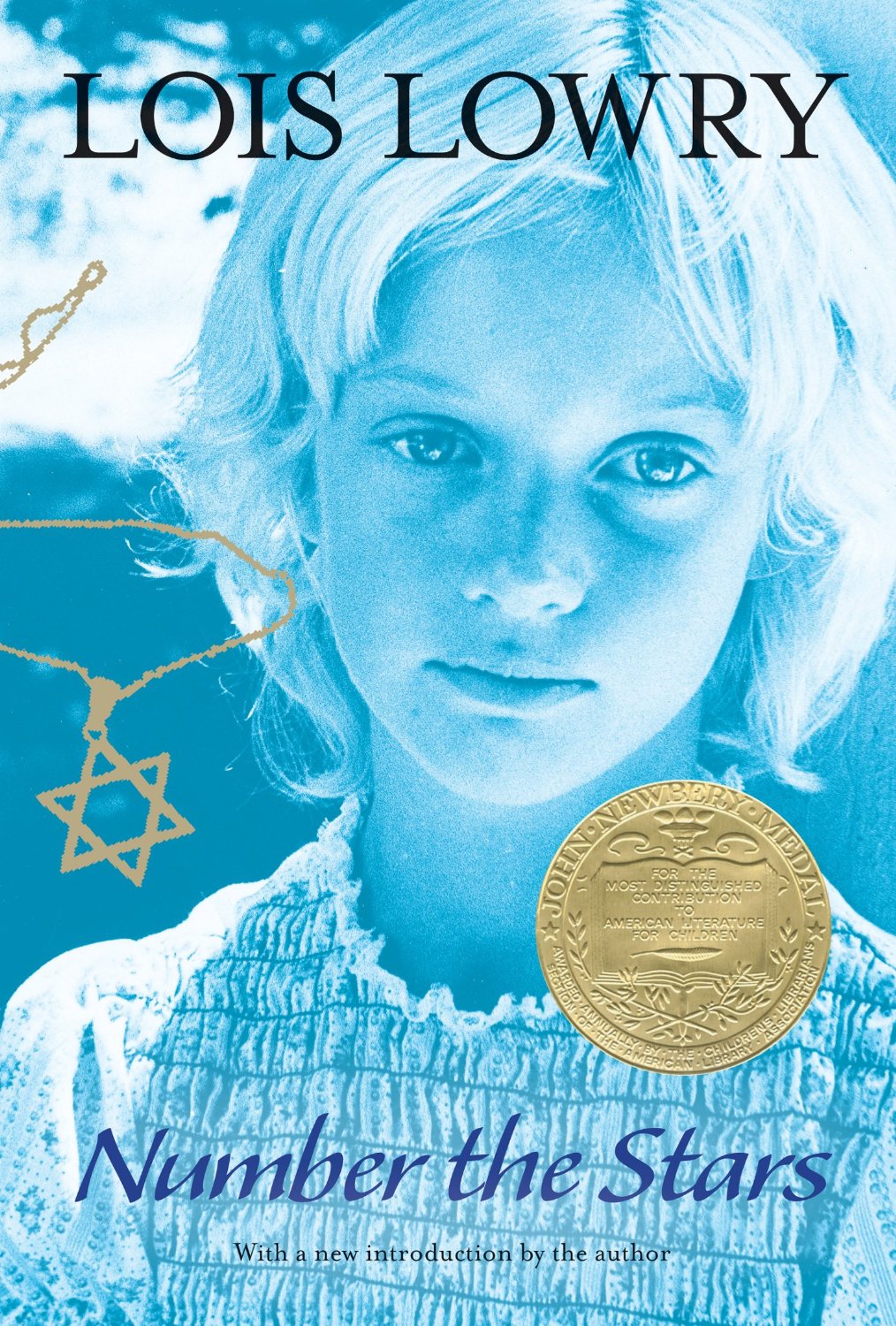
Number the Stars, by Lois Lowry

9128dHoa9dL._SL1500_After finishing the Four Lindas series, last night it was time to dive into a new book. Somehow I found myself looking at some young adult fiction online.  After coming across Number the Stars and seeing the overwhelmingly positive reviews for it, I decided to read it.  Only $1.99 for the Kindle version and a mere 160 pages, I was done two hours later, satisfied and awash in the author’s marvelous prose.

The story is a fictionalized account of a true story told to the author by a Jewish friend who was hidden during WWII.  It centers around a ten year old girl named Annemarie Johannesen who lives in Denmark at the time of the German occupation.  She is the middle child of 3 girls, with a mysteriously deceased older sister.  Annemarie’s best friend is Ellen Rosen, a Jewish girl who lives with her mother and father in the same apartment building.

Lois Lowry has a gift for character development, suspense, and driving the story forward.  She writes efficiently, which I wish more writers did.  There is nothing superfluous about the dialogue or events.

Within a few pages, as Jews in the neighborhood are disappearing, Annemarie is thrust into an adult situation.  Her parents make the decision to take in her friend, Ellen, and hide her.  I learned they were like many Danish families who successfully hid and helped their Jewish friends, many of whom made their way to safety in Sweden.

And here is where the adventure begins.  I will say no more about the plot except that it is excellently crafted.  Seeing everything through the eyes of Annemarie, who soon starts to make sense of the cat-and-mouse game her family is involved in, makes the story develop at just the right pace. She matures quickly, keenly observing the adults, and discovers her own role during this dangerous time.

I highly recommend this book.  This is a Newbery Award-winner (the highest honor for children’s literature.)  There is nothing scary or inappropriate.  Everything is explained at a child’s emotional level of about 10 years and up. At no time does it seem like the author is talking down to her readers.  This book is a treasure, and I wish I had known of it when I was in the classroom.

An enthusiastic 10/10 Stars.

Fiction, History

We the Living, by Ayn Rand

WeTheLiving_paperback__33059.1363219081.1280.1280I was just reading a quote that says “The happiest people don’t have the best of everything, they just make the best of everything.”  A documentary called HAPPY (available on Netflix,) shows that people’s levels of happiness around the world is based on things other than material possessions, mainly family and a connection and contribution to society.  Years ago, a 20/20 special on happiness concluded that a large part is based on the control we have over our own lives.

Keeping all of these things in mind, I now reflect on the melancholy characters in Ayn Rand’s We the Living–her first novel. Focusing on Communist Russia in the post-Lenin time period between WWI and WWII, Ayn Rand is quoted as saying that this was the most autobiographical book she would ever write.  She also said that it was her intention to show the destructive powers of a dictatorial government on society no matter the time or country, whether it be Russia, Nazi Germany, or any other.

“Destructive” is the key word in defining Communism’s effects as we follow three main characters on their journeys to survive and endure a world that is quickly becoming more and more restrictive.  Kira, the character who the author loosely based on herself, arrives in Petrograd with her family after being away during the war years.  Akin to Ayn Rand, her bourgeois parentage is like a social stain as she tries to become part of the new society.  Leo, the son of a an executed government rebel, and Andre, an orphaned war vet on the rise in the government, are the two men she becomes involved with, each fulfilling separate needs within her.  Each begins with an agenda that changes as times become more desperate.

Ayn Rand excels in character development.  Even the government feels like it own character–perhaps the strongest, most consistent, antagonist of them all–as we see what happens when choices and ambitions of the Individual are stripped away.  This is a time when your devotion to country and state is everything, and your patriotism is constantly being questioned.

There is also a multitude of supporting characters–parents, siblings, cousins, friends–who, although taking on minor roles in the story, take on major roles in emphasizing what was happening at the time.  No one was immune to Communism’s control, and woe be to you if you did not yield to it. But “yield” is a relative term, because different people react in different ways to such control, and “self-preservation” has many faces.

Ayn Rand’s husband, who encouraged her to write this book, said she was the first person to escape Communist Russia who could write an honest, first-person account of what it was like to live there.  And she was quoted as saying that she could not fathom how some Americans thought that Communism was a noble idea, philosophically, while demonizing what was actually happening to the Russian people. But like we see today, using North Korea as an example, the government even tried to control the outside world’s perception.  Russia was probably more successful simply because of the limited technology and media influence of the time.

However, when you read this book you will see there is nothing noble about the government controlling every aspect of its citizens’ lives.  I hear people saying that the US is headed in this direction and I cringe.  If you think that, reading this book will give you an entirely new perspective.  We may not live in the “home of the free” in its most idyllic, shiny sense, but we are nowhere close to what these people endured and from which they are still trying to recover. This book is an eye-opener, and a crucial read.

10/10 Stars

History, Memoir, Nonfiction

The Immortal Life of Henrietta Lacks, by Rebecca Skloot

the-immortal-life-of-henrietta-lacks

Once upon a time there was a story that needed to be told.  It is about something we all need to be aware of, yet few of us are aware.  It begins with cells and with a poor, Southern woman named Henrietta Lacks who died at age 30 and is buried in an unmarked grave.

But what it really goes back to is this question:  who do our bodies belong to?  Whether you believe in God, an afterlife, and souls (or not) when Science hits on a certain discovery it sometimes makes claims–or stakes claims–on things that can further research.  Does it have that right?

Henrietta was dying of cervical cancer and being treated at Johns Hopkins when her doctor took a sample of her cells and gave them to George Gey, a researcher at the hospital who was working on cell growth and duplication outside of the human body.  No patient consent was asked for or given.  No family consent was asked for or given.  After all, Henrietta was getting free medical care, and the hospital’s rationale was that, in exchange for that care, they could bypass asking for permission.  They had done it with other patients and this time was no different.

But Henrietta’s cells were different.  After multiple failures trying to duplicate cells artificially, George Guy was suddenly handed the scientific version of the goose that laid the golden egg.  Except in this case, there were billions of golden eggs, because Henrietta’s cells multiplied again and again…and again and again.

She died, unceremoniously, leaving 5 children and a husband behind, but her cells lived on, and live on to this day in labs around the world.  Renamed HeLa cells, their relentless fortitude in continuing to multiply has made them instrumental in some of medicine’s most important research.

Fast forward several decades when the author, Rebecca Skloot, a too-smart-for-her-own-good student who constantly challenged the conventional school system, was sitting in a science class at a local community college.  After teaching a brief lesson on the HeLa cells, the professor wrote Henrietta’s name on the blackboard.  A spark and questions began to emerge in Rebecca’s mind, as did a quest to find out more about this unsuspecting woman who had given so much.

There are some people who are born to write a certain book and tell a certain story.  Henrietta’s story was waiting for Rebecca Skloot to come along and pursue the multiple avenues required to do it justice.  What she didn’t know was that Henrietta’s children had been used, lied to, and taken advantage of so much over the years, that the last thing they wanted to do was trust a young white woman inquiring about their mother’s cells.  Just gaining their trust took years.  All they knew was that Johns Hopkins and many others had capitalized and profited off of them, and they had nothing.  They didn’t even have health insurance.

There is much, much more to this story, and what you will realize as you read is that the author’s and Henrietta’s children’s stories merge together during the decade of research it took to write this book.  There are parts that are difficult to read–both Henrietta and her children grew up with abuse, abandonment, and incredible poverty–a recipe for extreme hardship that affected generations of the Lacks family.

But the story also contains discovery, redemption, apologies, allegiance, ethics, and friendship. Henrietta, her children, the researchers, and the author all have their own journeys, and the lessons learned–for them and for the reader–are the kind that stay with you.

I highly recommend this book.  It will make you question and be grateful for many things.

9 stars out of 10

History, Memoir, Nonfiction

Two Lives, One Russia, by Nicholas Daniloff

9780395446010I don’t know if our fascination with Russia will ever diminish, partly because the culture, government, and history are so different from that of the US.  And it is this fascination, plus a job offer and the desire to investigate his family history, that motivated Nicholas Daniloff to move his family there in the late 1970’s.

Yet, despite knowing the language, the quirks of living in a country under the umbrella of so much mistrust, and being familiar with the experiences of other journalists who had been detained by the KGB, Daniloff himself was arrested just days before he and his wife were set to move back to the States.

Imagine–I don’t think we can–being nervous about forming new relationships for fear of the person being a KGB agent. Imagine having to save personal discussions for out on the balcony because of KGB microphones in your apartment.  Imagine using code words on the phone to avoid suspicion–even when you are doing nothing wrong.  This is what life was like.  Mistrust, fear, and deprivation. Deprivation of basic needs, information, and access to the rest of the world.

The “two lives” referred to in the book are the author’s and his great-great grandfather, a military leader at the time of the Decemberist movement.  Nicholas Daniloff has a unique ring that belonged to his ancestor, and the chapters switch back and forth between the events surrounding his arrest and his research into his great-great grandfather’s life and military service.

I found myself deeply fascinated with the chapters dealing with his imprisonment and endless interrogations.  The stress he underwent as he was accused of being a spy and handling illegal documents must have been terrible.  My attention waned during the other chapters.  There were too many tangents, too many names to remember, and too many branches of explanations.

If the entire book had dealt with his arrest, with only minor references to his ancestor, I think I would’ve been a lot more interested.  But I do understand the author’s need to draw parallels between his 2 week ordeal and the ten-year imprisonment his great-great grandfather endured.  Their experiences were not entirely alike, but it made the author feel closer to him, which is a trait many of us have to family members we hardly knew.

7.5 Stars out of 10

History, Memoir, Nonfiction

Call the Midwife, by Jennifer Worth

While waiting for Downton Abbey’s third season to begin in January, I have been enjoying a new BBC series, Call the Midwife.  It is based on the memoirs of a midwife named Jennifer Worth, and so I also began reading her book.

Jennifer Worth, who was “Jenny Lee” before she married, worked in London’s East End during the late 1950’s.  She and other young single midwives lived in a convent called Nonnatus House, side by side with a handful of nuns who also worked as midwives, ran a clinic for the expectant mothers in the area, and helped the young women like Jenny Lee complete their training by giving them field experience.

The East End was comprised of slums and tenement housing.  Unwashed children ran through the streets.  Houses of prostitution was commonplace.  Families usually squeezed into one or two rooms.  But with England’s socialized medicine, prenatal and antenatal care was available to everyone, regardless of their financial situation.  The nuns and young midwives were kept very busy.

Despite its whimsical cover, this book is not for the squeamish. But it is not gratuitously graphic either.  Most chapters deal with different birthing experiences that Jenny was in charge of, assisted in, or witnessed.  The East End’s poverty level brought its own set of challenges in many of these experiences, such as lack of sanitation in people’s homes, lack of electricity or phones for calling the doctor, or pre-existing illnesses in laboring mothers.

But this is not a story full of depressed people in depressed circumstances.  The author shows her awe and respect for the East Enders’ resilience despite those circumstances.  If you visit my other blog, Improvise the Harmony, and read the post called Happy =), it explains that, as long as people’s basic needs are met, they have the same capacity for happiness as someone who is much wealthier.  This memoir is a testament to that fact.

If you have been watching the series, you will recognize that some episodes have been completely lifted from the book.  But there are plenty that are not.  The book also gives us more insight into the regular cast of characters–who are based on real people–such as the other young midwives and nuns at the convent.

There is one chapter that made me squirm a bit, that was graphic in another way.  The chapter entitled “Cable Street.”  This chapter has, unfortunately, given me reason not to suggest the book to my book club.  It is a shame, too, because the rest of the memoir is delightful.  Despite this chapter, I do recommend the book.  Jennifer Worth’s writing style is the perfect balance of reporting and descriptive, and it is never boring.  It is one of those “slice of life” books that takes you to another place in another time.  The fact that everything in it really happened makes it all the more interesting.

8.5/10 Stars