Memoir, Nonfiction

Happy, Happy, Happy, by Phil Robertson

Duck-CommanderFor some reason, my husband decided to get me seasons 1-3 of Duck Dynasty for Christmas.  I had never seen the show, did not know anything about the Robertson family except that they were a rags-to-riches story and that the father, Phil, had been recently been suspended by A&E. (Which was lifted after 9 days and a lot of public backlash.)

After finishing season 1, we can totally see the appeal of the show and the family.  Compared to everything else on TV they are an anomaly–they work hard, love each other, respect the institution of marriage, value education, they don’t swear, and they make Christianity cool. As my husband pointed out, “People are hungry for a show with values.”

Don’t let the camo and beards fool you.  There’s more depth than meets the eye, which led me to reading Phil’s autobiography when I saw the Kindle version for a reduced price.  At 240 pages, it is a quick read, but enjoyable with some interesting tidbits.  You learn about his impoverished childhood, where no game meant no meat; his and Kay’s youthful (and enduring) marriage nearly 50 years ago, struggles with alcohol, conversion to Christ, and the beginnings of the Duck Commander company.

And, in true “Phil-o-sophy” he drops in his personal wisdom on marriage, raising respectful children, being self-sufficient, and his work ethic.  He is far from a perfect man, but he has learned from his mistakes in life.

The book is thought-provoking in that the reader is reminded that traditional values, now considered “old fashioned” by many, have a lot going for them.

8.5 out of 10 stars

Nonfiction, Self-Help, Travel

How to Live in a Car, Van, or RV, by Bob Wells

image

This book I read purely for fun and because it seemed interesting. Despite the fact that we are the owners of a mini motor home, it is unlikely that it will become our full time home.  Still, I admire anyone who can strip away their possessions to just the basics and find joy and fulfillment in that kind of life.

The author of this book, Bob Wells, began his life as a vandweller (all one word) out of sheer necessity. He was going through a messy divorce and couldn’t afford to even rent an apartment. This man thrives on living simply.  So much so, that when he got financially on his feet and remarried, he ended up divorcing a second time because living in a “stick and brick” house became unbearable for him. (“Bye, Honey, I’m leaving you for a van…”)

Now, for most of us, RV and trailer living would be like living in a really small house but still with basic conveniences. Bob looks at that as excessive, and advocates living in a box van or even your car. It is almost like a religion for him, and he lives on public land for free and never pays for a campground or uses hookups.

That is fine for him. And if that is a lifestyle that appeals to you he does have some good ideas. However, as a rule-follower, I have a hard time with the idea of purposefully drawing unemployment benefits so he only has to work for half the year. It’s one thing to live off the grid, it’s another thing to take advantage of the system while boasting that you don’t live within it.

For someone who, because of necessity or desire, wants to scale down their living quarters to a car, van or RV, this book might be helpful. Be warned that it does not give any instructions on using RV plumbing or electrical systems. Also be prepared for decent writing but tons of type-os of every kind. Whether or not this book was self-published, it was carelessly edited.

In the end, read it for your own amusement, but choose this lifestyle at your own risk.

7.5 out of 10 stars

Nonfiction, Travel

RVing Basics, by Bill & Jan Moeller

image

I know that reviewing a book about RVs is quite a departure from the types of books I normally review, but my husband and I just bought a 22-foot mini motor home (it doesn’t feel very mini) and I’m a big believer in “knowledge is power,” so this review and this book might be useful to other RV beginners like us.

After doing a lot of reading and research lately on the many necessary things that an RV owner must learn, I can confidently say that this is a well-written, thorough book. As the economy continues to be in a bad place, it is a good idea to look at alternate vacation options, and owning or renting a motor home, trailer or 5th wheel might be something to look into.

We are starting out as very new beginners, so the idea of valves, pumps, inverters, amps, and terms like “black water” can be a little daunting.  This book takes the mystery away from these and many other terms, plus their locations, uses, and where they fall in the checklists of things to do to get ready for an adventure.

The first 55 pages help you decide which type of RV is right for your needs.  We already have our motor home, even though we haven’t taken it on a trip yet, but I read the section anyway and it helped confirm the fact that our purchase was a good one for us. We bought it the day before I left to visit my family out of state, and my husband is in the process of insuring it.  Rest assured that when we are reunited we plan to take it on its maiden adventure.

Assuming the reader already has their vehicle, the rest of the book is devoted to parts, systems, etiquette, driving, troubleshooting, and a host of other important things. I read it cover to cover, absorbing as much as possible in order to feel less overwhelmed.  I can breathe a sigh of relief now knowing that I have, at least, a rudimentary knowledge of our RV.  This is written by “fulltimers” who live in their 5th wheel trailer year round and hope to impart their experience to the rest of us, including learning from mistakes they have made and observed.

I feel much better about our purchase and excited about our upcoming trips much more after having read this book. It’s an extremely useful resource for the first-time RV buyer.

9.5 out of 10 stars

History, Nonfiction

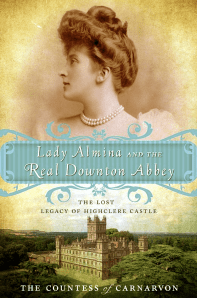
Lady Almina and the Real Downton Abbey: the Lost Legacy of Highclere Castle, by the Countess of Carnarvon

Screen Shot 2013-10-28 at 7.31.37 PMBefore there was Downton Abbey, there was Highclere Castle, the house used in the series, and the real life home of the Herbert family.  The current owner, George Herbert, is the 8th Earl of Carnarvon.  He is the latest in an illustrious family who, through determination, business sense, and fortuitous marriages has managed to keep Highclere Castle a self-sustaining estate when so many other houses of its kind have fallen into ruin.

The current earl’s wife Fiona, Countess of Carnarvon, feels a great duty to uphold the history of the castle and the family, especially now when Downton Abbey fans are clamoring for more information about the original owners.

Like Jacquelyn Bouvier, who brought class and style to Kennedy’s Camelot, Almina Wombwell did the same when she arrived at Highclere Castle as a 19 year old bride in 1895.

The illegitimate daughter of the fabulously wealthy Alfred de Rothschild, Almina was never fully embraced by society until she married the 5th Earl of Carnarvon.  She came with an enormous dowry, a generous stipend for redecorating, and her indulgent father funded the hospital she established at the castle during World War I.

There is no doubt that the current Lady Carnarvon has great respect for Almina and her legacy, much of which is still evident at the castle.  Her writing is uneven, but interesting, especially when she focuses on personal stories of the family, staff, and memorable soldiers who enjoyed the high-quality care provided there during the war.

As the reader I found myself either deeply engrossed or skimming.  I read intensely the parts about Almina and the earl’s courtship, personal stories from her childhood and her relationship with her father, the planning of her first important party for the Prince of Wales, and the many trips to Egypt which eventually led to the discovery of Tutankhamen’s tomb.

I skimmed over a lot of the less personal chapters about the happenings during the war.  Certainly the war affected Europe, and therefore, the inhabitants of Highclere, greatly.  But there were several times when the author seemed to get caught up in the technical aspects, almost like she was regurgitating information from another book.  It was lengthy and out of place.

It is fascinating to read about families such as the Carnarvons who have great inherited wealth, an estate, a title, and the responsibility to uphold these things for future generations.  As stewards of these privileges, that is their job.  But they also enjoy perks that the common man will never know, like rubbing elbows with royalty, being “gentleman politicians” but with no real governmental power, and spending money without even knowing how much they have in order to maintain the expected lifestyle.

Much of that money went towards the Egypt excavations.  And this is the first time I have read about the way the monumental discovery of Tut’s tomb changed the family’s life, mostly because of the invasion of the press.

Would I recommend the book?  Yes.  About half of it is very, very interesting.  Battle enthusiasts might find the other half interesting too.

7.5 out of 10 Stars

*** Learning about King Tut’s tomb has always been of special interest to me.  As a young kindergartener I was able to view actual artifacts when they came to Los Angeles on a special tour.  I never forgot that.  About 5 years ago, many of the most famous artifacts made their way again to the Los Angeles County Museum of Art and I had the opportunity to see them as an adult.  It is a singular experience to see the actual objects that were buried with Tut over 3000 years ago.  They have an aura of mystery and incredible beauty.

If this is a subject that interests you, I highly, highly recommend going to the PBS.org site or the PBS channel on your Roku player and watching “Ultimate Tut,” an episode from the series Secrets of the Dead.  Seeing this episode in tandem with finishing this book made everything come to life from that period of the Carnarvons’ lives.  I’m including a link HERE.

Nonfiction, Self-Help

Why Smart Kids Worry, by Allison Edwards

9781402284250_p0_v2_s260x420Recently, after visiting the Washington Anytime Library online and picking books on a variety of subjects, I became engrossed in Why Smart Kids Worry, by Allison Edwards. I am going to be as objective in my review as possible, but there are 3 things that may prevent me from being so.First of all, this book is written for parents of smart children who have high anxiety.  I am not a parent.  Second, this book is divided into 2 parts–describing different types of anxieties, and providing tools to help soothe them.  Not being a parent who needs the tools for a child I don’t have, I only read the first part, BUT…the author did mention the tools quite frequently in part 1.

Third, this book is written by a former school psychologist.  I am a former teacher.  Most teachers have a combative relationship with school psychologists and I am no different.

Despite those disclaimers, I did find the book quite interesting.  Why?  Because I WAS a smart kid who worried.  And I’ve grown into an adult who worries.  It is something I have to constantly talk myself through.

I never talk about this, but for the sake of this review I will…

As children, both my brother and I were identified as “gifted.”  Like the author states, that label can add some pressure and, whether conscious of it or not, smart kids are often worriers.  I cannot speak for my brother, who always seemed very calm and collected, but I was always a worrier as a kid.  I worried about being late for school, doing well on a test, about who would take care of me if my mom (a single parent) died, about what I would be when I grew up, about who I would marry, about how much my friends liked me, about how much sleep I was getting, if we had enough money (things were tight)…you name it, I thought about it and usually worried about it.

So, for me, the useful thing about this book is that I dug back into some of the things I used to worry about and felt less alone.  The author talks about the “snow globe.” A child puts everything through the filter within the small confines of their experience, and worries.  Smart kids take things to the next level.  She used the graphic images on the news after 9/11 as an example.  Adults would see the clip of the planes hitting the Twin Towers and know they were seeing a replay of something that already happened.

Kids look at those clips, and, if they are young enough, process it as an event happening in the moment.  News clip after news clip means that plane after plane is hitting the towers.  Smart kids then begin thinking within their sphere… “Hmm, planes hit towers.  We have planes and towers where I live, that means this could happen to me too.”

It seems outlandish, but I’ve seen this kind of connective thought process with students.

This book could be helpful to parents who have anxious kids.  No one wants their child to be pigeon-holed into a certain category, but when she talks about the way different kids process and communicate their anxieties, it might be comforting to parents to know that other families have experienced the same kinds of challenges.

The tools she discusses in Part 1 are helpful and productive.  Reminding parents that a child’s chronological, intellectual, and emotional ages are usually different, she informs parents that smart kids do not need to know about adult information happening in the family.  Very true.

I would recommend this book.  It is well organized and gives good advice to parents. Teachers and other caregivers may find it useful too.

8.5 out of 10 stars

History, Memoir, Nonfiction

The Immortal Life of Henrietta Lacks, by Rebecca Skloot

the-immortal-life-of-henrietta-lacks

Once upon a time there was a story that needed to be told.  It is about something we all need to be aware of, yet few of us are aware.  It begins with cells and with a poor, Southern woman named Henrietta Lacks who died at age 30 and is buried in an unmarked grave.

But what it really goes back to is this question:  who do our bodies belong to?  Whether you believe in God, an afterlife, and souls (or not) when Science hits on a certain discovery it sometimes makes claims–or stakes claims–on things that can further research.  Does it have that right?

Henrietta was dying of cervical cancer and being treated at Johns Hopkins when her doctor took a sample of her cells and gave them to George Gey, a researcher at the hospital who was working on cell growth and duplication outside of the human body.  No patient consent was asked for or given.  No family consent was asked for or given.  After all, Henrietta was getting free medical care, and the hospital’s rationale was that, in exchange for that care, they could bypass asking for permission.  They had done it with other patients and this time was no different.

But Henrietta’s cells were different.  After multiple failures trying to duplicate cells artificially, George Guy was suddenly handed the scientific version of the goose that laid the golden egg.  Except in this case, there were billions of golden eggs, because Henrietta’s cells multiplied again and again…and again and again.

She died, unceremoniously, leaving 5 children and a husband behind, but her cells lived on, and live on to this day in labs around the world.  Renamed HeLa cells, their relentless fortitude in continuing to multiply has made them instrumental in some of medicine’s most important research.

Fast forward several decades when the author, Rebecca Skloot, a too-smart-for-her-own-good student who constantly challenged the conventional school system, was sitting in a science class at a local community college.  After teaching a brief lesson on the HeLa cells, the professor wrote Henrietta’s name on the blackboard.  A spark and questions began to emerge in Rebecca’s mind, as did a quest to find out more about this unsuspecting woman who had given so much.

There are some people who are born to write a certain book and tell a certain story.  Henrietta’s story was waiting for Rebecca Skloot to come along and pursue the multiple avenues required to do it justice.  What she didn’t know was that Henrietta’s children had been used, lied to, and taken advantage of so much over the years, that the last thing they wanted to do was trust a young white woman inquiring about their mother’s cells.  Just gaining their trust took years.  All they knew was that Johns Hopkins and many others had capitalized and profited off of them, and they had nothing.  They didn’t even have health insurance.

There is much, much more to this story, and what you will realize as you read is that the author’s and Henrietta’s children’s stories merge together during the decade of research it took to write this book.  There are parts that are difficult to read–both Henrietta and her children grew up with abuse, abandonment, and incredible poverty–a recipe for extreme hardship that affected generations of the Lacks family.

But the story also contains discovery, redemption, apologies, allegiance, ethics, and friendship. Henrietta, her children, the researchers, and the author all have their own journeys, and the lessons learned–for them and for the reader–are the kind that stay with you.

I highly recommend this book.  It will make you question and be grateful for many things.

9 stars out of 10

History, Memoir, Nonfiction

Two Lives, One Russia, by Nicholas Daniloff

9780395446010I don’t know if our fascination with Russia will ever diminish, partly because the culture, government, and history are so different from that of the US.  And it is this fascination, plus a job offer and the desire to investigate his family history, that motivated Nicholas Daniloff to move his family there in the late 1970’s.

Yet, despite knowing the language, the quirks of living in a country under the umbrella of so much mistrust, and being familiar with the experiences of other journalists who had been detained by the KGB, Daniloff himself was arrested just days before he and his wife were set to move back to the States.

Imagine–I don’t think we can–being nervous about forming new relationships for fear of the person being a KGB agent. Imagine having to save personal discussions for out on the balcony because of KGB microphones in your apartment.  Imagine using code words on the phone to avoid suspicion–even when you are doing nothing wrong.  This is what life was like.  Mistrust, fear, and deprivation. Deprivation of basic needs, information, and access to the rest of the world.

The “two lives” referred to in the book are the author’s and his great-great grandfather, a military leader at the time of the Decemberist movement.  Nicholas Daniloff has a unique ring that belonged to his ancestor, and the chapters switch back and forth between the events surrounding his arrest and his research into his great-great grandfather’s life and military service.

I found myself deeply fascinated with the chapters dealing with his imprisonment and endless interrogations.  The stress he underwent as he was accused of being a spy and handling illegal documents must have been terrible.  My attention waned during the other chapters.  There were too many tangents, too many names to remember, and too many branches of explanations.

If the entire book had dealt with his arrest, with only minor references to his ancestor, I think I would’ve been a lot more interested.  But I do understand the author’s need to draw parallels between his 2 week ordeal and the ten-year imprisonment his great-great grandfather endured.  Their experiences were not entirely alike, but it made the author feel closer to him, which is a trait many of us have to family members we hardly knew.

7.5 Stars out of 10

History, Memoir, Nonfiction

Call the Midwife, by Jennifer Worth

While waiting for Downton Abbey’s third season to begin in January, I have been enjoying a new BBC series, Call the Midwife.  It is based on the memoirs of a midwife named Jennifer Worth, and so I also began reading her book.

Jennifer Worth, who was “Jenny Lee” before she married, worked in London’s East End during the late 1950’s.  She and other young single midwives lived in a convent called Nonnatus House, side by side with a handful of nuns who also worked as midwives, ran a clinic for the expectant mothers in the area, and helped the young women like Jenny Lee complete their training by giving them field experience.

The East End was comprised of slums and tenement housing.  Unwashed children ran through the streets.  Houses of prostitution was commonplace.  Families usually squeezed into one or two rooms.  But with England’s socialized medicine, prenatal and antenatal care was available to everyone, regardless of their financial situation.  The nuns and young midwives were kept very busy.

Despite its whimsical cover, this book is not for the squeamish. But it is not gratuitously graphic either.  Most chapters deal with different birthing experiences that Jenny was in charge of, assisted in, or witnessed.  The East End’s poverty level brought its own set of challenges in many of these experiences, such as lack of sanitation in people’s homes, lack of electricity or phones for calling the doctor, or pre-existing illnesses in laboring mothers.

But this is not a story full of depressed people in depressed circumstances.  The author shows her awe and respect for the East Enders’ resilience despite those circumstances.  If you visit my other blog, Improvise the Harmony, and read the post called Happy =), it explains that, as long as people’s basic needs are met, they have the same capacity for happiness as someone who is much wealthier.  This memoir is a testament to that fact.

If you have been watching the series, you will recognize that some episodes have been completely lifted from the book.  But there are plenty that are not.  The book also gives us more insight into the regular cast of characters–who are based on real people–such as the other young midwives and nuns at the convent.

There is one chapter that made me squirm a bit, that was graphic in another way.  The chapter entitled “Cable Street.”  This chapter has, unfortunately, given me reason not to suggest the book to my book club.  It is a shame, too, because the rest of the memoir is delightful.  Despite this chapter, I do recommend the book.  Jennifer Worth’s writing style is the perfect balance of reporting and descriptive, and it is never boring.  It is one of those “slice of life” books that takes you to another place in another time.  The fact that everything in it really happened makes it all the more interesting.

8.5/10 Stars

History, Memoir, Nonfiction

Elsie: Adventures of An Arizona Schoolteacher 1913-1916

There are few things more satisfying than finding a book completely by accident and then plunging yourself into it completely.  I found this delightful book while browsing through the Amazon lending library.  The sample I read was so endearing that I abandoned what I was reading at the time and took this book up instead.  Over the last few days, I have affectionately called this my “Elsie book,” verbally recommending it to several people.

Through detailed letters and diary entries compiled by her granddaughter, we learn that Elsie Hayes was an idealistic young woman who lived in Southern California at the turn of the 20th century.  She went to college for a while, but needed funds to continue her education, so she embarked on the adventure of a lifetime–leaving the comfort of her family and moving to Oak Creek, Arizona to teach school.  This decision changed her life forever.

There are charming aspects to the story that simply reflect a simpler time, such as Elsie’s social life–dinners at people’s houses, and the way people visited with each other (in person!) instead of texting, emailing, or simply giving a “thumbs-up” on Facebook.  It was the kind of socializing that required effort, manners, conversation, and skill.

The more I got to know Elsie, the more I felt I knew her.  She and I have many things in common–we are both from Southern California.  We both taught school before we were married.  We both saw our younger siblings get married before us and, though we guarded our independence, longed to have a wonderful man love us and take care of us.  We both saw our plans uprooted in one relationship when Fate took a tragic turn, yet found relief in the arms of the person we were truly supposed to be with.

Aside from these remarkable parallels, reading about Elsie brings pure joy.  She was optimistic, resilient, and knew what she wanted in life.  She loved her students, but still faced the challenges a teacher is bound to face.  (I did laugh at one of her diary entries when she remarked that she told a naughty student to go home.  If only!)

The one thing I would make future readers aware of is that, because of the time period, Elsie’s references to other races may offend some people.  She speaks once of “learning Mexican” from one of her students, and the “n” word appears once as the title of a play she is reading.  None of these words or phrases are used maliciously; they were simply acceptable at the time and her granddaughter did not alter them for authenticity.

I would very much recommend this memoir.  Rarely have I enjoyed a glimpse into the past as much as seeing it through the eyes of Elsie.

9.5/10 Stars

Elsie’s granddaughter, Barbara Anne Waite, does have a website where you can learn more about Elsie in her later years.  You can find it at http://barbaraannewaite.com/.  I would recommend visiting it after reading the book.

*********************************************************

A FUN TIDBIT  October 13, 2012

This morning I sent a quick email to Elsie’s granddaughter to tell her how much I enjoyed the book.  A few hours later I heard back from her!  This is what she wrote:

Dear Kristie-

Thanks so much for your sweet note. It is such an encouragement to hear from readers that enjoyed “Elsie.” The response  has gone way beyond my expectations and prayers. I do hope you go to my website : www.BarbaraAnneWaite.com.  Under “Tidbits” there are photos not included in the book and some extra historical notes. I am willing to make a special price for book clubs who want to order the print copies. If they are ordered together, (so I can mail as one mailing) I can do for $10.00 each if mailed within USA. The print copy has a lovely hand written font that can’t be done as an e-book.  Would you consider adding your review to Amazon’s Elsie site? I think that really helps my sales. I love it that I have had reviews from New Zealand, Ecuador, Crete, Korea and Canada. My favorite review was from a lady 103 that read it on Kindle and Skyped her review to her daughter.  I live in San Diego.   I am speaking to a book club there soon and I’m very excited about that.  I am going to look right now at your book review site and thanks for including “Elsie!”

Barbara Anne Waite
History, Memoir, Nonfiction

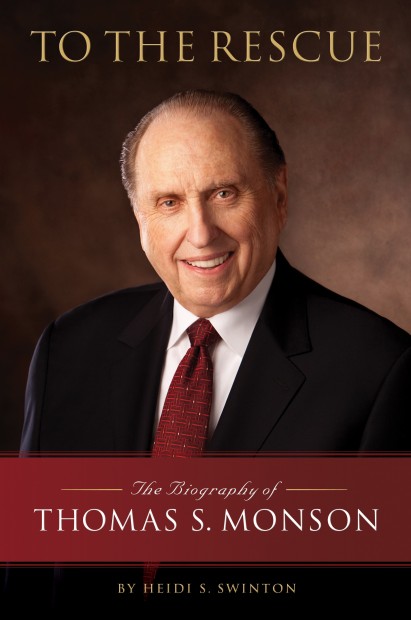
To the Rescue: The Biography of Thomas S. Monson

These past two months, my book club decided to take on the challenge of reading the very long and very comprehensive biography of Thomas S. Monson, president and prophet of the Church of Jesus Christ of Latter Day Saints.  We decided that the timing would be perfect since we were not meeting in August, which gave each of us eight weeks to delve into the 600-plus pages.

Getting started was not easy, but it was nothing compared to the daunting task the author faced when Pres. Monson called her personally and asked her to be the one to write his life story.  To write a prophet’s biography would be hard enough, but to write the biography of a living prophet who is adored throughout the world would be monumental, indeed.

Despite my sympathies for Sis. Swinton, I do think that she had a hard time finding her footing at the beginning, and her writing style is a little sterile.  This is something that the entire book group agreed on, and so we decided to focus more on the book’s content than its literary aspects.

Whether you are of the LDS faith or not, whether you agree with the Church’s doctrine or not, there is one thing that is undeniable, which is that Pres. Monson is an extraordinary man.  Born in 1927 and raised by a loving family in Salt Lake City, Utah, even as a boy little Tommy was unique.  His concern for others, his attitude towards service, his work ethic, and his unwavering faith all began at a very young age.

He took on adult responsibilities much younger than most, and excelled in each job or calling.  Married at 21, a bishop at 22, in the stake presidency at 27, a mission president at 30, and called to the Quorum of the Twelve Apostles at the unheard-of age of 36, the accelerated rate of his callings only magnify the fact that his wisdom and faith exceeded his years.

There were some sections that I felt compelled to skim (his schedules, Boy Scout awards, descriptions of various committees,) but other sections required my full attention.  His work with the saints in East Germany was incredible and I learned things about him and the challenges experienced by the church members caught behind the Berlin Wall that were awe-inspiring and faith-building.  I also loved reading about his humility, because even though he has been in very prominent Church positions, Pres. Monson still remains incredibly humble, and incredibly focused on serving the Lord and His children.  His actions and decisions are always driven by the Lord’s will and not his own.

Every church president has a “focus” during his tenure, whether it be missionary work or temples, but Pres. Monson’s focus seems to be about helping the Lord’s lost sheep and bringing international attention to the saints scattered throughout the world.

And throughout his life, Pres. Monson has still retained a love of life, laughter and fun.  He is devoted to his wife of 61 years, his 3 children, and numerous grandchildren and great-grandchildren.

I was more inspired by his example than his accomplishments.  Few will be able to duplicate the things he has done, but anyone can emulate how he has done them.

8.5/10 Stars


Entertainment, Memoir, Nonfiction

Laughs, Luck…and Lucy, by Jess Oppenheimer

After reading 2 relatively heavy books, it was time for something lighter.  While perusing the memoirs available for borrowing through the Kindle Lending Library on Amazon.com,  I came across Laughs, Luck…and Lucy, by Jess Oppenheimer. This book has been a delight.

Most people give all of the credit of I Love Lucy’s success to Lucille Ball because of her impeccable comedic timing.  Some remember Desi Arnaz as the brains behind the show.  But what few think about is that someone first had to create the show and its memorable stories, and that person was Jess Oppenheimer.

As engaging as a writer of his memoirs as he was while tweaking and crafting the scripts of TV’s most popular sitcom, Jess Oppenheimer takes us on a journey that begins with his childhood and his foray into the world of radio.  But as an expert in human nature, he knows that what readers really want to hear are anecdotes and behind-the-scenes stories of his iconic show.  Without wasting any time, we learn of his first contact with Lucille Ball while she was playing the socialite wife of a bank vice president (Richard Denning) on the radio program My Favorite Husband.  As television started to become a major force of entertainment , My Favorite Husband was reworked by Oppenheimer and the husband was recast at the insistence of Lucille Ball.  She wanted the part to be played by her husband, Desi Arnaz.  As controversial as that request was at the time, it turned out to be a great move.  (For those who are fans of the film An Affair to Remember, Richard Denning played Deborah Kerr’s handsome fiancee’. I don’t think I could picture him as Lucy’s comedic foil, could you?)

It didn’t take long for audiences to take notice of I Love Lucy, which was quickly the #1 show on television.  But the show will be remembered for other firsts as well, such as being the first to have a storyline about pregnancy, the first to show a couple sharing a bed, the first to film in front of a live audience, the first to film and save its episodes, and the first to use 3 cameras.  It was groundbreaking, and Jess Oppenheimer does a clever job of telling about how each of these firsts came to be, how the cast dealt with their success, and about the long hours involved with churning out a hit show week after week. (In those days a season had 36 episodes, not 24 like today.)

If you are a fan of I Love Lucy, as I am, you will enjoy this book very much.  It hearkens back to the days when TV shows had standards, when writing was clever, and when the most famous redhead of all time ruled the airways.

8.5/10 Stars

Memoir, Nonfiction

The Glass Castle, by Jeannette Walls

When I learned that our next book club selection was going to be a memoir, I was excited.  Ever since I was a child, I have loved reading biographies and autobiographies.  As I started the book, however, I could tell that this was no ordinary life that I was reading about.

Born in 1960, the 2nd of 4 children to Rex and Rose Mary Walls, Jeannette and her family lived the ultimate bohemian lifestyle.  Both of her parents were intelligent, self-taught, and talented–her mother even had a teaching certificate–but they simply did not like to work to support their family.  Rose Mary painted and wrote, although never once in the book does it say that she ever sold any of her creations.  And Rex?  Rex drank.  A lot.  He and Rose Mary had a volatile relationship, but they were also birds of a feather, always off finding that next adventure, never worrying about annoying things like the mortgage or even putting food on the table.  (I’m convinced that both of them suffered from some sort of mental illness.)  There were times when Jeannette and her siblings would go for days eating only popcorn or beans.  She became an expert at rooting through trash and eating her classmates’ discarded sandwiches, as well as fending off their embarrassing questions.  Her younger brother did the same.  When young Jeannette was in the hospital after burning herself, and when Rose Mary gave birth to her 4th child, Rex would employ his “skedaddle” method.  It is exactly what you think it is–springing his family to avoid paying the bills.

In fact, the “skedaddle” is what kept the family moving for the first decade of Jeannette’s life.  Rex Walls was all about avoidance, denial, and broken promises.  It is heart-breaking, infuriating, and exhausting to read.  But the book has that train wreck quality.  You cannot stop reading it.  I will admit, however, that there were times when I would need to take a break from it for several days. The extreme deprivation these kids suffered would take its toll on me.  Yet, the author does not write like she is asking for sympathy, and their poverty created a strong streak of resourcefulness in all of them.

The light at the end of the tunnel for me was knowing that, one by one, Jeannette and her siblings eventually escaped their parents and carved out lives of their own.  Amazingly, only one of the four turned to substance abuse and continues to lead a troubled life.  Even more amazing is that the kids have forgiven their parents and have a relationship with them (Rex died in 1994.)  As the author states in the following video, you can either look at the Glass Castle as another one of Rex Walls’ drunken promises or as a hope for the future.  No matter how dire things became, those kids retained that glimmer in their eye that life could be better, and they didn’t stop trying until it was.

8.5/10 Stars