Fiction, Philosophy, Romance, Short Stories, Women's Fiction, Young Adult

Ten Books-At-A-Glance

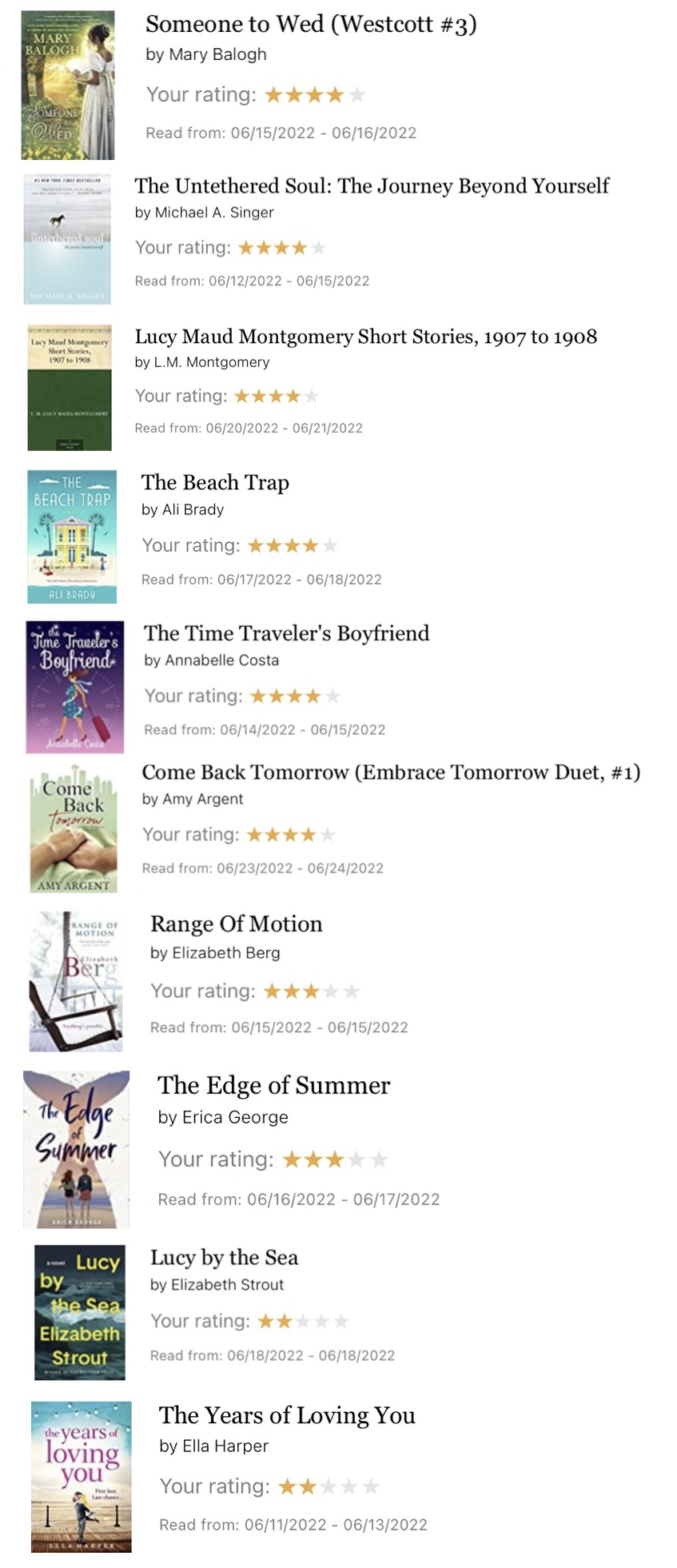
Here are 10 other books I’ve read recently with their 1-5 Star ratings on Goodreads. None of them made great impressions on me, but I still found the ones with 4 stars enjoyable. The biggest surprise was Someone To Wed, by Mary Balogh because the female main character was such a pillar of strength, despite her challenges. The biggest disappointment was the advanced copy (available Sept 20) of Lucy By the Sea, by Pulitzer-Prize winning author Elizabeth Strout. It is about a divorced couple co-habitating during the Covid pandemic. Personally, I think it is much too soon for a story on this subject. If you’re interested in any of them, I’m happy to answer questions in the comments.

Nonfiction, Philosophy, Self-Help

The Book of Joy, by Douglas Abrams

bookofjoy

Despite having only met a handful of times, the Dalai Lama and Anglican Archbishop Tutu are terrific friends. Their mutual love, respect, generosity, and self-deprecating humor is wonderful to witness. The Book of Joy, by Douglas Abrams, chronicles a meeting spanning several days in which the author both observes and asks questions of these two revered spiritual leaders. The questions are about joy, happiness, the toxic state of the world and how to find joy and happiness within it. There are also questions regarding their personal lives, experiences, and challenges.

Both men have overcome great obstacles in regards to health and national politics. Both have had to adapt their spirituality and personal philosophies to the changing world. Both are highly disciplined (although the Dalai Lama clearly excels in this trait.) They also differ in many ways. Archbishop Tutu is a Christian, the Dalai Lama is a self-described “non-theist” Buddhist. The archbishop is married with children, the Dalai Lama leads a celibate lifestyle. The archbishop chose his path in life, while the Dalai Lama was sought out and plucked from his very large family at the age of 3 to fulfill his spiritual obligations.

The book could be described as “pleasant.” But I cannot describe it as groundbreaking. It is endearing to see the banter between the men and to hear about their histories, especially the Dalai Lama’s exile, but my interest did not go too far beyond this. The concepts of love, kindness, compassion, and forgiveness are, no doubt, very important, but I did not extrapolate any significant depth from the discussions. The Dalai Lama was always the one who initiated answers, while the archbishop usually “seconded” them. However, for a reader such as myself who believes in God and an afterlife, unlike the Dalai Lama (who frequently reminded the reader of this fact,) it often felt like a large puzzle piece was missing.

The person who doesn’t give himself enough credit is the author himself, who often contributed insights that elaborated and enhanced the discussions. As the book continued I found myself highlighting more and more of his thoughts. By the end, after color coding the contributions of all three men involved, the Dalai Lama had the most highlights, the author was second, and the archbishop was third.

Make no mistake, I do think an audience exists for this book. Someone who reveres these men more than myself, someone who is a nontheist or agnostic, someone who lacks personal or scriptural resources on joy and happiness, someone who wants to read a pleasant book about joy without digging too deep, someone who enjoys a wider range of reading material than myself…there are plenty who would enjoy this book very much. Sadly, my enjoyment had its limitations.

7.5/10 Stars


Nonfiction, Philosophy, Self-Help

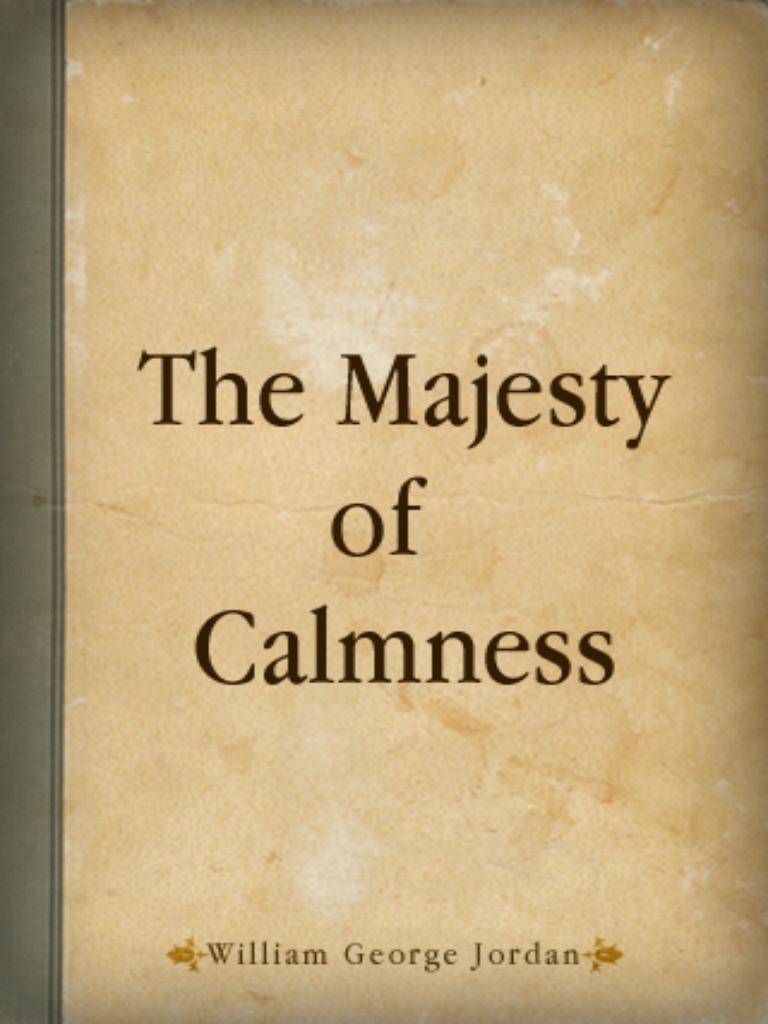
The Majesty of Calmness, by William George Jordan

majesty-of-calmness

The path of truth, higher living, truer development in every phase of life, is never shut from the individual–until he closes it himself. Let man feel this, believe it and make this faith a real and living factor in his life and there are no limits to his progress.

The Majesty of Calmness can best be described as a handbook to Life. Published in 1900, its message is just as relevant today. It should be required reading for everyone, no matter their belief system, as it addresses and is respectful to all. One must read it with the mindset that we all need to improve. Reading it with the mindset that we have Life figured out because of age and experience will erode its wisdom.

The author suggests that Calmness as a state of mind is the ultimate achievement. Others may interpret it as an advanced state of Faith, but still a reachable goal we should all desire.

The author also discusses Happiness, Satisfaction, Contentment, and Pleasure—what they are and what they are not, which is most important, and how to achieve it. That power is innate and has nothing to do with the world’s definitions of success. Conversely, the author also addresses Cynicism, Negativity, Failure, and Comparison–their causes and the damage they do if we indulge them.

Self-realization of these things, plus a desire to always improve, helps us to attain that state of Calmness—the umbrella philosophy of the entire book—it becomes our silent companion in the best of times, preparing us for the worst.

The author’s observations of different types of people, emotions, and reactions is incredibly perceptive. He acknowledges that, yes, Life often is unfair and, yes, it seems like wickedness often prevails, but our behavior in challenging situations can still make us victorious, if only in our own mind.

I highly recommend this book. It’s only $1 on Amazon Kindle. It is subtle, but powerful, like a trusted friend helping to center us on a bad day, or a quiet prayer of supplication being answered.

10/10 Stars

Memoir, Nonfiction, Philosophy

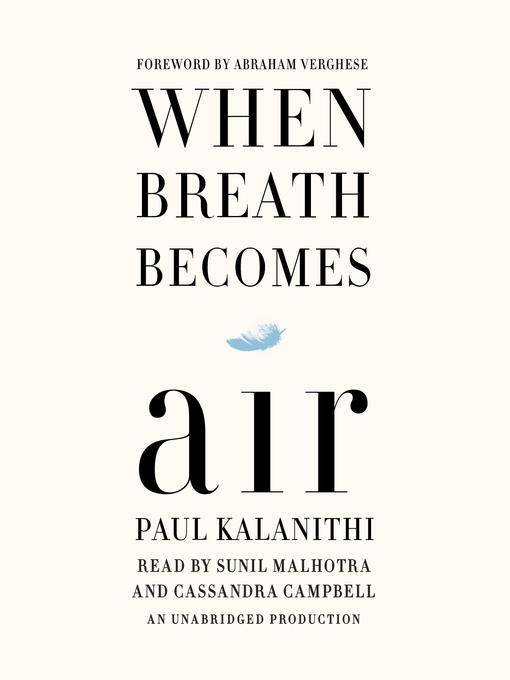
When Breath Becomes Air, by Paul Kalanithi

When Breath COVER

I’m going to do something I’ve never done on this site, which is to reveal my rating for a book at the beginning of its review. When Breath Becomes Air has earned a solid 10, pure and simple. We’ll work backwards from there.

Let me also say that nothing keeps me away from reading a book or seeing a movie more than “hype” surrounding it. The little cynic in me says, “OK, prove it.” So often the material does not live up to the hype, and who wants that disappointment? There has been a lot of that with this book. Ergo my cautious avoidance and wary delayed approach.

When it became available as an audio book on the local online library site, I downloaded it, but with the condition that it was competing with two other books already on my iPhone. “We’ll see how good it is,” I thought.

A few days ago, with the audio version accompanying me on a 130 mile drive, my opinion changed completely. Suddenly, I was glued to the journey of Dr. Kalanithi, an accomplished neurosurgeon in California who was about to start his surgical residency and, almost simultaneously, was diagnosed with aggressive lung cancer.

Lung cancer for a non-smoker seems especially cruel, even more so for someone with such a promising future ahead. The second son of a family of doctors, Paul had received two Bachelor’s Degrees from Stanford, a Master’s from Cambridge, and his MD from Yale. His work was highly regarded and his medical papers were winning awards.  What of this spectacularly unfair turn of events?

One of the words Paul uses frequently is “trajectory.” In regards to his career, his marriage, the possibility (or not) of children, his faith (or lack thereof,) and his future, his trajectory would have to be reset. Not just once, but over and over again.

Now, about my rating. I do not give a “10” lightly. Only a handful of books have qualified. Like other “10” books I’ve read, When Breath Becomes Air never lost my attention. But, more importantly, it is exquisitely written. Not a word or sentence out of place, perfect word economy, and every thought expressed is done so with quality and depth. This is no accident. The author himself once considered writing as a full-time profession.

Instead, it is his legacy.

I highly, highly recommend When Breath Becomes Air. It is eye-opening, witty, fascinating, and majestic. You will not be disappointed.

With all my heart– 10/10 Stars!!



Nonfiction, Philosophy, Religion, Self-Help

The God Who Weeps, by Terryl and Fiona Givens

9781609071882_p0_v2_s1200x630

As I review The God Who Weeps, by Terryl and Fiona Givens, we must first discuss “audience.”

  • There are those who are members of the Church of Jesus Christ of Latter-day Saints (Mormons) who have great interest in the philosophical workings of their church. They enjoy dissecting, discussing, and analyzing the church to which they belong. They deeply ponder its scriptures, standards, doctrine, and history. By doing this, it only strengthens their testimonies and beliefs. (Many who find great satisfaction in such discussions, including friends of mine, belong to a network called the Mormon Transhumanist Association.)
  • There are other Christians (“other,” because Mormons are also Christians) and non-Christians who are interested in the LDS Church, who perhaps have no desire to become LDS, but are still curious and interested in reading a philosophical approach such as this one.
  • And there are those who make it their life’s work to study religions, either professionally or as a hobby–religions which fall under the umbrella of Christianity, as well as Judaism, Islam, Hinduism, Buddhism, etc., but are mostly interested in comparing and contrasting the various faiths and gleaning, what they perceive, as the best qualities of all of them. “Best,” of course, being subjective to the individual.

While reading The God Who Weeps, I identified people with interests and pursuits, like those above, as the book’s target audience.

Unfortunately, I do not fall in any of those categories. While I am an active member of the Church of Jesus Christ of Latter-day Saints (Mormons,) it is my experience that over-analyzing my faith and Church doctrine also over complicates it and has negative effects on my personal testimony of what I believe to be true. As a result, I usually avoid books such as this one.

That is not saying I don’t recommend The God Who Weeps. There is much good in it. Let’s look simply at the title. The idea of a “God who weeps” is that there is a loving Heavenly Father–an actual FATHER–who cares for us so deeply that our pain is His, our setbacks/worries/challenges/heartbreaks are things He mourns for right along with us.

It is this personalizing of God that I find so attractive and dear about the teachings in the LDS Church. (Among other things.) I feel He knows me individually, hears and answers my prayers, and knows the worries and concerns of my heart.

This Heavenly Father I love so very much is discussed in The God Who Weeps. However, I also feel like the best ideas (those with which I can most identify) are buried under a lot of philosophy and ideas that the authors admit they don’t agree with, but still discuss as a way to promote their original thought: that Mormonism makes sense of life.

So, I have to ask myself, what is the purpose in writing a book like this? To help Mormons feel better about a church they already belong to? To give non-Mormons an analytical perspective?

I would hope that a book like this, at the very least, strengthens the testimony of an LDS Church member. I would also hope that a book like this, at the very least, sparks interest about the LDS Church in someone who is not a member–with the disclaimer that true faith in God the Father and His son, Jesus Christ–as well as discernment about which church is true–may begin by reading a scholarly book like this one, but is actually created and nurtured through sincere scripture study, humble prayer, and a heartfelt witness of the Holy Ghost.

8.5/10 Stars