Biography, History, Nonfiction, Series & Collections

Alan Turing, by Hourly Histories

After watching The Imitation Game again, I felt like it was time to learn more about Alan Turing, one of those essential people in history whose story was suppressed for decades after his death. In doing so I happened upon the Hourly Histories series.

These books, which focus mostly on war and film figures of the 1940s are truly excellent. In about 80 pages they describe much about the subject, getting to the heart of what made them who they were and the importance of their contributions. I’ve read a few others and was equally impressed.

Like many geniuses, Turing was a brilliant man with a tragic life, but as the father of the modern computer–upon which we all rely–his name needs to be known and recognized.

Hourly Histories books will interest a variety of readers of different ages. They would make great additions to a classroom or home library and digital versions are available to borrow if you have a Kindle Unlimited subscription.

8.5/10 Stars

Fiction

The Cousins, by Karen M. McManus

First in a series that I may or may not pursue, The Cousins is about three teenagers who are invited to work at a resort on an island owned by their grandparents. This invitation comes out of the blue because their parents have all been cut off–emotionally and financially–for reasons they say they don’t understand.

Each chapter is told through the viewpoint of a different character. There are twists, turns, and deceptions aplenty as the cousins scramble to understand the long-held secrets in their family.

When I say that I may or may not pursue the rest of the series, it is only because the book felt plodding with an anti-climatic ending. After the labyrinth we are taken through, I think the reader deserves better.

8/10 Stars

Fiction

Death in Venice, by Thomas Mann

When I was a student at BYU, I took a wonderful film class with Dr. Donald Marshall. He would send us to the university’s International Cinema (really a large lecture hall with a big screen) to watch films that have made their mark in history. Death in Venice, with Dirk Bogarde, was one of those films. Dr. Marshall advised us to pay attention to the marriage of visuals and Gustav Mahler’s haunting music. But it is only recently that I read the book.

In the wrong hands and seen through the wrong eyes, the character of Gustav von Aschenbach could be viewed as a creepy pedophile. He does, after all, follow a boy through the streets and beaches of Venice. But this is not a story about lust. It is a story about beauty and its fragility. Gustav is a famous composer, sensitive and protective of the elegant Polish boy, Tadzio. Meanwhile, a merciless epidemic is sweeping through the city, leaving much death in its wake.

As a naturally visual person, I am glad I saw the film first, even though it has been nearly thirty years. But it made an impression, and I was able to conjure up those decades-old images while reading Thomas Mann’s classic novel. We are in Gustav’s mind the entire time. We feel his longing, his pain, and his mortality. Like in the film, there is little dialogue, especially between the two main characters. Just an invisible cosmic thread that binds them together, like artist and subject. It is singularly unique.

9/10 Stars

Autobiography, Faith, Memoir, Nonfiction

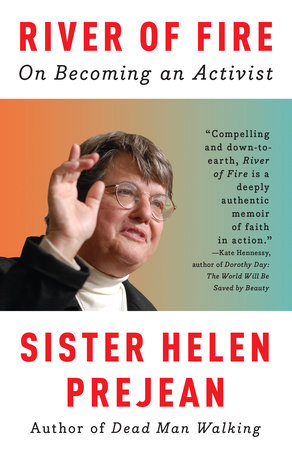
River of Fire, by Sister Helen Prejean

While exploring new podcasts I came across one called Everything Happens, with Kate Bowler, out of Duke University. She often focuses on Catholic themes, but not always, and she has an intelligent, soft-spoken style of interviewing that draws you in while making the interviewee feel comfortable.

One of my favorite episodes was the Helen Prejean interview. You may not think you know who Helen Prejean is, but you probably do if you’ve heard of the biographical film Dead Man Walking, with Susan Sarandon and Sean Penn. Sister Prejean, a Catholic nun from the Deep South, has made it her life’s work to befriend and advocate for prisoners on death row.

However you may feel about the death penalty–hot button topic that it is–you will enjoy River of Fire, Sister Prejean’s autobiography. Her warm, Southern, conversational drawl permeates through the pages as you travel with her back to Louisiana in the early nineteen forties and fifties. You read about her childhood, her funny relationship with her sister, and her personal vocation to serve others as a nun. You’ll also learn about the dramatic shift brought on by Vatican II and the necessary adjustments required of those in the Catholic ministry.

I admire Sister Prejean’s tireless efforts to serve the poor, the disadvantaged, and the marginalized. The world needs more people with her compassion for others.

9/10 Stars

Listen to the podcast episode HERE. (25 minutes)

Autobiography, Nonfiction

The Wilding Way, by Michael Wilding

Just like there are talented musicians on YouTube who you will never see in a large venue or at the Grammys, there are actors with witty charm who can hold their own with the biggest names and never quite become big names themselves.

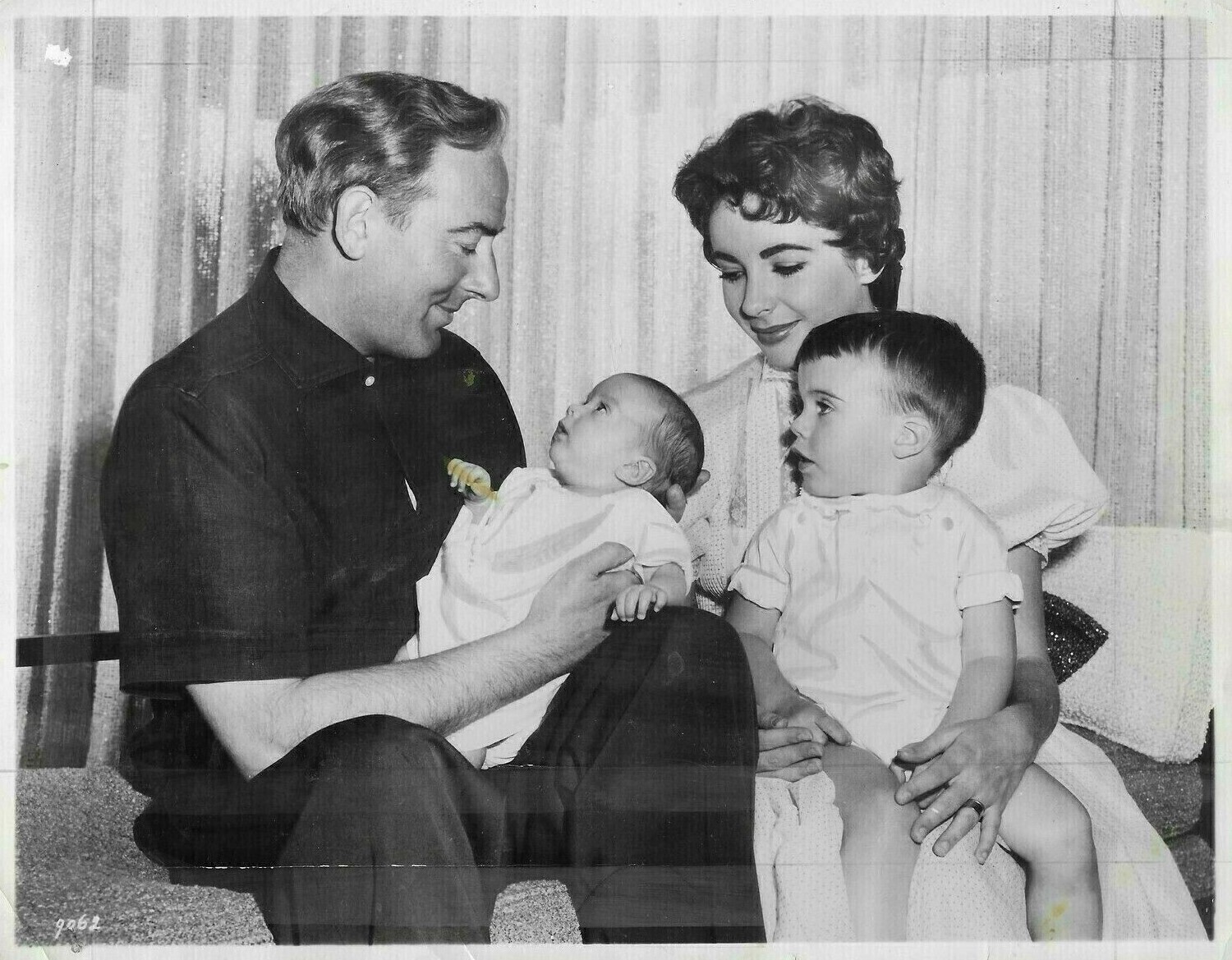
Enter Michael Wilding, best known (sadly) as Husband #2 of Elizabeth Taylor. Their marriage lasted a bumpy 5 years, where he sacrificed a very promising British film career to follow his young bride to America. He is the father of her two sons, Michael Jr. and Christopher. But Hollywood didn’t quite know what to do with him, and his star faded like a blinking light bulb, while Taylor’s became stratospheric.

I went down a rabbit hole a few months ago that led me to this autobiography of an actor who is so self-effacing and charming, I began a quest to find his films. It isn’t easy. Most are unavailable or Region 2 DVDs (Europe,) but I did manage to find a few, especially his starring turns with Anna Neagle (wife of Herbert Wilcox, who is the father of Wilding’s coauthor.) They were the Tom Hanks/Meg Ryan of their day and the films I did find with the two of them are positively delightful. (Spring in Park Lane and Maytime in Mayfair, both with the same main cast, on DVD only. I found them on eBay.)

Unlike Elizabeth Taylor, whose childhood was anything but conventional, Michael Wilding came from a stable family whose parents allowed him to explore his interests. This led him on a fascinating life journey through four marriages and a myriad of film and TV genres, putting him in the company of some exceptional people like Noel Coward (check out In Which We Serve, on Amazon streaming–it’s excellent) and Alfred Hitchcock (I liked Stage Fright, but found Under Capricorn tiresome.)

Michael Wilding with his future and final wife,
Margaret Leighton, in Under Capricorn

Despite being saddled with epilepsy, Wilding remained dignified and roguish until the very end, which came too soon. Other films I’ve enjoyed are The Law and the Lady with Greer Garson, The Glass Slipper with Leslie Caron (skip the ballets, trust me,) and the semi-campy Torch Song with troublesome Joan Crawford. These last three, plus his films with Anna Neagle, are his best.

What I liked best about The Wilding Way was that he never once plays a victim of circumstance, always taking responsibility for his failures. There is a breezy grace to the way he moves onscreen and in his life, never taking it too seriously. A cross between Cary Grant, Danny Kaye, and Laurence Olivier. An impressive (and fun) mix.

8.5/10 Stars

Fiction, Historical Fiction, Short Stories

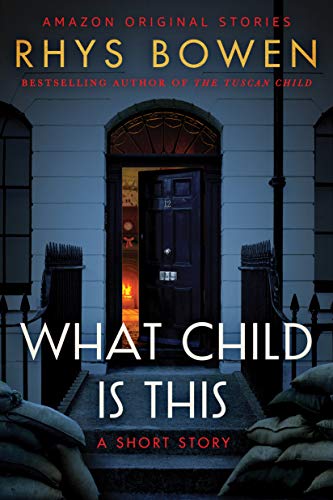
What Child Is This, by Rhys Bowen

If you’re a reader in this digital age, you are probably bombarded with book and author suggestions from Amazon, Goodreads, etc. Rhys Bowen has popped up constantly for me and I decided to begin exploring her writing around Christmastime with What Child Is This.

She uses one of my favorite backdrops in books and film, World War II in England. A young couple struggles with a variety of losses during this harrowing time when civilians lost homes, family members, and their own lives. Despite the period, it is not an action story, but one with a degree of quiet. As so often happens in different challenges, spouses will take turns comforting each other and being the strong one.

It’s a lovely story. One that offers hope during the COVID-19 pandemic, where even now we’re all experiencing something we never expected, are being forced to make compromises, and have found our lives taking unplanned detours.

Rhys Bowen is a wonderful author and I’m currently on Book 4 of her 15-book series Her Royal Spyness, which I’m enjoying very much. So hooray for those Amazon suggestions. Sometimes they are right on target.

8.5/10 Stars

Fiction, Mystery, Women's Fiction

The Last Thing He Told Me, by Laura Dave

Rarely does my impatience for a book motivate me to buy it instead of waiting for it to become available through the online library. But 65,000 stellar ratings on Amazon cannot be wrong, so I held my breath and purchased The Last Thing He Told Me sight unseen. I was not disappointed.

We all know there are things in life that are unreliable, but we hope for a few constants. In Hannah Hall’s life it was Owen, her husband of 18 months. Until it wasn’t. Owen has disappeared, leaving only a cryptic note. “Protect her.”

The rest of the story takes us on a seesaw of flashbacks of their courtship and the present, while Hannah pieces together clues that might lead up to why her life is suddenly spiraling out of control. Few can be trusted, but her past eventually prompts her to make a final, life-changing decision.

If this sounds vague, it’s only because this novel contains one of the most engrossing stories I’ve ever read. I could not put it down. The less details you know, the better. It’s a book to be experienced and that experience is quite the ride. Be aware that the language is of a PG-13 rating.

9.5/10 Stars

Nonfiction

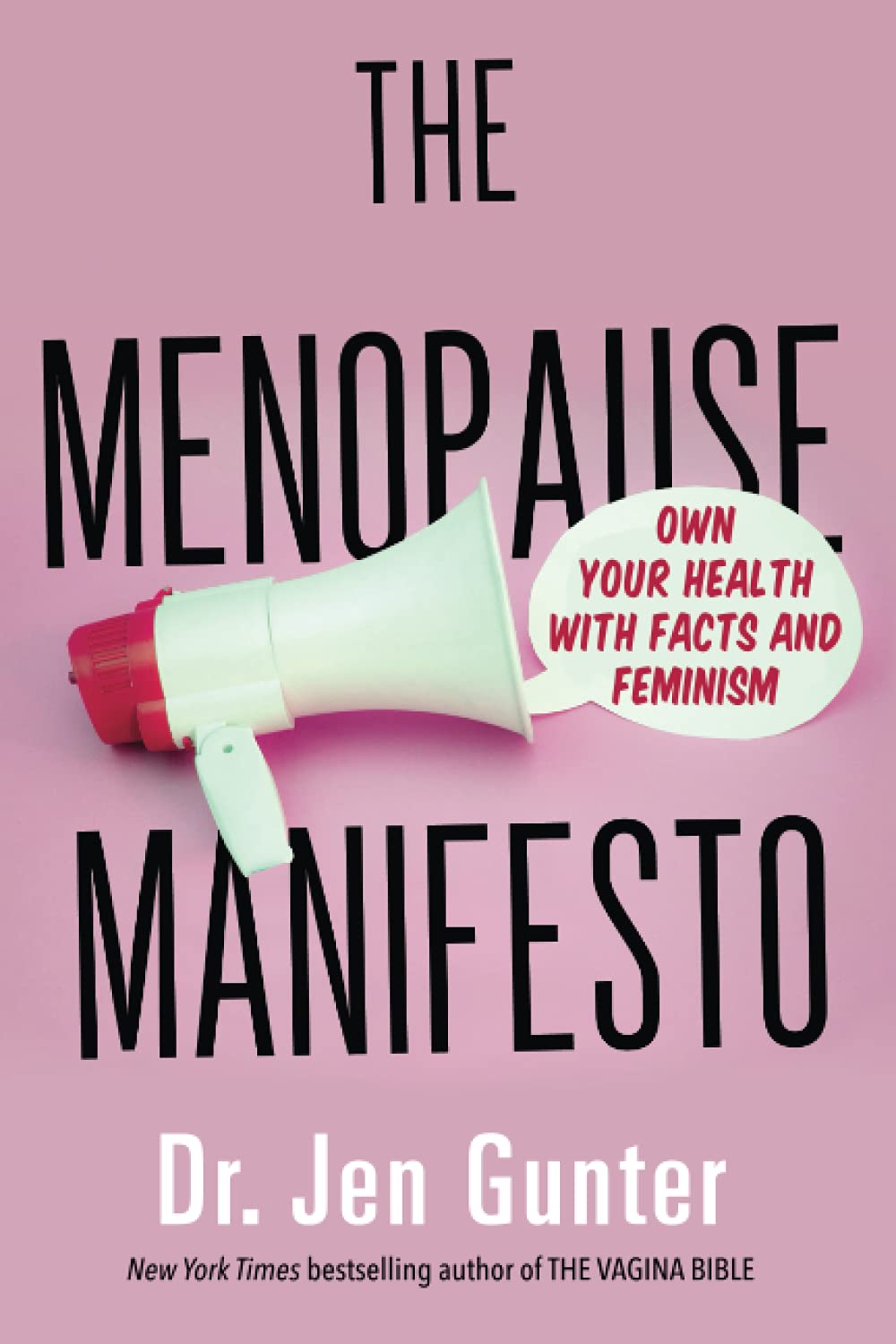
The Menopause Manifesto, by Dr. Jen Gunter

Time to play catch-up! There are several reviews that will appear soon on this blog. Get ready! Here we go:

I remember a scene in Father of the Bride Part 2 when Diane Keaton was looking at books on the bed table of a house where she and her husband were staying. All of them were on menopause. I’m sure I chuckled about this upon my first viewing of the movie. Who would want to read a book on menopause? The book title that comes to mind in that stack is “The Silent Passage.”

The operative word being “silent.” Menopause is a subject rarely discussed unless one seeks it out. That is maddening, because few of us–myself included–are prepared when it happens to us. In a few weeks I turn 51, the average age of menopause, yet I’m ashamed to admit that I knew little about it, including those several years leading up to it, called peri-menopause. (To be clear, one has experienced “menopause” when 12 full months have elapsed since the last menstrual period. Symptoms up until that point are “peri-menopause.”) So am I experiencing menopause right now? No.

The Menopause Manifesto was recommended to me last week by a Facebook group acquaintance. I devoured it in two days, focusing mostly on sections that pertain specifically to my own experience. Dr. Jen Gunter, an OB/GYN with decades of experience treating patients, covers A LOT. It’s her manifesto because she frustratingly reveals the plight of menopausal women filtered through a profession dominated by men. It’s not to hate on men, but it is the reality that people who will never experience menopause have, historically, treated those who will go through the physical/emotional/mental/sexual changes caused by this phenomenon.

Yes, phenomenon. Women’s bodies are amazing! They are so much more than objectified, CGIed, Photoshopped 2-dimensional objects in magazines and film. And, as progressive as we would like to think modern society is when it comes to our bodies, we have a long way to go. Women are just as much to blame as men in this respect. We deserve better and we need to do better. All women’s bodies are beautiful. Say it with me: ALL WOMEN’S BODIES ARE BEAUTIFUL.

One major discovery from this book: Ancestral family medical history plays absolutely no role when it comes to menopausal symptoms. Just because a mother had hot flashes doesn’t mean her daughter will too. Every menopausal body is unique, and the closest indication of what to expect–but by no means a guarantee–is between sisters, not mother and daughter.

The predictable unpredictability was another. Basically, menopause is a roller coaster of one’s very own. Nature’s tailor-made experience. But that experience can affect others, so the chapter on how peri-menopause and menopause affect sexual desire is one that I highly recommend couples read together.

I’m so grateful this book was recommended to me. It holds a wealth of knowledge, situations, and medical information that will be helpful to ANYONE who reads it. But if you are in your early forties and menopause is on the horizon for you, it is essential and invaluable.

9.5/10 Stars

Biography, Nonfiction

Steve Jobs, by Walter Isaacson

The story of an adopted son of a blue-collar family becoming founder and CEO of the most successful company in the world is nothing short of epic. But the journey getting there is just as intriguing. Knowing the cancer he’d been battling for years would eventually win, Steve Jobs took control in the only way he could, enlisting a hand-picked biographer to take charge of his story, in effect, getting ahead of those who would dissect his life after his passing.

No matter what kind of smartphone you use, you’re Team Apple whether you realize it or not. Those clicks, pinch zooms, and swipes that are second nature to all of us started with the iPhone and morphed into every smartphone brand available. The App store, the Cloud, digital music, digital animation–all of these and more were refined by Steve Jobs and his “A team.” Refined, but not necessarily invented. He gave us simplicity in our devices we didn’t even know we wanted until we owned one. The artistry he demanded in every detail of Apple’s technology and aspect of the company is both the root of his brilliance and the target of criticism. Yet, for those of us deeply embedded and loyal to Apple’s integrated ecosystem, it wouldn’t even be possible without that controlling grip upon which Jobs tirelessly insisted.

Issacson’s biography, written after dozens of interviews with Jobs, his family, and colleagues, is as unvarnished as it gets. Intimidating, moody, exhausted and exhausting, changeable, eccentric, we see all sides of Jobs. From his adoption, to garage inventions with Steve Wozniak, to the building and rebuilding of Apple, to his family and friend relationships, to his health challenges and everything in between, we ride alongside this man whose quest for excellence and vision has permeated into nearly everything that involves personal technology. The legacy he left behind, as well as trusted lieutenants like current Apple CEO Tim Cook and former VP of Design Jony Ive show that all of the blood, sweat and tears–lots of tears–was worth it.

9.5/10 stars

Biography, Faith and Religion, Nonfiction

In the Hands of the Lord: The Life of Dallin H. Oaks, by Richard E. Turley, Jr.

It is late June 2015. My husband and I are visiting Temple Square in Salt Lake City, Utah. It’s his first time there. We’re surrounded by pretty flowers, curious visitors, the indescribably beautiful temple and other impressive buildings.

As we face the street, we see a lean, spry, older man hop the curb and sprint right by us. It was Dallin H. Oaks. “It’s Elder Oaks!” I exclaimed. Of course, he was long gone by then.

Rewind to August 12, 1932 when Dallin H. Oaks was born. His mother, Stella, named him Dallin in honor of the sculptor, Cyrus Dallin, for whom she was the artist’s model for the statue, The Pioneer Mother. The “H” stands for Harris, the last name of his 2nd great-grandfather Emer Harris, brother to Martin Harris. Martin was one of the Three Witnesses of The Book of Mormon, but even better known for losing the 116 page manuscript when the Prophet Joseph Smith was beginning his translation of the plates that became that book. Dallin H. Oaks gave a wonderful talk in 1999 (I highly recommend it, click the link) called The Witness: Martin Harris, in which he focuses on the sacrifices Harris made during the early days of the Church of Jesus Christ of Latter-day Saints. A great reminder that a moment of weakness should not define us.

After a harrowing birth that made his physician father, Lloyd Oaks, and others present wonder if he would even survive, Dallin entered a remarkable life of hard work, service, and accomplishments. Widowed in 1939 when Lloyd died of tuberculosis, Stella Oaks was left to raise her children alone. She overcame much, but eventually finished her schooling and became involved in local education and civic leadership. She was a terrific example of resiliency and service. Being raised by a single mother gave Dallin a great respect for women and he has constantly worked for fairness and recognition of women’s achievements throughout his life.

Author Richard Turley, former Assistant Church Historian and long-time friend of President Oaks, does a marvelous job outlining the life of this amazing man. We learn about his early family life while advancing his admirable legal career. I was delighted to learn about his years as president of my alma mater, Brigham Young University–about a decade before I attended–and the effects of his tenure there, making much-needed changes that are still in place today.

Of course, Latter-day Saints know Dallin H. Oaks (now “President Oaks”) best as the Senior Apostle of the Quorum of the Twelve and next in line to be President of the Church. We see him speak twice a year (either in person or televised) at General Conference. For most of us, seeing him only in that setting has created an image of his overall personality in our minds. We hear his booming voice and think of adjectives like stern, instructive, even a bit intimidating. The best part of this biography was learning about the man behind the scenes. His family adores him and say he’s actually a pretty funny man. I loved reading about his first few years as an Apostle. His mentors, not surprisingly, were Neal A. Maxwell (a personal favorite) and Bruce R. McConkie. It is a life-long calling he had to grow into and takes very seriously. There were bumps along the way, but he works very hard, always reminding himself that, ultimately, he answers to the highest authority.

Towards the end of the book, aside from reading about his second marriage in 2000 to Kristen McMain Oaks after the death of beloved wife June in 1998, I loved reading responses to letters from church members. Like everything else he does, President Oaks answers with love, no matter the subject.

President Oaks is truly someone who leads by example. I am inspired by his work ethic, wisdom, devotion to family, and constant striving for personal improvement. He is a humble man who loves the Lord. I feel honored that this book gave me the opportunity to know him better.

9.5/10 Stars
Biography, Black History, Entertainment, History, Nonfiction

Mobituaries, by Mo Rocca

You might recognize Mo Rocca and wonder where you’ve seen him before. It could be on The Daily Show or CBS News Sunday Morning. Maybe you’ve heard his unique voice on NPR. He’s a very smart, Harvard-educated, somewhat caricature-ish person, a description I think he would embrace. Funnily enough, I first saw him as the dimwitted newscaster, Ted Willoughby, on The Good Wife.

So imagine my surprise when I was browsing podcasts, looking for something that didn’t have an “E” for explicit language attached to it, and found that Mo (short for Maurice Alberto) hosted a show called Mobituaries. I listened to the episodes on Lawrence Welk, Audrey Hepburn, Marlena Dietrich, the Bunker Brothers (the original Siamese twins,) and a few others that escape me at the moment. They were clean, they were entertaining, and they were really interesting. When I found out he had a book that delved even deeper into these “great lives worth reliving,” I did what I rarely do…I actually bought the book.

Mo has vast interests, but his favorites are pop culture and US presidents. He also likes people who were the first to do something (Jackie Robinson and Rosa Parks were preceded by others, who knew?) and famous siblings (Billy Carter, we hardly knew thee…) There are those famous people who died the same day, one always eclipsing the other (Michael Jackson and Farrah Fawcett both died on June 25, 2009. You can guess who took “center stage.”) There are also those people for whom the term “disambiguation” was created. (I’ll give you a second to look it up.) I’m talking about Audrey Hepburn vs Katherine Hepburn, Joan of Arc vs Joan Van Ark (do people really get those two mixed up?) and the whole Andrew Johnson/Andrew Jackson/Stonewall Jackson confusion. Honestly, distinguishing the difference between any of those people is not something that has ever kept me up at night, but it’s still fun.

There are places in the book that, admittedly, I skimmed. Some chapters are identical to their podcast counterparts. Some just didn’t interest me. The more I read, the more I realized that this would make the ideal “bathroom book.” That’s the book you put on the back of the commode where you and your guests can read whatever chapter they prefer when they need a little extra time to do their business.

If I had to choose between the Mobituaries podcast and the book, I would probably choose the podcast for two reasons. 1. It’s more succinct. The book gets a bit wordy. 2. Just to hear Mo’s voice. There is no comparison. Still, it’s a fun read, probably a good gift for certain history buffs, and a great literary addition to your bathroom.

8.5/10 stars

Here is a fun interview Mo does with Trevor Noah talking about Mobituaries, the book:

Uncategorized

A quick note…

This book review site now has a new domain: readwithkristie.com. To improve your reading experience there will now be no ads (yay!) on this blog. It also has a slightly new look, but that’s just for fun.

I’m very grateful to my 100 followers on WordPress and my email followers.

NOTE, if you receive blog posts by email, I encourage you to click on the book’s TITLE in that post. It will take you directly to this site. Here’s why I recommend doing this: I do a lot, A LOT of polishing and refining of my posts after hitting that dreaded “Publish” button. When I do click Publish, that is the version that goes to your email, but it is very rarely the final, best version of what I want to express. Example: even the new domain name in the email post is different than the one I ended up choosing. 🙂

Again, thank you for visiting, commenting, liking and subscribing. I appreciate it!!