Nonfiction, Philosophy, Self-Help

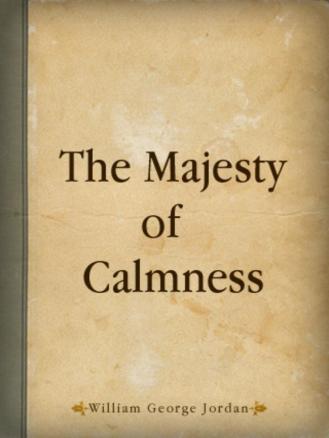
The Majesty of Calmness, by William George Jordan

majesty-of-calmness

The path of truth, higher living, truer development in every phase of life, is never shut from the individual–until he closes it himself. Let man feel this, believe it and make this faith a real and living factor in his life and there are no limits to his progress.

The Majesty of Calmness can best be described as a handbook to Life. Published in 1900, its message is just as relevant today. It should be required reading for everyone, no matter their belief system, as it addresses and is respectful to all. One must read it with the mindset that we all need to improve. Reading it with the mindset that we have Life figured out because of age and experience will erode its wisdom.

The author suggests that Calmness as a state of mind is the ultimate achievement. Others may interpret it as an advanced state of Faith, but still a reachable goal we should all desire.

The author also discusses Happiness, Satisfaction, Contentment, and Pleasure—what they are and what they are not, which is most important, and how to achieve it. That power is innate and has nothing to do with the world’s definitions of success. Conversely, the author also addresses Cynicism, Negativity, Failure, and Comparison–their causes and the damage they do if we indulge them.

Self-realization of these things, plus a desire to always improve, helps us to attain that state of Calmness—the umbrella philosophy of the entire book—it becomes our silent companion in the best of times, preparing us for the worst.

The author’s observations of different types of people, emotions, and reactions is incredibly perceptive. He acknowledges that, yes, Life often is unfair and, yes, it seems like wickedness often prevails, but our behavior in challenging situations can still make us victorious, if only in our own mind.

I highly recommend this book. It’s only $1 on Amazon Kindle. It is subtle, but powerful, like a trusted friend helping to center us on a bad day, or a quiet prayer of supplication being answered.

10/10 Stars

Fiction, Young Adult

The Secret Sense of Wildflower, by Susan Gabriel

15349533

A wonderful, heartbreaking story full of depth, tears and redemption. It took just 3 hours to read.

Wildflower is Louisa May McAllister. Yes, Little Women is her mother’s favorite book and yes, she has sisters named Meg, Jo, Beth, and Amy. That is part of the book’s whimsy. Most of its charm is captured in the 1940’s language of the south, so much so that I found myself reading in my head with a regional accent.

But this is Appalachia and life there is harsh. The McAllisters are mourning the loss of their daddy, dead nearly one year after an accident at the sawmill. Nell, their mama, drifts from day to day, never shedding a tear. Wildflower is part physical orphan through her daddy’s death, but part emotional orphan from her mother. Confidantes are few.

When things are lighter, I felt like I was reading a hybrid of Cold Sassy Tree and Christy. Wildflower reminds me a lot of Will Tweedy in Cold Sassy–observant, with many layers unseen by the surrounding adults. There is, however, a brief but horrible scene that robs Wildflower of her childhood and her innocence. The “secret sense” she prided herself in tried to warn her, but she ignored it. That decision changes everything.

By sheer happenstance, I’ve recently read several books with strong, resourceful female protagonists. The Secret Sense of Wildflower continues this trend. It is, at different times, darling and funny, but also raw and revealing. The language matures alongside Wildflower, becoming more stoic as her reality shifts from child to adult.

I recommend the book, but know what you’re about to read. Teens and adults alike will find it powerfully moving.

9/10 Stars

Fiction, Mystery, Series & Collections, Young Adult

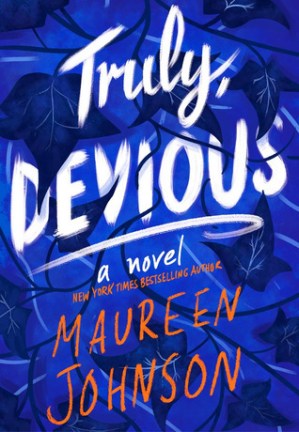
Truly Devious, by Maureen Johnson

truly-devious

What you lack in any investigation is time. With every passing hour, evidence slips away. Crime scenes are compromised by people and the elements. Things are moved, altered, smeared, shifted. Organisms rot. Wind blows dusts and contaminants. Memories change and fade. As you move away from the event, you move away from the solution.  –Truly Devious

This book was recommended by “The Clockwork Reader” Booktube channel. Hannah, the channel’s creator, was so passionate about how good it was that I decided to give it a try. She reads a lot of fiction and comments on a great variety within the genre. That, plus her soothing voice, are making me a return watcher of her channel. Plus, I desperately needed something to balance out my two previous reads.

Advertised as a YA mystery novel, the story in Truly Devious is so slick and the characters so well crafted, that adults would love it too. So, yes, my first Booktube recommendation was a complete success.

Set at Ellingham Academy, a distant cousin to Hogwarts minus the magic, the school is as unique as its students. Built in the 1930’s by newspaper tycoon Albert Ellingham, the school earned unwanted notoriety when the founder’s wife and daughter were kidnapped shortly after its completion. A few years later an overly-curious student is murdered, presumably by the same person, a teasing riddler using the pseudonym of “Truly Devious.”

Fast forward another few decades. The crimes remain unsolved, making them the prime focus and school project of new student, Stevie. She, like all other Ellingham scholars, was chosen as part of an elite program. Plucked from high schools around the country, those admitted are allowed to pursue their own educational paths. Each has a talent, a project, and a goal. The academy’s job is to help them reach those goals.

Stevie is all about solving mysteries, listening to true crime podcasts, and reading the classics by Agatha Christie, Arthur Conan Doyle, and Dorothy L. Sayers. Her instincts are sharp and her perception is honed. The Ellingham crimes are the perfect cold case.

Truly Devious is masterful storytelling. The author, Maureen Johnson, creates an automatic challenge by having so many smart characters, and she meets that challenge with both grace and gusto. The story tick tocks between time periods. There are the days after the initial kidnappings in 1936 and modern day with Stevie and her classmates.   Each time period has a very specific style and it is almost like you’re reading two books at the same time. I also loved some of the poetic rhythms in Stevie’s thoughts and the subtle creativity the author uses in students’ names, especially “Hayes” and “Ellie.” If you read it, you’ll understand.

But be warned, the reader is toyed with almost as much as the characters. The end of the book is not the end of the story. Some questions are answered, some are not, and new ones appear. In any other circumstance that would be maddening. Not here. The next book in the series, The Vanishing Stair, will be released in January and it’s already in my calendar.

9.5/10 Stars


Fiction, Young Adult

Well, That Was Awkward, by Rachel Vail

9780147513984

Cute, witty Cyrano de Bergerac-type tale for the texting generation. Gracie Grant is the main character, with her best friend, Sienna, and best neighbor, Emmett, as her closest confidantes. They’re in 8th grade, experiencing all of the early teen anxiety you would expect. Gracie’s situation is a bit unique because she’s her parents’ surviving child. Bret is the deceased older sister she never knew. Sometimes Gracie talks to her. Sometimes she’s jealous of her. Sometimes she’s mad at her. Ofttimes she feels the weight of her parents’ loss, never wanting to upset them or cause them more pain. As if being in 8th grade wasn’t hard enough.

The writing has that staccato rhythm of teen language. We’re always in Gracie’s head and it’s pretty darn full. Thoughts come in spurts, often expressed immediately after. But, being fourteen also means a lot of self-doubt. A LOT. Every character has it, plus a hundred other insecurities that manifest themselves in different ways–sometimes with regret that requires awkward backpedaling. The author does a decent job of creating individual kids with all of these overlapping qualities.

Texting is the teen language and used frequently in the story. The kids have instant access to each other. (With plusses and minuses to this.) They’re also never alone as long as they have their phones. (Is alone such a bad thing?) And then we have the “texting personality” which is different from the “in person personality.” If the texting personality has, well, MORE personality, then what? You’ve got an already angsty teen with two competing personalities. (Yes, that was on purpose. And if you read that quickly you will get the pace of the book.)

Target audiences will certainly relate to Gracie, her friends, enemies, and frenemies.

Meanwhile, I’ve never been so glad to not be a teenager anymore.

8.5/10 Stars
Memoir, Nonfiction

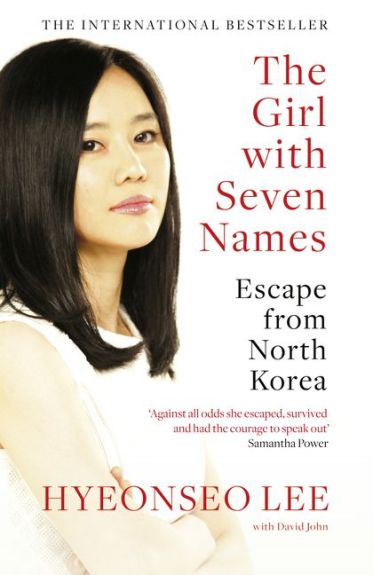
The Girl With Seven Names: Escape from North Korea, by Hyeonseo Lee

y648

The Girl With Seven Names is truly a fascinating read. With all of the news coverage about North Korea, there are thousands of little details which can only be learned from someone who grew up there. The first half of Ms. Lee’s story is her childhood. She describes the importance of “sonbung,” the caste system under which the culture operates. We learn about the way North Korean schools teach the children, indoctrinating them with a version of history and a filter through which to see the rest of world. Everyone lives in fear. No one knows who to trust. They are prisoners both physically and mentally.

The second half is about her journey leaving the country and her efforts to adjust beyond its borders. It is un…be…lie…vable. (I’m trying very hard not to include any spoilers!)

The concept of “names” is revisited often. Names and identification.

This motivated me to start thinking a lot about the origin of our identities. (See? I’m a wannabe college student.) Where do our identities come from? Our name? Our family? Our social status? Our religious beliefs? Our country? Notice how I’m working from the inside out…. I’ve never read a book where someone was forced to change their name so many times, usually to conceal her identity and try to assimilate in her current surroundings. But not always.

Although I expected to be awestruck at the extreme level of control the Kim Dynasty has over its people, there was something I did not expect. I did not expect to feel the compassion for the culture as much as I did upon completing the book. It’s hard to describe, but there is SO much we take for granted, even as we complain about our own governments in democratic nations. The fact that we CAN complain is something many people cannot even comprehend.

I can’t even imagine living in a country where you have to look over your shoulder every second of every day. Any control of one’s life is through rebellion. What we consider to be illegal and taboo becomes a way of life for many as they try to make a little extra money and maintain a sense of control (and sanity) that the government will not allow. Unfortunately, the consequences of this are negative as well. Not only is everyone trying to outsmart everyone else, but basic concepts like charity and kindness are completely foreign when there’s usually a hidden agenda.

Hyeonseo Lee has an extraordinary amount of “close calls.” But she also experiences what can only be explained as miracles. Those events are hopeful and truly faith-inspiring.

I highly, highly recommend The Girl With Seven Names. It would make a fantastic book club selection. At its core, it will change you, making you more appreciative for the freedoms we enjoy, and it will put your own challenges in a new perspective.

10/10 Stars  (Really, a MUST-read.)

(Here’s my disclaimer for sensitive readers: Although violence is described, it is not disturbingly graphic. The hardest section for me was reading about the years of famine. It’s a short section, but a heart-breaking one.)

*******************

Some extra observations about Educated vs. The Girl With Seven Names:

As I read The Girl With Seven Names, bracing myself for the grit, I started to realize why the “tough” scenes didn’t upset me quite as much as when I read Educated. Perhaps I was already inoculated and this is purely my opinion but, based on these two books, I think that growing up in an oppressive family might actually be harder than growing up in an oppressive nation. Make no mistake, BOTH are incredibly difficult and will have life-long effects on their victims. But it’s my belief that you except safety and support from your family. It’s a given (usually). Therefore the pain inflicted is much more personal and wounding because it’s from those you love and want to trust. In Educated I was amazed at how many times the author forgave and boomeranged back to her abusers. It’s because they were her family and she loved them–it was inconceivable to feel anything else.

Patriotism and duty to one’s country is more abstract. The disillusionment Hyeonseo Lee feels in Seven Names as she gets older is more about logic and fear of the outside world than love and a sense of obligation. If you do happen to read both books, you will understand why I’m lumping them together.


Memoir, Nonfiction

Educated, by Tara Westover

authors-evenings_tara-westover_educated

Yesterday I did two things I’ve never done: (1) I bought a book because it looked so interesting and the library “hold” queue was longer than I could wait. (2) I read until after 4am because I absolutely could NOT put it down and HAD to finish it.

This unbelievably gripping memoir is called Educated, by Tara Westover. When I say “gripping,” I mean wraps-its-literary-fingers-around-your-throat-and-doesn’t-let-go-kind-of-gripping. Take that as a warning.

Warm and fuzzy, it is not.

Some background on the author: Tara Westover was born into a Mormon survivalist family in southern Idaho. She’s the youngest of 7 children. Her father, who probably suffers from bipolar disorder and/or schizophrenia, abhors any and all agencies connected to the government. His family yields to the effects of his ever-growing paranoia. The children don’t go to school, they don’t see doctors, they have no birth certificates (they don’t even know their birthdays,) they have no friends, they’re cut off from most extended family, and they are made to think that preparation for the “End of Days” is top priority. There’s no TV, radio, or phone for years in their home. All they know is their father’s BIZARRE interpretation of life beyond Buck’s Peak, the mountain where they live. Over time, partly due to self-preservation but mostly due to an injury, their mother becomes mentally unhinged as well.

When I first started the book, the story seemed relatively “tame” compared to The Glass Castle, which many readers have used as an example of what to expect. Then I realized that the author was just “easing us in.” The chaos, the turmoil, and the emotional roller coaster her parents inflicted on their children is EXHAUSTING to read. But, I couldn’t stop reading.

We all know family relationships are complicated, but the relationships in this family are at a level most of us (thankfully) will never, ever experience. You’re left shaking your head that parents can so clearly love their children and still make the decisions they did about their physical safety and emotional welfare.

You read already knowing the ending, which is that Tara and two of her older brothers left that life and, with unbelievable tenacity and determination, attended prestigious universities and obtained PhDs. Everything between her birth and the present day is the journey about which she writes. That journey is a devastating one which became more and more difficult. She more she achieved, the more she realized how little she knew. She more she integrated within the university community, the less deserving she felt. Her memoir is only one part of what will probably be a lifelong healing process.

Still, her courage is inspiring. Her future is hopeful. Her story is unforgettable.

9.5/10 Stars

To learn more: tarawestover.com

A final caution: Tara suffers years of physical and emotional abuse at the hand of  one particular brother. It’s random, always unexpected, and horrific. In one of his rages, he also brutally kills his dog. These are things I really have a tough time reading about, so this is a disclaimer for those who are extra sensitive like myself.

Lastly, as member of the Church of Jesus Christ of Latter-day Saints (Mormon), let me emphasize that this is NOT a mainstream Mormon family, nor does the LDS Church sanction or teach behavior exhibited by the Westover parents. The father cloaks his “prophecies” and strange ideas in his religion, which just happens to be Mormon. The author does not vilify the LDS Church nor hold them responsible, which I appreciated.

Fiction, History

Hotel on the Corner of Bitter and Sweet, by Jamie Ford

hotel-of-bitter-and-sweet

My poor heart is sentimental

Not made of wood

I got it bad and that ain’t good.

–Duke Ellington, 1941

Few things delight this reader more than becoming emotionally invested in a book that turns out to be even better than I could’ve hoped. In turn, few things frustrate me more than reading about a shameful time in US history that is rarely taught in schools. That is what happened to me while reading Hotel on the Corner of Bitter and Sweet, by Jamie Ford.

The story centers on the innocent friendship of Henry Lee and Keiko Okabe. It is 1942, Seattle. The only two Asian students “scholarshipping” at an all-white prep school, they meet by working side-by-side in the cafeteria but soon become inseparable. As a child of the 1970s and 1980s, some of my best friends were Japanese and I respected them immensely, but 1942 was a very different time. Even Americans of Japanese-descent were regarded as the enemy. Henry’s father feels this hatred especially personally, having arrived alone in America years before at age 13 from China, orphaned by war with Japan.

Like young children today, Henry and Keiko see their similarities more than their differences, and Keiko’s educated parents are likewise enlightened and inclusive. Henry’s father, however, cannot and will not see anything redeeming in the Okabes. To him they are mere representations of the people who slaughtered his family.

Fast forward to 1986. Henry is 59 and a recent widower. The nearby Panama Hotel has just been sold and, like a dusty time capsule, its basement is full of items once belonging to Japanese families nearly 50 years before. Items they could not carry to internment camps. Items they meant to retrieve after the war was over. Items they never saw again.

Suddenly, memories of the past are thrust to the present.

Through the wide eyes of young people whose childhoods are systematically being robbed, we see the harsh realities of war on the American home-front. But this is different than watching fathers and brothers enlisting and not coming back. This is watching families driven from their homes and businesses in ways that seem decidedly un-American. And yet, it happened.

Despite reading some mixed reviews on Goodreads and a self-imposed hesitant start, I started devouring this book more and more. Besides falling in love with Henry’s developing courage and Keiko’s sweet innocence, I began to recognize the value of a book like this. It is important. Denying history does not erase it. If anything, it creates the danger of repetition.

There are so many potential discussions with this book (making it the top book club selection of Fall/Winter 2009-2010.) It’s a treasure. You will remember it and its characters for a long time.

9.5/10 Stars


Nonfiction, Religion, Self-Help

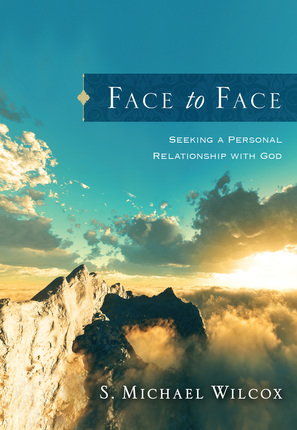
Face to Face: Seeking a Personal Relationship With God, by S. Michael Wilcox

ftoface

True confession time: I do not read a lot of Church books. I have bought a few by Church leaders or scholars I’ve heard speak in person, but usually end up giving them away or let them collect dust on a shelf. I just gravitate to other genres.

Still, I probably own more by S. Michael Wilcox than any other LDS writer, mainly because he is my favorite (and husband’s favorite) speaker at BYU Education Week. I try to attend every class he teaches and we own several of his talks on CDs that we listen to on the long drive home from Provo, Utah.

Three nights ago I was experiencing some inner turmoil. I had prayed for solace but felt inspired to take this book off the shelf and give it a real chance. That, in itself, was an answer to prayer. And yes, although Bro. Wilcox makes definite references to the Church of Jesus Christ of Latter-day Saints, the lessons, examples, most scriptures, and other references are not “LDS specific.” In fact, one of the greatest things about Bro. Wilcox–something that makes me respect him even more–is that, instead of negating the value of Christian writers outside his faith, he employs their teachings (positively) to edify the point he is trying to make.

I would call him a true “scholar of the humble heart.” In the spirit of extreme humility and courage, he uses very personal struggles from his own life as examples. Sometimes we look at men (and women) of faith such as Bro. Wilcox and assume that they have always been that way. Not so. He goes into great detail about times in his life where he has wrestled with doctrinal concepts, times where he was not the husband he now wishes he was, and the many times he has brought these challenges to God. More often than not, great patience was required before the answers came–but they did.

The difference between Bro. Wilcox and so many of us in our own prayerful wrestlings, is that he is more determined and more diligent than most. When one approach doesn’t work, he tries another. I love the way he creates conversations between himself and the Lord. I would never have the courage to do this. They are familiar, but loving and respectful. Example: “Mike, why don’t you ask me what you should pray for?”

I learned so much from this small 148-page book. Whatever your faith–even if you are new to prayer and conversing with our Father in Heaven–I recommend it. Highly.

9.5/10 Stars

Children, Nonfiction, Young Adult

The Wild Book, by Margarita Engle

WildBook

It is the early 1900s in Cuba. Fefa (short for Josefa) lives on a tropical farm with her parents and many brothers and sisters. She is somewhere in the middle. She feels it too—being somewhere in the middle. Too young to be the teasing older sister, too old to be the indulged baby. And now she must endure the stigma and frustration of “word blindness”—an outdated term for dyslexia. The local doctor, lacking any sensitivity, has stamped that label on her and she can feel it as strongly as if it was scribbled across her forehead. Giving her reading struggles a name does not make them go away.

Meanwhile, dangers are everywhere. Alligator-like caimans lurk in the tall grasses. Bandits hide behind trees waiting to steal cattle. Kidnappers threaten to steal children at high ransoms. Her parents conceal their worries from the family, but Fefa can read the concern on their faces. Words on a page are challenges, but she isn’t blind to her troubled surroundings. She’s an old soul. A worried old soul.

Her mother gives Fefa a blank book to practice her words, “her wild book.” She carefully writes her observations. The empty pages give her freedom but words do not come easily. She reads them back slowly….syl…la…ble…by…syl…la…ble. The farm manager writes a poem in her book. She looks at him with mistrust, but doesn’t know why. A feeling.

Each sentence is brief. Each thought is powerful.

The Wild Book is beautiful! I found it by accident on our online library site, started it last night, and finished it this morning. It is told in poetic prose through the eyes and ears of Fefa. It yearns to be read out loud to fully display its cadence and vivid imagery. (“Manatees on the beach lounging like chubby mermaids.” What a great sentence!)

Every two pages is a new chapter—a new poem—moving the story forward and exploring the depths of Fefa’s troubled heart. Yet the ending is triumphant. Even better, it is the true story of the author’s grandmother.

This is a book I wish I’d had in my elementary school class library! Younger students will appreciate the rhythm. Older students will recognize its depth. This is a special book that appears deceptively simple, but possesses many layers, just like its young heroine.

Parents, read it to your children. They will have new appreciation for the safety they enjoy.

10/10 Stars

Fiction, Romance, Women's Fiction, Young Adult

Love & Gelato, by Jenna Evans Welch

Love-Gelato

This cute story is the debut of Jenna Evans Welch, daughter of author Richard Paul Evans (The Christmas Box, The Locket, The Walk, and so many others.) When I started the book I thought the reader demographic was women, but I quickly discovered it is Young Adult Fiction. That is FINE. I’ve read enough YA Lit to see the way boundaries are constantly being pushed with sexual themes and coarse language, so it is comforting to know a new author like Welch is providing cleaner options. If I had a teenage daughter, I would have no problem recommending this book. (age 15+ IMHO)

Speaking of teenage daughters, on to the plot, told in first person by 16 year-old Lina Emerson. Lina, originally from Seattle, has just suffered the worst loss of her life, the death of her mother, photographer Hadley Emerson. Now, at her mother’s request, Lina is off to Florence, Italy to stay with her mother’s art school friend, the dependable Howard Mercer, who is superintendent of a World War II cemetery.

All of the adventures in Love & Gelato take place in just under a week, a dizzying pace for anyone over 21, but not so for an emotional teenager. The day after her arrival, Lina meets Ren (short for Lorrrenzo..be sure to roll that “r”) Ferrara. Ren introduces Lina to other ex-pat kids and possible classmates (if she decides to stay,) shows her Florence’s points of interest, and becomes Lina’s confidante on her quest to discover her mother’s connection with the city–and with Howard, who may or may not be Lina’s father.

Like most teenagers, driven more by heart and hormones than their heads, Lina jumps to certain conclusions without all the facts. But what I enjoyed most was the writing, which had plenty of wit as Lina sizes up each new person and situation she encounters.  Her “map” to the city is an old journal belonging to her mother. Those entries I found to be a bit flat and forced–the author is obviously trying to create a separate, distinct voice–but they were not numerous enough to detract from the overall story.

The sequel, Love & Luck, is also available, and centers around Addie, Lina’s American best friend with whom she frequently calls or video-chats for advice and support.

Love & Gelato is sweet and engaging, without being too saccharine or sarcastic, a tough line to walk with YA Lit. It is a quick read (one day for me) and a simple escape. I even found myself Googling some of the tourist spots mentioned, which was helpful. Now I just need to buy some gelato.

8.5/10 Stars

Fiction

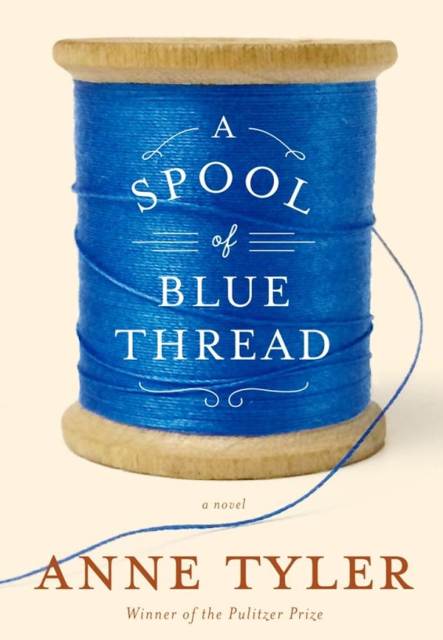
A Spool of Blue Thread, by Anne Tyler

5730aa08b5641

I am one of those curious people who wonders about the meaning of a book title, especially when it is vague. And, although the phrase “a spool of blue thread” doesn’t appear until the very end of the book, I must admit–I’m still wondering. (Forgiveness? Longevity? An unending series of life and death?)

The Goodreads reviews on A Spool of Blue Thread are extremely mixed. That doesn’t surprise me at all. There is no doubt that Anne Tyler is a terrific writer, skilled at mapping out the human condition and little details we all absorb but rarely discuss. Some will find great depth in this book’s pages, others will see it as a story that goes on and on with no real point or climax. I lean toward the latter.

Until the “semi” explanation of the title manifested itself, my impatience kicked in and I began tapping into my Humanities degree, where symbolism was a favorite subtopic. The story, like a spool of thread, is linear at first. But, as time goes on–like the spool unwinding more and more– it begins to zig zag back and forth, losing it’s initial direction and original purpose.

Through it all we follow multiple generations of the Whitshank family. The first and second generations are only described in depth after three members are dead and buried, which felt like an unnatural backpedaling to this reader. I suppose the point–if there is one–is to show that even as families change and people grow up, everyone ultimately begins and ends at the same place. We’re all children dependent on our parents, teens who rebel on some level, young adults carving our niche in the world, and older adults wondering where it all went before quietly leaving this earth. Our only artifacts being people’s memories of us and a collection of belongings to be sold, donated, or, if we’re lucky, lovingly treasured. It’s a cynical cycle, but an honest one.

A reader who is content with this type of horizontal plot packaged in very capable writing will enjoy the book. A reader looking for an engaging, memorable story will not. At best, we will all recognize someone in the Whitshank family as a person we know or to whom we are related. Perhaps even ourselves. As a reader, however, I did not find myself rooting for any particular character and am ready to move on.

8/10 Stars


Fiction, Romance, Women's Fiction

The Lost Husband, by Katherine Center

Book-Review-Adult-Fiction-The-Lost-Husband-by-Katherine-Center

I should start a new section called “unputdownables.” The Lost Husband would definitely fit into that category. Most importantly, though, I think I have found a new author whose books I want to read.

The last time I finished a book in two days was The Bette Davis Club, an unmitigated disaster, in my opinion. The Lost Husband was also quick reading, but for different reasons. No talking down to the reader, no ridiculous, selfish characters (OK, one selfish character, but she has to be selfish to assist the story.) Just an entertaining plot peppered with unpredictability that makes the reader want to return again and again.

Libby has been a young widow for three years. Two of those years have been spent living with her mother, who takes more passive-aggressive pleasure in criticizing Libby and running off to pedicure appointments than supporting her and allowing her to mourn. Libby’s two children, Abby and Theodore (Tank,) are resilient as most children are, but still fragile. Unfortunately, Libby has no other options.

Then one day, out of the blue, Libby receives a letter from Aunt Jean. She’s offering Libby room and board on her goat farm in exchange for help running the place. “Crazy Aunt Jean,” Libby’s mother’s sister of whom she has only vague memories. Most of what Libby knows about Aunt Jean comes from her mother’s venomous opinions with a hearty side dish of hatred. These sisters are the epitome of oil and water. Still…anything is better than living with her narcissistic mother, Libby decides, and one day later she’s off to a goat farm in Atwater, Texas.

The rest of the story centers around Libby’s new life in these unforeseen circumstances, the people she meets (there are some terrific supporting characters in Aunt Jean, O’Connor, and Sunshine,) and the healing process Libby is finally allowed to explore. Everyone has some secret or past challenge they are trying to overcome, allowing for extra character dimension and some interesting subplots, and no one is who they seem when Libby initially meets them. The story is told in first person, so we see everything through Libby’s eyes and feel it all through her emotions, which are relatable and authentic.

The book walks the line of “froth,” but I didn’t care. I enjoyed every minute with it and look forward to reading more from Katherine Center. Not every book has to be earth-shattering and life-changing. Some can just be good old-fashioned escapism. You’ll find that in The Lost Husband. Delightful from start to finish.

9/10 Stars

8/1/18 Here’s a fun tidbit: last night I was poking around on Goodreads and came across a Q&A section on the author’s page. I wrote that I was impressed with her comment to an aspiring writer, and quickly received 2 responses. It’s always a treat when authors interact with readers.:

Screen Shot 2018-08-01 at 11.20.41 AM