Children, Fantasy, Fiction, Series & Collections, Young Adult

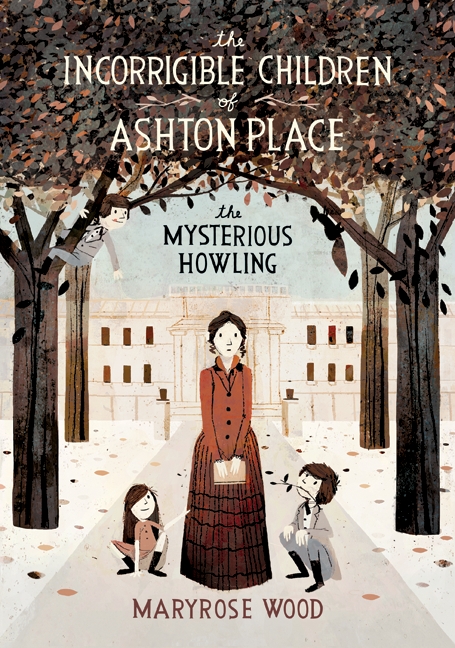
The Incorrigible Children of Ashton Place, Book 2 (The Hidden Gallery,) by Maryrose Wood

image

“Navigation, you see, is not just a problem for sailors.  Everyone must go adventuring sooner or later, yet finding one’s way home is not easy. Just like the North Star and all it’s whirling, starry brethren, a person’s idea of where “home” is remains in perpetual motion, one’s whole life long.”

–Page 311, The Hidden Gallery

Shall I mention again how much I am enjoying the series The Incorrigible Children of Ashton Place?

Book 2, The Hidden Gallery, takes young governess Penelope Lumley and her 3 charges to London. She has received a letter from her former headmistress and an invitation to meet in the city. When Lady Ashton of Ashton Place becomes aware of this, she decides to pack up the entire household and rent a home in London so they can all go. While Lady Ashton cares only about nurturing her social connections, Penelope becomes involved in a series of odd coincidences that raise more and more questions about her background and the origin of The Incorrigibles (Lord Ashton’s name for the wolf-raised brood.)

Once again, author Maryrose Wood writes her gothic tale in a way that is both effortless and charming. Even as an adult, I felt like I was sitting at the knee of a great storyteller, completely engrossed in the characters and the action.

Three themes emerge continuously throughout the book: navigation, the moon, and home. Some of the mysteries in Book 1 become a little clearer if you can read between the lines and unravel the clues, but there are plenty of new questions which are not resolved by the end. It doesn’t matter, the ending is satisfying enough to make you let out a temporary sigh before wanting to delve into Book 3. I’m hooked.

9.5 out of 10 stars

Children, Fantasy, Fiction, Series & Collections, Young Adult

The Incorrigible Children of Ashton Place, Book 1 (The Mysterious Howling,) by Maryrose Wood

9780061791055When 15 year old Penelope Lumley stepped off the carriage at Ashton Place to interview for a governess post, she had no idea what awaited her.  After quickly being hired by flighty Lady Ashton, Penelope suddenly found herself in charge of 3 feral children that Lord Ashton had discovered on his property the only week before.  All of Penelope’s hopes of imparting her knowledge of languages, math, and geography were dashed so she could teach the children the most basic skills.  They had no language, no manners, and couldn’t even dress themselves properly.  Meanwhile, Lady Ashton is thinking only of planning her first big party as mistress of the house and Lord Ashton spends all his days at the gentleman’s club.

Written in a charming style that makes Miss Lumley appear both loving and determined, author Maryrose Wood has managed to make this first book in the series akin to children’s books of old, like Mary Poppins or Alice in Wonderland.  The story is nothing if not unique, as well as engaging and well-paced.  I was enraptured and read it in less than a day.

This is a little gem of a book, and I have already begun Book 2 (The Hidden Gallery.)  How wonderful to read a novel that doesn’t talk down to its reader, doesn’t resort to the current trends of zombies and vampires, and even makes an effort to introduce its readers to new words (“irony” and “hyperbole” are cleverly explained in context.)  Penelope Lumley is smart, plucky and likeable, yet rarely discouraged despite her circumstances.  Since leaving the classroom 4 years ago, this is the first series I have encountered that made me wish I had students again with which to share it.

10 out of 10 stars

Fiction

Welcome to the World, Baby Girl! by Fannie Flagg

84022

If you could describe yourself in 3 sentences, what would you say?  Dena Nordstrom’s problem when asked that question by her psychiatrist is that her answers only expressed her image (an up and coming TV journalist) and nothing else.

Once again, author Fannie Flagg’s main character is an ambitious, beautiful woman with a sad childhood and backwards priorities.  Dena is a confident newscaster who leapfrogs from local weather girl to a young Diane Sawyer within a few years.  Admired by both men and women, her job is her life until that nosy busybody called “conscience” starts to emerge.  Next comes the biological response:  panic attacks and ulcers.  Her physician’s advice?  Talk to a shrink or go on complete bed rest.

The solution for a workaholic like Dena is a no-brainer, so she begins sessions with Dr. Gerry O’Malley, who then passes her off to hypnotherapist Elizabeth Diggers.

Meanwhile, people from Dena’s youth remember her fondly and pray for her return to Elmwood Springs, Missouri.  A college roommate, neighbors, and distant relatives follow Dena’s career and public life, worrying and wondering what the frantic pace could be doing to her.  They know that going home would be the best thing for her.  But will she?

Fannie Flagg again shows her tremendous gift of storytelling in this novel.  She has a talent for making her writing light and fun yet the characters’ feelings deep.  Her character development is superb, and done in such a way that other writers should take notice.  Having previously finished Miss Peregrine’s Home for Peculiar Children, which also dealt with a myriad of characters (somewhat forgettable) and different time periods (somewhat confusing), Fannie Flagg’s books are an example of how this can be done successfully.  Her formula is simple, really. Each chapter begins with the date when it is set and is devoted to a specific character.  Eventually you know them all so well that, when they start to come together, it isn’t confusing and they are like old friends. Some are friends you care about and some are friends whose lives have meandered down a path of darkness and deserve some come-uppance.

I feel like finding this author is like hitting a gold mine, and I intend to continue reading her books until I’ve read them all.  They are treasures.

9.5 out of 10 stars

Fantasy, Fiction, Series & Collections, Young Adult

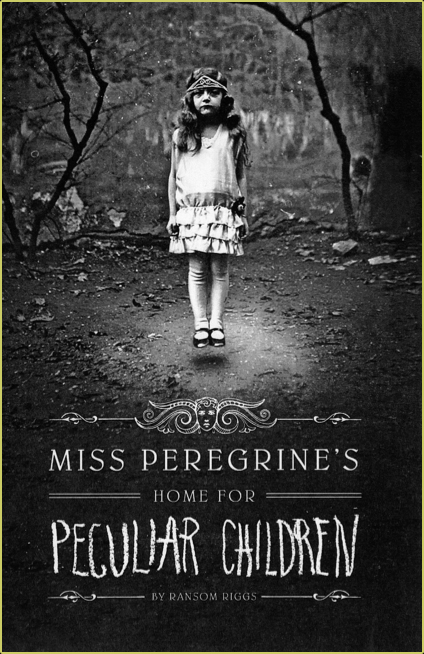
Miss Peregrine’s Home for Peculiar Children, by Ransom Riggs

miss p book cover with borderSomewhere between the X-Men comics and the movie Groundhog Day lies the story of Miss Peregrine’s Home for Peculiar Children, a debut novel for its author.

Aimed at teens, this book begins by introducing us to Jacob Portman, an introverted young man with no direction who works at a drug store.  The caveat is that his family owns the drug store and hundreds just like it.  Like many teens who come from considerable wealth, Jacob values little and has no direction, secure in the knowledge that his family’s money will always support him.  His circle consists of his heiress mother, frustrated father, condescending psychologist, and a grandfather he adores.

His grandfather, Abe, who was a survivor of the Nazi regime, grew up in a children’s home.  Never knowing which stories to believe, Jacob was entertained by Abe’s collection of freaky vintage photographs.  The photos, taken long before Photoshop existed, contain images that have clearly been manipulated in some way.  Or have they?  A girl who floats in air, another who holds a ball of fire in her hand, these cannot be real, right?

Jacob’s life is suddenly sent into a tailspin when he witnesses his grandfather’s death, which is both horrific and mysterious. Using his grandfather’s last words as his guide, Jacob begins a quest to find out the truth about the man he loved most in the world and where he came from.

It is on this quest that the story and setting changes dramatically, from a posh Florida suburb to a tiny island near Wales.  Everything Jacob knows about home, family and himself is about to change.

I was riveted for the first half of the book. Any story that takes its protagonist on the journey this one does is going to hold your attention. The plot is definitely unique and has the makings for a film, which I read is already being made.  My issue is character development.  Jacob and Emma–a “peculiar” child who takes center stage–are developed well, but don’t make us care about them much. (In reading other reviews I know I’m in the minority when I say that.) The other peculiar children are difficult to keep track of, as in which one has which peculiar ability. (Some “peculiarities” are a bit disturbing.) And one of the most important characters, Miss Peregrine herself, feels like a mystery even at the book’s end.  The person I found myself caring about the most, Jacob’s father, had no ending to his plot line.

Two things are clear by the end. This story is an outline for a film and it is going to have a sequel (available 1/14/14.)  But it could have been so much more.  And, in a shameless comparison with the Harry Potter series, JK Rowling showed us that you can have magnificent writing in modern times without profanity.  Riggs seems to want to make friends with his readers by peppering the book with words you hear kids say today.  If the writing is of high enough quality, you can connect with today’s teens without doing that.

Overall, Miss Peregrine is an interesting story that did not meet its full potential. However, I am curious to see where the sequel takes us.

8 out of 10 stars

Nonfiction, Self-Help, Travel

How to Live in a Car, Van, or RV, by Bob Wells

image

This book I read purely for fun and because it seemed interesting. Despite the fact that we are the owners of a mini motor home, it is unlikely that it will become our full time home.  Still, I admire anyone who can strip away their possessions to just the basics and find joy and fulfillment in that kind of life.

The author of this book, Bob Wells, began his life as a vandweller (all one word) out of sheer necessity. He was going through a messy divorce and couldn’t afford to even rent an apartment. This man thrives on living simply.  So much so, that when he got financially on his feet and remarried, he ended up divorcing a second time because living in a “stick and brick” house became unbearable for him. (“Bye, Honey, I’m leaving you for a van…”)

Now, for most of us, RV and trailer living would be like living in a really small house but still with basic conveniences. Bob looks at that as excessive, and advocates living in a box van or even your car. It is almost like a religion for him, and he lives on public land for free and never pays for a campground or uses hookups.

That is fine for him. And if that is a lifestyle that appeals to you he does have some good ideas. However, as a rule-follower, I have a hard time with the idea of purposefully drawing unemployment benefits so he only has to work for half the year. It’s one thing to live off the grid, it’s another thing to take advantage of the system while boasting that you don’t live within it.

For someone who, because of necessity or desire, wants to scale down their living quarters to a car, van or RV, this book might be helpful. Be warned that it does not give any instructions on using RV plumbing or electrical systems. Also be prepared for decent writing but tons of type-os of every kind. Whether or not this book was self-published, it was carelessly edited.

In the end, read it for your own amusement, but choose this lifestyle at your own risk.

7.5 out of 10 stars

Nonfiction, Travel

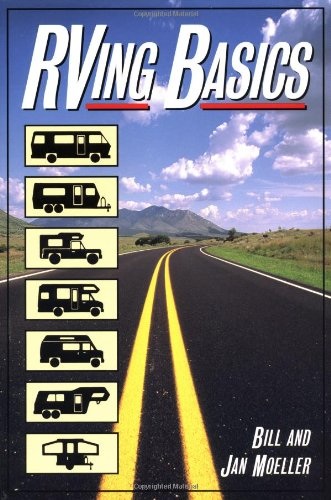
RVing Basics, by Bill & Jan Moeller

image

I know that reviewing a book about RVs is quite a departure from the types of books I normally review, but my husband and I just bought a 22-foot mini motor home (it doesn’t feel very mini) and I’m a big believer in “knowledge is power,” so this review and this book might be useful to other RV beginners like us.

After doing a lot of reading and research lately on the many necessary things that an RV owner must learn, I can confidently say that this is a well-written, thorough book. As the economy continues to be in a bad place, it is a good idea to look at alternate vacation options, and owning or renting a motor home, trailer or 5th wheel might be something to look into.

We are starting out as very new beginners, so the idea of valves, pumps, inverters, amps, and terms like “black water” can be a little daunting.  This book takes the mystery away from these and many other terms, plus their locations, uses, and where they fall in the checklists of things to do to get ready for an adventure.

The first 55 pages help you decide which type of RV is right for your needs.  We already have our motor home, even though we haven’t taken it on a trip yet, but I read the section anyway and it helped confirm the fact that our purchase was a good one for us. We bought it the day before I left to visit my family out of state, and my husband is in the process of insuring it.  Rest assured that when we are reunited we plan to take it on its maiden adventure.

Assuming the reader already has their vehicle, the rest of the book is devoted to parts, systems, etiquette, driving, troubleshooting, and a host of other important things. I read it cover to cover, absorbing as much as possible in order to feel less overwhelmed.  I can breathe a sigh of relief now knowing that I have, at least, a rudimentary knowledge of our RV.  This is written by “fulltimers” who live in their 5th wheel trailer year round and hope to impart their experience to the rest of us, including learning from mistakes they have made and observed.

I feel much better about our purchase and excited about our upcoming trips much more after having read this book. It’s an extremely useful resource for the first-time RV buyer.

9.5 out of 10 stars

History, Nonfiction

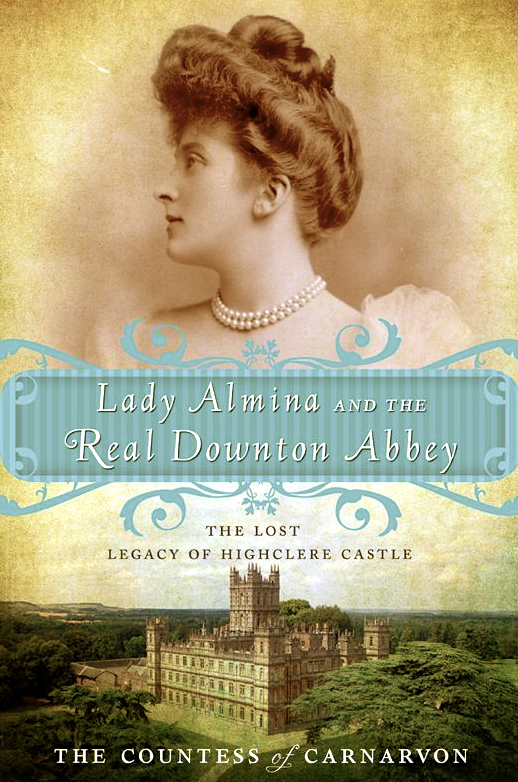
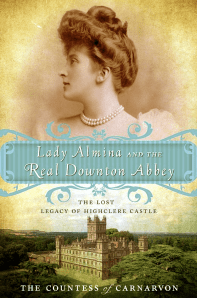
Lady Almina and the Real Downton Abbey: the Lost Legacy of Highclere Castle, by the Countess of Carnarvon

Screen Shot 2013-10-28 at 7.31.37 PMBefore there was Downton Abbey, there was Highclere Castle, the house used in the series, and the real life home of the Herbert family.  The current owner, George Herbert, is the 8th Earl of Carnarvon.  He is the latest in an illustrious family who, through determination, business sense, and fortuitous marriages has managed to keep Highclere Castle a self-sustaining estate when so many other houses of its kind have fallen into ruin.

The current earl’s wife Fiona, Countess of Carnarvon, feels a great duty to uphold the history of the castle and the family, especially now when Downton Abbey fans are clamoring for more information about the original owners.

Like Jacquelyn Bouvier, who brought class and style to Kennedy’s Camelot, Almina Wombwell did the same when she arrived at Highclere Castle as a 19 year old bride in 1895.

The illegitimate daughter of the fabulously wealthy Alfred de Rothschild, Almina was never fully embraced by society until she married the 5th Earl of Carnarvon.  She came with an enormous dowry, a generous stipend for redecorating, and her indulgent father funded the hospital she established at the castle during World War I.

There is no doubt that the current Lady Carnarvon has great respect for Almina and her legacy, much of which is still evident at the castle.  Her writing is uneven, but interesting, especially when she focuses on personal stories of the family, staff, and memorable soldiers who enjoyed the high-quality care provided there during the war.

As the reader I found myself either deeply engrossed or skimming.  I read intensely the parts about Almina and the earl’s courtship, personal stories from her childhood and her relationship with her father, the planning of her first important party for the Prince of Wales, and the many trips to Egypt which eventually led to the discovery of Tutankhamen’s tomb.

I skimmed over a lot of the less personal chapters about the happenings during the war.  Certainly the war affected Europe, and therefore, the inhabitants of Highclere, greatly.  But there were several times when the author seemed to get caught up in the technical aspects, almost like she was regurgitating information from another book.  It was lengthy and out of place.

It is fascinating to read about families such as the Carnarvons who have great inherited wealth, an estate, a title, and the responsibility to uphold these things for future generations.  As stewards of these privileges, that is their job.  But they also enjoy perks that the common man will never know, like rubbing elbows with royalty, being “gentleman politicians” but with no real governmental power, and spending money without even knowing how much they have in order to maintain the expected lifestyle.

Much of that money went towards the Egypt excavations.  And this is the first time I have read about the way the monumental discovery of Tut’s tomb changed the family’s life, mostly because of the invasion of the press.

Would I recommend the book?  Yes.  About half of it is very, very interesting.  Battle enthusiasts might find the other half interesting too.

7.5 out of 10 Stars

*** Learning about King Tut’s tomb has always been of special interest to me.  As a young kindergartener I was able to view actual artifacts when they came to Los Angeles on a special tour.  I never forgot that.  About 5 years ago, many of the most famous artifacts made their way again to the Los Angeles County Museum of Art and I had the opportunity to see them as an adult.  It is a singular experience to see the actual objects that were buried with Tut over 3000 years ago.  They have an aura of mystery and incredible beauty.

If this is a subject that interests you, I highly, highly recommend going to the PBS.org site or the PBS channel on your Roku player and watching “Ultimate Tut,” an episode from the series Secrets of the Dead.  Seeing this episode in tandem with finishing this book made everything come to life from that period of the Carnarvons’ lives.  I’m including a link HERE.

Fiction

I Still Dream About You, by Fannie Flagg

still dream

There are average novels, fun novels, and there are thoroughly enjoyable novels.  I Still Dream About You, by Fannie Flagg, is thoroughly enjoyable.

The story centers around an aging former Miss Alabama, Maggie Fortenberry.  Disgusted with her life’s lack of direction and, with the world in general, she makes plans to end her life.  This is a Type A suicide plan:  To Do Lists, a formal goodbye note, and leaving behind as little fuss and mess as possible for others.  A “considerate” suicide. Still, despite her depression, Maggie is double-take gorgeous and known for her chic sense of style.

Surrounding Maggie is a cast of colorful supporting characters.  Her best friend, Brenda, a member of Overeaters Anonymous who has dreams of becoming Birmingham’s first African American female mayer; Ethel Clipp, Maggie’s 90-something co-worker at the real estate agency; Babs “The Beast” Bingingham, the agency’s #1 rival and nemesis; and the late Hazel Wisenknott, the diminutive woman who started the agency, and Maggie’s mentor in business and in Life.

Like in her novel, Fried Green Tomatoes and the Whistle Stop Cafe’, Fannie Flagg cuts back and forth between time periods in this story.  Enter the Victorian Era and the story of Edward Crocker, the former owner of Crestview, a magnificent old estate that Maggie has always admired and which has now become her final listing.

Many themes run throughout the story, with the “grass is always greener” being the major one.  The second being that no matter how much we plan ahead, Life often leads us in other directions.

With its Southern setting, driving story, memorable characters, and optimism (despite the protagonist’s ultimate goal,) I Still Dream About You is rich and full-bodied–like a really good piece of cake.  It completely draws you in and holds you in comfort until the last bite, or in this case, the last page.  I cannot remember enjoying a novel so much.

9.5 out of 10 stars

Nonfiction, Self-Help

Why Smart Kids Worry, by Allison Edwards

9781402284250_p0_v2_s260x420Recently, after visiting the Washington Anytime Library online and picking books on a variety of subjects, I became engrossed in Why Smart Kids Worry, by Allison Edwards. I am going to be as objective in my review as possible, but there are 3 things that may prevent me from being so.First of all, this book is written for parents of smart children who have high anxiety.  I am not a parent.  Second, this book is divided into 2 parts–describing different types of anxieties, and providing tools to help soothe them.  Not being a parent who needs the tools for a child I don’t have, I only read the first part, BUT…the author did mention the tools quite frequently in part 1.

Third, this book is written by a former school psychologist.  I am a former teacher.  Most teachers have a combative relationship with school psychologists and I am no different.

Despite those disclaimers, I did find the book quite interesting.  Why?  Because I WAS a smart kid who worried.  And I’ve grown into an adult who worries.  It is something I have to constantly talk myself through.

I never talk about this, but for the sake of this review I will…

As children, both my brother and I were identified as “gifted.”  Like the author states, that label can add some pressure and, whether conscious of it or not, smart kids are often worriers.  I cannot speak for my brother, who always seemed very calm and collected, but I was always a worrier as a kid.  I worried about being late for school, doing well on a test, about who would take care of me if my mom (a single parent) died, about what I would be when I grew up, about who I would marry, about how much my friends liked me, about how much sleep I was getting, if we had enough money (things were tight)…you name it, I thought about it and usually worried about it.

So, for me, the useful thing about this book is that I dug back into some of the things I used to worry about and felt less alone.  The author talks about the “snow globe.” A child puts everything through the filter within the small confines of their experience, and worries.  Smart kids take things to the next level.  She used the graphic images on the news after 9/11 as an example.  Adults would see the clip of the planes hitting the Twin Towers and know they were seeing a replay of something that already happened.

Kids look at those clips, and, if they are young enough, process it as an event happening in the moment.  News clip after news clip means that plane after plane is hitting the towers.  Smart kids then begin thinking within their sphere… “Hmm, planes hit towers.  We have planes and towers where I live, that means this could happen to me too.”

It seems outlandish, but I’ve seen this kind of connective thought process with students.

This book could be helpful to parents who have anxious kids.  No one wants their child to be pigeon-holed into a certain category, but when she talks about the way different kids process and communicate their anxieties, it might be comforting to parents to know that other families have experienced the same kinds of challenges.

The tools she discusses in Part 1 are helpful and productive.  Reminding parents that a child’s chronological, intellectual, and emotional ages are usually different, she informs parents that smart kids do not need to know about adult information happening in the family.  Very true.

I would recommend this book.  It is well organized and gives good advice to parents. Teachers and other caregivers may find it useful too.

8.5 out of 10 stars

Children, Fiction, Young Adult

The Witch of Blackbird Pond, by Elizabeth George Speare

WitchBlackbird7Despite being an avid reader all of my life, there are books from my youth that have eluded me.  Some I remember passing again and again in the libraries I frequented.  They called to me, yet I never picked them up.

The Witch of Blackbird Pond is one of those books.  Long before the days of Harry Potter there were innocent and fun stories about witches that satisfied young readers.  I remember one I read several times about a bumbling witch hiding on the ceiling of a young girl’s closet.  And of course, there is Roald Dahl’s Witches, a personal favorite.

But the irony of The Witch of Blackbird Pond is that there is no witch. This story is set in puritanical times, when accusations of witchcraft had more to do with hatred and ignorance than truth and evidence. But in their defense, it was a very hard life they led.

The protagonist is a teenage girl named Kit Tyler who is newly arrived in colonial Connecticut after being raised by her late grandfather in Barbados.  Used to sunshine, the laid-back island atmosphere, and a life of privilege, Kit must now adjust to a sterile life full of physical labor with her aunt’s family.

It is your classic “fish out of water” story, with the differences in Kit’s former life and her new, austere one being so vast, that everything she says and does seems wrong.  In an effort to befriend the loneliest members in town, she brings more suspicion upon herself. Her intentions are always good, but her methods attract attention.

This is a story with great character development and several minor story lines that intertwine with each other.  I began reading it last night and finished it this morning.  Much of it is gripping and fluid.  Perfect for young adults, the most dramatic parts are just enough, not overdone.

It also gives the reader much to think about in regards to prejudice, ignorance, and what it means to be a truly God-fearing person.

9.5 out of 10 stars

As an extra tidbit, I learned that when this book was being considered for the prestigious Newbery Award, it is the first time a book was chosen by unanimous vote on the very first vote.  The authoress is also one of only 5 people to win the Newbery award twice.  (Another is Lois Lowry, author of Number the Stars, also found on this site.)

Fiction, Series & Collections

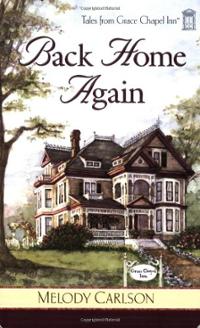
Back Home Again, by Melody Carlson

back-home-again-melody-carlson-paperback-cover-artIn keeping with my light, summer reading (which is coming to an end, sob!) I recently finished Book 1 in the Grace Chapel Inn series, Back Home Again, by Melody Carlson.  Obviously, I have really been enjoying this author, who writes interesting stories with good character development, and is able to do so without being controversial or offensive.

The Grace Chapel Inn series is one that uses many different authors as contributors.  I’m not a big fan of that because each one will have their own style.  As the first book in the series with an author I already like a lot, I knew I was safe with Back Home Again.

The story is simple enough.  Three sisters in their sixties decide to turn the family home into a bed and breakfast after the passing of their father, Acorn Hill’s beloved minister. Each sister brings her own ideas and talents to the endeavor, but, like any small town, everyone knows everyone else’s business.  The trio of women quickly discover who supports them and who does not in a town where maintaining the status quo is almost overly important.

A quick, light read, but it keeps your interest and is well written.  Sometimes that is enough.

8.5 out of 10 stars

Fiction, Romance

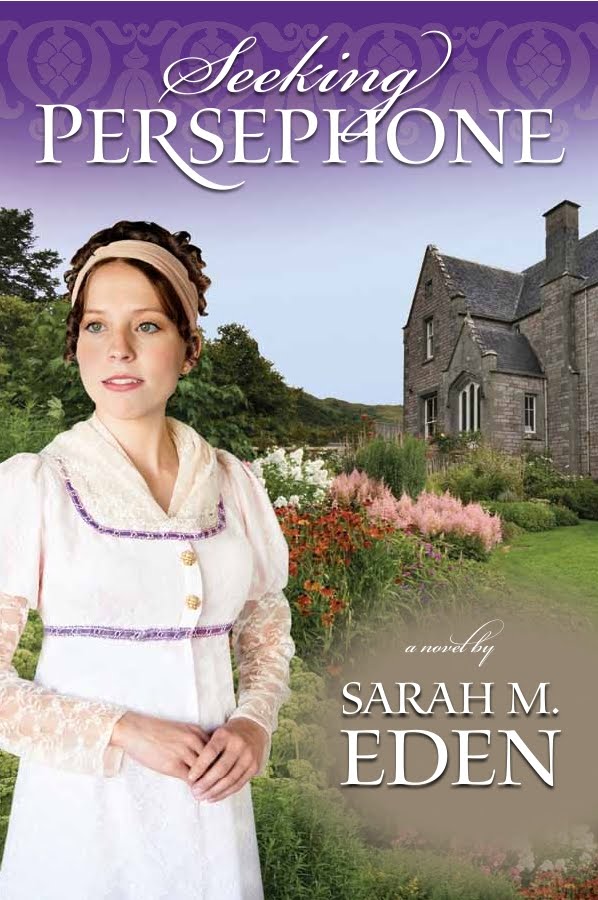
Seeking Persephone, by Sarah M. Eden

SP_front_CoverLast night I finished Seeking Persephone, by Sarah M. Eden, a story I have been visiting between other books for about 3 months.  With only a quarter of the book remaining, I decided to see how these characters ended up.

Like Edenbrooke, by Julianne Donaldson, Seeking Persephone is part of the genre of LDS romantic regency fiction. These books are written by women for women.  Their authors are loyal Jane Austen devotees who want to carry on the tradition of clean literature set in a simpler time of good manners, lovely dresses, and when marriage to a wealthy man is a woman’s top priority.

After reading two books in this genre by two different authors, I am finding this kind of escapist reading teetering on the ridiculous.  Escapist lit is fine, the regency setting is fine, but unoriginality is not.  So far, both Edenbrooke and Seeking Persephone have obvious shades of famous stories that are classics because they were the first of their kind.  While Edenbrooke’s characters had a lot of similarities to Pride and Prejudice’s Elizabeth and Darcy, Seeking Persephone is a retelling of Beauty and the Beast.

In it, the poor but beautiful Persephone is sacrificed into marriage to the brooding and scarred Duke of Kielder.  It is unapologetic in its predictability, and shameless in its attempt to try and be something more than fluff.  Harsh but true.  For the same reasons I have vowed not to read another ridiculous book by the highly overrated Nicholas Sparks, I do not see myself returning to this genre again.  Intelligent readers deserve something better than this.

A disappointing 5/10 Stars