Children, Fiction, Young Adult

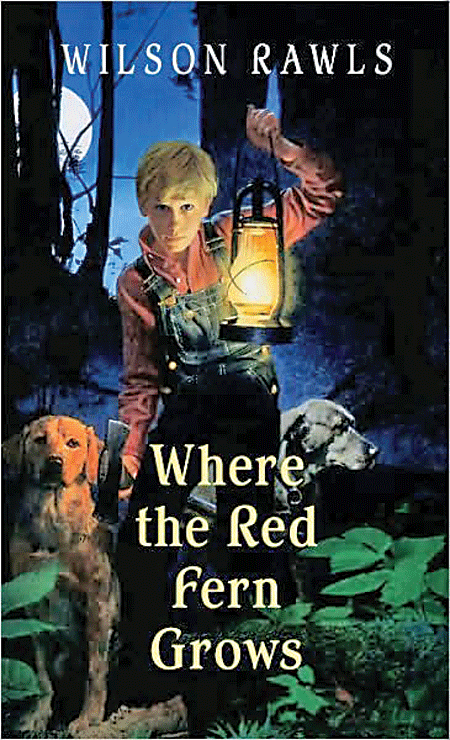
Where the Red Fern Grows, by Wilson Rawls

Where-the-Red-Fern-GrowsAs I sit here with my dog, Bailey, nearby, I ponder the love a dog has for its owner.  Since the beginning of time dogs have proven to be the most loyal of furry companions, a reminder of the kind of love God wants all of us to have for each other–unconditional and constant.

Where the Red Fern Grows, by Wilson Rawls, lovingly tells the story of a young boy and his 2 coon hounds, Old Dan and Little Ann.  When I say “lovingly,” I mean that the love this boy feels for his dogs is so strong that it motivates everything he does, even before he meets them.  How is this possible?  Because we love what we value, and after saving up for more than 2 years just to afford their hefty prices, Billy Coleman valued his dogs immensely. Tears came to his eyes the moment he first saw them and they were inseparable to the end.

As any pet owner knows, we usually outlive our furry family members, and it is a sad event that we must all prepare for, even when we adopt them as pups.  But we also know that the time we have together is very special.  Billy made the most of every moment with his two dogs, training and working with them until their skills were renowned in the rural Ozark mountains and beyond.

Wilson Rawls illustrates the growth of the dogs and their young master with a craft I have rarely seen in literature.  His writing is artistic.  Everything about these characters is sincere, good and believable.  In a world where that hardly seems probable, he makes it possible.

The best writers say to beginners to write what you know.  Growing up in the Ozarks himself, this is what Wilson Rawls knew.  Being highly influenced by Jack London’s Call of the Wild surely assisted in creating his subject.

This story is a winner of the highly prestigious Newbery Medal, awarded to quality books for children and young adults.  It is extremely worthy of this honor.  Anyone of any age will be moved and touched by the adventures of our morally sound, young protagonist and his 2 loyal companions.

10/10 Stars
Children, Fiction, History, Young Adult

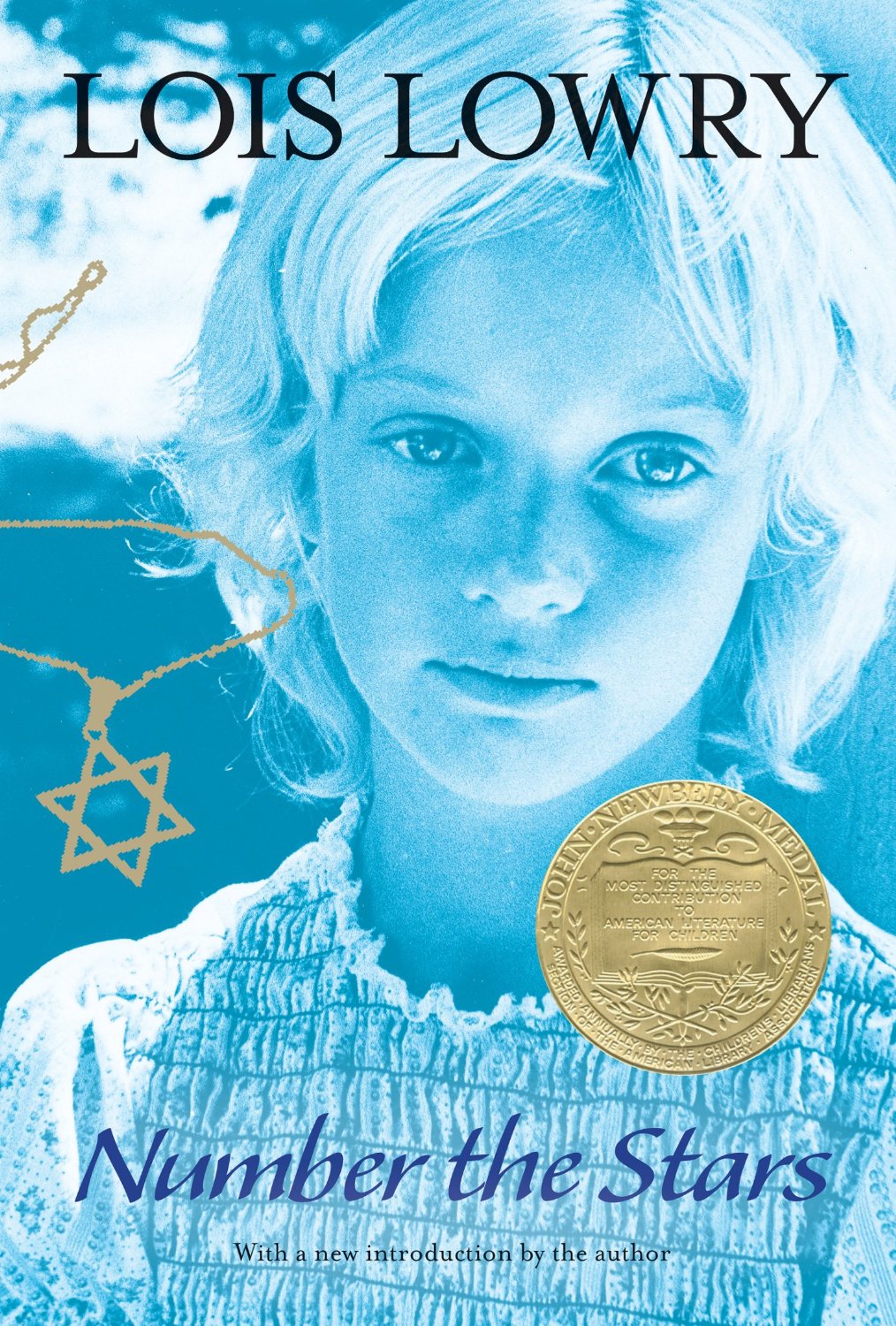
Number the Stars, by Lois Lowry

9128dHoa9dL._SL1500_After finishing the Four Lindas series, last night it was time to dive into a new book. Somehow I found myself looking at some young adult fiction online.  After coming across Number the Stars and seeing the overwhelmingly positive reviews for it, I decided to read it.  Only $1.99 for the Kindle version and a mere 160 pages, I was done two hours later, satisfied and awash in the author’s marvelous prose.

The story is a fictionalized account of a true story told to the author by a Jewish friend who was hidden during WWII.  It centers around a ten year old girl named Annemarie Johannesen who lives in Denmark at the time of the German occupation.  She is the middle child of 3 girls, with a mysteriously deceased older sister.  Annemarie’s best friend is Ellen Rosen, a Jewish girl who lives with her mother and father in the same apartment building.

Lois Lowry has a gift for character development, suspense, and driving the story forward.  She writes efficiently, which I wish more writers did.  There is nothing superfluous about the dialogue or events.

Within a few pages, as Jews in the neighborhood are disappearing, Annemarie is thrust into an adult situation.  Her parents make the decision to take in her friend, Ellen, and hide her.  I learned they were like many Danish families who successfully hid and helped their Jewish friends, many of whom made their way to safety in Sweden.

And here is where the adventure begins.  I will say no more about the plot except that it is excellently crafted.  Seeing everything through the eyes of Annemarie, who soon starts to make sense of the cat-and-mouse game her family is involved in, makes the story develop at just the right pace. She matures quickly, keenly observing the adults, and discovers her own role during this dangerous time.

I highly recommend this book.  This is a Newbery Award-winner (the highest honor for children’s literature.)  There is nothing scary or inappropriate.  Everything is explained at a child’s emotional level of about 10 years and up. At no time does it seem like the author is talking down to her readers.  This book is a treasure, and I wish I had known of it when I was in the classroom.

An enthusiastic 10/10 Stars.

Fiction, Series & Collections

All for One & Here’s to Friends–Books 3 & 4 of the Four Lindas Series, by Melody Carlson

allforone heres_to_friendsI cannot remember the last time I’ve read an entire series of books.  It may have been the Harry Potter series.  After reading As Young As We Feel, the first book of the Four Lindas series, for our local book club, I felt compelled to carry on with the characters.

Just as a quick recap, they are 4 ladies named Linda who have known each other from childhood but now go by their middle names.  They are brought back together at a class reunion and the 3 who are not currently living in their small Oregon hometown eventually return.  All of the ladies are at a crossroads in their lives.

Book 1, As Young As We Feel, describes them getting reunited and reacquainted, as well as the moves to fictional Clifdon, Oregon. They also make decisions of how they are going to go forward with their lives.

Book 2, Hometown Ties, is a creamy book.  With the exception of one of the ladies who is caring for an elderly parent, the rest seem to have settled in to a happy new normal with budding relationships for a couple of them.

Book 3, All for One, shows that no matter how we think our lives are going, there are always challenges around the corner that we were completely unprepared for.  There is a lot of upheaval in this book, but the ladies’ friendship and commitment to each other buffers what could have been a lot worse.

Book 4, Here’s to Friends, sees the ladies still dealing with some of the challenges of Book 3.  Most of them are relationship based, deciding whether to take the leap with possible new loves or to stay single and independent.  I will note that the one thing about Book 4 that I found annoying is that a couple of the ladies suspected good, trustworthy men of not being faithful, even though they had clearly done nothing.  The doubts were born completely out of the women’s own insecurities and got a little tiresome after a while.

The good thing is that the ending is satisfying, even though everything is not sewn up in a tight little bow.  It is a conclusion of hope, not perfection, which is more realistic.  And when all is said and done, the reader wishes they had friends like these.

Whole series:  8/10 Stars

Fiction, Series & Collections

As Young as We Feel & Hometown Ties–Books 1 & 2 of the Four Lindas Series, by Melody Carlson

AYAWF9781434764959_p0_v1_s260x420There is something about summertime that makes you want to read books that go down easily.  After reading Book 1 of the Four Lindas series, As Young as We Feel, for our book club, I felt compelled to read the rest of the series.  Two down and two to go.

Once upon a time there were 4 young girls named Linda who lived in the small seaside town of Clifden, Oregon.  Linda Abigail, Linda Marlene, Linda Jane, and Linda Caroline.  They formed a club and a tight-knit friendship.

Book 1 catches up with the four Lindas, who now go by their middle names (Abby, Marley, Janie, and Caroline) at their 40 year high school reunion.  Life, as it often does, has taken them to different states and in different directions, so much so that all of them question what brought them together so many years ago other than their names.

After the unexpected death of a popular classmate at the reunion, the ladies start reevaluating their lives.  Abby, the only one who still lives in Clifden, is domestic and lives in a beautiful home, married to her high school sweetheart, Paul, yet feels unfulfilled.  Marley, the free spirit, has been living in Seattle and working in an art gallery since her divorce, but longs to be an artist herself.  Janie is a high-powered attorney living in New York and a recent widow who is ready for change.  Caroline is the guy magnet who looks years younger than her age, is a full-time waitress and part-time actress, and lives in the fast-paced world of Los Angeles.  Caroline’s mother also has Alzheimer’s Disease, and upon returning to Clifden and seeing her mother’s condition and the squalor in which she lives, has some tough decisions to make.

Melody Carlson is a master at character development.  Each chapter is named for one of the women, and she rotates through them, developing their individual and intertwined stories until the book is completed.  It is a basic, yet ingenious, system of making sure that each character gets her fair share of the reader’s attention.

In the end you are left with 4 women who are on new life paths and whose renewed friendship fortifies them to make courageous decisions.  Both books I’ve read so far are delightful and not saccharine at all.  On the contrary, the women deal with issues that are very real–aging parents, divorce, loneliness, distanced relationships with children, and the possibility of new loves. Their support of each other makes them each very pro-active as they meet their challenges head-on, with the expected bumps and self-doubt along the way.

Admittedly, these books are very much aimed at women readers, but there is nothing wrong with that.  I would recommend them to anyone, but I think women over 40 would really relate with the characters.  After 2 books I feel I know them well, want them to succeed and be happy, and can’t wait to see what happens next.  Each book is a 2-3 day read. Easy, fun and relaxing. I cannot remember when I’ve enjoyed reading so much.

Book 3 is called All for One, and Book 4 is Here’s to Friends.  There is also a section of the author’s website devoted to the series, found HERE.

9.5/10 Stars

Fiction, History

We the Living, by Ayn Rand

WeTheLiving_paperback__33059.1363219081.1280.1280I was just reading a quote that says “The happiest people don’t have the best of everything, they just make the best of everything.”  A documentary called HAPPY (available on Netflix,) shows that people’s levels of happiness around the world is based on things other than material possessions, mainly family and a connection and contribution to society.  Years ago, a 20/20 special on happiness concluded that a large part is based on the control we have over our own lives.

Keeping all of these things in mind, I now reflect on the melancholy characters in Ayn Rand’s We the Living–her first novel. Focusing on Communist Russia in the post-Lenin time period between WWI and WWII, Ayn Rand is quoted as saying that this was the most autobiographical book she would ever write.  She also said that it was her intention to show the destructive powers of a dictatorial government on society no matter the time or country, whether it be Russia, Nazi Germany, or any other.

“Destructive” is the key word in defining Communism’s effects as we follow three main characters on their journeys to survive and endure a world that is quickly becoming more and more restrictive.  Kira, the character who the author loosely based on herself, arrives in Petrograd with her family after being away during the war years.  Akin to Ayn Rand, her bourgeois parentage is like a social stain as she tries to become part of the new society.  Leo, the son of a an executed government rebel, and Andre, an orphaned war vet on the rise in the government, are the two men she becomes involved with, each fulfilling separate needs within her.  Each begins with an agenda that changes as times become more desperate.

Ayn Rand excels in character development.  Even the government feels like it own character–perhaps the strongest, most consistent, antagonist of them all–as we see what happens when choices and ambitions of the Individual are stripped away.  This is a time when your devotion to country and state is everything, and your patriotism is constantly being questioned.

There is also a multitude of supporting characters–parents, siblings, cousins, friends–who, although taking on minor roles in the story, take on major roles in emphasizing what was happening at the time.  No one was immune to Communism’s control, and woe be to you if you did not yield to it. But “yield” is a relative term, because different people react in different ways to such control, and “self-preservation” has many faces.

Ayn Rand’s husband, who encouraged her to write this book, said she was the first person to escape Communist Russia who could write an honest, first-person account of what it was like to live there.  And she was quoted as saying that she could not fathom how some Americans thought that Communism was a noble idea, philosophically, while demonizing what was actually happening to the Russian people. But like we see today, using North Korea as an example, the government even tried to control the outside world’s perception.  Russia was probably more successful simply because of the limited technology and media influence of the time.

However, when you read this book you will see there is nothing noble about the government controlling every aspect of its citizens’ lives.  I hear people saying that the US is headed in this direction and I cringe.  If you think that, reading this book will give you an entirely new perspective.  We may not live in the “home of the free” in its most idyllic, shiny sense, but we are nowhere close to what these people endured and from which they are still trying to recover. This book is an eye-opener, and a crucial read.

10/10 Stars

Fiction, Romance

Edenbrooke, by Julianne Donaldson

edenbrooke

Two book reviews in two days is very unusual for me, but Edenbrooke, our April book club selection, was a quick and frothy read.  Whereas as The Immortal Life of Henrietta Lacks was like a steak dinner with baked potato, Edenbrooke is like a small bowl of chocolate mousse at the end of the meal.  That doesn’t mean it wasn’t enjoyable, because it was, but like chocolate mousse it is predictably light and far from life-changing.  Although I will say that it was a nice literary escape between two demanding books on my reading list.

Set in the English countryside, the story centers around the awkward half of a set of twins, Marianne Daventry.  She is attractive and unassuming, a composite of Elizabeth Bennett in Pride and Prejudice and Jo March in Little Women.  Her sister, Cecily, reminds me of a cross between Jo’s sister, Amy, and Blanche Ingram in Jane Eyre.  And therein lies a bit of criticism of the story–almost everything about it seems borrowed from the classic romance stories of that era.

There were a few twists that I did not expect, and some excitement at the beginning and the end involving danger and intrigue, but the story is, for the most part, quite predictable. It is more about the journey than the destination.

Still, to be fair, I will state again that I did enjoy it.  It is a clean story that manages to keep the reader’s attention. I sincerely wanted to find out everything that happened to the characters.  Would I recommend it?  I suppose.  One cannot read heavy, intense books all the time, and Edenbrooke was the perfect respite.

So, within its genre, I would give it 8/10 stars

History, Memoir, Nonfiction

The Immortal Life of Henrietta Lacks, by Rebecca Skloot

the-immortal-life-of-henrietta-lacks

Once upon a time there was a story that needed to be told.  It is about something we all need to be aware of, yet few of us are aware.  It begins with cells and with a poor, Southern woman named Henrietta Lacks who died at age 30 and is buried in an unmarked grave.

But what it really goes back to is this question:  who do our bodies belong to?  Whether you believe in God, an afterlife, and souls (or not) when Science hits on a certain discovery it sometimes makes claims–or stakes claims–on things that can further research.  Does it have that right?

Henrietta was dying of cervical cancer and being treated at Johns Hopkins when her doctor took a sample of her cells and gave them to George Gey, a researcher at the hospital who was working on cell growth and duplication outside of the human body.  No patient consent was asked for or given.  No family consent was asked for or given.  After all, Henrietta was getting free medical care, and the hospital’s rationale was that, in exchange for that care, they could bypass asking for permission.  They had done it with other patients and this time was no different.

But Henrietta’s cells were different.  After multiple failures trying to duplicate cells artificially, George Guy was suddenly handed the scientific version of the goose that laid the golden egg.  Except in this case, there were billions of golden eggs, because Henrietta’s cells multiplied again and again…and again and again.

She died, unceremoniously, leaving 5 children and a husband behind, but her cells lived on, and live on to this day in labs around the world.  Renamed HeLa cells, their relentless fortitude in continuing to multiply has made them instrumental in some of medicine’s most important research.

Fast forward several decades when the author, Rebecca Skloot, a too-smart-for-her-own-good student who constantly challenged the conventional school system, was sitting in a science class at a local community college.  After teaching a brief lesson on the HeLa cells, the professor wrote Henrietta’s name on the blackboard.  A spark and questions began to emerge in Rebecca’s mind, as did a quest to find out more about this unsuspecting woman who had given so much.

There are some people who are born to write a certain book and tell a certain story.  Henrietta’s story was waiting for Rebecca Skloot to come along and pursue the multiple avenues required to do it justice.  What she didn’t know was that Henrietta’s children had been used, lied to, and taken advantage of so much over the years, that the last thing they wanted to do was trust a young white woman inquiring about their mother’s cells.  Just gaining their trust took years.  All they knew was that Johns Hopkins and many others had capitalized and profited off of them, and they had nothing.  They didn’t even have health insurance.

There is much, much more to this story, and what you will realize as you read is that the author’s and Henrietta’s children’s stories merge together during the decade of research it took to write this book.  There are parts that are difficult to read–both Henrietta and her children grew up with abuse, abandonment, and incredible poverty–a recipe for extreme hardship that affected generations of the Lacks family.

But the story also contains discovery, redemption, apologies, allegiance, ethics, and friendship. Henrietta, her children, the researchers, and the author all have their own journeys, and the lessons learned–for them and for the reader–are the kind that stay with you.

I highly recommend this book.  It will make you question and be grateful for many things.

9 stars out of 10

History, Memoir, Nonfiction

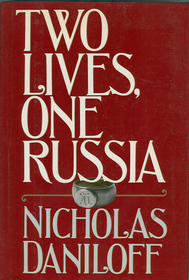
Two Lives, One Russia, by Nicholas Daniloff

9780395446010I don’t know if our fascination with Russia will ever diminish, partly because the culture, government, and history are so different from that of the US.  And it is this fascination, plus a job offer and the desire to investigate his family history, that motivated Nicholas Daniloff to move his family there in the late 1970’s.

Yet, despite knowing the language, the quirks of living in a country under the umbrella of so much mistrust, and being familiar with the experiences of other journalists who had been detained by the KGB, Daniloff himself was arrested just days before he and his wife were set to move back to the States.

Imagine–I don’t think we can–being nervous about forming new relationships for fear of the person being a KGB agent. Imagine having to save personal discussions for out on the balcony because of KGB microphones in your apartment.  Imagine using code words on the phone to avoid suspicion–even when you are doing nothing wrong.  This is what life was like.  Mistrust, fear, and deprivation. Deprivation of basic needs, information, and access to the rest of the world.

The “two lives” referred to in the book are the author’s and his great-great grandfather, a military leader at the time of the Decemberist movement.  Nicholas Daniloff has a unique ring that belonged to his ancestor, and the chapters switch back and forth between the events surrounding his arrest and his research into his great-great grandfather’s life and military service.

I found myself deeply fascinated with the chapters dealing with his imprisonment and endless interrogations.  The stress he underwent as he was accused of being a spy and handling illegal documents must have been terrible.  My attention waned during the other chapters.  There were too many tangents, too many names to remember, and too many branches of explanations.

If the entire book had dealt with his arrest, with only minor references to his ancestor, I think I would’ve been a lot more interested.  But I do understand the author’s need to draw parallels between his 2 week ordeal and the ten-year imprisonment his great-great grandfather endured.  Their experiences were not entirely alike, but it made the author feel closer to him, which is a trait many of us have to family members we hardly knew.

7.5 Stars out of 10

Fiction

Leave it to Jeeves, by P.G. Wodehouse

2940012592675_p0_v1_s260x420

Yes, I’m experimenting with a new blog template…

And no, don’t let the plain cover fool you, these stories are hilarious.  The man whose picture is on the cover is British humorist, Sir Pelham Grenvile Wodehouse, also known as P.G. Wodehouse.  I found this collection of stories while browsing through some of the free Kindle books, and what a delightful find it was.

The two main characters are the rich but bumbling, Bertie Wooster and his highly resourceful valet, Jeeves.  When you think of the consummate “gentleman’s personal gentleman” who can anticipate the needs and desires of his employer, Jeeves is your man.

Between Wooster’s money, connections, and life of leisure, and Jeeves’ intelligence and creativity in getting his boss and many of his friends out of various scrapes, you have a collection of stories quite unlike any other.  They are well thought out, unique, and with surprise endings, each of them, as Jeeves shows that a man in service has much more intelligence than one who is given everything without laboring for it.  And, although Wooster is the employer, it is he who is more dependent on Jeeves than the other way around, as he states more than once.

You see these two evading the inquiries of a nosy aunt, helping friends and cousins both in Britain and the US, and doing it all with humorous panache.  They are the perfect pre-bedtime stories and endlessly enjoyable.

9.5 out of 10 Stars


Fiction

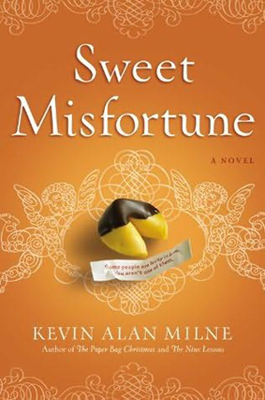
Sweet Misfortune, by Kevin A. Milne

sweet-misfortune

Sweet Misfortune was our recent book club selection.  Ponder the idea of defining moments in our lives.  How much do they define us?  How great is their influence?

In the case of Sophie Jones, the answer is “quite a bit.”

A birthday, a fortune cookie, and a devastating car crash for which she blamed herself.  These are the events that set things in motion.

Few of us will ever experience anything as cataclysmic as this, but I still found myself getting impatient with Sophie at the beginning.  She is grown now, owner of a successful business, even loved by those in her inner circle, but she is bitter.  The accident of her childhood did not leave her physically impaired, but it has scarred her emotionally.  She is cynical, mistrusting, and fatalistic.

As I said, I have little patience with bitter and negative people, because I do feel that we all have the power to make our lives better.  Perhaps this shows lack of compassion on my part, but too often I have seen people use their past as an excuse to be rude or act entitled.  Sophie does not subscribe to this way of thinking.  My only hope as I continued reading was that her life, and therefore, her mood, would improve.

In her case, the key was closure.  Several people were involved in that multi-car accident when she was a child.  Others died besides her family.  It affected many for the long term, forcing them to make the same life decision–how much would they let that night define them?  Would they take power over the event, or let it take power over them?

As the story unfolds, and of course I don’t want to add any major spoilers, Sophie takes a journey back in time to piece together what happened that night and what has become of the other families.  Some things are slightly predictable, some are surprising, all lead her to new conclusions about her life, her future, and who she is going to keep close.

I would recommend this book.  It is light reading and, happily, without any offensive language or scenes.  The idea of “Happiness” and its meaning is a recurring theme, which makes the reader start to think, “How would I define Happiness?”  “By events? Feelings? Faith?  Relationships?”

A quick read with a good message.

8.5/10  Stars

History, Memoir, Nonfiction

Call the Midwife, by Jennifer Worth

While waiting for Downton Abbey’s third season to begin in January, I have been enjoying a new BBC series, Call the Midwife.  It is based on the memoirs of a midwife named Jennifer Worth, and so I also began reading her book.

Jennifer Worth, who was “Jenny Lee” before she married, worked in London’s East End during the late 1950’s.  She and other young single midwives lived in a convent called Nonnatus House, side by side with a handful of nuns who also worked as midwives, ran a clinic for the expectant mothers in the area, and helped the young women like Jenny Lee complete their training by giving them field experience.

The East End was comprised of slums and tenement housing.  Unwashed children ran through the streets.  Houses of prostitution was commonplace.  Families usually squeezed into one or two rooms.  But with England’s socialized medicine, prenatal and antenatal care was available to everyone, regardless of their financial situation.  The nuns and young midwives were kept very busy.

Despite its whimsical cover, this book is not for the squeamish. But it is not gratuitously graphic either.  Most chapters deal with different birthing experiences that Jenny was in charge of, assisted in, or witnessed.  The East End’s poverty level brought its own set of challenges in many of these experiences, such as lack of sanitation in people’s homes, lack of electricity or phones for calling the doctor, or pre-existing illnesses in laboring mothers.

But this is not a story full of depressed people in depressed circumstances.  The author shows her awe and respect for the East Enders’ resilience despite those circumstances.  If you visit my other blog, Improvise the Harmony, and read the post called Happy =), it explains that, as long as people’s basic needs are met, they have the same capacity for happiness as someone who is much wealthier.  This memoir is a testament to that fact.

If you have been watching the series, you will recognize that some episodes have been completely lifted from the book.  But there are plenty that are not.  The book also gives us more insight into the regular cast of characters–who are based on real people–such as the other young midwives and nuns at the convent.

There is one chapter that made me squirm a bit, that was graphic in another way.  The chapter entitled “Cable Street.”  This chapter has, unfortunately, given me reason not to suggest the book to my book club.  It is a shame, too, because the rest of the memoir is delightful.  Despite this chapter, I do recommend the book.  Jennifer Worth’s writing style is the perfect balance of reporting and descriptive, and it is never boring.  It is one of those “slice of life” books that takes you to another place in another time.  The fact that everything in it really happened makes it all the more interesting.

8.5/10 Stars

Fiction

The Walk, by Richard Paul Evans

There is a group of authors that write what I call “light fiction.”  Richard Paul Evans, Nicholas Sparks, Mitch Albom all fall into this category.  There isn’t anything particularly groundbreaking about their writing, they aren’t part of a movement or trend (zombies, vampires,) and they steer away from controversy (The DaVinci Code, 50 Shades of Grey.)  But they tell decent stories that keep your attention, and they seem to churn them out at a remarkable rate.  Plus, their books are comfortable and their subjects are familiar.  We need that sometimes.  It is like drinking milk or listening to Barry Manilow.  We know they are formulaic, but we don’t care.

Something else these authors do is tap into the normal human experiences of love and loss and being touched by someone along Life’s path.  We can all relate to that. They are the relationships that enrich us and create extraordinary experiences among ordinary lives.  They make our existence magical, if only in brief chapters–a mentor, a teacher, a friendship, a fleeting love affair, or even someone we met on the street.

Let’s focus on the concept of loss, because that is the topic of The Walk.  Think about it–what would you do if you lost everything?  Your spouse, your business, your home?  Would you become numb?  Consider ending it all?

The cruelest thing about loss is that while your world is crumbling, the rest of the world moves on without you. The sun continues to rise and set each day.  People go on with their lives.  Condolences–although appreciated and well-meaning–don’t take the hurt or confusion away.

The main character, Alan, deals with his loss in an unusual way.  He decides to go walking.  Across the country.  It’s simple and productive, and he’s hoping it will alleviate his pain.

And where does God fit into loss?  There are people who need someone to blame, so they blame God.  He’s an easy target.  You can’t see Him and He isn’t going to get into an argument with you.  You feel like the “supposed” winner.  Or maybe winner by forfeit.

Ally, a waitress Alan encounters in the book, makes a profound observation. People tend to blame God for taking things away from us, but how often do they remember that He was the one who gave them to us in the first place?

As I said, The Walk isn’t trying to cure cancer.  But it is a thoughtful, quick read with relatable characters.  And, let’s face it, loss is something we all have in common.  How we deal with it, however, is very personal.

7.5/10 Stars