Fiction, Series & Collections

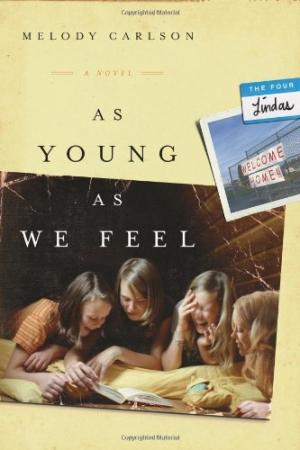
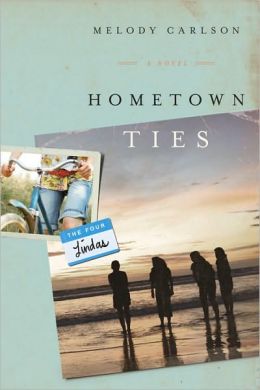
As Young as We Feel & Hometown Ties–Books 1 & 2 of the Four Lindas Series, by Melody Carlson

AYAWF9781434764959_p0_v1_s260x420There is something about summertime that makes you want to read books that go down easily.  After reading Book 1 of the Four Lindas series, As Young as We Feel, for our book club, I felt compelled to read the rest of the series.  Two down and two to go.

Once upon a time there were 4 young girls named Linda who lived in the small seaside town of Clifden, Oregon.  Linda Abigail, Linda Marlene, Linda Jane, and Linda Caroline.  They formed a club and a tight-knit friendship.

Book 1 catches up with the four Lindas, who now go by their middle names (Abby, Marley, Janie, and Caroline) at their 40 year high school reunion.  Life, as it often does, has taken them to different states and in different directions, so much so that all of them question what brought them together so many years ago other than their names.

After the unexpected death of a popular classmate at the reunion, the ladies start reevaluating their lives.  Abby, the only one who still lives in Clifden, is domestic and lives in a beautiful home, married to her high school sweetheart, Paul, yet feels unfulfilled.  Marley, the free spirit, has been living in Seattle and working in an art gallery since her divorce, but longs to be an artist herself.  Janie is a high-powered attorney living in New York and a recent widow who is ready for change.  Caroline is the guy magnet who looks years younger than her age, is a full-time waitress and part-time actress, and lives in the fast-paced world of Los Angeles.  Caroline’s mother also has Alzheimer’s Disease, and upon returning to Clifden and seeing her mother’s condition and the squalor in which she lives, has some tough decisions to make.

Melody Carlson is a master at character development.  Each chapter is named for one of the women, and she rotates through them, developing their individual and intertwined stories until the book is completed.  It is a basic, yet ingenious, system of making sure that each character gets her fair share of the reader’s attention.

In the end you are left with 4 women who are on new life paths and whose renewed friendship fortifies them to make courageous decisions.  Both books I’ve read so far are delightful and not saccharine at all.  On the contrary, the women deal with issues that are very real–aging parents, divorce, loneliness, distanced relationships with children, and the possibility of new loves. Their support of each other makes them each very pro-active as they meet their challenges head-on, with the expected bumps and self-doubt along the way.

Admittedly, these books are very much aimed at women readers, but there is nothing wrong with that.  I would recommend them to anyone, but I think women over 40 would really relate with the characters.  After 2 books I feel I know them well, want them to succeed and be happy, and can’t wait to see what happens next.  Each book is a 2-3 day read. Easy, fun and relaxing. I cannot remember when I’ve enjoyed reading so much.

Book 3 is called All for One, and Book 4 is Here’s to Friends.  There is also a section of the author’s website devoted to the series, found HERE.

9.5/10 Stars

Fiction, History

We the Living, by Ayn Rand

WeTheLiving_paperback__33059.1363219081.1280.1280I was just reading a quote that says “The happiest people don’t have the best of everything, they just make the best of everything.”  A documentary called HAPPY (available on Netflix,) shows that people’s levels of happiness around the world is based on things other than material possessions, mainly family and a connection and contribution to society.  Years ago, a 20/20 special on happiness concluded that a large part is based on the control we have over our own lives.

Keeping all of these things in mind, I now reflect on the melancholy characters in Ayn Rand’s We the Living–her first novel. Focusing on Communist Russia in the post-Lenin time period between WWI and WWII, Ayn Rand is quoted as saying that this was the most autobiographical book she would ever write.  She also said that it was her intention to show the destructive powers of a dictatorial government on society no matter the time or country, whether it be Russia, Nazi Germany, or any other.

“Destructive” is the key word in defining Communism’s effects as we follow three main characters on their journeys to survive and endure a world that is quickly becoming more and more restrictive.  Kira, the character who the author loosely based on herself, arrives in Petrograd with her family after being away during the war years.  Akin to Ayn Rand, her bourgeois parentage is like a social stain as she tries to become part of the new society.  Leo, the son of a an executed government rebel, and Andre, an orphaned war vet on the rise in the government, are the two men she becomes involved with, each fulfilling separate needs within her.  Each begins with an agenda that changes as times become more desperate.

Ayn Rand excels in character development.  Even the government feels like it own character–perhaps the strongest, most consistent, antagonist of them all–as we see what happens when choices and ambitions of the Individual are stripped away.  This is a time when your devotion to country and state is everything, and your patriotism is constantly being questioned.

There is also a multitude of supporting characters–parents, siblings, cousins, friends–who, although taking on minor roles in the story, take on major roles in emphasizing what was happening at the time.  No one was immune to Communism’s control, and woe be to you if you did not yield to it. But “yield” is a relative term, because different people react in different ways to such control, and “self-preservation” has many faces.

Ayn Rand’s husband, who encouraged her to write this book, said she was the first person to escape Communist Russia who could write an honest, first-person account of what it was like to live there.  And she was quoted as saying that she could not fathom how some Americans thought that Communism was a noble idea, philosophically, while demonizing what was actually happening to the Russian people. But like we see today, using North Korea as an example, the government even tried to control the outside world’s perception.  Russia was probably more successful simply because of the limited technology and media influence of the time.

However, when you read this book you will see there is nothing noble about the government controlling every aspect of its citizens’ lives.  I hear people saying that the US is headed in this direction and I cringe.  If you think that, reading this book will give you an entirely new perspective.  We may not live in the “home of the free” in its most idyllic, shiny sense, but we are nowhere close to what these people endured and from which they are still trying to recover. This book is an eye-opener, and a crucial read.

10/10 Stars

Fiction, Romance

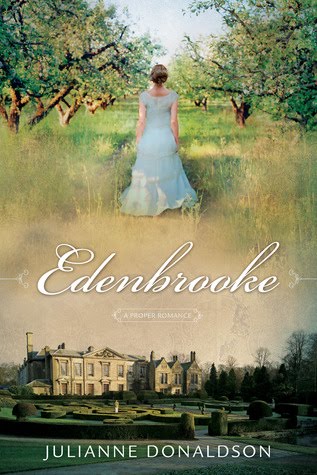
Edenbrooke, by Julianne Donaldson

edenbrooke

Two book reviews in two days is very unusual for me, but Edenbrooke, our April book club selection, was a quick and frothy read.  Whereas as The Immortal Life of Henrietta Lacks was like a steak dinner with baked potato, Edenbrooke is like a small bowl of chocolate mousse at the end of the meal.  That doesn’t mean it wasn’t enjoyable, because it was, but like chocolate mousse it is predictably light and far from life-changing.  Although I will say that it was a nice literary escape between two demanding books on my reading list.

Set in the English countryside, the story centers around the awkward half of a set of twins, Marianne Daventry.  She is attractive and unassuming, a composite of Elizabeth Bennett in Pride and Prejudice and Jo March in Little Women.  Her sister, Cecily, reminds me of a cross between Jo’s sister, Amy, and Blanche Ingram in Jane Eyre.  And therein lies a bit of criticism of the story–almost everything about it seems borrowed from the classic romance stories of that era.

There were a few twists that I did not expect, and some excitement at the beginning and the end involving danger and intrigue, but the story is, for the most part, quite predictable. It is more about the journey than the destination.

Still, to be fair, I will state again that I did enjoy it.  It is a clean story that manages to keep the reader’s attention. I sincerely wanted to find out everything that happened to the characters.  Would I recommend it?  I suppose.  One cannot read heavy, intense books all the time, and Edenbrooke was the perfect respite.

So, within its genre, I would give it 8/10 stars

Fiction

Leave it to Jeeves, by P.G. Wodehouse

2940012592675_p0_v1_s260x420

Yes, I’m experimenting with a new blog template…

And no, don’t let the plain cover fool you, these stories are hilarious.  The man whose picture is on the cover is British humorist, Sir Pelham Grenvile Wodehouse, also known as P.G. Wodehouse.  I found this collection of stories while browsing through some of the free Kindle books, and what a delightful find it was.

The two main characters are the rich but bumbling, Bertie Wooster and his highly resourceful valet, Jeeves.  When you think of the consummate “gentleman’s personal gentleman” who can anticipate the needs and desires of his employer, Jeeves is your man.

Between Wooster’s money, connections, and life of leisure, and Jeeves’ intelligence and creativity in getting his boss and many of his friends out of various scrapes, you have a collection of stories quite unlike any other.  They are well thought out, unique, and with surprise endings, each of them, as Jeeves shows that a man in service has much more intelligence than one who is given everything without laboring for it.  And, although Wooster is the employer, it is he who is more dependent on Jeeves than the other way around, as he states more than once.

You see these two evading the inquiries of a nosy aunt, helping friends and cousins both in Britain and the US, and doing it all with humorous panache.  They are the perfect pre-bedtime stories and endlessly enjoyable.

9.5 out of 10 Stars


Fiction

Sweet Misfortune, by Kevin A. Milne

sweet-misfortune

Sweet Misfortune was our recent book club selection.  Ponder the idea of defining moments in our lives.  How much do they define us?  How great is their influence?

In the case of Sophie Jones, the answer is “quite a bit.”

A birthday, a fortune cookie, and a devastating car crash for which she blamed herself.  These are the events that set things in motion.

Few of us will ever experience anything as cataclysmic as this, but I still found myself getting impatient with Sophie at the beginning.  She is grown now, owner of a successful business, even loved by those in her inner circle, but she is bitter.  The accident of her childhood did not leave her physically impaired, but it has scarred her emotionally.  She is cynical, mistrusting, and fatalistic.

As I said, I have little patience with bitter and negative people, because I do feel that we all have the power to make our lives better.  Perhaps this shows lack of compassion on my part, but too often I have seen people use their past as an excuse to be rude or act entitled.  Sophie does not subscribe to this way of thinking.  My only hope as I continued reading was that her life, and therefore, her mood, would improve.

In her case, the key was closure.  Several people were involved in that multi-car accident when she was a child.  Others died besides her family.  It affected many for the long term, forcing them to make the same life decision–how much would they let that night define them?  Would they take power over the event, or let it take power over them?

As the story unfolds, and of course I don’t want to add any major spoilers, Sophie takes a journey back in time to piece together what happened that night and what has become of the other families.  Some things are slightly predictable, some are surprising, all lead her to new conclusions about her life, her future, and who she is going to keep close.

I would recommend this book.  It is light reading and, happily, without any offensive language or scenes.  The idea of “Happiness” and its meaning is a recurring theme, which makes the reader start to think, “How would I define Happiness?”  “By events? Feelings? Faith?  Relationships?”

A quick read with a good message.

8.5/10  Stars

Fiction

The Walk, by Richard Paul Evans

There is a group of authors that write what I call “light fiction.”  Richard Paul Evans, Nicholas Sparks, Mitch Albom all fall into this category.  There isn’t anything particularly groundbreaking about their writing, they aren’t part of a movement or trend (zombies, vampires,) and they steer away from controversy (The DaVinci Code, 50 Shades of Grey.)  But they tell decent stories that keep your attention, and they seem to churn them out at a remarkable rate.  Plus, their books are comfortable and their subjects are familiar.  We need that sometimes.  It is like drinking milk or listening to Barry Manilow.  We know they are formulaic, but we don’t care.

Something else these authors do is tap into the normal human experiences of love and loss and being touched by someone along Life’s path.  We can all relate to that. They are the relationships that enrich us and create extraordinary experiences among ordinary lives.  They make our existence magical, if only in brief chapters–a mentor, a teacher, a friendship, a fleeting love affair, or even someone we met on the street.

Let’s focus on the concept of loss, because that is the topic of The Walk.  Think about it–what would you do if you lost everything?  Your spouse, your business, your home?  Would you become numb?  Consider ending it all?

The cruelest thing about loss is that while your world is crumbling, the rest of the world moves on without you. The sun continues to rise and set each day.  People go on with their lives.  Condolences–although appreciated and well-meaning–don’t take the hurt or confusion away.

The main character, Alan, deals with his loss in an unusual way.  He decides to go walking.  Across the country.  It’s simple and productive, and he’s hoping it will alleviate his pain.

And where does God fit into loss?  There are people who need someone to blame, so they blame God.  He’s an easy target.  You can’t see Him and He isn’t going to get into an argument with you.  You feel like the “supposed” winner.  Or maybe winner by forfeit.

Ally, a waitress Alan encounters in the book, makes a profound observation. People tend to blame God for taking things away from us, but how often do they remember that He was the one who gave them to us in the first place?

As I said, The Walk isn’t trying to cure cancer.  But it is a thoughtful, quick read with relatable characters.  And, let’s face it, loss is something we all have in common.  How we deal with it, however, is very personal.

7.5/10 Stars

Entertainment, Fiction, History

The World of Downton Abbey, by Jessica Fellowes

As an admitted Anglophile who is completely swept up in the current Downton Abbey craze, I couldn’t wait to get my hands on the companion book.  Not only did I expect it to have beautiful pictures (which it does,) but I also thought it would be a fun way to satisfy my hunger for more information on the fictional Crawley family and the time in which they lived.

If you are unaware of what Downton Abbey is, it is a mini-series on PBS set in the years surrounding WWI.  Downton Abbey is the estate belonging to the Crawley family, the patriarch of which is the 5th Earl of Grantham.  The estate, as was the custom, has been handed down to male heirs throughout the years since it was originally bought in the 1600’s.  Robert and Cora Crawley, however, have been blessed with 3 daughters and no sons, which creates an obstacle in the inheritance of the estate.  That obstacle increases when the next heirs, a male cousin and his son, drown during the Titanic‘s sinking in 1912.

What follows is a series of events that are made more intriguing by the fact that they are happening to an aristocratic family with daughters that need to be married off, a family estate that needs a future owner, and a bevy of servants downstairs who are accompanied by their own set of issues. The class system continues downstairs as well, with the butler at the head and the kitchen maids near the bottom.  There are secrets, mysteries, unrequited love affairs, schemes, and other storylines that keep the plot moving forward in a clever and entertaining way.

The Downton Abbey Companion Book does a satisfactory job of being no more than what it claims to be– a “companion.”  It does not give away any of the plot beyond the first season. There are a few behind-the-scenes anecdotes, some history of the house that is used (Highclere Castle,) and explanation of the work that is done to preserve the time period’s authenticity.

But what I most appreciated in the book are the tidbits on real-life people who lived during that time; people upon whom some of the characters are based.  There are quotes from duchesses, butlers, footmen, maids, and others who lived the time and its required customs.  If nothing else, it makes you appreciate the efforts of the writers and production team to create a realistic setting for a fictional family during a time in history when their way of life was slowly becoming more and more obsolete.

The book’s author, Jessica Fellowes, is an author and free-land journalist.  She is also the niece of Julian Fellowes, who is the creator and writer of Downton Abbey.

If it seems odd to include a television companion book on a book review site, my only excuse is my love for this series and the fact that it reads like a book.  And, because the characters are so well thought out, it is refreshing to read about some of their backgrounds, which is provided in the book.  We learn about the history of the house in the series, the courtship of Robert and Cora, and the expectations of everyone in their distinctive social standings.

In fulfilling its intended purpose, the Downton Abbey Companion Book is quite successful.

9/10 Stars

Children, Fantasy, Fiction, Young Adult

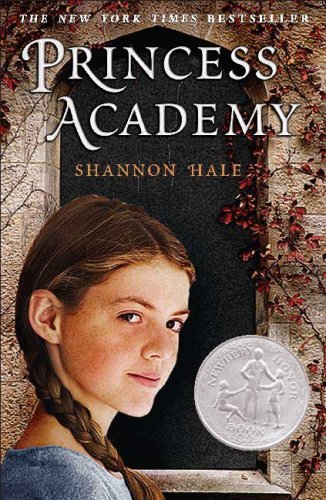
Princess Academy, by Shannon Hale

One of the great things about being in a book club is that you get exposed to books and authors that you’ve never heard of before.  After reading several books with heavy themes, it was suggested that we treat ourselves to something a little lighter, even a kids’ book.  We chose The Princess Academy, by Shannon Hale.

Ironically, I already owned the book.  I had been shopping at Target a few months before, and was somehow drawn to this book.  Maybe it was the earnest look on the girl’s face, maybe it was the words “bestseller” and “Newbery Honor book.”  Either way, it sounded interesting.

Technically, you could call the book a fantasy.  But it is one of those fantasies that feels like it could really happen.  The protagonist, Miri, is part of a group of “highlanders” in a fictional land.  The village’s people all work in a quarry, digging a valuable stone out of the earth that is not available anywhere else.  That life is all they know.  They have families, they work in the quarry, and, periodically, the crafty “lowlander” merchants come and buy the stone from them to sell at a profit.  The lowlanders view the highlanders as backward and ignorant.  But many of the highlanders who work in the quarry have a special “gift” that no one else has.

Miri, who lives with her sister and father, soon experiences an interruption in her peaceful life.  The nation’s young prince needs to find a wife, and it has been revealed that the future princess must come from the highlander people.  The only way to prepare for such a thing is to have a “princess academy,” which will train the youngest daughters of each family in ways of grace and gentility.  Only after they have received their sufficient training will the prince choose his future bride.

The idea of the story sounds a little far-fetched, but it works.  Miri is a strong-willed, but charming character who you want to succeed.  She endures prejudice, greed, competition, and even some physical abuse while at the academy.  The dynamics between the girls and their motivations for winning the prince’s affections are fun and interesting to read about.  There are jealousies and alliances, leaders and followers, but all of them benefit from the education.  Miri even learns some things that benefit her entire town.  Ruling over the girls is a strict teacher named Olana, and even she experiences some growth in the course of the story.

There is a crisis towards the end that, I feel, seems a bit contrived, but the story needed something to show how the girls could work together when necessary.

As a whole, this is a very unique tale with a surprise ending.  I think it is this uniqueness, plus the engaging characters and writing that rarely lags, that make this an appealing book.  It is appropriate for all ages.

8.5/10 Stars

Children, Fiction

Danny, the Champion of the World, by Roald Dahl

One of the reasons why Roald Dahl’s books have remained so popular over the years, is because he treats the children in his stories the way kids want to be treated.  And he does the same thing to his readers.  I first discovered Danny, The Champion of the World as a 9 year old 4th grader, and it was the first book I ever read where I felt a complete connection with the author and the characters.  Roald Dahl’s messages to kids are simple, yet profound:  You matter.  You’re important.  Your ideas are worth sharing.  There is validity in what you contribute to the world, and it doesn’t matter that you’re a kid.

Most of Roald Dahl’s books center around a child in a peculiar circumstance that has an adult ally and plenty of obstacles to overcome.  In Danny, our young protagonist lives with his father in a gypsy caravan in a small English village where they maintain the local filling station and garage.  Danny goes to school and endures the daily tyranny of his teacher, Captain Lancaster.  When at home, he and his father work on cars together and lead a simple, but fulfilling life.  The bond between these two is extremely close. Danny absolutely worships his dad, who tells him fantastic tales every night before bed.

But one evening, Danny’s father nearly falls from his pedestal when he reveals a secret to his son about a late-night hobby– poaching (stealing) pheasants off the land of a wealthy landowner.  Danny must come to terms with this news and decide how to deal with it.

What follows is a father/son adventure of the wildest sort, which involves local villagers, the constable, and even the preacher’s wife!

There are fun, fantastic stories, and there is excellent storytelling.  Danny has both.  One minute you are whisked away in a high-flying balloon and the next you are crawling along in the dark with Danny and his dad on a midnight mission.  Few authors, of children’s or adult books, can bring language to life the Roald Dahl can, and this book is one of his treasures.  It isn’t his most well-known, (most know Dahl as the author of Charlie and the Chocolate Factory and James and the Giant Peach,) but I think it is his best.  I have read it to many of my elementary school classes over the years and it never ceases to mesmerize.

10/10 Stars

Fiction, History

A Thousand Splendid Suns, by Khaled Hosseini

How is it that some writers can blend depth and simplicity, happiness and sorrow, and beauty and disgust all in one amazing tale? That is what Khaled Hosseini has done in A Thousand Splendid Suns.

The book is the story of 2 women. There is Mariam, an illegitimate daughter of her town’s most respected businessman. She lives in a hovel with her cynical and disillusioned mother.

There is Laila, the daughter of a forward-thinking schoolteacher and a mother who is vibrant and outgoing.

The book is divided into four parts. Part 1 is Mariam’s story, which is filled with hopes, determination, and years of emotional numbness after circumstances force her into a harsh marriage.

Part 2 is Laila’s story, which is filled with love, tenderness, loss and redemption. I don’t want to give anything away, so forgive my sketchy descriptions.

Part 3 is where these women’s lives meet, then intersect, then become entwined out of circumstance, necessity, and, ultimately, sacrifice.

Part 4 is where they part ways, each finding a new kind of peace and tranquility and even fulfillment. Although they part ways, they are still very much entwined with each other.

During the tales you see the disintegration of society in Afghanistan. Happy families are torn apart by death and political upheaval. Thriving cities are now piles of rubble ruled over by warlords who are merciless. Rules are imposed that remind you of what the Jews had to endure in Nazi Germany, only this time it is the Afghan women who are being oppressed.

But through it all you see the indomitable spirits of these women. They find a way to survive the most incredible challenges. They love, they hope, they plan for the future. They try to create normalcy for their children. They shake their heads at the men riding by in the backs of trucks with their rifles and airs of self-importance. They even stay optimistic that their lot in life will eventually change.

This book in amazing, just as I expected it to be after my previous experience with Hosseini’s The Kite Runner. Despite the subject matter, it is extremely fast reading. I learned and understand more about the plight of the Afghan people from A Thousand Splendid Suns than anything I’ve seen or heard from the media.

I’m sure I’m not the only one who watches those news stories about the Middle East with a sense of mild apathy. After all, those countries are always fighting amongst themselves and with others. There are so many names of leaders, cities, warlords, and factions we don’t understand. I know my sympathy has diluted over the years because all of these problems seem to melt together until one isn’t distinguishable from the other.

What I most appreciated about this book is that the reader gets an inside perspective of what life was like before, during, and after the Taliban took over the main cities of Afghanistan. You see how lives change. I, personally, felt thankful for having been born in the USA (which is something I haven’t done in a long time.)

Give yourself the gift of an amazing read that will leave you with knowledge of a forgotten group of people–the women of Afghanistan–and a heightened sense of compassion for everyone. Read Khaled Hosseini’s A Thousand Splendid Suns. It will stay with you for a long time.

10/10 Stars

Fiction

Cold Sassy Tree, by Olive Ann Burns

When I was in college and flying back and forth between Utah and California, there were 2 books that always came with me on the airplane, Jane Eyre and Cold Sassy Tree.  I remember specifically my introduction to Jane Eyre, but I cannot, for the life of me, remember how I discovered Cold Sassy Tree.  I do know that it has been a book I have revisited many times like an old friend, always ready to greet me with its characters and multiple storylines.

Cold Sassy Tree takes place at the turn of the century in Cold Sassy, Georgia.  It centers around a boy and his grandpa.  The boy, Will Tweedy, is 14 years old and experiencing life as most boys that age.  He is caught between childhood and adulthood, surging with hormones, and at the point where rules are not as black and white as they used to be.  He has just lost his best friend and confidante, Bluford Jackson, to a freak accident.  One thing he has no doubt about, though, is his love for his grandpa, E. Rucker Blakeslee, owner of the general store, several homes, and a recent widower.  Rules don’t mean much to him either, but for different reasons.  Rucker feels he has lived enough years that he is entitled to do what he wants.

To prove his point, Rucker shocks his family and the town by eloping with his milliner less than 3 weeks after his wife dies.  Love Simpson is young, brash, flamboyant and, Heaven forbid–a Yankee!

This causes a lot of upheaval in a town that is usually free of scandal, not to mention the embarrassment to Rucker’s 2 daughters and their families.  His only ally seems to be his grandson, Will, who watches his grandpa with a mixture of fear, respect, and awe. Rucker begins stretching social boundaries more and more, even having church in his own living room to show up the ladies of the town who are not accepting of his new, much-younger wife.  Miss Love, herself, is a breath of fresh air in Rucker’s life, bringing new ideas  and a renewed sense of self-worth to the old man.

Cold Sassy Tree is all about good, old-fashioned storytelling.  It is not trying to be something lofty, and yet, because the story is told from Will Tweedy’s viewpoint, we find ourselves discovering life right alongside him.  As he deals with feelings about his grandpa, his parents, his best friend’s death, first love, elitism, racism, and other issues, I found myself transported.  The fact that these issues are dealt with in an entertaining, not heavy-handed way, makes the story all the more special.

The authoress, Olive Ann Burns, died shortly after writing Cold Sassy Tree and in the midst of writing a sequel, called Leaving Cold Sassy.  Sadly, and not because it was unfinished, lightening did not strike a second time with that book.  The original Cold Sassy book ends very satisfactorily, as you wish the remaining characters well and thank them for the glimpse they allowed you into their lives during that hot, scandalous summer.

It is a delightful read that all ages can enjoy.

9/10 Stars