Faith, Nonfiction, Religion, Self-Help

All These Things Shall give Thee Experience, by Neal A. Maxwell

1123897

One of the most beloved apostles in the Church of Jesus Christ of Latter-day Saints is Elder Neal A. Maxwell. Known for his compassion and his intelligence, Elder Maxwell passed away in 2004 after an eight year battle with leukemia.

At the time of his passing I was in the middle of a self-imposed “hiatus” from Church activity and, although I feel it was something that I, personally, needed to go through in order to shape who I am today, I do not recommend it. It was, in retrospect, both a waste of time and time wasted (not the same thing.) There are so many things I do not know but want to know and so many things I want to learn that I could’ve pursued years ago.

One of those things about which I’ve felt a recent desire to become better acquainted with the lives and teachings of Church leaders, past and present. Elder Maxwell has always been in my peripheral vision but it wasn’t until recently, while in the midst of several exhausting weeks of different trials and challenges, that I decided to read this particular book. It had been sitting for years, unopened, in my Deseret Bookshelf app. I read about two thirds of it and listened to the last third, read by Elder Maxwell himself in that fatherly voice of his, one that exudes both care and concern.

My immediate impression was that Neal A. Maxwell crafts his thoughts with the same quality as Mozart writing a symphony or da Vinci creating the Mona Lisa. This is not an exaggeration. He is one of the most masterful, exquisite writers I’ve ever encountered. But, like any masterful work, appreciating it requires focus and study. This is not a book you can skim or listen to in the background. While I did do some multi-tasking while listening, those tasks had to be fairly mindless in order to pay attention and ponder the messages.

If I had to choose 3 favorite chapters it would be these:

  • The Omniscience of an Omnipotent and Omniloving God
  • Prayer and Growth
  • Follow the Brethren

All of these chapters resonated with me for different reasons. Going into great detail about God’s omniscience helps us to understand that challenges help to shape us to become like Him one day, which should be our ultimate goal. Learning how to pray in a way God can answer has been a recent personal pursuit, so I was happy to learn more on the subject. Following the brethren (leaders) is a strong pep talk of a chapter, but sometimes tough love is the best course, especially when the only agenda behind that pep talk is to help the reader self-reflect and improve.

I learned a lot of things that I need to consider in my own life, especially when things are difficult. I also understand, more than ever, why Neal A. Maxwell was so revered. He KNOWS people, how they tick, how they function, how they act and react. I was amazed at his perception. This book is a treasure.

10/10 Stars

Biography, Faith, Nonfiction

Insights from a Prophet’s Life: Russell M. Nelson, by Sheri Dew

Insights_from_a_Prophet_s_Life_-_Russell_M._Nelson_580xWhen you have an incredible subject like Russell M. Nelson and a gifted writer like Sheri Dew, you have the recipe for success. This was, hands down, one of the best biographies I’ve ever read (heard as an audiobook.)

As someone who has loved biographies since I was a child, my standards are fairly high, and Insights From a Prophet’s Life not only met those standards, but exceeded them. What a fascinating man!

I was prepared to be impressed, but I was left amazed. Yes, he is a brilliant and well-respected heart surgeon; yes, he is a devoted husband and father; yes, he is a faithful servant in the Church of Jesus Christ of Latter-day Saints, but there are many, many stories between these milestones. And, despite his gifts, hard-work, and humility, he has not escaped tragedy. The chapter on his first wife’s passing is heartbreaking. The chapter on his courtship with his second wife is optimistic.

Russell-M-Nelson-Newsbio-young-Russell-and-Dantzel-1024x768
Russell M. Nelson and his first wife, Dantzel
dr-nelson-heart-surgeon-5563A
Dr. Russell M. Nelson, heart surgeon

All of his experiences, including adapting to the changing world as a surgeon and spiritual leader are inspiring. Everything he does is with an enormous amount of faith and discipline.

By the end I was entertained, motivated, impressed, delighted, and honored to learn more about our dear President Nelson.

10/10 Stars

Bonus Link: Author/Deseret Book CEO, Sheri Dew, discusses writing about Russell M. Nelson in the ALL IN podcast. Click HERE.


Biography, Nonfiction

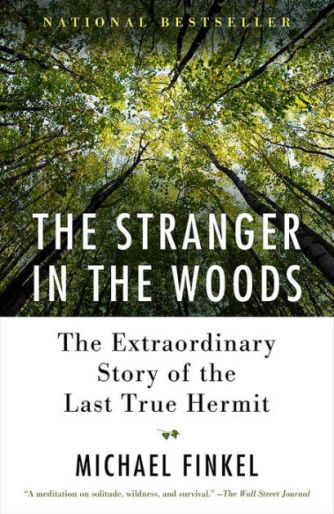
The Stranger in the Woods, by Michael Finkel

strangerwoods

Once upon a time there was a young man from Massachusetts named Christopher Knight who walked into the Maine woods and away from society…for 27 years. He didn’t tell his family, he had no friends, and he abandoned his car.

This is the beginning of the strange but true story of the North Pond Hermit, a man who shunned society but was still dependent on it. While living in a tree-covered clearing deep in the forest, Knight subsisted on food and supplies from twice-monthly raids of nearby cabins. His burglaries numbered into the hundreds.

Besides food he also stole clothing, bedding, a TV, watches, batteries, propane, and reading material–lots and lots of reading material. Meanwhile, the nearby residents didn’t know what to think. Some felt sorry for him, some wanted to help him, but many were enraged.

Knight’s nighttime escapades culminated into one final burglary of a summer camp kitchen, where he was finally apprehended and came to the attention of the author, Michael Finkel, who was determined to write Knight’s story.

The writing style is entertaining and economical, much like Knight himself (whose legal issues continue to this day.) Like the local residents, I was conflicted about Christopher Knight. Living off the grid is one thing, but breaking the law and violating peoples’ property and sense of security is something else. One thing that’s undeniable, however, it’s a fascinating story.

9/10 Stars

Faith, Nonfiction, Religion

Worth the Wrestle, by Sheri Dew

worthwrestle

There is a vast spectrum between belief in God and non-belief. There is also a large spectrum within the range of belief. In the course of our life this is something that everyone must self-evaluate at least once. Our belief system, after all, shapes who we are, what we do, and how we interact with others. Am I a Christian or not? Do I believe in God or not? Do I adhere to the doctrine of an organized religion or not? Am I satisfied with my belief system or not? All of us have answered these questions, either in quiet solitude or aloud.

It is only fair to tell the reader of this post two important things: 1. This blog is maintained and written by a member of the Church of Jesus Christ of Latter-day Saints. 2. While not strictly for a Latter-day Saint audience, Sheri Dew’s Worth the Wrestle is directed mostly towards members of this particular church.

Having said that, and knowing what one is getting into when reading this book, its audience is well, anyone. If you are a seeker of faith, a student of religion, a Latter-day Saint who is struggling, a Latter-day Saint whose testimony is strong but needs a booster shot, or even a curious person with any belief system who seeks important suggestions for a happier life, then this book is for you.

Sheri Dew has been blessed with a wonderful gift of expression. Her messages are simple, but the outcome is undeniable. She uses examples from her own life when she encountered situations that could have threatened her beliefs. Like all of us, she has wrestled. She knows of what she speaks, and does so brilliantly. However, unlike all of us, she has emerged victorious from that wrestle with her initial beliefs intact. She also gives examples of friends and acquaintances who have wrestled with their faith. What is the common denominator for those, like Sheri Dew, who are able to heal from their spiritual slumps? True humility and true desire to find their way back. The outcome for the humble person versus the obstinate one is profound.

I listened to the audio version of this book on Deseret Bookshelf PLUS, a treasure trove of faith-based materials available to anyone. Sheri Dew, the current CEO of Deseret Book, reads her own words, making them all the more poignant and expressive. At the book’s conclusion I was fortified, spiritually uplifted, and informed. All good things.

9.5/10 Stars

Nonfiction, Self-Help

The Ultimate Guide to Menstrual Cups, by Jackie Bolen

ultimatemenstrualcups

I have a new project! I’ve been researching ecological, cruelty-free health and beauty products over the last several months (one of the reasons why this blog went dormant for a while.) This quest has led me to reusable menstrual products, mainly menstrual cups. (All together now…”eewwww.” And now, “What the heck is a menstrual cup?”)

Developed in the 1800s, redesigned in the 1930’s, and finally coming into prominence in the last decade, menstrual cups are similar to tampons, except that they collect the flow instead of absorbing it. Made of medical-grade silicon or TPE (thermoplastic elastomer,) they are healthier (virtually no risk of TSS!), more comfortable, and more economical. Choosing the right one, however, is a process that requires time, patience, knowledge, and research.

I have learned A LOT about these little marvels recently, enough to know that the limited resources of information vary greatly in their quality. There are only a small handful of websites and Youtube channels that I would recommend. There is, however, only one book I would recommend, and that is this one, The Ultimate Guide to Menstrual Cups, by Jackie Bolen. It is only available in ebook form, and is on Amazon for $4.49.

The book is concise, informative, and thorough. In my experience, potential users always have the same questions and this book addresses all of them.

9.5/10 Stars

Nonfiction, Philosophy, Self-Help

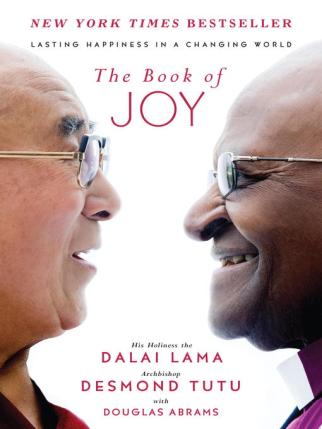
The Book of Joy, by Douglas Abrams

bookofjoy

Despite having only met a handful of times, the Dalai Lama and Anglican Archbishop Tutu are terrific friends. Their mutual love, respect, generosity, and self-deprecating humor is wonderful to witness. The Book of Joy, by Douglas Abrams, chronicles a meeting spanning several days in which the author both observes and asks questions of these two revered spiritual leaders. The questions are about joy, happiness, the toxic state of the world and how to find joy and happiness within it. There are also questions regarding their personal lives, experiences, and challenges.

Both men have overcome great obstacles in regards to health and national politics. Both have had to adapt their spirituality and personal philosophies to the changing world. Both are highly disciplined (although the Dalai Lama clearly excels in this trait.) They also differ in many ways. Archbishop Tutu is a Christian, the Dalai Lama is a self-described “non-theist” Buddhist. The archbishop is married with children, the Dalai Lama leads a celibate lifestyle. The archbishop chose his path in life, while the Dalai Lama was sought out and plucked from his very large family at the age of 3 to fulfill his spiritual obligations.

The book could be described as “pleasant.” But I cannot describe it as groundbreaking. It is endearing to see the banter between the men and to hear about their histories, especially the Dalai Lama’s exile, but my interest did not go too far beyond this. The concepts of love, kindness, compassion, and forgiveness are, no doubt, very important, but I did not extrapolate any significant depth from the discussions. The Dalai Lama was always the one who initiated answers, while the archbishop usually “seconded” them. However, for a reader such as myself who believes in God and an afterlife, unlike the Dalai Lama (who frequently reminded the reader of this fact,) it often felt like a large puzzle piece was missing.

The person who doesn’t give himself enough credit is the author himself, who often contributed insights that elaborated and enhanced the discussions. As the book continued I found myself highlighting more and more of his thoughts. By the end, after color coding the contributions of all three men involved, the Dalai Lama had the most highlights, the author was second, and the archbishop was third.

Make no mistake, I do think an audience exists for this book. Someone who reveres these men more than myself, someone who is a nontheist or agnostic, someone who lacks personal or scriptural resources on joy and happiness, someone who wants to read a pleasant book about joy without digging too deep, someone who enjoys a wider range of reading material than myself…there are plenty who would enjoy this book very much. Sadly, my enjoyment had its limitations.

7.5/10 Stars


Biography, History, Nonfiction

The Tattooist of Auschwitz, by Heather Morris

1067891_1_08-22tattooist_standard

Stories of love, discipline, generosity, and resourcefulness that were born out of the Holocaust never fail to amaze me. But because of the atrocities of the time, I usually prefer to learn about them in a documentary. It’s much easier for me to devote an hour or two to this cruel period than several hours reading about it. Knowing this about myself, I began The Tattooist of Auschwitz with caution. Seeing the word “survival” on the cover also helped me. Whatever darkness endured by the main character it would ultimately be about…survival.

Armed with this knowledge and drawn in by Heather Morriss’s high-quality writing style, I began the story of Lale, a Jewish Slovakian man in his twenties who went to Auschwitz when concentration camps were still in their infancy. Quickly promoted from the assistant to the main tattooist responsible for carving thousands of permanent numbers into inmates’ arms, he was given access to more areas of the camp, afforded extra rations which he usually shared, and even came face to face with the “doctor of death” himself, Josef Mengele.

Through Lale’s eyes we are given a glimpse into the abominable creativity the Nazis used for dehumanizing those who crossed their paths. Any wrong move–or no move at all–brought death. The alternate side is how the craftiest and luckiest (often a factor) inmates survived from day to day, submissive on the outside, powerfully resolute on the inside.

This book reads very smoothly as we live through Lale’s three years at the hands of such doom. Every day could be his last. But, like other inspiring stories from this time, he triumphs again and again, helps many others, constantly dodges death, and even finds love.

The Tattooist of Auschwitz is a phenomenal book that deserves its many accolades. It is only graphic in its honest portrayal of events but never more than necessary. I appreciated that. There are also a few f-bombs, but I allow rare leniency on this because of the setting’s intensity.

Highly, highly recommended for mature teens and older. This would make a terrific book club selection or just for individual reading. It is uplifting in ways you would never expect but most importantly–it will change you.

A worthy 10/10 Stars


History, Nonfiction

The Radium Girls, by Kate Moore

radium girls

If you’ve never heard of the “radium girls” and their sensational trial in the mid 1930s, you’re not alone. Until reading this book, neither had I. But it is a piece of history that needed to be told.

After Marie and Pierre Curie discovered Radium in 1898 it became the “wonder element.” Radium was put into face creams and lotions, people drank radium-infused water, and its glowing properties were put to use in special paint at the Radium Dial Company in New Jersey. “Fortunate” women were hired to paint over numbers on watches worn by American GIs fighting in WWI. Later, radium watches and clocks were sold across the US.

f1
Example of a radium clock

The highly trained women who painted the dials made more money than most in the workforce. They could help their families and still afford expensive clothing. Others longed to follow in their glowing footsteps. That’s right, the dust from the workroom clung to them, making their glowing figures instantly recognizable as they walked home each evening.

Speed was of the essence and these women kept up, 6 days a week, long hours every day. Paid by the unit, they were trained to use the “lip, dip, paint” method, a quick way to give the brush that perfect point necessary for such delicate work.

But over time the radium worked its way in deeper than the women’s skin and hair. A toothache here, a painful hip there, a sore arm, and worse. Much, much worse. Radium poisoning was making its appearance, starting slowly until it could not be ignored.

Radium Girls tells the story of these women and what they endured physically, emotionally, and financially as their health issues began dominating their lives. Eventually their illnesses forced the medical community to connect the dots and someone needed to be held accountable. So began the lawsuits against Radium Dial, who, for years, stubbornly refuted all accusations.

The book is important and I’m so grateful to finally know of this segment of history, one you would never learn about in school. These women’s suffering cannot be overstated, as you read believing…hoping…knowing that surely the company will be made to pay, right? Sometimes the company’s reactions were so, so frustrating.

A very impressive recounting of the events and, although long in coming, the vindication these women deserve.

9/10 Stars

June 2020 Update: This morning I learned that Radium Girls has been made into a film, set to release last April, but delayed due to COVID-19. This is a story that was crying out for more attention. I hope the film does it justice. More info is available HERE.


Nonfiction, Philosophy, Self-Help

The Majesty of Calmness, by William George Jordan

majesty-of-calmness

The path of truth, higher living, truer development in every phase of life, is never shut from the individual–until he closes it himself. Let man feel this, believe it and make this faith a real and living factor in his life and there are no limits to his progress.

The Majesty of Calmness can best be described as a handbook to Life. Published in 1900, its message is just as relevant today. It should be required reading for everyone, no matter their belief system, as it addresses and is respectful to all. One must read it with the mindset that we all need to improve. Reading it with the mindset that we have Life figured out because of age and experience will erode its wisdom.

The author suggests that Calmness as a state of mind is the ultimate achievement. Others may interpret it as an advanced state of Faith, but still a reachable goal we should all desire.

The author also discusses Happiness, Satisfaction, Contentment, and Pleasure—what they are and what they are not, which is most important, and how to achieve it. That power is innate and has nothing to do with the world’s definitions of success. Conversely, the author also addresses Cynicism, Negativity, Failure, and Comparison–their causes and the damage they do if we indulge them.

Self-realization of these things, plus a desire to always improve, helps us to attain that state of Calmness—the umbrella philosophy of the entire book—it becomes our silent companion in the best of times, preparing us for the worst.

The author’s observations of different types of people, emotions, and reactions is incredibly perceptive. He acknowledges that, yes, Life often is unfair and, yes, it seems like wickedness often prevails, but our behavior in challenging situations can still make us victorious, if only in our own mind.

I highly recommend this book. It’s only $1 on Amazon Kindle. It is subtle, but powerful, like a trusted friend helping to center us on a bad day, or a quiet prayer of supplication being answered.

10/10 Stars

Memoir, Nonfiction

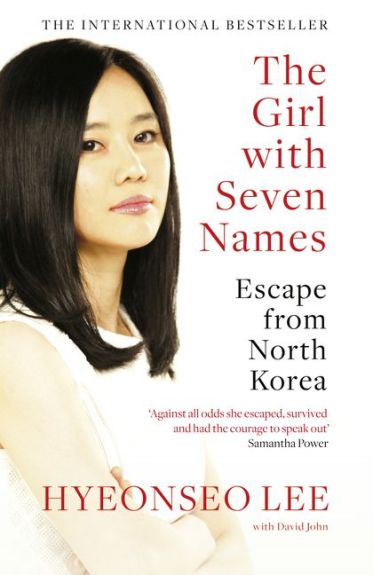
The Girl With Seven Names: Escape from North Korea, by Hyeonseo Lee

y648

The Girl With Seven Names is truly a fascinating read. With all of the news coverage about North Korea, there are thousands of little details which can only be learned from someone who grew up there. The first half of Ms. Lee’s story is her childhood. She describes the importance of “sonbung,” the caste system under which the culture operates. We learn about the way North Korean schools teach the children, indoctrinating them with a version of history and a filter through which to see the rest of world. Everyone lives in fear. No one knows who to trust. They are prisoners both physically and mentally.

The second half is about her journey leaving the country and her efforts to adjust beyond its borders. It is un…be…lie…vable. (I’m trying very hard not to include any spoilers!)

The concept of “names” is revisited often. Names and identification.

This motivated me to start thinking a lot about the origin of our identities. (See? I’m a wannabe college student.) Where do our identities come from? Our name? Our family? Our social status? Our religious beliefs? Our country? Notice how I’m working from the inside out…. I’ve never read a book where someone was forced to change their name so many times, usually to conceal her identity and try to assimilate in her current surroundings. But not always.

Although I expected to be awestruck at the extreme level of control the Kim Dynasty has over its people, there was something I did not expect. I did not expect to feel the compassion for the culture as much as I did upon completing the book. It’s hard to describe, but there is SO much we take for granted, even as we complain about our own governments in democratic nations. The fact that we CAN complain is something many people cannot even comprehend.

I can’t even imagine living in a country where you have to look over your shoulder every second of every day. Any control of one’s life is through rebellion. What we consider to be illegal and taboo becomes a way of life for many as they try to make a little extra money and maintain a sense of control (and sanity) that the government will not allow. Unfortunately, the consequences of this are negative as well. Not only is everyone trying to outsmart everyone else, but basic concepts like charity and kindness are completely foreign when there’s usually a hidden agenda.

Hyeonseo Lee has an extraordinary amount of “close calls.” But she also experiences what can only be explained as miracles. Those events are hopeful and truly faith-inspiring.

I highly, highly recommend The Girl With Seven Names. It would make a fantastic book club selection. At its core, it will change you, making you more appreciative for the freedoms we enjoy, and it will put your own challenges in a new perspective.

10/10 Stars  (Really, a MUST-read.)

(Here’s my disclaimer for sensitive readers: Although violence is described, it is not disturbingly graphic. The hardest section for me was reading about the years of famine. It’s a short section, but a heart-breaking one.)

*******************

Some extra observations about Educated vs. The Girl With Seven Names:

As I read The Girl With Seven Names, bracing myself for the grit, I started to realize why the “tough” scenes didn’t upset me quite as much as when I read Educated. Perhaps I was already inoculated and this is purely my opinion but, based on these two books, I think that growing up in an oppressive family might actually be harder than growing up in an oppressive nation. Make no mistake, BOTH are incredibly difficult and will have life-long effects on their victims. But it’s my belief that you except safety and support from your family. It’s a given (usually). Therefore the pain inflicted is much more personal and wounding because it’s from those you love and want to trust. In Educated I was amazed at how many times the author forgave and boomeranged back to her abusers. It’s because they were her family and she loved them–it was inconceivable to feel anything else.

Patriotism and duty to one’s country is more abstract. The disillusionment Hyeonseo Lee feels in Seven Names as she gets older is more about logic and fear of the outside world than love and a sense of obligation. If you do happen to read both books, you will understand why I’m lumping them together.


Memoir, Nonfiction

Educated, by Tara Westover

authors-evenings_tara-westover_educated

Yesterday I did two things I’ve never done: (1) I bought a book because it looked so interesting and the library “hold” queue was longer than I could wait. (2) I read until after 4am because I absolutely could NOT put it down and HAD to finish it.

This unbelievably gripping memoir is called Educated, by Tara Westover. When I say “gripping,” I mean wraps-its-literary-fingers-around-your-throat-and-doesn’t-let-go-kind-of-gripping. Take that as a warning.

Warm and fuzzy, it is not.

Some background on the author: Tara Westover was born into a Mormon survivalist family in southern Idaho. She’s the youngest of 7 children. Her father, who probably suffers from bipolar disorder and/or schizophrenia, abhors any and all agencies connected to the government. His family yields to the effects of his ever-growing paranoia. The children don’t go to school, they don’t see doctors, they have no birth certificates (they don’t even know their birthdays,) they have no friends, they’re cut off from most extended family, and they are made to think that preparation for the “End of Days” is top priority. There’s no TV, radio, or phone for years in their home. All they know is their father’s BIZARRE interpretation of life beyond Buck’s Peak, the mountain where they live. Over time, partly due to self-preservation but mostly due to an injury, their mother becomes mentally unhinged as well.

When I first started the book, the story seemed relatively “tame” compared to The Glass Castle, which many readers have used as an example of what to expect. Then I realized that the author was just “easing us in.” The chaos, the turmoil, and the emotional roller coaster her parents inflicted on their children is EXHAUSTING to read. But, I couldn’t stop reading.

We all know family relationships are complicated, but the relationships in this family are at a level most of us (thankfully) will never, ever experience. You’re left shaking your head that parents can so clearly love their children and still make the decisions they did about their physical safety and emotional welfare.

You read already knowing the ending, which is that Tara and two of her older brothers left that life and, with unbelievable tenacity and determination, attended prestigious universities and obtained PhDs. Everything between her birth and the present day is the journey about which she writes. That journey is a devastating one which became more and more difficult. She more she achieved, the more she realized how little she knew. She more she integrated within the university community, the less deserving she felt. Her memoir is only one part of what will probably be a lifelong healing process.

Still, her courage is inspiring. Her future is hopeful. Her story is unforgettable.

9.5/10 Stars

To learn more: tarawestover.com

A final caution: Tara suffers years of physical and emotional abuse at the hand of  one particular brother. It’s random, always unexpected, and horrific. In one of his rages, he also brutally kills his dog. These are things I really have a tough time reading about, so this is a disclaimer for those who are extra sensitive like myself.

Lastly, as member of the Church of Jesus Christ of Latter-day Saints (Mormon), let me emphasize that this is NOT a mainstream Mormon family, nor does the LDS Church sanction or teach behavior exhibited by the Westover parents. The father cloaks his “prophecies” and strange ideas in his religion, which just happens to be Mormon. The author does not vilify the LDS Church nor hold them responsible, which I appreciated.

Nonfiction, Religion, Self-Help

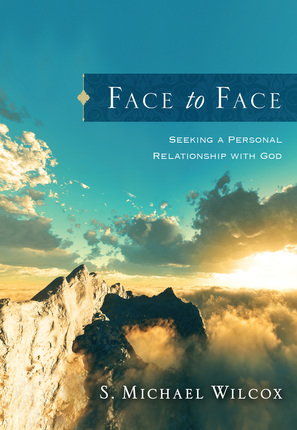
Face to Face: Seeking a Personal Relationship With God, by S. Michael Wilcox

ftoface

True confession time: I do not read a lot of Church books. I have bought a few by Church leaders or scholars I’ve heard speak in person, but usually end up giving them away or let them collect dust on a shelf. I just gravitate to other genres.

Still, I probably own more by S. Michael Wilcox than any other LDS writer, mainly because he is my favorite (and husband’s favorite) speaker at BYU Education Week. I try to attend every class he teaches and we own several of his talks on CDs that we listen to on the long drive home from Provo, Utah.

Three nights ago I was experiencing some inner turmoil. I had prayed for solace but felt inspired to take this book off the shelf and give it a real chance. That, in itself, was an answer to prayer. And yes, although Bro. Wilcox makes definite references to the Church of Jesus Christ of Latter-day Saints, the lessons, examples, most scriptures, and other references are not “LDS specific.” In fact, one of the greatest things about Bro. Wilcox–something that makes me respect him even more–is that, instead of negating the value of Christian writers outside his faith, he employs their teachings (positively) to edify the point he is trying to make.

I would call him a true “scholar of the humble heart.” In the spirit of extreme humility and courage, he uses very personal struggles from his own life as examples. Sometimes we look at men (and women) of faith such as Bro. Wilcox and assume that they have always been that way. Not so. He goes into great detail about times in his life where he has wrestled with doctrinal concepts, times where he was not the husband he now wishes he was, and the many times he has brought these challenges to God. More often than not, great patience was required before the answers came–but they did.

The difference between Bro. Wilcox and so many of us in our own prayerful wrestlings, is that he is more determined and more diligent than most. When one approach doesn’t work, he tries another. I love the way he creates conversations between himself and the Lord. I would never have the courage to do this. They are familiar, but loving and respectful. Example: “Mike, why don’t you ask me what you should pray for?”

I learned so much from this small 148-page book. Whatever your faith–even if you are new to prayer and conversing with our Father in Heaven–I recommend it. Highly.

9.5/10 Stars