Cozy Mysteries, Fiction, Women's Fiction

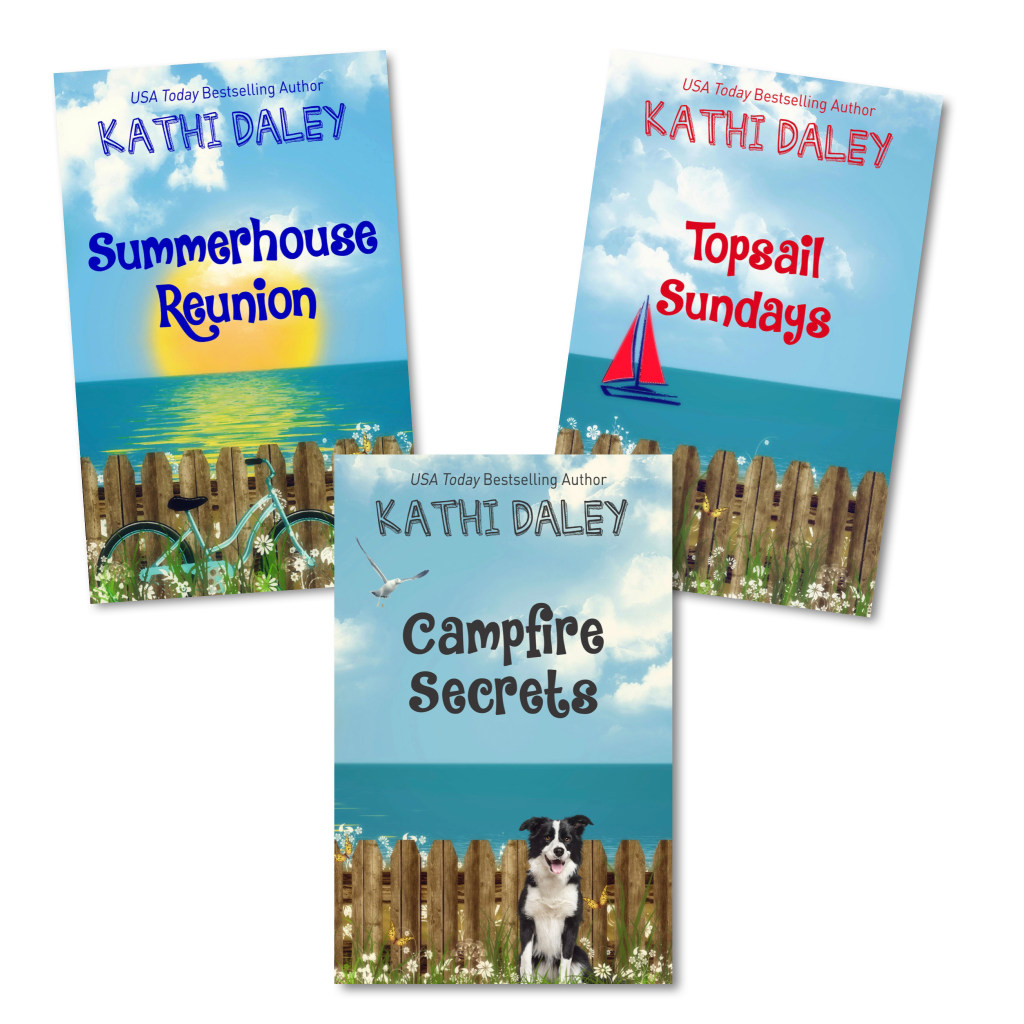
Island Reunion Series (Books 1-3,) by Kathi Daley

Six friends, including one who is recently deceased and one who mysteriously disappeared twenty five years ago.

In the present we hear the voice of Kelly, one of the six, whose twin sister, Kayla, has recently passed away. Kelly, along with the remaining three friends Carrie, Nora, and Quinn, have plans to reunite in a rented house that once belonged to Kelly’s family. Meanwhile, on the fictional Shipwreck Island, patterns emerge of other teenage girls who have vanished over the years.

Throughout the Island Reunion series the women share their highs and lows, mourn Kayla’s passing, investigate the decades-old mystery of their missing friend, Peggy, and try to move forward from their individual life challenges. Now in their early forties, all of them have reached an impasse.

Despite the many characters, Kathi Daley does not bombard the reader. New characters are introduced at a pace that allows you to get to know a few at a time. The writing is fluid and comfortable. The dialogue feels realistic. Some romance and intrigue is peppered throughout. The final book was my least favorite of the three, but it tied up loose ends nicely and confirmed one prediction I made earlier.

I would definitely call this “women’s fiction,” bordering on cozy mysteries, although the plot is unlike any of the cozy mysteries I’ve read in the past. It was quick and light but the characters and plot had substance. All have clean language–good “pandemic” reading to pass a few hours. And, while the lives of the wealthy can be hard to relate to, their privilege always remains a side point not a focus.

This was my introduction to Kathi Daley’s books and I’m motivated to try others. She is best known for her Inn at Holiday Bay series. The Island Reunion books are all included with a Kindle Unlimited subscription.

Book 1: Summerhouse Reunion

Book 2: Topsail Sundays

Book 3: Campfire Secrets

8/10 Stars
Fiction, Historical Fiction

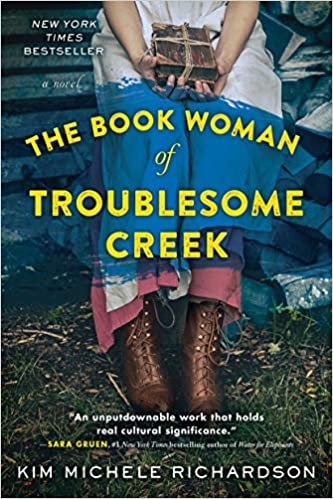
The Book Woman of Troublesome Creek, by Kim Michele Richardson

Their hunger for books could teach them of a better life free of the hunger, but without food they’d never live long enough or have the strength to find it.

Where to start? I loved this book.

There are so many unique qualities to The Book Woman of Troublesome Creek, by Kim Michele Richardson, starting with the fact that it takes two fascinating pieces of history and merges them together into one character.

That character, the voice of our narrator, is Cussy Mary Carter, nicknamed “Bluet.” Piece of History #1: she is a Pack Horse librarian in the 1930’s, riding through the Appalachian Mountains weekly, delivering books to the poor but proud. Piece of History #2: she is a descendant of the Blue Fugates of Kentucky, a group of people with a rare genetic condition that turned their skin blue.

On one hand, you have Cussy Mary as the outcast because of her visible blue skin (she even qualified as “colored,” although she was not African American, and was subject to the same restrictions of the time.) On the other hand, you have Cussy Mary as the one who brings culture to the region’s isolated people. The school children look forward to seeing her. The illiterate (too proud to ever admit such a thing) depend on her to read to them. The elderly simply enjoy her pleasant company.

If there existed a scale of reactions people have towards Cussy Mary, from loving, sympathetic, and compassionate to repulsed, fearful, and murderous, she evokes them all. Yet, somehow, she maintains her composure, ever the book’s heroine from beginning to end. When a character is convinced they are unlovable, yet still manages to treat others with kindness and respect–as Cussy Mary does–you cannot help but admire them.

The themes of prejudice, segregation and ignorance are pervasive throughout the novel. But there is also forgiveness, redemption, and stoicism. My only small criticism is that the ending is almost “too tidy,” seemingly out of step with the rest of the novel. But that is purely my opinion.

Overall, The Book Woman of Troublesome Creek is an extremely engaging read, suitable for book clubs or the curious individual looking for a story unlike any other.

9.5/10 Stars

Fiction, Parable

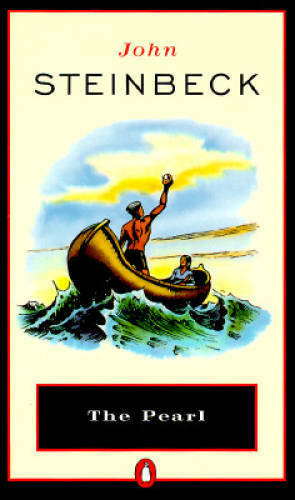
The Pearl, by John Steinbeck

s-l640

For it is said that humans are never satisfied, that you give them one thing and they want something more… –The Pearl

How is it that some have so much while others go without? A hut versus a grand house. Rags versus silken finery. Character versus emptiness. The Song of Family versus the Song of Evil. Do possessions make one evil? Possessions can make one a slave.

Greed. Materialism. Attributes that are practically glorified these days. The master storyteller does not need hundreds of pages to tell how they corrupt and distort. John Steinbeck is that master storyteller.

All of these themes are explored in The Pearl, the story of a humble fisherman named Kino who finds a treasure he thinks will bring an end to his troubles. Yet, what are his troubles? Before his discovery, he lived peacefully, although simply, with his loving wife and little son.

A master storyteller can affect his reader in less than an hour, as I was last night. And today I look around at my possessions wondering if they belong to me or if it is the other way around.

Read The Pearl and prepare to be changed.

9/10 Stars


Fiction, Series & Collections

My Name is Asher Lev, by Chaim Potok

9781400031047_l

“To touch a person’s heart, you must see a person’s face…”

Last week I was listening to a podcast where actor Tom Hanks was being interviewed. The interviewer asked him to name the first book he ever read that he felt was “transformative.” Tom answered My Name is Asher Lev. I was between books at the time and, having already read and enjoyed The Chosen, by Chaim Potok, I decided to try another.

Honestly, I found myself plodding through this book as if metaphorically walking through mud. I knew it would be about the Orthodox Jew culture. I knew it would be heavy. But it was heavy in a way I did not expect. It was emotionally heavy. Heavy and frustrating.

Now, I suppose that as far as “transformative,” I could see where Tom Hanks is coming from. If you are an artist and you believe that nothing comes before your art then, yes, My Name is Asher Lev could be considered transformative. But for the rest of us, I’m not so sure.

This is where interpretation of literature becomes a gray area.

As far as writing style, yes, Chaim Potok is an excellent writer. His style is minimal, yet profound. There is an indescribable power within it that propels the reader to carry on and keep reading. The plot, however…

Simply put, My Name is Asher Lev does not do any favors for the Orthodox Jews. It follows a young, friendless boy into adulthood who, more than anything else, wants to be an artist. The more his father tells him to stop wasting his time on drawing, the more he rebels. Over the years he continues to pursue his vocation at the risk of alienating everyone he cares about, his parents, his rabbi, his community.

The biggest question would have to be “Is it worth it?” Never having been in that situation, I cannot say. I did, however, think of my Uncle Ruben, an extremely talented artist who struggled for years against the wishes of my grandparents to turn his vocation into a career, eventually becoming successful and convincing them and everyone else.

Our protagonist, Asher Lev, had a larger task. He was battling against pervasive religious traditions that affected everything in his life. He was also battling against a close-knit religious community whose stronghold on those traditions was becoming more and more desperate as the world crumbled around them. Lastly, as the only son of a respected man who worked to help the persecuted, he was battling against his father, whom he loved.

Those who are fighting that uphill battle to just be who they are at the risk of all they love and hold dear will, perhaps, find Asher Lev’s story more relatable. There is an audience for his struggles. Unfortunately, I am not that audience.

8/10 Stars


Children, Fiction, Series & Collections, Young Adult

Daddy-Long-Legs, by Jean Webster

81qjcQXpF1L

I suppose that in today’s world, a story where a rich, older man anonymously sponsors an orphaned girl’s schooling while also orchestrating in-person meetings would seem, well, creepy. And if you watch the movie with Fred Astaire as Jervis Pendleton and Leslie Caron as little Judy there is a great age gap–about 30 years– between them, cute as the movie may be. But, as expected, the book is different.

First of all, it is all set in America, not France. Second of all, in the book it is easier to imagine about a 10-15 year age gap between them. This is more acceptable. The film immediately reveals that Daddy-Long-Legs and Jervis Pendleton are one and the same. The book does not, but it’s fairly obvious to the perceptive reader. It’s a spoiler that does not really spoil, although one does wonder how this man who is so sweet to young Judy in person can let her toil and wonder why her sponsor never writes back, allowing her to wallow in confusion for 3 years. That is a bit more unacceptable.

It’s an odd story, one that could only be told at a time when the role of women was to be demure and subservient. The book is comprised entirely of Judy’s letters to her sponsor, always a risky tactic, but here it seems to work. The letters are detailed enough to help the reader forget that they are only reading letters. We see a range of emotions from the young orphan, plus cute little sketches, and even some back-pedaling as she feels one thing one day (usually frustration with the one-sided relationship) and retracts it with regret the next.

The part I find most perplexing is the reader demographic for this story, which I can only assume is a teenage girl, an age peer of Judy’s, at the time it was written in 1912. Again, a very different time for women, still eight years away from the 19th Amendment. At one point Judy asks “are women even citizens?” (Jean Webster, the author, was a great supporter of women’s suffrage.)

So, if you keep in mind the context of the time period this book was published, it is easier not to judge it too harshly and see it as just a sweet, unusual story.

8/10 Stars

Aside from the full-length 1955 American movie, there are many Japanese anime versions of Daddy-Long-Legs. You can find them on YouTube. I came across this short, 12-min bedtime story version, which actually helped me enjoy the book more. Available HERE on Amazon Prime.

Fiction, Historical Fiction

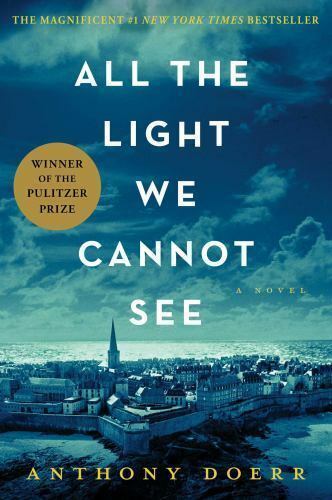
All the Light We Cannot See, by Anthony Doerr

s-l640

“The total entropy of any system, said Dr. Hauptmann, will decrease only if the entropy of another system will increase. Nature demands symmetry.”

In All the Light We Cannot See, the Pulitzer Prize winning novel by Anthony Doerr, that symmetry is achieved by telling parallel stories of two main characters on opposite sides of World War II.

In Germany there is Werner Pfennig, an orphaned, tow-headed young man with a special gift for fixing and engineering radios at a time when communication is crucial. His only family is his younger sister, Jutta, who also acts as his conscience. Werner’s talent and Aryan looks get him noticed and he is recruited into a special school for the Hitler Youth.

In France there is Marie-Laure LeBlanc, a freckled, motherless blind girl. Her father, Daniel Le Blanc, is the locksmith at a local museum. His life is completely devoted to his daughter. He has built an elaborate model of the neighborhood so Marie-Laure can find her way. When they move in with his eccentric, agoraphobic Uncle Etienne, Daniel starts over and builds a model of the new location. He is determined that Marie-Laure be as independent as possible, a skill she will need later. Daniel has also been entrusted with a priceless item from the museum.

There are also a handful of important supporting characters: Frank von Rumpel, the determined German gemologist on an unstoppable quest; Madam Manec, Uncle Etienne’s servant who has become such a part of the family that the word servant hardly suffices; and Frederick, Werner’s first roommate at the new boys’ school, whose sensitive nature and morality chafes against the brutal methods being taught.

All throughout the book we, the reader, are ping-ponged back and forth between Werner’s and Marie-Laure’s lives, wondering when they will converge, as you know fate will orchestrate. Set aside all assumptions, however. All of my guesses were incorrect.

Time periods shift frequently. Sometimes they are clearly marked and other times not, the biggest complaint I’ve seen from other reviewers. I see no purpose in the added confusion, there are so many other details about which to keep track. My other complaint would be that the most intense climatic build ends in a very anti-climactic way. The proverbial balloon popping and hissing until empty.

But overall, All The Light We Cannot See is riveting. If you can picture in your mind an upside cone, that is how I felt as I read about Werner and Marie-Laure’s lives, waiting impatiently for them to intertwine. I flew through the 532 pages in about 3 days, staying up until after 1am last night to finish. As someone whose attention span has been greatly affected by the world’s goings-on, that was an achievement. The book was obviously meticulously researched. I’ve never read so much detail about the Hitler Youth. It made me cringe. War’s unfairness, loss, brutality, and waste is peppered throughout. Why some are allowed to live and others are not is a question that echoes into eternity.

9/10 Stars


Christian Fiction, Fiction, Historical Fiction, Series & Collections

Muddy: Where Faith and Polygamy Collide, River: Where Faith and Consecration Converge, by Dean Hughes

Muddy_Where_Faith_and_Polygamy_Collide

I’m going to combine the first two novels in Dean Hughes’ newest series:

MUDDY: Where Faith and Polygamy Collide

If you’ve ever wondered what it was like to be a polygamist family in the early days of the Utah pioneers, look no further. Muddy, and the books following it in the series, will give you a fly-on-the-wall view.

Morgan Davis, a faithful young man in his 20’s from Farmington, Utah, has been asked to marry and settle in Southern Utah. Over time, despite his great hesitancy to participate in polygamy, he is asked to marry again.

But there is more to the story–much, much more. There is the setting up in a new place, the adjustment to being a husband and father, and the challenges that accompany hard living while farming and having to provide everything for your family in a place with no resources or commerce.

When Morgan is asked to marry his second wife, Ruth–a quiet young widow–he and his first wife, Angeline, must navigate this new dynamic in their family. What are the logistics when there are two wives? We are privy to all of this, and it’s fascinating.

52329908._UY1000_SS1000_

RIVER: Where Faith and Consecration Converge

Just when Morgan thinks his life is on track, he is thrown more curve balls. River begins with a grasshopper plague swarming into the community. Dean Hughes describes it in such detail, you feel yourself swatting the insects away.

But the biggest new challenge, aside from the grasshoppers, is that Morgan Davis is asked to move with his family to a new settlement and begin living the United Order’s Law of Consecration. If we thought the logistics of plural marriage were challenging, living this law is even more difficult. Many hands might make light work, but they also bring different viewpoints, personalities, and interpretations of rules.

Meanwhile, Washington DC is starting to pursue polygamist families. Morgan, his wives, and children must prepare and decide what to do should he be hauled away by the deputies.

River is a very “meaty” book, with a lot more intensity and personality clashes than its predecessor, Muddy. A terrific second book in the series.

My Observations

Dean Hughes is a very gifted writer. He has a way of showing us the thoughts and feelings of different characters that is both realistic and detailed. He explores an impressive array of human emotion. During the multiple talks to set up the Law of Consecration in the community, Hughes touches on nearly every kind of concern that people would have when asked to live such a lifestyle. It takes an enormous amount of faith and selflessness, things that are difficult for even the best of people.

But I think the thing that impresses me most about Hughes’ writing style is the way he writes women. He seems to know how women tick, their worries and fears, their jealousies and concerns. I am constantly amazed at how well the female characters’ innermost thoughts are described.

This is historical fiction at its best, with realistic fictional characters living and interacting with actual figures from history. I find myself often in moments of self-reflection wondering how I would react to the hardships these people faced and the things that were asked of them by their church leaders.

9.5/10 Stars

Fantasy, Fiction, Young Adult

Snape, A Definitive Reading, by Lorrie Kim

snape cover.jpg

Definitive, yes. Interesting, no.

Anyone who has invested time reading and/or watching the entire Harry Potter series knows that there is much more to Severus Snape than meets the eye, and certainly much more than he appears in the very first book. Since the end of the series and as Snape’s true nature and motives have been revealed, the character has become an unlikely hero. It is for this reason that I had such high hopes for this book.

Harry Potter author, J.K. Rowling, has released several books with backstories of everything from Hogwarts teachers to the inception of Quidditch. They’re fascinating. And it makes sense. The backstories are coming from the same imagination that conceptualized the characters in the first place.

Snape, A Definitive Reading is the opposite of fascinating.

I see this book as one more example of someone riding on the coattails of someone else’s talent and success. There is nothing revelatory here, but merely a chronicling of every single time Snape and Harry Potter interacted with each other through the book series. And that, my friends, is A LOT of interacting. It’s as tedious as it sounds.

At the beginning I read carefully, but as time went on and the book maintained its dry format, I found myself skimming more and more. It’s a few hours I’ll never get back and, as a favor, I recommend you not waste your time with this book. You can do better and Snape deserves more.

6/10 Stars

Children, Fiction

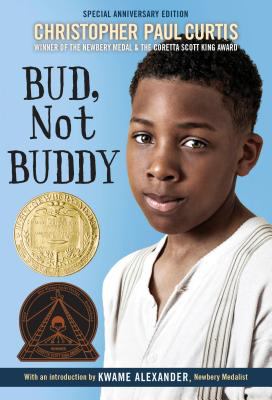
Bud, Not Buddy, by Christopher Paul Curtis

Bud Not Buddy cover.jpg

This is a book I discovered completely by accident. It was featured on the homepage of my local online library during Black History Month. I was attracted to its Newbery award winning status and its many stellar reviews.

Bud (not Buddy) is an only child with an absent father and a recently deceased mother. He’s currently “in the system,” being bounced from one foster home to another. He longs for a real family and, deep down, he knows there is one waiting for him.

The story seesaws between touching moments as Bud (not Buddy) pieces together clues to find the man he thinks is his father and hilarious moments in his transient, fractured life. Aimed at children, the balance of these two characteristics is just enough to keep a young person’s attention. It certainly captivated mine. Bud (not Buddy) is extremely likable and polite, you root for him the entire time, always hoping that he’ll find the family he seeks.

I was very happy to have found this book. If I was still teaching elementary school (which I did for 13 years until my marriage in 2010,) I would definitely purchase this for our classroom library and read it aloud during group storytime. There are plenty of things to discuss with young students. However, since I do not currently have my own classroom, I shared this book by sending it, along with Farmer Boy, to California as birthday presents for my 12-year old nephew. We do what we can.

8.5/10 Stars


Fiction, Historical Fiction

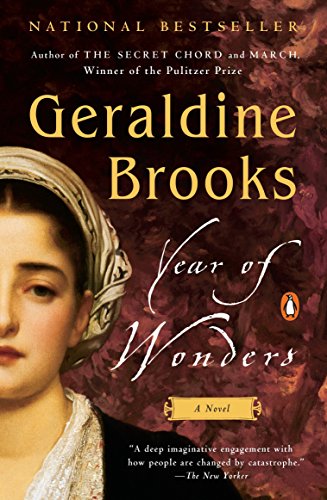
Year of Wonders, by Geraldine Brooks

Year of Wonders cover

I had no idea when I listened to (75%) and read (25%) this book about the plague in the 17th century that, a few months later, we would be seeing the global panic we’re currently experiencing with the Coronavirus. The main differences are, of course, that the people then had greater cause to panic and medical technology was drastically inferior to what it is today.

Year of Wonders is about a young widow and mother named Anna. Like other books by Geraldine Brooks, the central female character possesses a quiet strength during a time when women were expected to be passive and mild. Anna does her best to support herself and her two young sons by working on her small farm, working at the parsonage, and bringing in a boarder now and then.

Over the course of the book Anna’s challenges and losses continue to increase, yet she never wavers, relying on her faith that she will see loved ones again, and her devotion to helping others in her social circle.

Geraldine Brooks has a talent for writing books in this Puritan setting, almost making them sound as if they were written in that time period. There was, sadly, a major misstep in the ending of Year of Wonders which led me to agree with other reviewers on Goodreads who stated that the ending felt like a completely different book. After investing so much time and energy into Anna’s story, hers is an odd and disjointed conclusion.

8/10 Stars

Fantasy, Fiction, Young Adult

The Girl Who Drank the Moon, by Kelly Barnhill

The Girl Who Drank the Moon cover

After some very demanding months in 2019, I can now return to my beloved book review blog! I’ve read and listened to quite a few books over the last few months, but I narrowed them down to a handful of my favorites to include on this site.

A few weeks ago at a “Favorites” party I won the Young Adult book, The Girl Who Drank the Moon. The fact that it is a Newbery Award winner gave me hope. And, despite its fantasy genre, I decided to give it a try.

I’m glad I did.

Set in a gloomy, dystopian society, The Girl Who Drank the Moon is full of symbolism that spills over into our modern world. A government who swears it is protecting the people, even though they insist that one child must be sacrificed to the forest’s witch every year. Characters include a child who escapes the sacrifice, the aforementioned witch, a dragon, a swamp monster, a madwoman in a tower, and a young apprentice trying to figure out what is true and what is not.

I devoured the book in two days, then loaned it to a friend who is a high school librarian. She loved it too.

Do not be put off by the genre, as I first was, or by its target audience. Younger people may not understand every layer in this the book, and that’s OK. But they will still enjoy it. As an adult, I found the symbolism very powerful, worthy of a college paper.

The Girl Who Drank the Moon is most definitely the best book I’ve read in a quite a while. There are some unexpected surprises, which I found very satisfying. And I’ve done my best not to include any spoilers here so that you can experience them for yourself.

9.5/10 Stars

Fiction, Historical Fiction

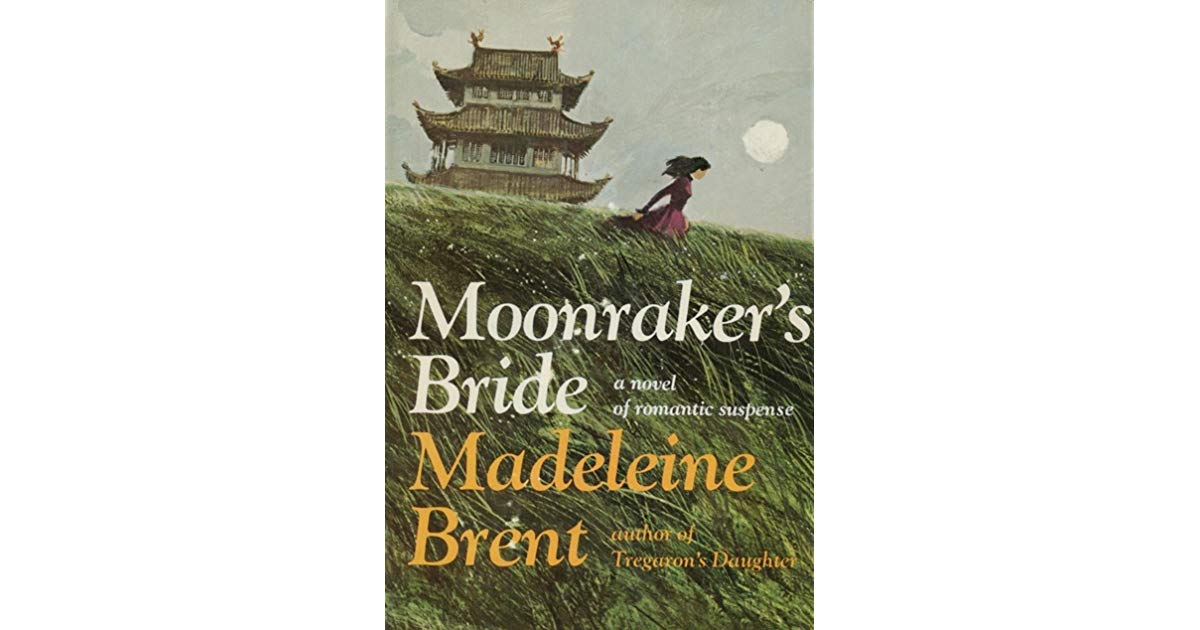
Moonraker’s Bride, by Madeleine Brent

19495._UY630_SR1200,630_

It is a joy to read a book that I know will make the “10 Star” list on my site. Moonraker’s Bride, by Madeleine Brent, is such a book.

In much the same way as the protagonist in The Blue Castle (another 10 star favorite,) main character Lucy Waring’s life begins in one place and situation before making a dramatic shift to another. Lucy is a 17 year old British orphan living in China, knowing no other life than the impoverished orphanage run by a well-meaning, but sickly, Miss Prothero. Miss Prothero’s ill health forces Lucy, as the orphanage’s oldest resident, to take on all of the daily responsibilities, including the most basic–finding the means to feed the children in her care. Despite the mounting obstacles, Lucy loves being needed and has learned to be a quick-thinking, courageous, resourceful young woman.

One day, when Lucy’s luck (seemingly) runs out, she meets political prisoner, Nick Sabine. Nick’s own future is grim, but this unlikely meeting changes Lucy’s life forever. Suddenly she is immersed in a myriad of adventures that include a puzzling riddle, a lost treasure, a family feud, and numerous other twists and turns.

The story, the writing style, and, especially, the character development in Moonraker’s Bride are glorious. The time period invites some suspension of reality, but it is forgivable. What makes the female-centric novel even more interesting is that author Madeleine Brent was actually a man named Peter O’Donnell (1920-2010) writing under a female pseudonym. I knew this going into the book, but was even more impressed while reading it. Lucy Waring’s sentiments and reactions “feel” female, without being insulting or stereotypical.

I highly recommend Moonraker’s Bride. This was a book I could not put down. It was also a book I immediately missed when I completed it. As an FYI, it is out of print, as are all of the books by Madeleine Brent (a tragedy,) but used copies are available on both Amazon and alibris.com.

10/10 Stars